
Weighing art history between frivolity and importance, Ivan Argote’s solo exhibition Close to Me surveys canonical artworks from the Great Sphinx of Tanis (2600 B.C.) to Kasimir Malevich’s Black Cross (1915). His performances breathe new life into centuries-old works and interact with Modern art as a means to discover the Contemporary. As he traces his own genealogical lines in and against a Western narrative of art history, Argote yields his own art practice.
Based in Paris, the Colombian artist showcases his latest work at Brussels’ D+T Project Gallery from September 7 to October 27, 2012. The exhibition takes its title from a song by the English rock band The Cure. Much like the song, the show can be characterized as an ebullient arrangement of video, photography and sculpture. The synth-pop melody, audible throughout the gallery, plays from Feeling (2009) a 3-minute video of the artist dancing in front of Malevich’s Black Cross (1915) at the Centre Pompidou in Paris. Malevich’s austere Suprematist painting was his radical attempt to facilitate absolute feeling through abstract geometric motifs, which Argote assumes with an impulse to dance. Considering the camera shoots at a crooked angle from the floor Argote’s action has a wayward manner about it, subverting prescribed behaviors often regulated to museum visitors. As the artist interrupts the lofty silence in the building, suggesting another way of interacting with artwork, Malevich’s enigmatic painting is reduced to a symbol of art history that is subject to Argote’s humorous intervention.
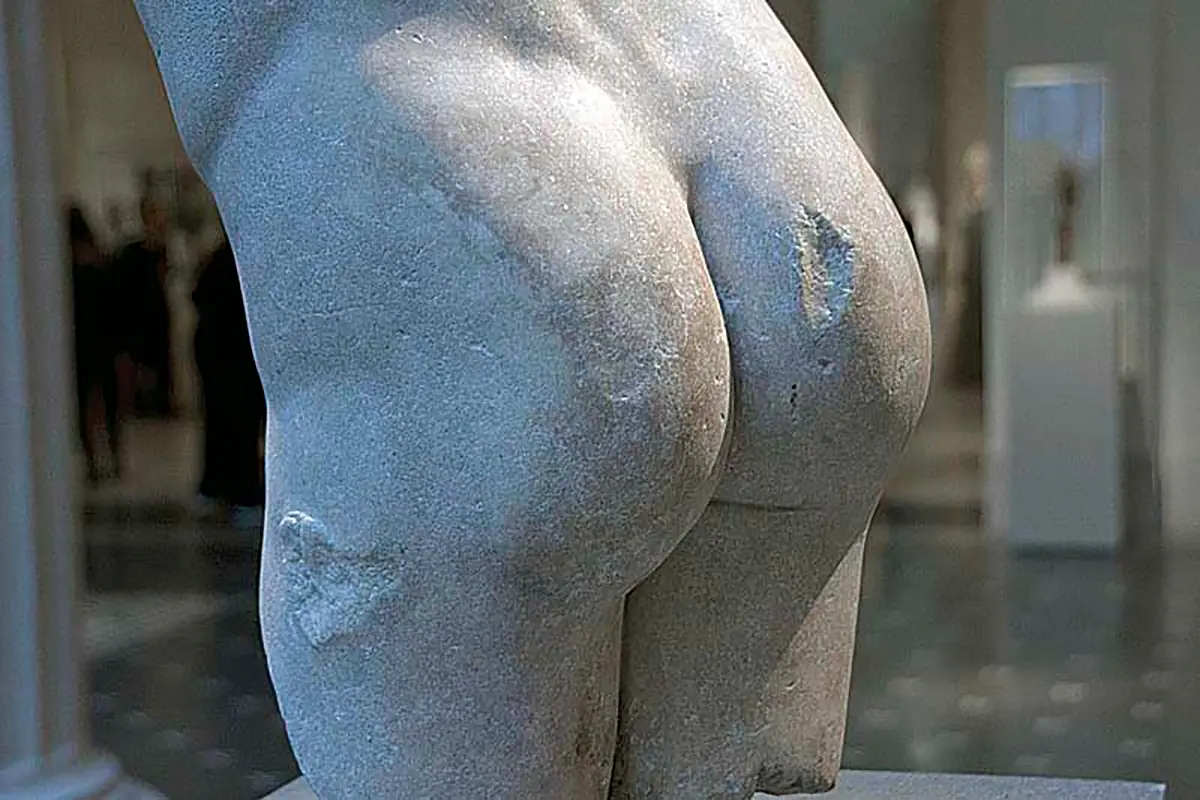
Argote continues in this vein at New York’s Metropolitan Museum of Art where he carefully interrogates their collection of Greek and Roman sculptures. The outcome is droll, with four photographs detailing antiquity’s sculpted bottoms. The images are remarkable as you detect the rough, broken texture of a perfectly contoured behind. However, the series Behind (MET) (2011-2012) is once again a document of Argote’s satirical reading of Western art history. Nose Job (2012), a shorter version of a 20-minute video, shows the Great Sphinx of Tanis (2600 B.C.) at the Louvre in Paris with a slight alteration. Argote produces the once missing nose in granite, inserting the copy at the foot of the sphinx. The video replays the usual stream of visitors as their attention shifts from the overall grandeur of the sphinx to the neglected nose. Some laugh, other visitors proceed with their tour of the museum. The result of his performances alternately demystifies the sterility of museums and delicately mocks, if only to momentarily suspend the aura we typically bestow these canonical artworks.
The exhibition’s levity fades with the sculpture Morsure (2012), translated from French as bite. Argote reproduces a classical style plinth, using the plaster base as a platform for a four-sided mirror that reflects the bare walls of the second gallery room. Once again you are reminded of the white cube, then you catch your own reflection that returns you and the work to the present moment, or loosely the contemporary. At best, this work articulates the overall framework of the exhibition as Argote’s subjective look towards history, alternately making connections to artistic predecessors and marking definite ruptures. His approach to art history and his relationship to it appear to be an uneven juncture, where questions of genealogy are met with a resounding laugh in the face of a narrow tradition. Without referencing a single work from Latin America’s artistic past, the exhibition inconspicuously provokes questions around the axis between Northern and Southern histories of art. Argote’s experience suggests a comical encounter that has clearly shaped his own practice. Yet, his work signals a complex dialogue that will be worth following in future exhibitions.
ELIZE MAZADIEGO