
Artists who migrate to new countries and join a given artistic group have been greatly beneficial for those collectives. Think of the Bauhaus, the Paris School, Abstract Expressionism in the US. Latin America received the influx of such visitors that, for many reasons, settled here: Buenos Aires, Mexico City, São Paulo, Rio de Janeiro are all superlative examples.
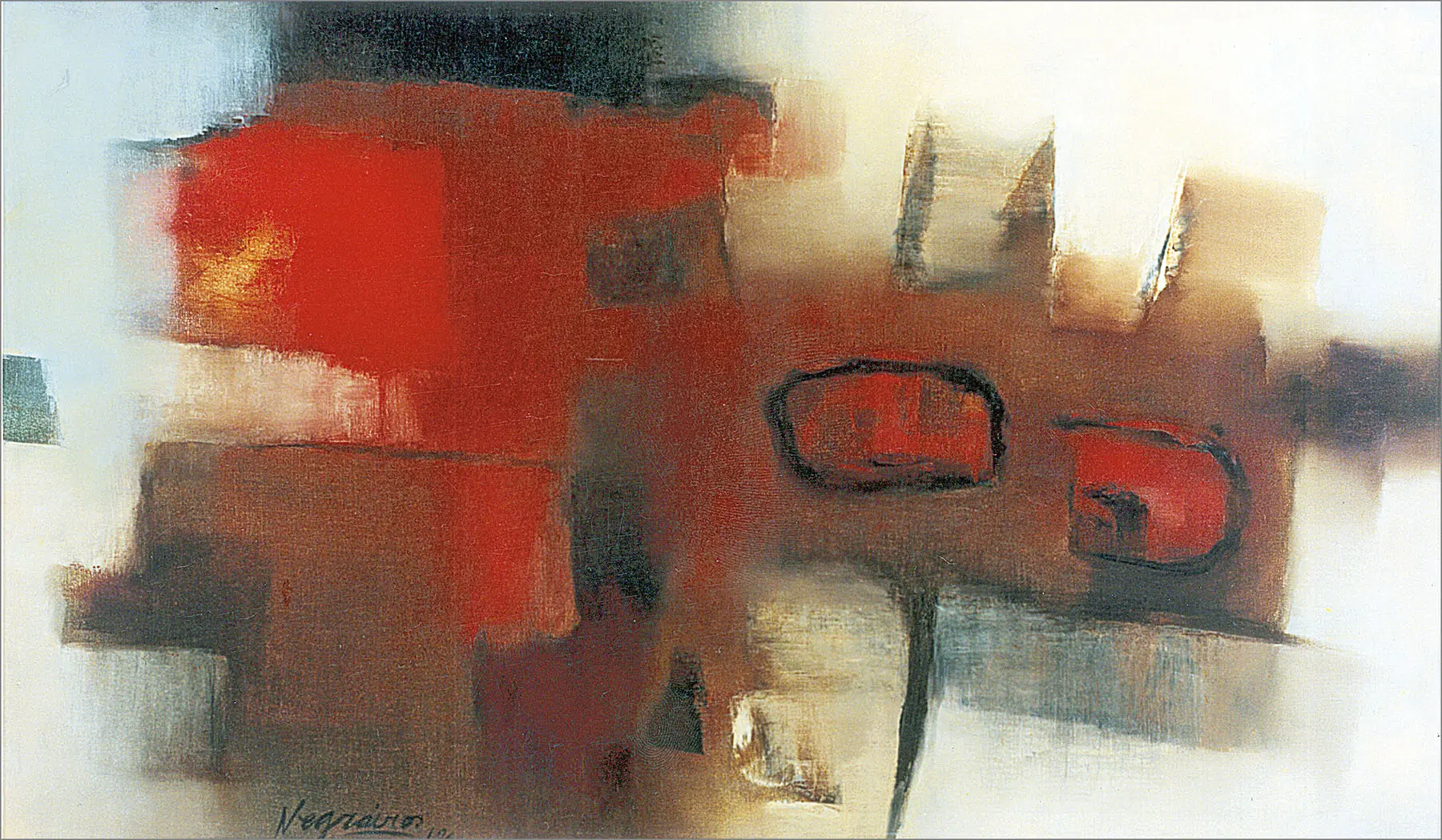
Colombia also benefited from these flows: Guillermo Wiedemann and Leopoldo Richter from Germany; Jan Bartelsman from The Netherlands; Juan Antonio Roda from Spain, Armando Villegas from Peru; Jim Amaral from the US—these are some of the pioneers around the mid-Twentieth Century. María Thereza Negreiros hails from Brazil. She was born in 1930 in the Amazon rainforest town of Maués, to a family of big landowners. She studied fine arts at the University of Rio de Janeiro. In 1954 she arrived in Colombia and settled in Cali, where she initially encountered a small arts community formed, essentially, by siblings Lucy and Hernando Tejada, Jan Bartelsman, and later Pedro Alcántara. Her first solo exhibition took place in 1961, at the Luis Ángel Arango library, featuring twenty-two oil paintings that evoked natural themes, which she approached by means of abstraction. The show comprised two series: Magia en la montaña and Alas de mariposas o Cromatismos. Abstraction was a risky gamble and a contribution to new Colombian art in the nascent decade, and Negreiros was saluted in just those terms by Marta Traba, who reviewed the show for Nueva Prensa. 1 Two years later she presented a group of matteric works titled Génesis, where sand, rocks, and synthetic fluids formed the surface of the painting, revealing a manifest interest in informalism as a vehicle for expression. The sequence referred to the cosmos’ perpetual, threatening motion, and conceived of painting as a territory for the questioning of pictorial procedures and of representation itself. Again it was Marta Traba2 who noted the importance of this reflection on display at Bogotá’s galleria de Arte Moderno. For his part, Walter Engel referred to the artist and her work with these words: “Afterwards she goes from one find to the next, all conquered honestly, in a constant explosion of new materials and their combinations.”
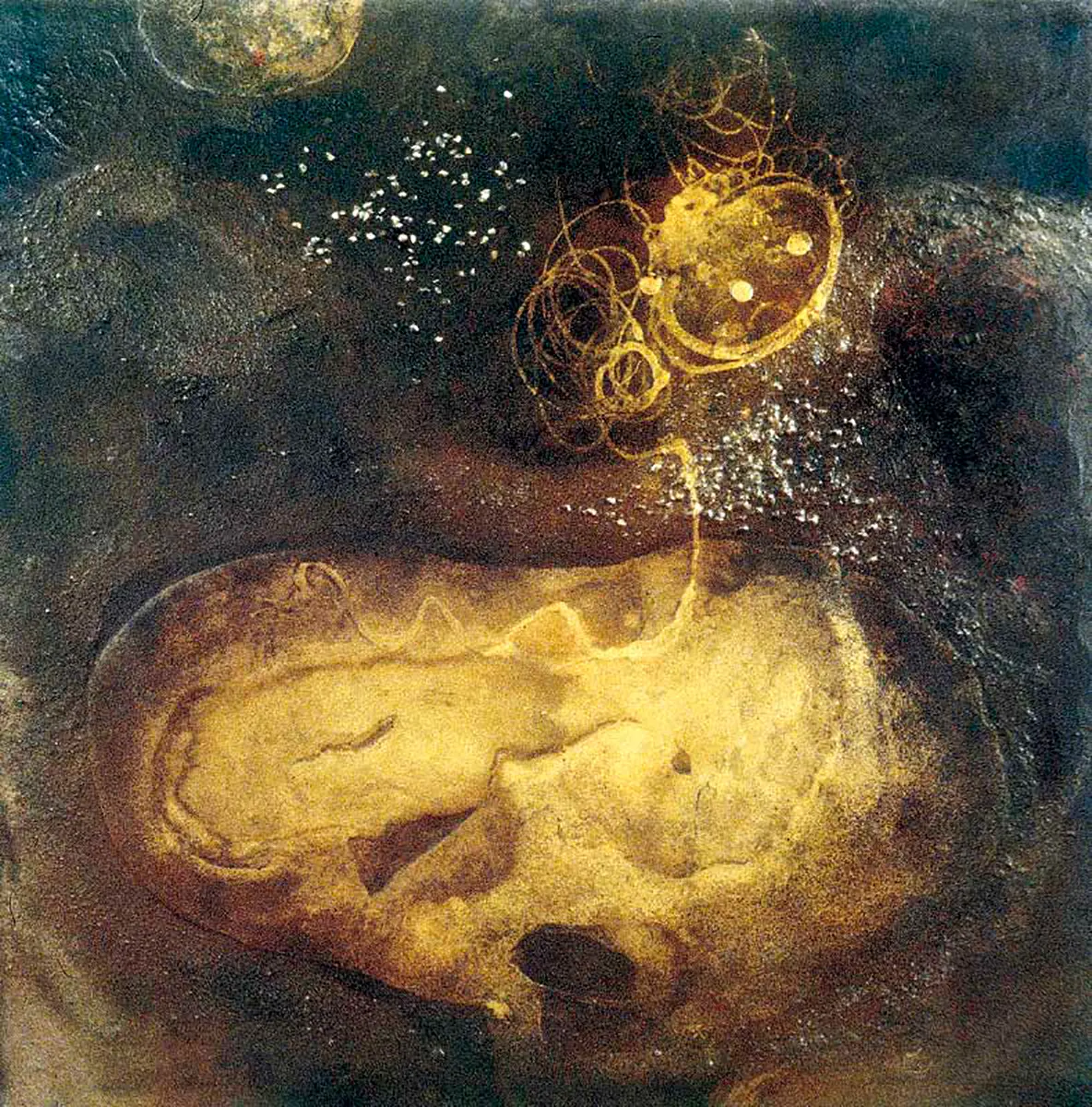
Negreiros’ previous proposals celebrated light and color as central ingredients; the paintings in Génesis appeared monochrome in yellowish-earthen hues, and the sensation of a primordial magma was produced by the flow of action and altered skin. From that starting point, the artist became interested in surfaces, an exploration of her materials, the three-dimensionality of painting, all of which will drive her later towards the production of objects. In that sense, she was a good sensor for the concerns that dominated Colombian art in the 1960s. In this way, María Thereza Negreiros also joined the group of female artists who in that decade staked their independence and made important contributions: Beatriz González, Norma Zárate, Ana Mercedes Hoyos, Beatriz Daza, Feliza Bursztyn, Olga de Amaral, to name some of the most relevant.
Génesis, which reflects about its own physical condition, seems to culminate on two large canvases, two square meters each, titled Batalla de hombres y de hierro, where oil mixes with mineral paint, indralit, sand, and sawdust, generating alterations that were as desert-like as they were evocative. One of them, a petrous and arid landscape, is now in the collection of the Museo de Arte Moderno la Tertulia, in Cali, and received an award at the Pan-American painting Salon in 1965.
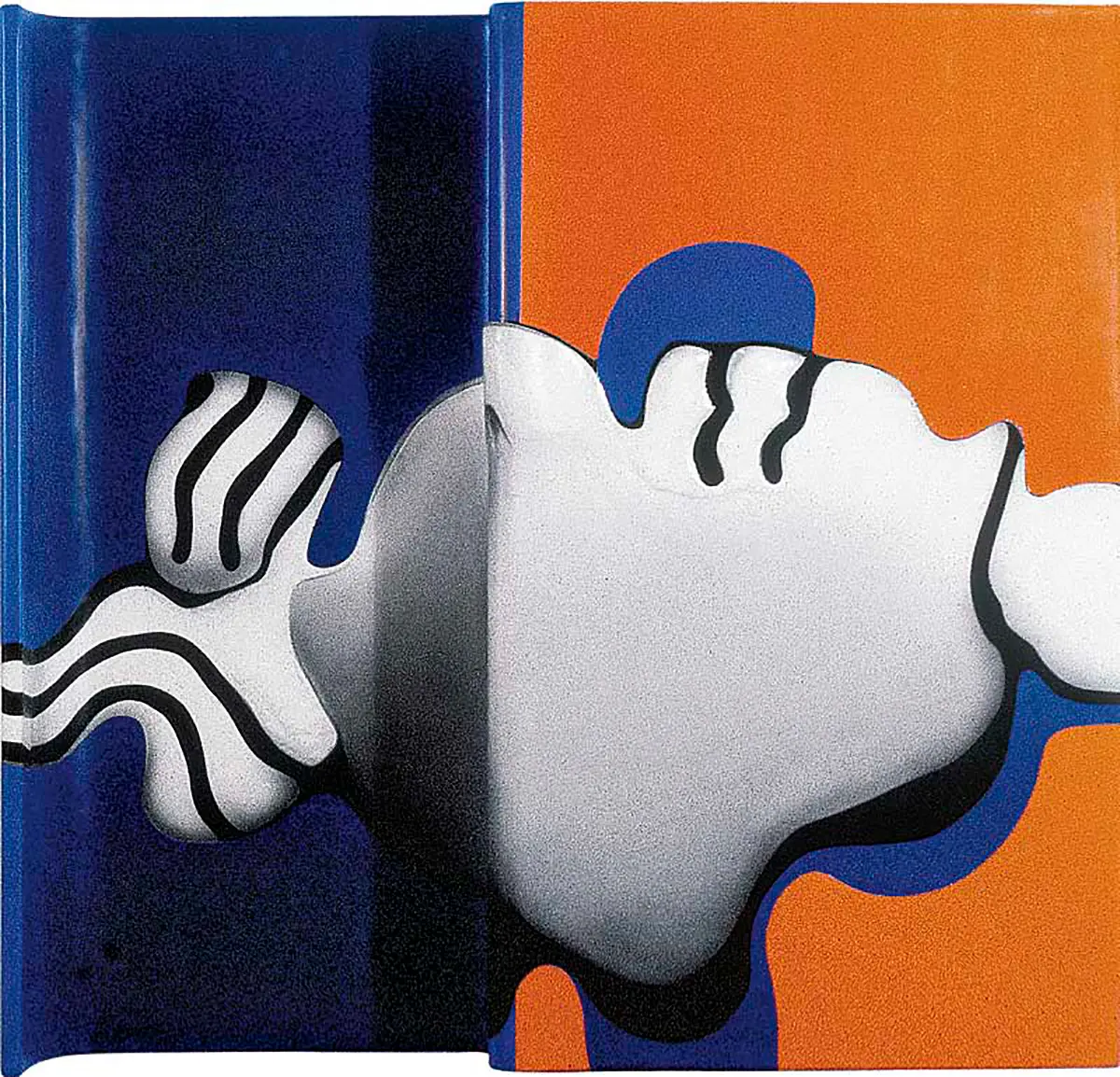

Many abstract artists also practiced figurativism, and vice versa; the examples of Willem de Kooning in the US or Juan Antonio Roda in Colombia could be cited as reference. María Thereza Negreiros was equally intermittent, and in 1966 she presented the series Ángeles in an individual exhibition at the Museo de Arte Moderno in Bogotá. 3 She took the initial idea from images of the colonial period, so loaded with cherubs and seraphim, as well as archangels. Her proposal incorporated three-dimensionality, molding caricaturesque and abstracted faces that responded to other tendencies present in the period, namely neo-figurative painting. A critical version of representation, with questions about the human condition. Think of her contemporaries such as Pedro Alcántara, Leonel Góngora, Carlos Granada, Luis Caballero, Augusto Rendón, and Norman Mejía, among the most audacious and anti-establishment. The reinterpretation of referents, the idea of revisiting and citing an artistic argument, and the expressionistic, ironic, humorous treatment given to the Ángeles sequence reaffirmed the important presence of Negreiros’ reflections in Colombian art. This series was presented in Rio de Janeiro, the city where the artist had completed her studies. The show received critical attention. Antonio Maia wrote: “Her angels, in a complete or fragmentary figuration, take over almost the entire surface in a geometric distribution, expanding to reach the edge of the canvas. At other times, they fit together in an arbitrary fashion, as if it were a puzzle.” For his part, Marc Berlowitz said: “A vigorous and personal artist who employs new materials with admirable technique and who understood the true spirit of the new figuration, which is not the academic figure with some modern condiments. María Thereza Negreiros presented one of the year’s most important exhibitions.” By then, Negreiros had already represented Colombia in group exhibitions in the US, Argentina, and Brazil.4

The synthetic materials and forceful colors present in these new matteric works seemed to culminate in a large diptych from 1968, titled Mujer en la Escalera Rodante, which participated in the first Salón Austral y Colombiano de Pintura, the inaugural exhibition for the La Tertulia museum in Cali. Already Negreiros’ art came in entirely three-dimensional work, dependent on the wall. The project’s sizable scope moved her proposal forward towards questions related to the multi-dimensional expansion of what was known as painting, thus interrogating its integrity and reach. We should remember that the same Salon included Bernardo Salcedo’s boxes, Hernando Tejada’s works in wood, and Beatriz González’s laminates and painted metal objects. María Thereza Negreiros was interested in provoking reflection, questioning formats, and presenting conceptual propositions supported on new formal solutions.
The decade of the 1970s defined as no other the new attitude in many respects that are contemporary to us today. The passion for psychotropic drugs, rock music, the struggle for civil rights, the Cuban revolution, and the Cultural Revolution in China, youth power, and the tyranny of consumerism. Of course, we had our own local heroes, such as the guerrilla priest Camilo Torres, a local version of Che Guevara, and a non-conformist movement interested in the arts in general: Nadaísmo, helmed by Gonzalo Arango. Colombian society began to reflect on itself and artists contributed to change in that perspective. As a woman and as an artist, María Thereza Negreiros took part in that revolution. She was close to Nadaísmo, of which Cali was the epicenter, not only for the Avant-Garde Festivals they organized but also as a sustained presence made visible through a number of actions. She intervened in the debates of the period, centered on abstraction and figuration as well as form and content, with an art that was eloquent and to the point, risk-taking, and forward-looking.
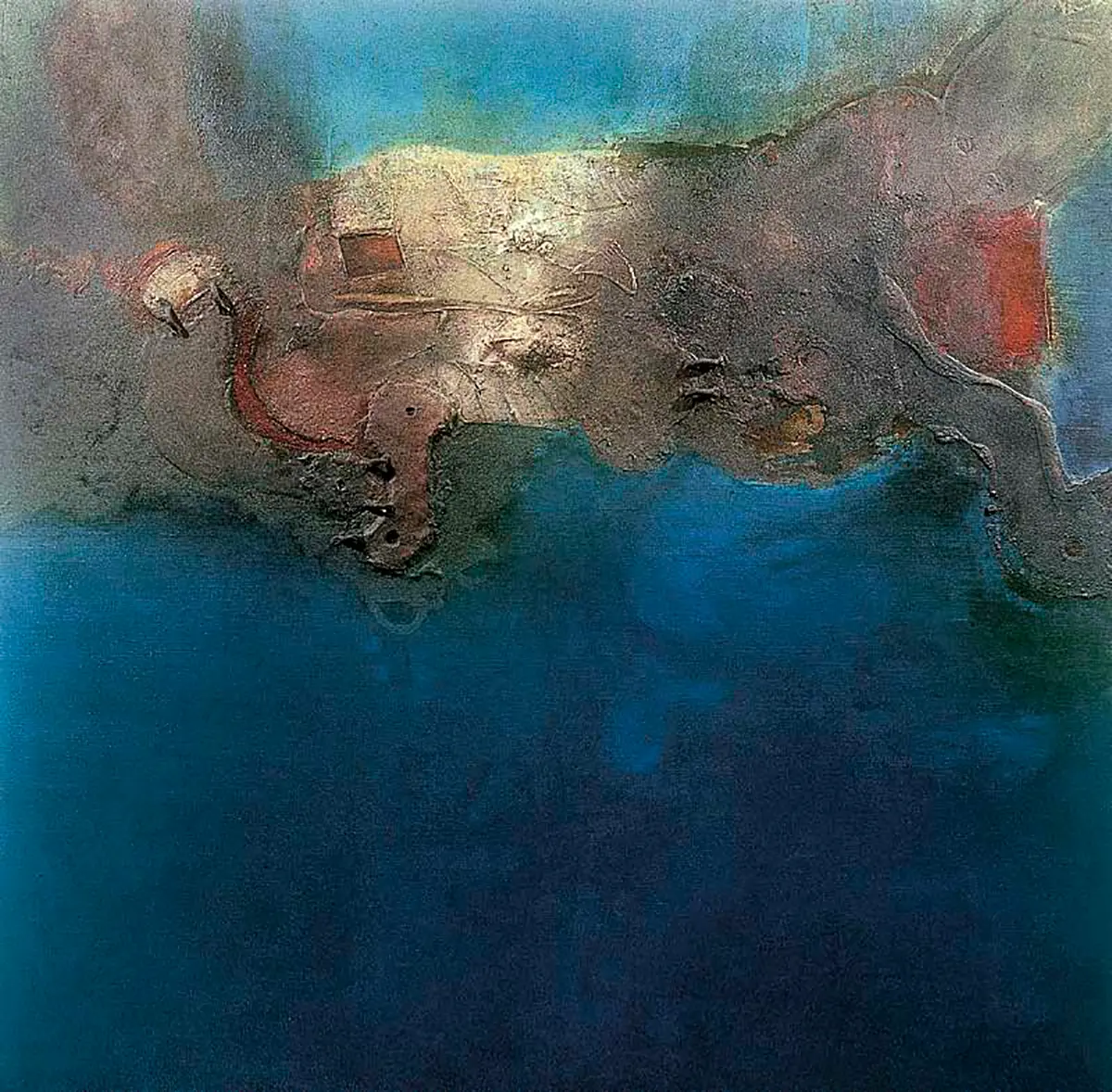
Towards the end of the 1960s we find works like Recuerdo de un antepasado-Catalina, 5 a plexiglas box on which the schematic face of a woman is reflected, dated in 1969, and Misterio de una carcajada from 1970,6 a large photographic fold displaying a sequence of open mouths printed on acetate. As the new decade dawned, her attention centered on objects: rectangular of cylindrical boxes showing real photographed eyes that vibrated under the silver light of their background. She titled these Multitud or Lenguaje de los sentidos. The perfect industrial finish of the works and their metaphysical aspirations marked an ultimate interest in non-conventional formats. These small- and medium-format works had their precedent in a larger object from 1971, Metro cúbico para un hombre.7 Towards the end of the decade and given the impact of a prolonged visit to the Amazon River region, she began once again to think about painting on canvas. In a way, Negreiros returned to the idea of her early paintings of 1961 and 1962, when she produced a series of Girasoles and the groups already mentioned like Magia en la montaña.
The work of Maria Thereza Negreiros has been built on the basis of sweeping shifts and her artistic practice has been based on questions she has posed and attempted to respond to by means of a variety of formal and conceptual adventures, including the exploration of diverse techniques. Surely this last period of her career, when she has encountered the rainforest as a motif, is the longest and more constant. It has unfolded over the last thirty years. In 1982, Marta Traba wrote an introduction for Negreiros’ first retrospective. From Washington, where Traba lived, she wrote: “Divided, then, between rational experiment and lyrical communication, her work has turned out more convulsive, less stationary, than others where an idea is given from the start, then transferred to a convenient system of forms, and the process of the work unfolds on a single channel, perfected or modified always within its self-imposed limits. I would not say that Marie Thereza Negreiros experimental will has been a drive to be at the vanguard, be it in terms of images or the use of different materials. Rather, I would say that such a quest was in ever instance motivated by the same desire: to say something important and profound that widens the public’s visual register and allows them access to a new territory of the imagination.”
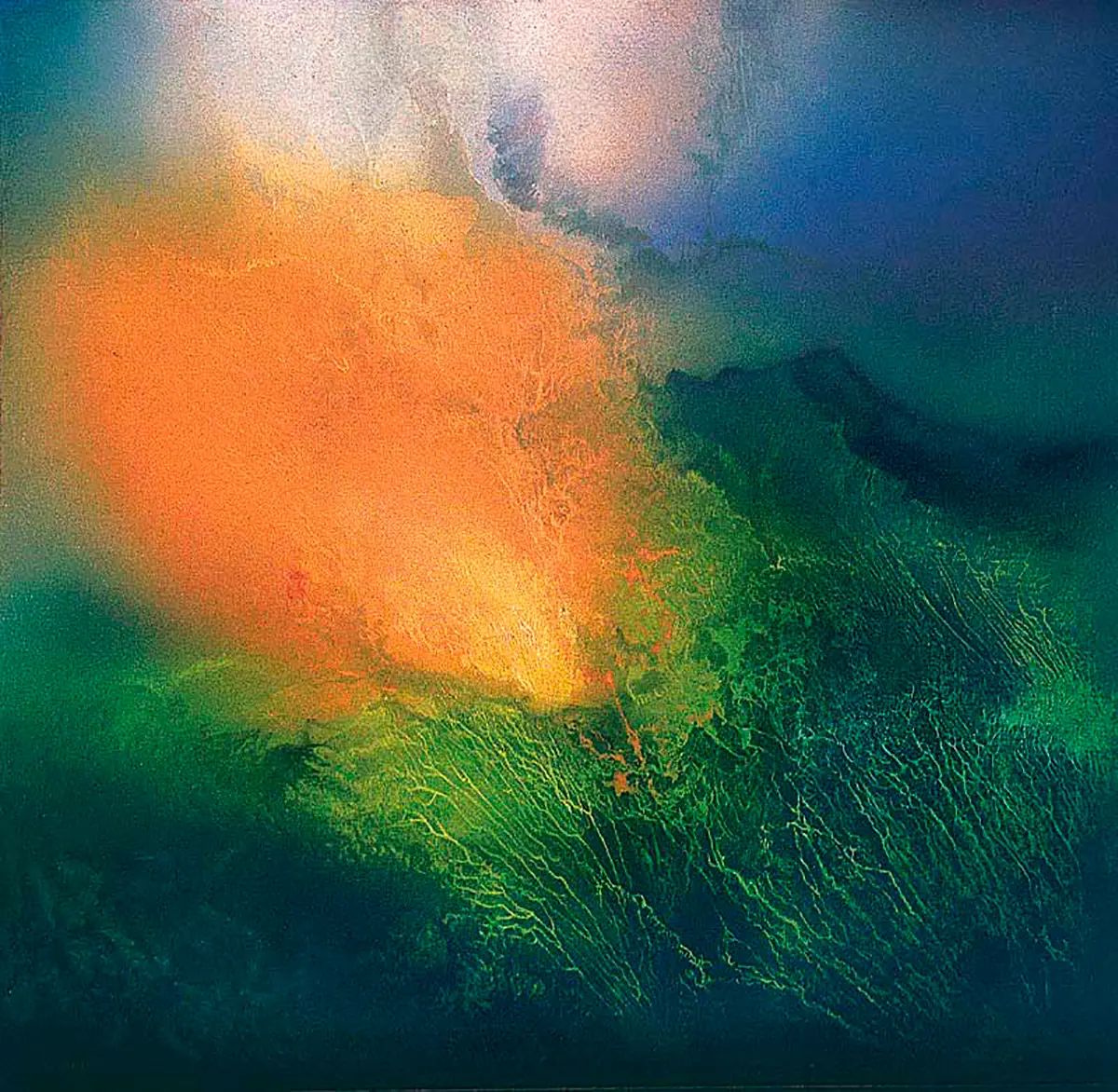
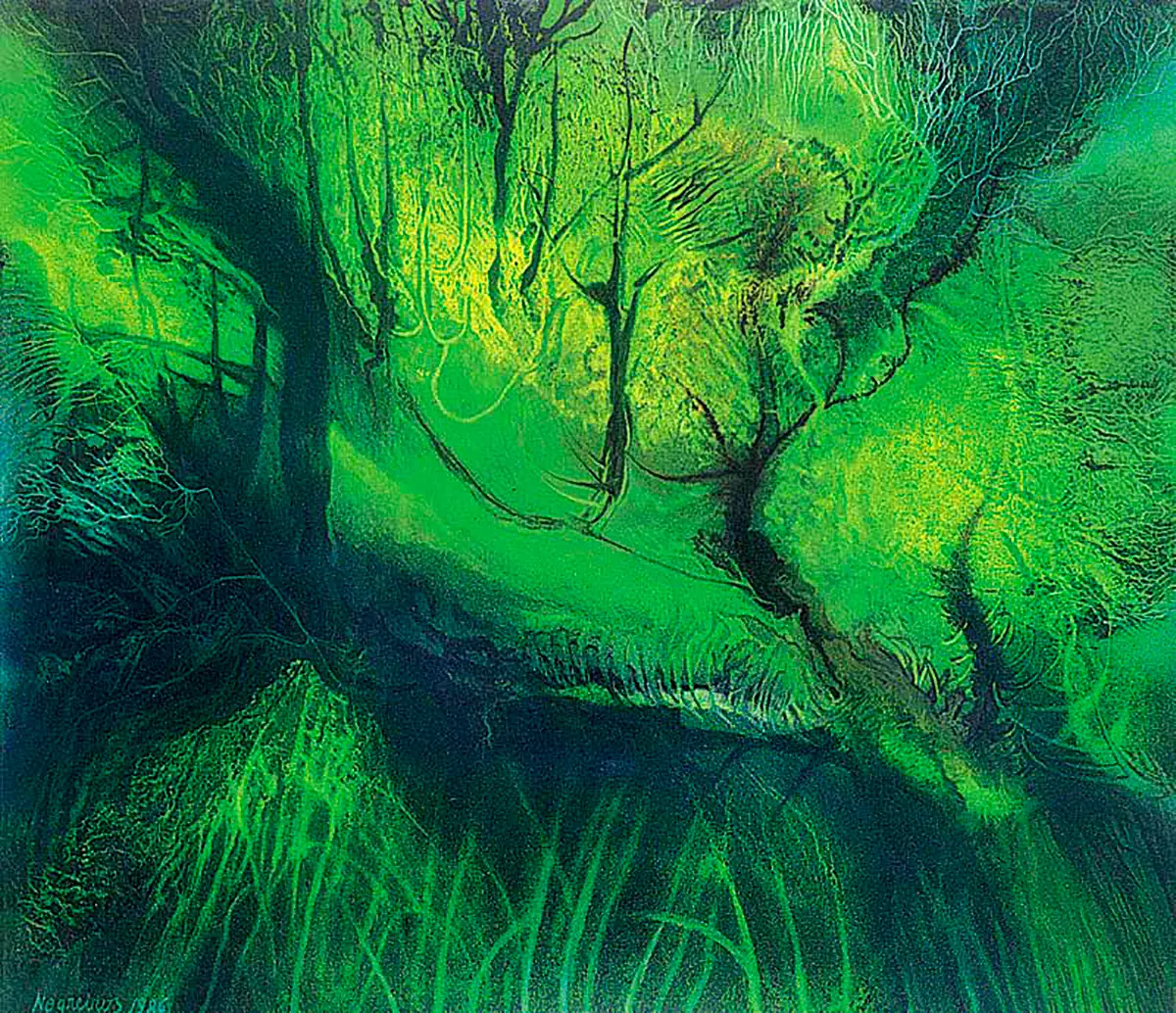
Negreiros became interested in the Amazonian landscape, but not in order to reconstruct it and turn her painting realistic or narrative. She intended to capture its chromatics, immensity, drama, and overwhelming presence. To achieve this, she has focused since the 1980s in certain specific themes. The green forest and its vastness; the flows of water in the great river and its tributaries; fluorescence and awe-inspiring fires. This she has done in canvases of a variety of formats and also in large, enveloping oil-on-canvas polyptychs. The diluted material allows for and facilitates controlled accidents and fluidity of evocative and ambiguous forms. Also, impastos. The artist has described her experience in that region: “I thought I knew the Amazon region, but I didn’t. Living there is a challenge, even a challenge to physical endurance. My true encounter with my own culture was returning to my town and visiting the cemetery where my entire clan rests. Finding my identity, carrying my backpack on my shoulders, and saying ‘here I am with all my baggage, positive and negative: this is me.’ Discovering that I would have been much more useful in the forest had I been an engineer or an agronomist, not a painter. Feeling the happiness of giving, because however little you give is needed in that desperation, in that cold that breaks your bones at night on the riverbank. I advise people to travel to the Amazon as a school of humanity.” 8 With these arguments, the artist not only explores her own memories but also warns us of and protests against threats to the survival of this great life preserve. Ideas about ecology are not alien to Negreiros, in the same measure in which she trusts the subjective power of her symbolic abstraction with multi-directional implications.
NOTES
1. Marta Traba, “Negreiros, Mateus, Vanegas”, La Nueva Prensa magazine. Bogotá, December 1961.
2. Marta Traba, “Se numera el Génesis”, La Nueva Prensa magazine. Bogotá. October 1963.
3. The same show was presented at La Tertulia in Cali. Ángel Signo was part of the 18th Colombian Artists Salon in Bogotá.
4. 30 Colombian Painters, an exhibition originated in Fort Lauderdale that traveled to other US cities (1963). 2nd Cordoba Biennial (Argentina) and 7th São Paulo Biennial (1964).
5. Collection of the Museo de Arte Moderno la Tertulia, Cali.
6. She participated with this work in the Pan American Graphic Arts Salon, Cali, 1970.
7. This work was exhibited for the first time in the exhibition 10 años de arte colombiano, Museo de Arte Moderno la Tertulia, Cali, 1971.
8. Maritza Uribe de Urdinola, Testimonios de la Artista, Catalog of the retrospective 1961-1981, Cali Chamber of Commerce, 1982.
MIGUEL GONZÁLEZ
Curator of the Museo de Arte Moderno La Tertulia and Museo Rayo. A Member of AICA. He lives and works in Cali, Colombia.