
Real/Virtual. Arte cinético argentino en los años sesenta, a show at the Museo Nacional de Bellas Artes in Buenos Aires curated by María José Herrera, is a new entry in an important series of revisions of the movement that have appeared in the international arena during the last ten years, through exhibitions, books, and research projects. Notable among the exhibitions are the Carlos Cruz-Díez retrospective organized by the Museum of Fine Arts Houston (which traveled to Malba in 2011 to celebrate the institution’s 10th anniversary), the Julio Le Parc show at Daros Foundation (Zürich, 2005), and Lo(s) Cinético(s) (Museo Nacional Centro de Arte Reina Sofía, Madrid, 2007 Tomie Ohtake Foundation, São Paulo, 2008), to cite only the most widely publicized ones. Among the publications, we must mention the Conversaciones series launched by the Cisneros Foundation, which devoted two volumes to testimonials by Carlos Cruz-Díez and Jesús Soto; recent research projects on kinetic art developed in Latin America; and the new edition of Elena Oliveras classic Arte Cinético y neocinetismo.
The kinetic-art boom of the last two decades also applies to geometric abstraction: from the contemporary standpoint, both movements appear as visual points of reference in the South American map. Their abstract shapes, circles, squares, lines that are not just fixed in the painting but move through space, are proposed as an alternative to modes of representation formerly common in the continent. Images of resistance connected to social conflicts and the working class, as well as images associated with primitivism and the region’s flora and fauna, gave shape to the stereotypical visual aspect of Latin America since the 1930s; the artistic productions that emerged in the 1950s were proof that the paradigm had been radically reformulated. The image of an impoverished, suffering Latin America or that of a colorful exoticism was no longer dominant in this period of international political and economic realignment. A precise, rational, modern Latin America had emerged as the model for a group of nations aspiring to development. Evidently, these configurations have acquired a contemporary value. The “constructive cut which includes the production of Joaquín Torres-García and his workshop, the output of concrete and neo-concrete art in Argentina and Brazil, and the kinetic art produced in Argentina, Venezuela, and Paris, as well as some contemporary contributions is both a curatorial script for important international exhibitions and an axis for several private collections.
For the local circuit, the MNBA proposes Real/Virtual. Arte cinético argentino en los años sesenta as part of a policy of temporary exhibitions connected to the Bicentennial celebrations, intended to rethink Twentieth-Century Argentinean art from the avant-garde of the 1920s through the innovative proposals of the second half of the century. This show, the first historical review of kinetic art in Argentina, is panoramic in scope, with works from the MNBA collection—acquired in real-time as kinetic art emerged end evolved—as well as loans from other institutions and private collections. For the MNBA, producing this exhibition involved a long, complex effort in conservation and restoration.
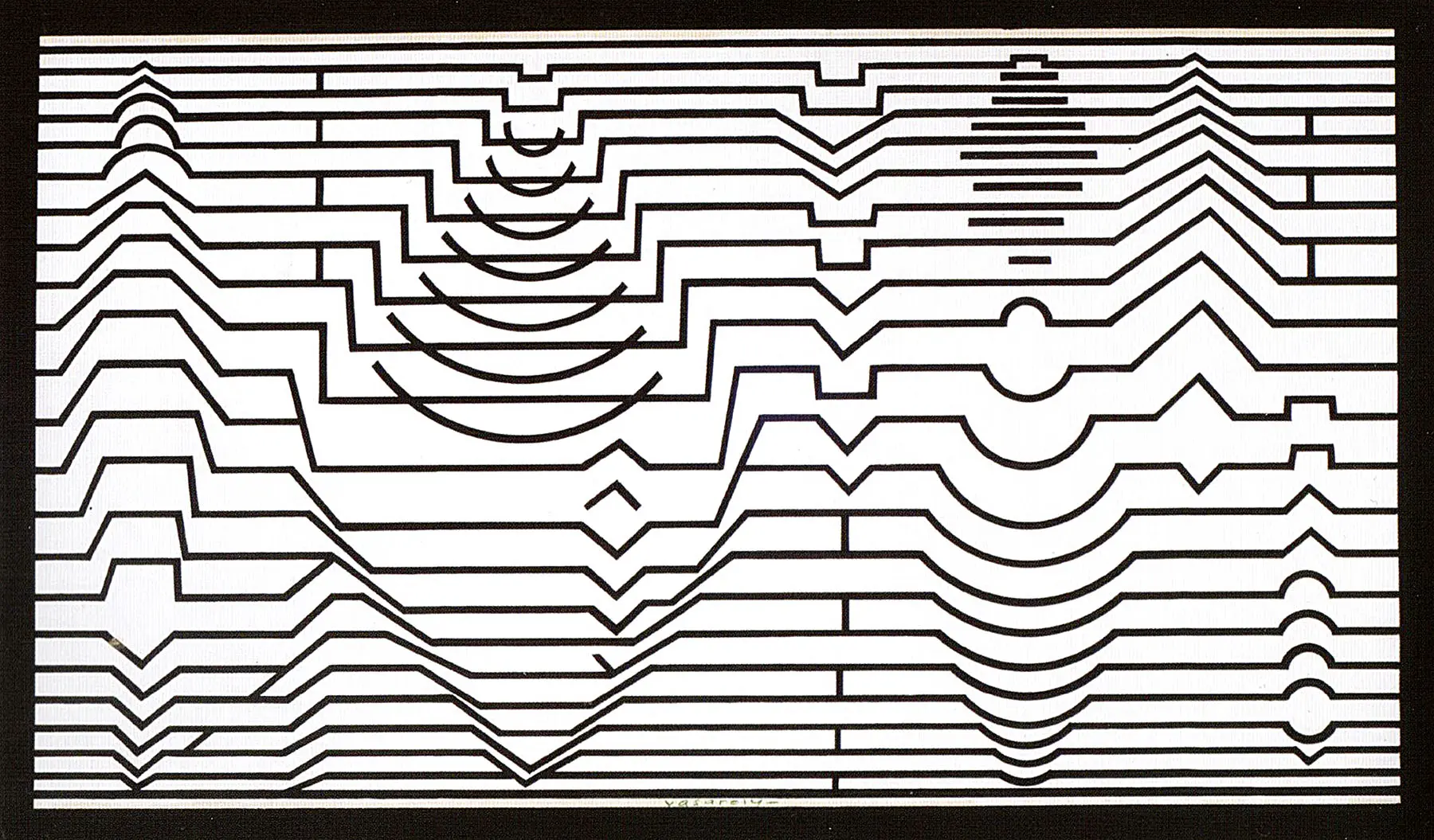
The goal of the exhibition is to highlight the institutional actions that framed the genesis and evolution of kinetic art: Herrera asserts that crucial moments in the inscription of the movement had their center at MNBA under Jorge Romero Brest’s innovative management and under his successor, Samuel Oliver. The show takes this curatorial statement as its point of departure: the first gallery tells the story of the impact that the Victor Vasarely exhibition at the Buenos Aires museum in 1958 had on the local art scene. It was with this show sponsored by the Paris gallery Denise René, a promoter of kinetic art that Buenos Aires artists encountered the work of their French-Hungarian colleague, whose geometric proposal was different to local understandings and practices. This new search contradicted the rigorous exploration of the establishment of form on the pictorial plane that characterized concrete art, proposing instead an investigation of the visual instability produced by black/white contrasts, the superposition of grids, and other serial effects that create the sensation of motion. In this gallery, visitors encounter Vasarely’s Méandre, where a vibrant opposition of blacks and whites established strong connections with the work of Argentine artists like Luis Tomasello, Hugo de Marziani, Julio Le Parc, Antonio Asis, and Juan Carlos Romero, among others.
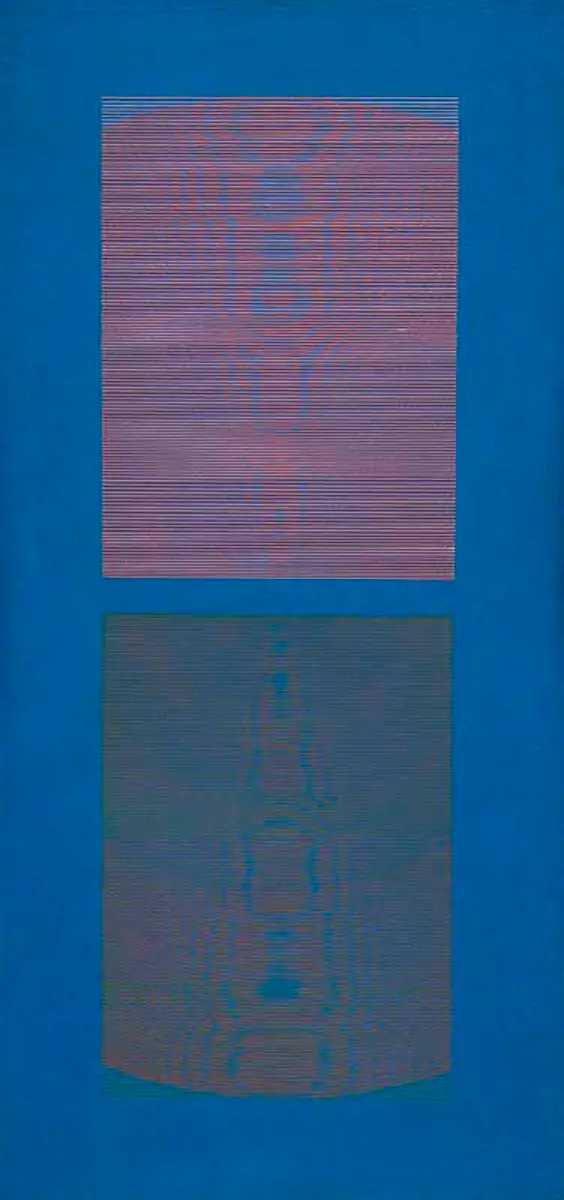
The following section, titled El ojo que mira, focuses on an analysis of works that explored the potential of shapes and forms to recreate the optical sensation of movement. These works are constructed in order to probe the possibilities and limits of human vision. The optical illusion of movement is produced when our visual organs are confronted with the impossibility of separating the elements that constitute the work, as perception oscillates between different formal solutions. This happens with the weak of ambiguous forms and with a background black-and-white grid that tires the retina and makes it impossible to settle on a single configuration. In this section, works by Eduardo Mac Entyre and Miguel Ángel Vidal provide a key to understand this issue. These artists, alongside collector Ignacio Pirovano, founded the Arte Generativo group, inspired by the writings of Georges Vantongerloo; Vatongerloo’s manifesto declared that a point, a straight line, or a circle are not attached to the canvas but instead generate motion and achieve a projective form of life. Mac Entyre moved towards the use of circles for the generation of shapes: such is the case of his Tramas (1961-1964, MNBA). Looking at this work, our eye finds it difficult to settle the image, as it is confronted with the vibrations of a periodic linear structure. Our perceptual system wavers, then, between a variety of formal and chromatic solutions, experiencing the ambiguity produced by the overlapping grids.
The third section centers around the optical-kinetic explorations o the Paris-based Groupe de Recherche d’Art Visuel (GRAV), focusing on the contributions of Argentine artists Julio Le Parc and Horacio García Rossi, both among the group’s founders.
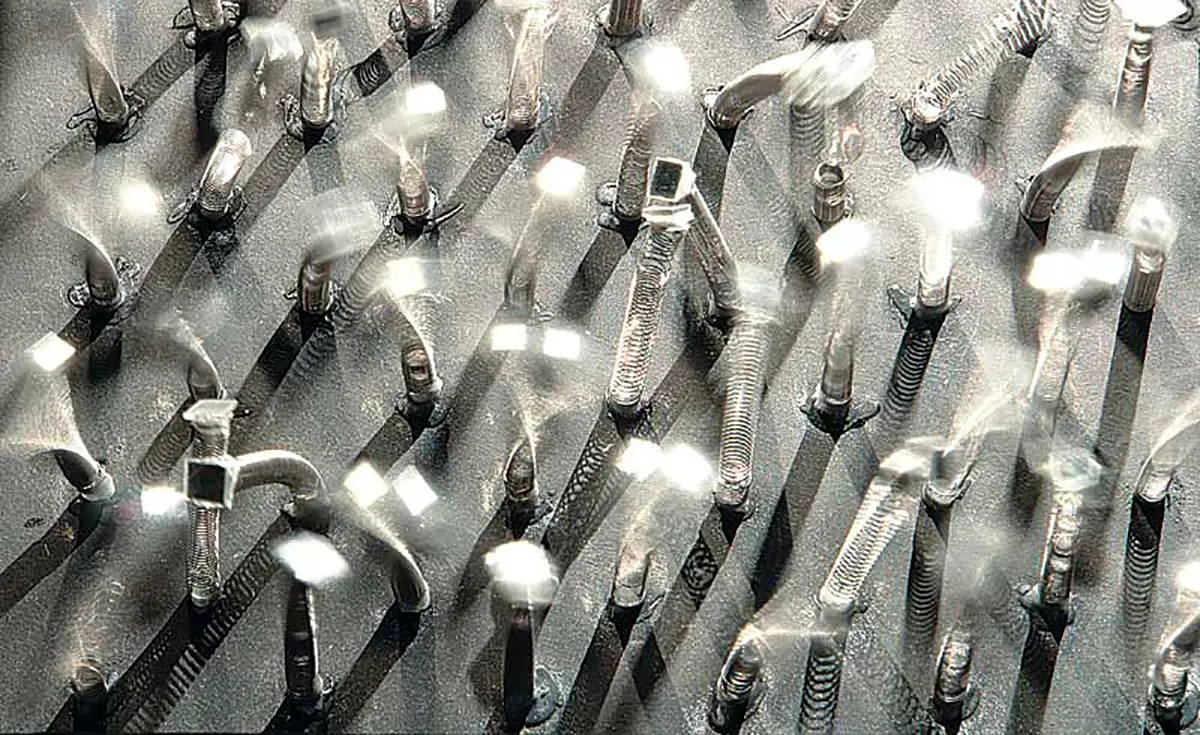
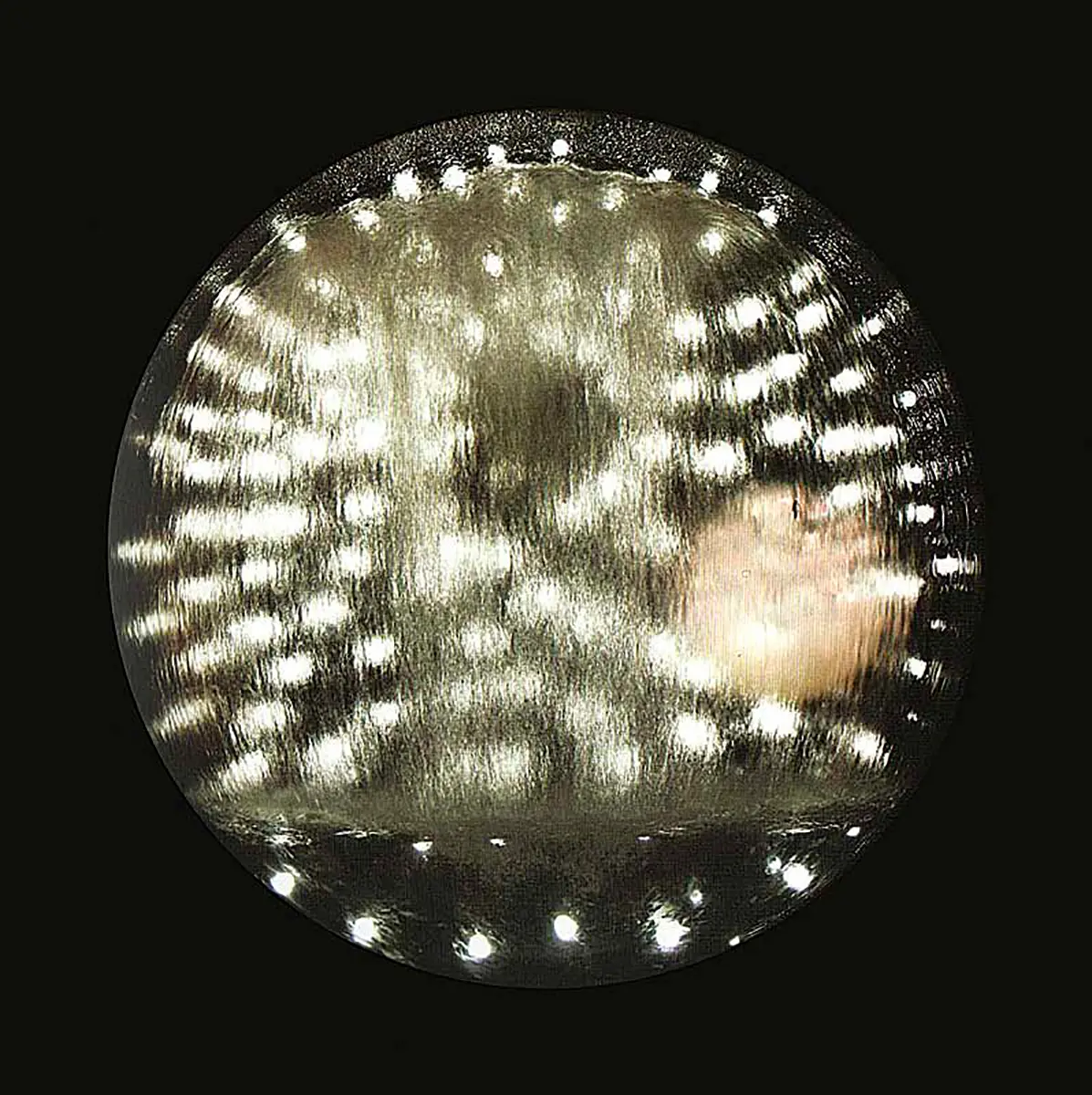
Le Parc arrived in Paris in 1958. There, he and his former classmates at the Escuela Nacional de Bellas Artes García Rossi and Francisco Sobrino, alongside a group of French artists, carried out as part of GRAV fertile investigations on kinetic art, infusing its poetics with strong social and political contents. In their manifesto, titled No more mystifications! they called for a democratization of art through the participation of the audience, while their urban actions criticized the museum as a hallowed space for cultural promotion. In this part of the exhibition, the galleries are kept in the dark, the ideal arrangement for works that use artificial light, motors, and other materials in an attempt to magnify motion. Along those lines, one outstanding work by Le Parc that is greatly benefited by the museography is Lumière sur resorts (1964-2011), the spectacular visuality of which—reflections produced by mirrors and mutating light shapes—strongly contrasts with its constructive simplicity and precariousness. Consistent with its historical revalorizations of exhibitions, this section makes reference to La inestabilidad, a show presented at the MNBA pavilion in 1964, a landmark in the institutional consecration of Argentinean kinetic art. Coincidentally, it should be noted that Real/Virtual was presented in the same space almost 50 years later.
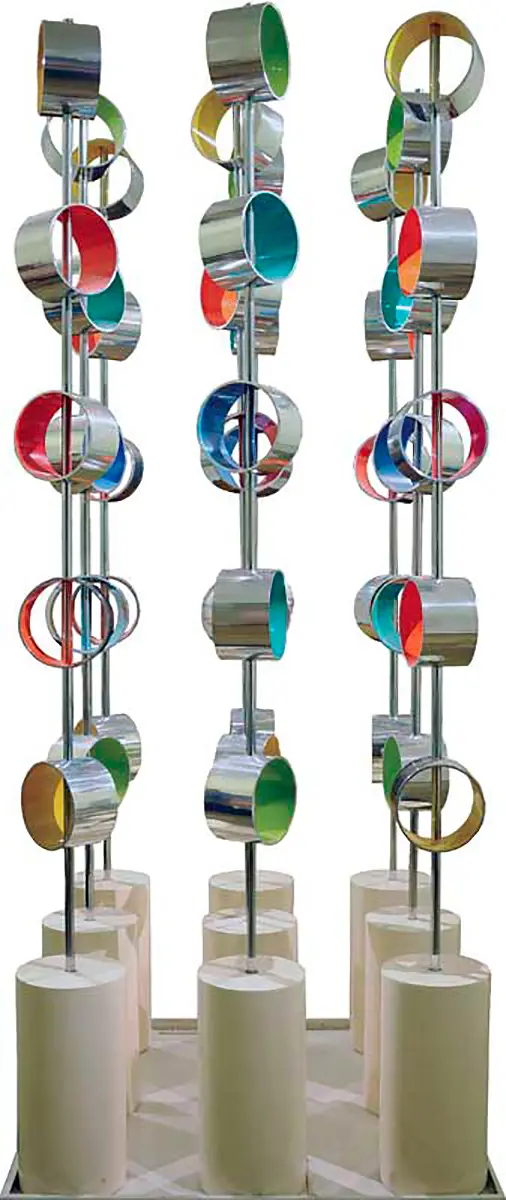
Not incidentally titled Exposiciones, the fourth section seeks to explore the expansion and legitimization of the movement. It deals not only with the role played by the MNBA in the promotion of kinetic art, but also the Ver y Estimar, Braque, and Di Tella awards, and, crucially, the efforts of the plastics industry: Plástica con plástico (1966) and Materiales, nuevas técnicas y nuevas expresiones (1968). On display in this section are the avenues for exploration found by kinetic art as it made use of industrial and technological developments through the introduction of plastic and new materials, as well as the use of motors and electrical circuits. In the motion-based works by Gyula Kosice (an artist from a previous generation who redirected his efforts under the new paradigm), and in those by Marta Boto, Gregorio Vardánega, and Rogelio Polesello, we witness the strong impact that plastic (and the developmentalist process in the socio-political realm) had in cultural production at the time. The colorful, bright, and translucent surfaces made it possible to create unexpected shapes and visual resources. Mouvements chromocinétiques (1971) condenses Boto’s exploration of color reflections and verticality as an axis for rotation: her enameled aluminum cylinders shoot out a multitude of chromatic flashes that envelop the viewer in a seductive perceptual experience.
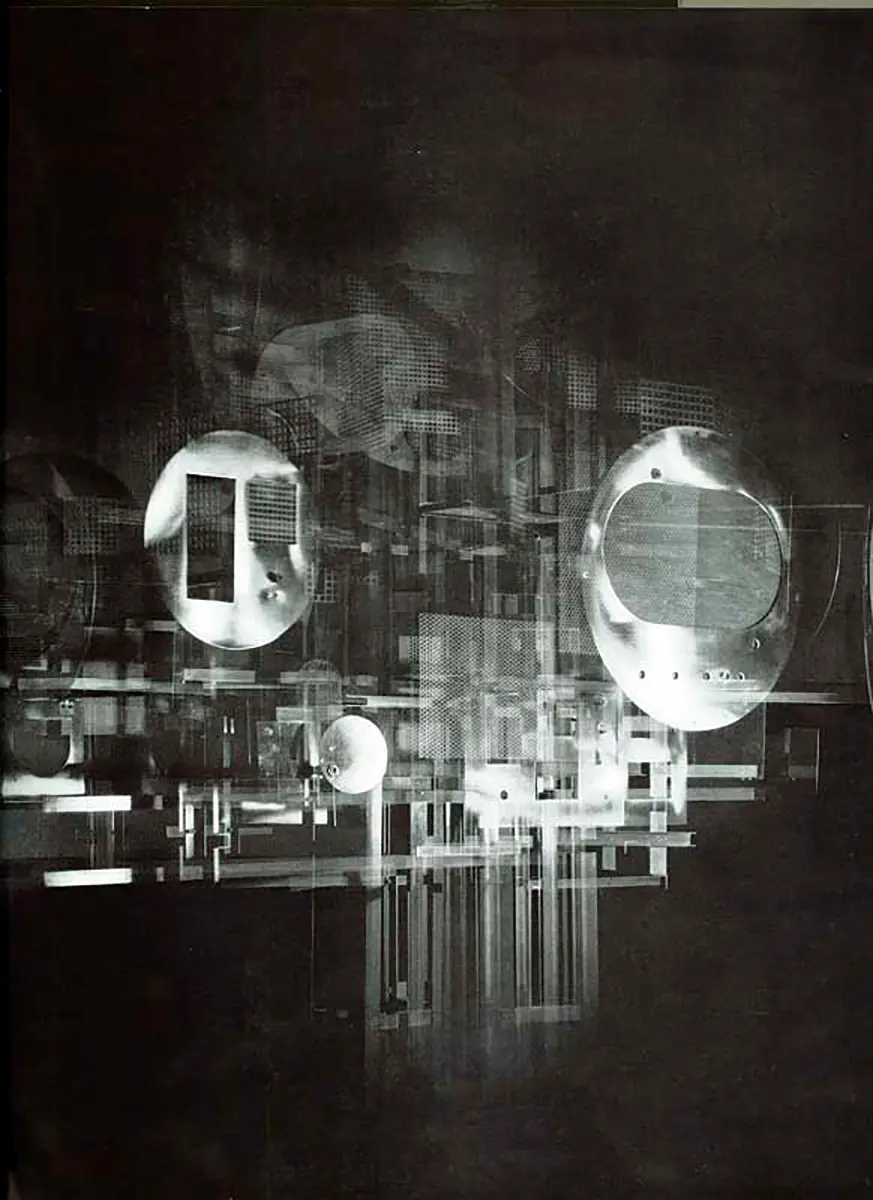
Real/Virtual also includes a paradigmatic work by Nicolás Schöffer, the French master of luminokinetic art. The installation Lux 2 (máquina de metal) was acquired by the museum thanks to the efforts of Romero Best, who had seen it at the 6th São Paulo Biennial in 1961. Seldom exhibited since its acquisition, this work was refurbished for this exhibition and presented for the first time with the original score by Pierre Henry. The accompanying documentary material (drawings, schematics for its installation, and correspondence between Romero Brest and the artist) are on display next to Schöffer’s work.
The exhibition is accompanied by an illustrated catalog that includes reproductions of every work on display, critical texts, testimonials by the artists, a selection of manifestos and documents, biographies, and a timeline. Undoubtedly, this exhibition seeks to reconstruct a scene of linked artistic investigations that perhaps has not been appreciated in all its complexity. The curators made possible new readings intended to contain the institutional scaffolding that supported such proposals. In that sense, the show is a meta-narrative, reconstructing, as a kinetic-art exhibition in itself, the way in which institutional kinetic-art exhibitions operated towards the movement’s establishment. Real/Virtual plays out as a game of mirrors with the movement’s 1960s past.
MARÍA AMALIA GARCÍA