
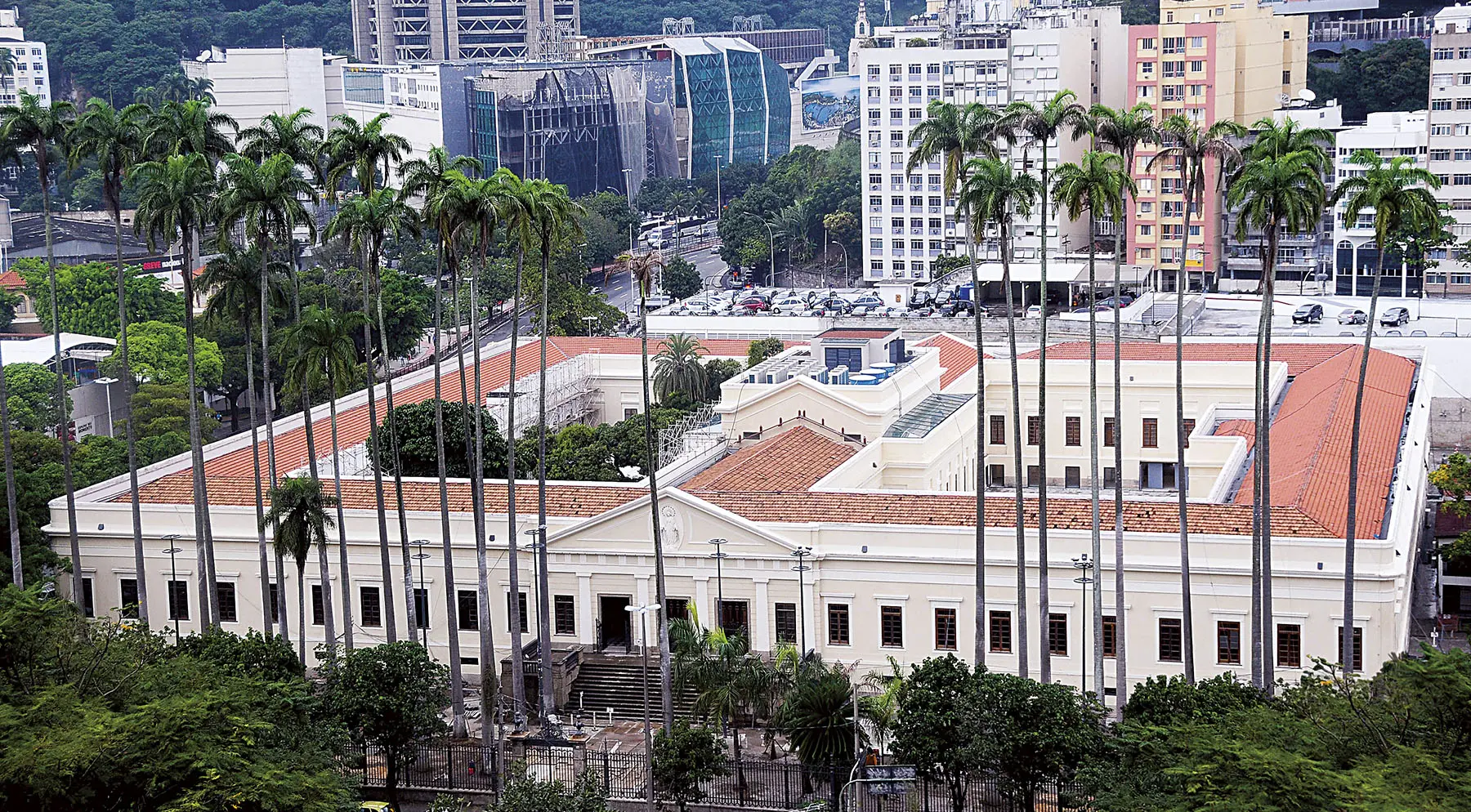
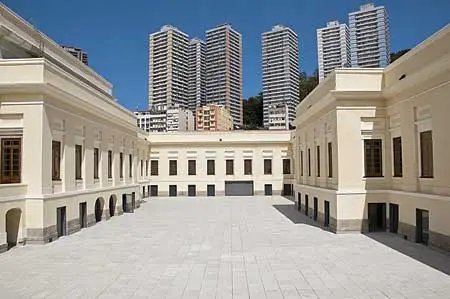
Although the format of the house is square—like that of any Nineteenth-Century school: a frame of straight angles whose borders will not let students slip so easily out of the yard—the project’s concept has the shape of a circle; in fact, it has the shape of a round table that, without any head position or established hierarchy, presents itself as an open field for discussion where every guest will be able to discourse on his or her point of view and bring it to debate. Indeed, Casa Daros can be described as a site for dialog, intimately connected to the issue of the purpose of art, which has coursed through the entire history of Latin American art in the Twentieth century.
The project was launched in late 1999 when German curator Hans-Michel Herzog and Swiss collector Ruth Schmidheiny decided to establish a contemporary Latin American art collection—which today includes 1,200 works by 117 artists—while imagining a space for its exhibition and promotion in one of the region’s countries. At first, they considered Cuba, but political repression on the island in the early 2000s halted their initiative. Then they thought of Colombia and Argentina; the former option was discarded because of the unevenness of the local art circuit, and the latter was abandoned for the opposite reason. Finally, they settled in Brazil, specifically Rio de Janeiro: a country offering excellent conditions and a city in need of more active spaces for the arts.
In 2006, after a long search, they finally found a potential site in the Botafogo neighborhood: an old, 12,000-square-meter neo-classical building dating back to 1866, the Empire era, when the Portuguese crown had relocated to South American shores and Rio was the capital of a kingdom. The building is large but rather simple. In the course of its history, it has served as a convent, orphanage, and boarding school; this is to say, it had oscillated between the classroom and the cell, two spaces that tend to be confused with one another in our culture. At any rate, it is interesting to note that particularity, as Isabella Rosado Nunes, the Casa’s director, points out, because “the building always had an educational avocation, ever since the owner, who was a church’s vicar, donated it to the Holy House [in the Nineteenth Century] to be used to house and educate people. I believe that is what was visualized from the start.”
Over the course of seven years, the restoration efforts—a meticulous plan for the renovation of the building’s internal structure and its preservation—were accompanied by the shaping of a project of diverse activities, some of which I will describe in what follows.
First, Meridianos, a program where, says Eugenio Valdés, Art and Education Director, “we invited five Brazilian artists to connect with counterparts from elsewhere in Latin America, establishing thematic positions and affinities in terms of aesthetics or of cultural interests, and it is interesting because most of them didn’t know each other.” The connections were: Carlos Cruz-Diez with Waltercio Caldas; Gonzalo Díaz with José Damasceno; Leandro Elrich with Vik Muniz; Julio Le Parc with Iole de Freitas; Teresa Serrano with Leonora de Barros. This last duet proved rather prolific and generated a collaborative work.
Also, the programs Metamorphosis of a Register and The Little Casa Daros, in collaboration with the Maré School of Popular Photographers of the NGO Observatório de Favelas, had as its audience students and teachers from nearby schools. One of the project’s activities was to manufacture hand-made cameras using cans of powdered milk and a pinhole for light. This workshop contributed to the development of a scarce skill among children reared in videogames: patience. The images had to be produced materially, which involved time for measuring light, and long waits.
In 2008, the First International Meeting of Educators – Art and Functional Illiteracy, projected in conversations between Eugenio Valdés and Luis Camnitzer and centered around the case of people who, despite knowing how to write, cannot comprehend the meaning of sentences, a situation that afflicts 21.6% of the Brazilian population today. “There are 34 million functional illiterates in Brazil,” says Valdés. “It is dramatic. Yet they should be seen as having not a problem of knowledge, but a special sensibility. They have to see the world in particularly spatial ways because if they are unable to determine explicit meanings in a single sentence, their way of dialoguing must be very sui generis.” Pedagogues like Tião Rocha and José Pacheco, along with artists like Lázaro Saavedra, Tania Bruguera, and Óscar Muñoz debated the topic.
Finally, I want to mention the Casa Daros Symposium, held in 2007, where a group of twenty artists, curators, critics, publishers, and other professionals from all over Latin America debates general aspects of the way in which economic, political, ideological, and cultural changes have impacted artistic work, what does it mean to produce art today, what is the role of criticism, what are the implications of putting a work of art into circulation, and what is the situation today of the relationship between art and pedagogy. Added to this was a discussion of Casa Daros’ programmatic proposals and their conceptual basis.
I mention this sequence of programs and events to provide a general idea of the range of themes and interests promoted by the new space, which will open its doors in Rio de Janeiro with an exhibition titled Cantos Cuentos Colombianos. This show, first held in 2004, includes several of the most important Colombian artists and works from the 1990s and early 2000s: among others, Paquita, by Miguel Ángel Rojas; Aliento, by Óscar Muñoz; Musa Paradisiaca, by José Alejandro Restrepo; and 6 de noviembre de 1985, by Doris Salcedo.
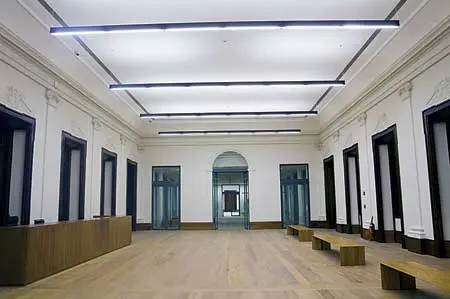
Thus, while the space just now nears the date of its inauguration, the project itself already has a track record, a process characterized by going beyond the act of collecting understood as gathering functionless objects—art—in ultra-safe conditions and praising them in with the purpose of increasing their value, which touches directly on the question of to what end are such objects made, kept, contemplated, and critiqued. A what for that I see as the program’s axis, its spine, sustaining several specific aspects: first, selection criteria that exceed art for art’s sake; second, a focus concerned more with the artistic process than with the work of art as fetish object; and, third, the possibility of situating art and education side by side, on the same plateau, in their condition of eminently creative endeavors.
Let’s go slowly. Asked why open Casa Daros in Brazil with an exhibition of Colombian art, Hans-Michel Herzog answered by highlighting the importance of mutual knowledge between the two countries, adding his interest in having Brazilians no longer look towards Europe or the United States, but their own world. This is a problem not only in Brazil or in São Paulo, but across the entire Spanish-speaking world, from its university programs where Latin American art (if it is included at all) appears merely as an annex, to the scarcity of acquisitions from neighboring countries. It is very difficult to see a Colombian collector buy work by Alfredo Volpi, for instance.
This mutual disinterest—derived perhaps from the inferiority complexes that are the product of three centuries of colonialism, or from the systematic fracture by two decades of the dictatorship of the bridges that began to be built in the first half of the Twentieth Century—runs deep, but it must be noted that there are several efforts underway to solve it today. The Mercosul Biennial and the Havana Biennial throughout its history, as well as spaces like El Levante in Rosario and Lugar a Dudas in Colombia, move in that direction.
In this landscape, Daros’ attempt is interesting. Being based on foreign investment, it has greater room for maneuver and more dribbling options; in fact, I dare to say that such a roundtable for today’s Latin American art would be extremely difficult otherwise, and more so in Brazil, which has become more closed despite all efforts by critics like Mario Pedrosa or Aracy Amaral to establish a communication with the country’s neighbors.
Indeed, it is very positive for the project to have finally found its home in Botafogo, in Rio de Janeiro, and in Brazil, which will help tear down the geographic, historical, and linguistic wall that exists around the country, a wall that is sometimes felt in rather risible affairs that nevertheless speak volumes on the matter: the bordering city between Brazil and Colombia is named Tabatinga in the former country and Leticia in the latter, yet in Brazil, no one knows what Leticia is, and in Colombia, no one knows Tabatinga, despite there being one and the same.
I am not saying here that we are one and the same. Truly, an interesting aspect of these conversations at Casa Daros is that they have been able to skirt, or escape from, the problem of what is Latin American art, a question that doesn’t contribute much these days, in order to reach directly for the imperative need to build communication channels between the countries no longer from the standpoint of a common identity but from a shared diversity.
About this, Eugenio Valdés Figueroa says: “[in Latin America] art, in particular, lacks a fluid corridor for communication, the flow appears periodically but not systematically. So that from one period to another, in Mexico nobody knows what is happening in Chile, and in Chile, nobody knows what is being done in Argentina; they are distant spaces (…) Brazil also faces a linguistic barrier and the Amazon barrier. It communicates with more ease with Europe and the United States than with its own neighbors.”
The intent, then, is to make Latin American art better known, above all, in the region itself. Back to Eugenio Valdés: “We want greater visibility in the international circuit but also in the Latin American circuit. For example, it is essential to achieve greater visibility in Brazil for Colombian artistic production. These two countries are neighbors but they barely know each other. In that respect, Daros Latinamerica has done a beautiful job in circulating its holdings internationally and holding exhibitions. One objective is for the works to remain the shortest time possible in the warehouse, to have them circulate and displayed. Daros Latinamerica is very generous with its loans. The Camnitzer show hasn’t stopped traveling; it is now in its sixth edition, on its way to Chile. I am talking about visibility also among Latin Americans, it is very important for us to know each other.”
The text that opens Cantos Cuentos Colombianos reads in part: “For us, it is important for the collection to be comprised of works that represent not only art for art’s sake, but that can be seen at various levels; works whose relevance is not solely aesthetic, but also social; works that are unique in several different contexts and that combine medium and content in a significant way.” This statement is already cementing a point of view, an attitude in matters of art that has the potential to break through the aesthetic sphere in order to reach towards the contexts, the landscape in which the work of art was created.
This criterion is essential. It not only directs the selection of works, but it has also emerged from the works themselves, from reviewing and paying attention to the production of our continent, from the start interested in the what for of art, be it at the political level, be it at the level of providing new forms of knowledge. This is to say, from the Cildo Meireles of Quem matou Herzog? to the Cildo Meireles whose work makes a jumble of the supposedly clear and objective action of measuring the world, its distances, its weights.
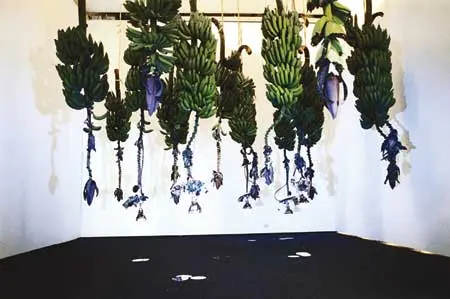
In other words, the criterion of transcending art for art’s sake has not preceded the collection but has evolved from it, for the works, and from a dialog with the artists, another characteristic at the basis of Daros. Giving artists a voice to explain what they mean to say, put their ideas and questions on the table, which in turn breaks with the myth of the work of art as a silent and enigmatic object that, once created, is abandoned to silence by its creator for critics to interpret it and for educational material to translate it in the language of laypeople.
These letting artists speak derives from an understanding of the work of art as an extended process. As Eugenio Valdés Figueroa, again, puts it: “When people refer to an artist’s particular work, they speak of it as finished, when in truth the work of art evolves throughout his or her entire career. Each work is but a second in a long trajectory of investigation.”
And with this, I reach the last point I offered as the basis for the project: the relationship between art and education. Casa Daros presents itself as a “space for the encounter of art, education, and communication,” without an educational department in charge of creating materials and guides to tell a set story. Far from it, education is at the same level as art itself, both as experiences of knowledge and research. “What interests us of the relationship between art and education,” says Eugenio Valdés, “is that many aspects of artistic practice and educational practice share a common nature, they are both research processes, they are both fields of knowledge, in both singularity and difference are fundamental.” And he adds: “In early Paulo Freire you can find possible definitions of art. He says, for instance: ‘Every educational process is always an unfinished process of interaction.’ That is where we look for fields of affinity.”
Art and education go hand in hand. It is not by chance that the first institutions to be closed down and intervened at the beginning of a dictatorship are the university and the museum; they are both inherent shapers of critical thinking, of a continued dislocation of the order of the world, provided, of course, that they are fulfilling their vital role and not their market function, be it the art market or the job market.
In that context, one of the interests mentioned by Valdés is to bring to light the artists’ own educational work, an exercise that is more often than not hidden from view and undervalued, even though the artists’ relationship with students in research and creation workshops is an essential component in the construction of their works.
The space will open its doors on March 23rd. The program is set with preparation for the next show, by Julio Le Parc, already well underway. We shall see how it progresses. For now, it must be said that the street where Casa Daros is located, General Severiano, is rather narrow and hidden, difficult to see from a distance; as you approach it, look for the palm trees that peer through between the buildings; with their height of 150 years, they will guide you to your destination.
JULIA BUENAVENTURA
Latin America art critic.