
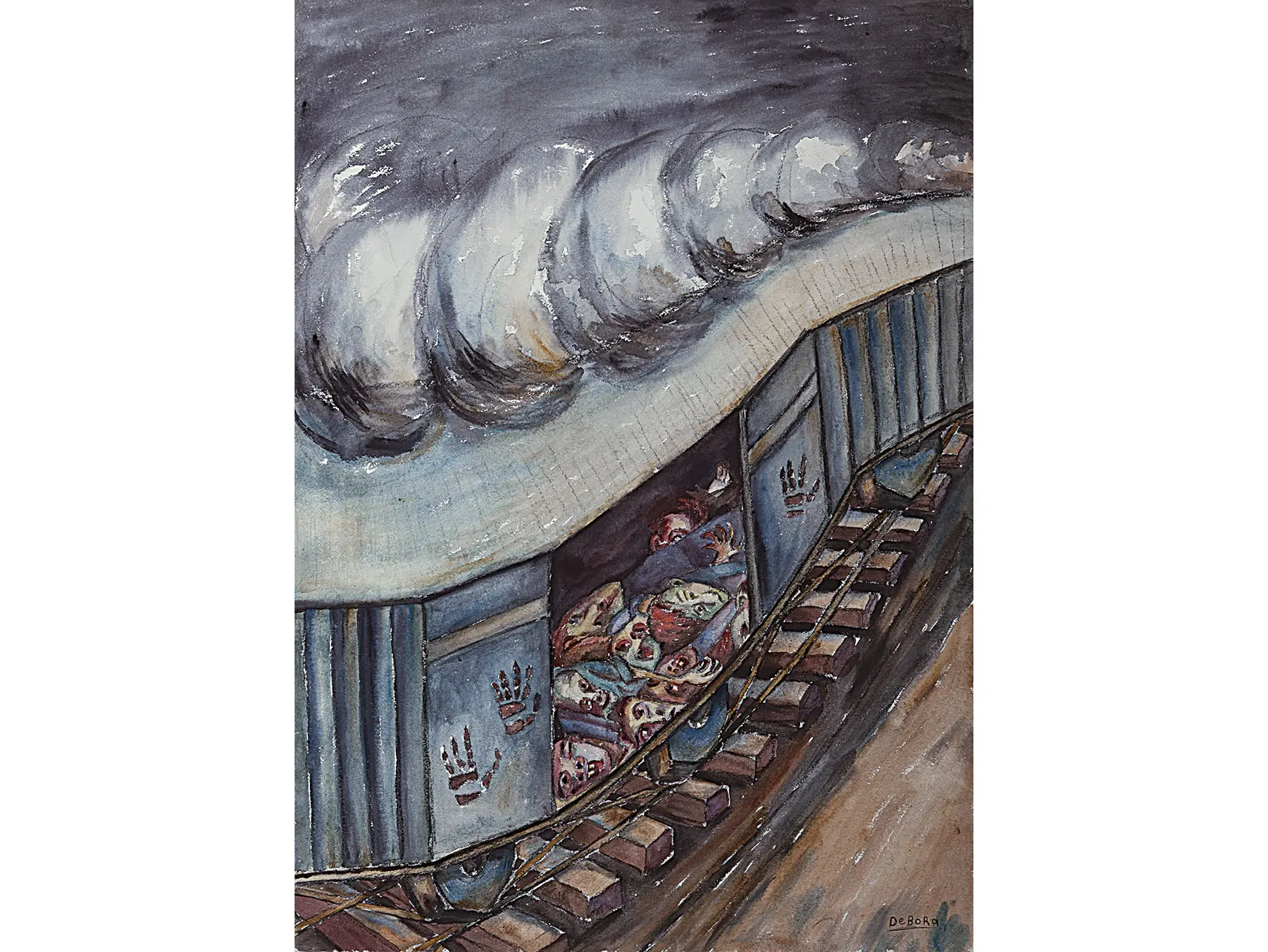
In the past few years, the Museum of Latin American Art (MOLAA) in Long Beach has brought a series of groundbreaking projects to Southern California, including Manchuria: Peripheral Vision, a retrospective of the work of Mexican conceptualist Felipe Ehrenberg, and the performance Vulnerable by Regina José Galindo, among others. MOLAA continues in this vein with Sociales: Débora Arango Arrives Today, the first major retrospective of Arango, whose reputation as one of the most important artists from Colombia is growing rapidly, in spite of the lack of awareness of her work outside of her home country. On view at the same time is Lola Álvarez Bravo: The Photography of an Era which presents a number of lesser-known works by Bravo, her students, and her husband, from the González Rendón archive, recently discovered in 2007. Viewed together, these exhibitions present new information regarding the experience of women artists in Latin America. While Sociales explores the work of Arango, an artist who was so heavily censored in Colombia that she voluntarily isolated herself and came back to public attention during the '70s, Lola Álvarez Bravo includes photographs that were thought to have been lost, adding another facet to Bravo’s long-established career as an artist.
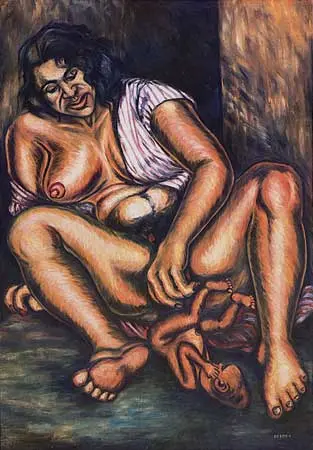
Arango’s work presents equally unflinching views of both Colombian politics and the experiences of women in Colombian society. The title of the exhibition, Sociales, refers to the different levels of “the social” present in her work, ranging from paintings that depict the public world of political events to the more private realm of personal experience. The MOLAA exhibition is divided into three main sections: an area devoted to her politically themed paintings, another devoted to female nudes and the injustices and exploitation that women in Colombia have experienced, and a third consisting of Arango’s portraits of friends and family, but given somewhat generic titles such as Poet and Maternity. Oscar Roldán-Alzate, the curator at Museo de Arte Moderno de Medellín, curated this exhibition held at Museo Nacional de Colombia in Bogota, which will also travel to the Mint Museum in Charlotte, North Carolina and El Museo del Barrio in New York.
Arango’s interest in art began with painting classes taught by Sister Rabaccia, one of the nuns at her school; then she was taught pictorial techniques by Eladio Vélez and progressed in the class led by Pedro Nel Gómez who abstained from further teaching her when she began painting female nudes; she worked on her own from then on. While she won prizes for her early work, which consisted of still lifes and other innocuous subjects, her interests quickly turned to the political turmoil known as “La Violencia” that occurred in Colombia from 1948 to 1953. These works consist primarily of oil on canvas and are painted in an expressionistic style that tends toward the grotesque, with compositions populated by animalistic monsters, skulls, and humans that more closely resemble vampires. La República (1957) reworks the national coat of arms into a horrific scene involving a corpse stretched out across the Colombian flag while simultaneously being picked apart by vultures as a group of batlike creatures looks on. Many of Arango’s works that depict the lives of women tend toward similarly dark themes, including prostitution, violence between women, and the pain of adolescence and childbirth. However, the exhibition also includes a number of more tranquil female nudes painted in watercolor. In several instances, Arango created larger-scale works by putting together several sheets of paper and painting life-size compositions across them. These paintings are frankly sensual and use the medium of watercolor to their greatest advantage. In works like Montañas, which compares the body of a female nude to the landscape behind her, the composition is filled with glowing, luminous colors that flow into one another.
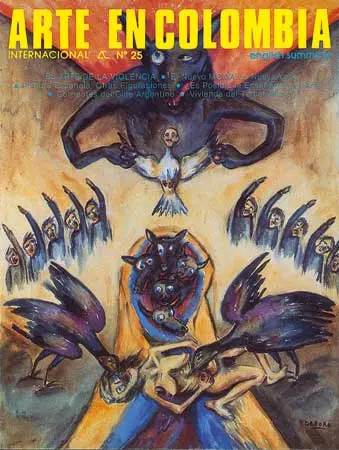
Arango’s models for these works were her friends and family who offered to pose for her. Because of her interest in the female nude and the fact that she never married or had children, Arango acquired the reputation of a woman of loose morals, in spite of the fact that she was devout, practicing Catholic. Due to the darkness of her images of La Violencia and of the lives of women, Arango’s work was frequently censored in Colombia. Starting in the 1980s, there were attempts to reposition it as part of a wave of criticism of Colombian politics and society by Colombian artists. However, because her work defies the pre-existing categories of Latin American art (modernism, social realism, geometric abstraction, conceptualism), Arango has until recently remained almost completely unknown in an international context. The MOLAA exhibition is the first major retrospective of Arango’s work outside of Colombia.
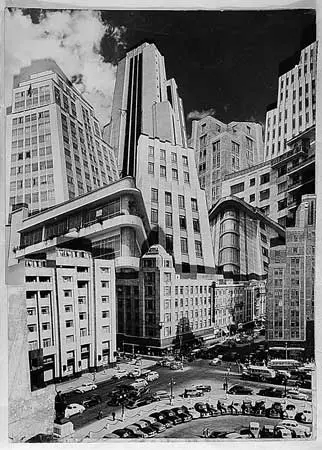
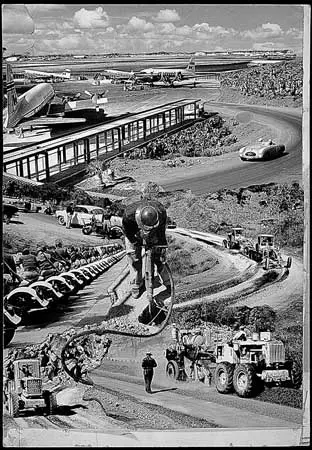
In contrast, Lola Álvarez Bravo’s reputation as an artist has been established for decades, owing both to her skill as a photographer and to her connections with some of the most famous artists in Mexico, such as Diego Rivera, Frida Kahlo, Dr. Atl, and her husband Manuel Álvarez Bravo. The exhibition situates Bravo within this larger circle of influence, and in turn explores the influence that Bravo had on her students, including Mariana Yampolsky. The exhibition, curated by Adriana Zavala and Rachel Arauz, who conducted research on the González Rendón archive, presents themes common in Mexican photography, such as portraits of indigenous people and surrealist-inspired street scenes. However, one of the most interesting sections of the exhibition features Bravo’s lesser-known works, such as her photomontage layouts for the magazine El maestro rural (The Rural Teacher). The works included in this section have a much more experimental feel evocative of Dada photomontage and explore themes of landscape, including a study of the Mexican landscape that feels very much like preparation for a mural, and two versions of an image of modernist buildings from Mexico City (The Capital of the Mexican Republic, 1946, and Architectural Anarchy in the City, 1954), one of which was reorganized to emphasize the aspect of urban chaos. This section includes actual copies of El Maestro Rural, as well as film stills in which one of Bravo’s cityscapes lurks in the background of office scenes, functioning as a sort of trompe l’oeil window view. This is a less familiar side of Bravo’s work, and of Mexican photography, suggesting a critique of Mexican modernism at the time of its making.
Lola Álvarez Bravo: The Photography of an Era opened at the Museo Casa del Estudio Diego Rivera y Frida Kahlo in 2011 and will travel to the Center for Creative Photography of the University of Arizona in Tucson in 2013. The catalogs for both exhibitions document the material in detailed essays and reproductions of works of art, but both exhibitions are definitely worth seeing in person and make significant contributions to the rapidly expanding field of Latin American art.
ERIN ALDANA
Art historian specializing in modern and contemporary Latin American art.