
This extensive, heterogeneous exhibition digs deep into Latin American art of the 1980s and 1990s, emphasizing its most eccentric, provocative, and even violent manifestations. Driven by a desire to reevaluate what was kept at the margins of the continent’s artistic institutions or was excluded from them outright, it has opened its doors to many documents, registers, and publications that, in truth, can hardly be deemed artistic. There are even materials whose own authors understood the tome as mere agitprop media for radical political movements denied visibility in hegemonic spaces, the latter being usually loyal to the powers-that-be or their direct incarnation. These are now on display at the Museo Reina Sofía in Madrid thanks to this institution’s embrace of the concept of “artistic activism,” deployed by researchers associated with the Red de conceptualismos del Sur to justify their inclusion. They explain it thus: “The concept of ‘artistic activism’ emerged in the midst of the European Avant Garde’s politicization during the inter-war period, and its use conspires against the circumscription of artistic practice to a self-sufficient sphere that isolates it from other social and political practices.” The researchers add that a significant portion of the “practices” represented here “never used the concept themselves,” but that it—the concept—has facilitated their investigation and curatorial work because it is not a closed or unilateral notion, but a conglomerate of dissimilar characteristics that are “transversally articulated through certain ritornellos.”
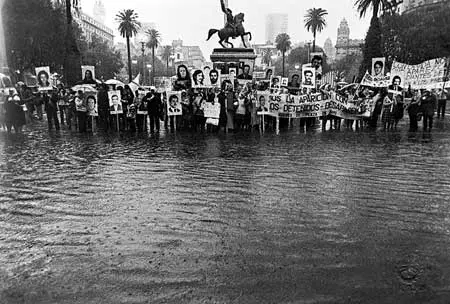
The very title of the show makes an impetuous call and anticipates its content. The call to “lose our human form” was taken by the curators from a programmatic text by Argentinean artist and activist Carlos “Indio” Solari, leader of the rock band Patricio Rey y sus Redonditos de Ricota, which incited us to “lose our human form in a trance” that could disarticulate “the dominant categories” and provide “revelatory emotions.” This reaches its fullest meaning when we note that it is an epochal proclamation, one that could not have been formulated and heard in an epoch no market by a general crisis in the human condition and radical questioning of the role played by the human body as its confirmation or guarantee. This questioning was nevertheless the result of widely differing motivations, some political, others cultural in nature. Belonging to the first class of motivations is the ominous innovation in State-terror techniques introduced by the Nacht und Nebel decree—promulgated on December 7, 1941, by the Nazi regime for the repression of resistance in the occupied countries in Eastern Europe—which was salvaged and updated by Southern Cone military, especially in Argentina and Chile. As Field Marshal Keitel declared to the Nuremberg court, Adolf Hitler had explained that the “dissuasive effect” of the clandestine detention and execution of political enemies resides in the fact that “a) it makes it possible to disappear the accused without a trace, and b) no information is provided about their fate.” According to Keitel, Hitler also added that “delivering the body for burial in its place of origin is not advisable, because the site can be used for rallies (…) Through the spread of such terror, a people’s will to resist will be obliterated.” Of course, this “obliteration” was not ultimately achieved in Nazi-occupied Europe nor in Argentina, where the tactic of disappearing the bodies of victims, suspending them indefinitely in a state between life and death, encountered innovative responses in terms of emancipatory politics —as in fact did the Nacht un Nebel decree even within the realm of highly repressive regimes, with the well-documented intimidation and dissuasion effect of a public display of execution and torment. I am referring here to the Madres de Plaza de Mayo, who, taking advantage of the intangible status of Mother across cultures and their acknowledged right to defend to the utmost the lives of their children, generated an extraordinary opposition movement that brought to public light the original sin so intently obscured by the military regime: the forcible disappearance of persons. The sine die stealing of the victim’s body. Their example was promptly followed by Mujeres por la vida en Chile.
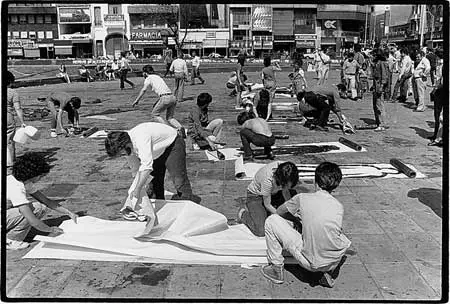
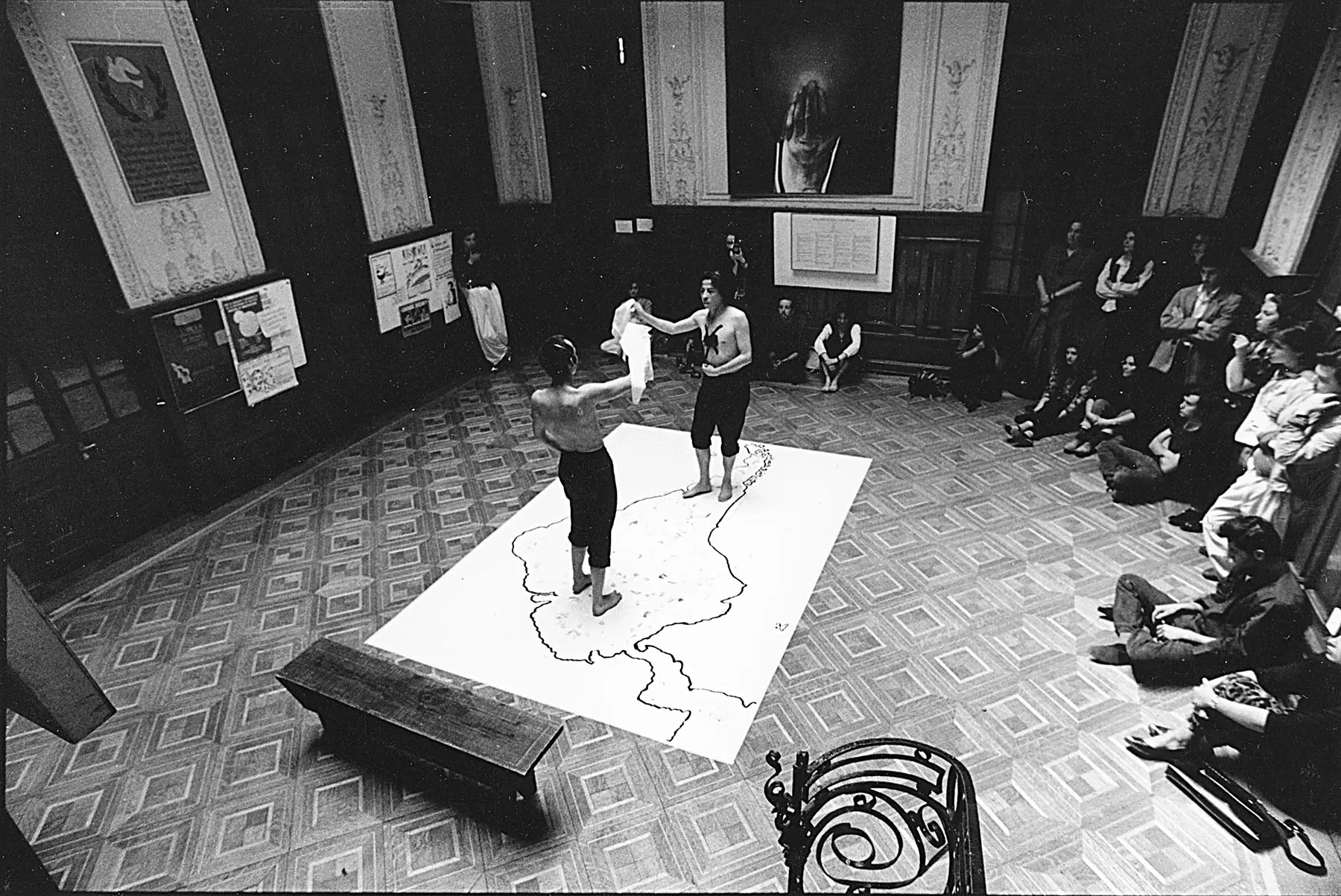
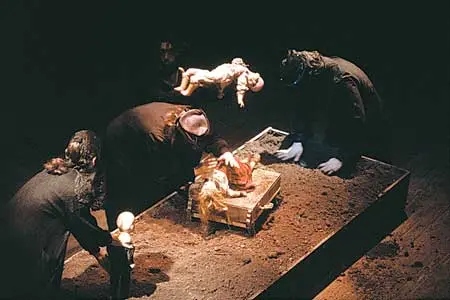
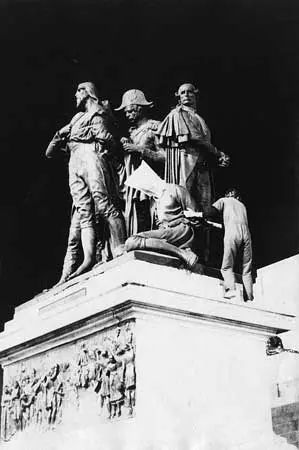
The exhibition devotes a good chapter to documents and registers of activities generated by these movements, including both period photographic and journalistic materials and posters, banners, and various publications, among them those put forth by Chilean collectives who coined and put into circulation, with different purposes and in a variety of contexts of protest and rejection of Augusto Pinochet’s dictatorship, the succinct slogan NO +. No more disappeared, no more torture, but also “we are +” (with “no” standing for the Spanish word nosotros). The first gallery devoted to this chapter holds a reconstruction of a light projection on the floor of a human outline, accompanied by a text that evokes a disappeared person and denounces his disappearance: “The whole truth. Dalmiro Ores. 16.12.82”. The same gallery and the ones that follow present records of interventions and performances, these clearly artistic in intent, that wanted to stage, thematize, or tame the unsettling anomaly of the disappearance of the victim’s body, its existence solely in memory and in solidarity. A standout among them is the tribute to Sebastián Acevedo by the Chilean collective Las yeguas del apocalipsis, with an installation of crystal wine glasses and audio where we hear the names of a long roster of the disappeared. Also by this collective, the show includes a reconstruction of the performance Bailar la cueca, presented at the headquarters of the Chilean Human Rights Commission in Santiago on October 12, 1989. There, two members of the group dance a traditional Chilean cueca on a map of South America symptomatically covered in remains of Coca-Cola bottles. Also notable is El hombre de arena, a 1982 installation by the Argentinean collective El periférico de los objetos. But perhaps the most aesthetically refined example came from Compañía Argentina de Mimo, which in 1980 presented a series of performance where its nude members interpreted situations such as clandestine detentions, torture, and death by firing squad. Gianni Mestichelli exhibits 6 large-format and 12 medium-format black and white photographs of these performances.
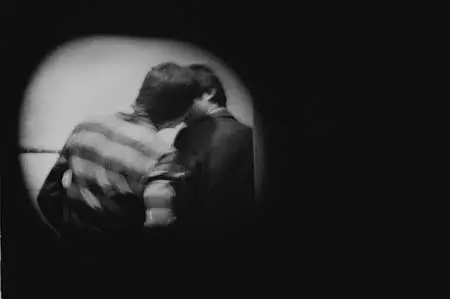
As I said, the second determining factor in the crisis of the human form is cultural in character, and it points in turn in a variety of directions. One of these is represented in this exhibition by works, interventions, and practices centered on matters of gender and sexual identity created by artists and collectives for whom politics is definitely sexual and sex definitely political. Or, as Barbara Kruger put it, Your body is your battleground. These artists and collectives tended to make the slogan launched in 1980 by Argentina’s Homosexual liberation Front (“machismo is fascismo”) entirely their own. The oldest instance of this unexpected mode of political action included in Perder la forma humana is El perchero, a 1975 intervention by Carlos Leppe at Módulos y Formas gallery in Santiago de Chile, where the artist’s three black and white life-size photographs of himself. In two of them, he appeared as an exuberant female opera singer, with two openings in the front of his satin dress that revealed his nipples; in one, placed between the others, he appeared nude, his nipples and genitals covered with gauze and surgical tape. This dramatization of sexual difference added to the erasure of the bodily organs that are its “natural” guarantee, brought center stage its conventional, contingent, historical character, thus opening an early crack in the modes of legitimization of that machismo seen by Argentinean activists as the underpinning of specifically Latin American fascism. Brazilian artist Eduardo Kac, in the 1980s a member of the OV3RGOZE collective, also effectively subverted the sexual identity stereotypes entrenched in a patriarchal culture. The show includes a black and white photograph, also life-size, where Kac appears entirely in the nude, with a vagina substituting his penis. A confrontational switch that reappears in Mujeres con falo y hombres embarazados, a 1987 work by Polvo de gallina negra, a Mexican collective formed by María Bustamante and Monica Meyer. But perhaps the boldest and most provocative of all the works included in the show are the 18 large-format photographs documenting Rosa Cordis, a 1986 performance by Sergio Zevallos in Lima, Peru. There, an underwear-clad transsexual person tidies him/herself up, masturbates, and finally sodomizes a dark-skinned, poverty-stricken shanty-town man (a shanty-town in the precarious stage for the entire action). Next to this work, Sobre porcelana, a photographic series by Colombian artist Miguel Ángel Rojas, is frankly sophisticated and subtle. Using a hidden camera, Rojas captured the shadowy world of homosexual encounters in the projection room of the Faenza cinema in 1980s Bogota.
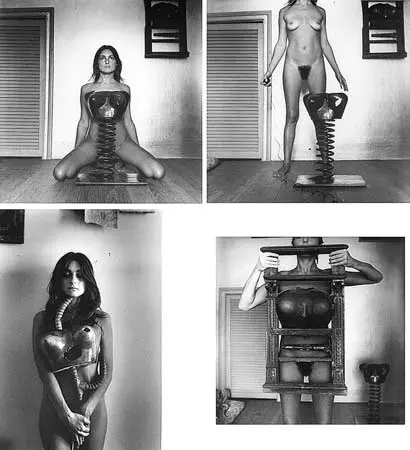
For her part, Argentinean artist Liliana Maresca explored not as much the mutating, polymorphous character of sexual difference, but the radically artificial aspect of its condition as a socially and politically determined product in a society where machines are objectivity is also central. In 1983, in collaboration with photographer Marcos López, Maresca held a photographic session in which she copulates with a celibate machine she had previously designed and built. The result, on display here, is a sequence of images that could very well serve as illustrations of Deleuze’s machinic events.
The pathos of these ways of questioning the evidence of the human body, as well as sexual identity, is balanced in this exhibition by the works of artists who opted to appropriate the carnivalesque, orgiastic of the confusion of bodies and the dissolution of identities. That was indeed the option taken by Carlos Solari and his rock band, who offered their audiences—as is habitual in rock concerts—a truly ecstatic experience. But it was also the option of Brazil’s OV3RGOZE, mentioned above, whose actions (also amply documented in this exhibition) was a vibrant reclamation of the sexual pleasure generated by orgy and dance, connected not only with their native country’s formidable Carnival tradition but also with the performance-art proposals of Lygia Clark or Cildo Meireles. Also projected here is a video recording of cross-dressing singer Ney Matogrosso’s 1988 performance at the Montreaux Festival. In Argentina, this tendency to promote Dionysian enjoyment in the realm of art found a good representative in Museos Bailables, a project curated in Buenos Aires by Fernando “Coco” Bedoya, leader of the Trotskyist-oriented group GAS-TAR/C.A.Pa.Ta/Co. “Throughout 1988,” the catalog for Perder la forma humana tells us, “Bedoya organized four ‘Danceable Museums’, calling visual artists, photographers, filmmakers, musicians, poets, performers, mimes, stencil artists and others to occupy for one night the space of various then-fashionable discotheques (…) The normal activities in the discotheques was not interrupted but taken by surprise, interfered with, or affected by any number of artistic proposals. The event’s very name contained its oxymoron, its invitation to disorder: Can one dance in a museum? Can a disco become a museum? Bedoya’s strategy, however, was not an isolated instance; it participated, in its way, in the efforts on the part of some artists and groups to recover and relaunch the lost alliance between Leon Trotsky and André Breton, established in Mexico in 1937. Among these artists were Buenos Aires’ Taller de Investigaciones Teatrales and Rosario’s Grupo de Arte Experimental Cucaño, which joined forces with Viajou sem pasaporte, from São Paulo, for a relaunch of the international Surrealist movement. Their slogan: “Surrealism is somewhere else. The Surrealist movement must embody the Surrealist movement now.”
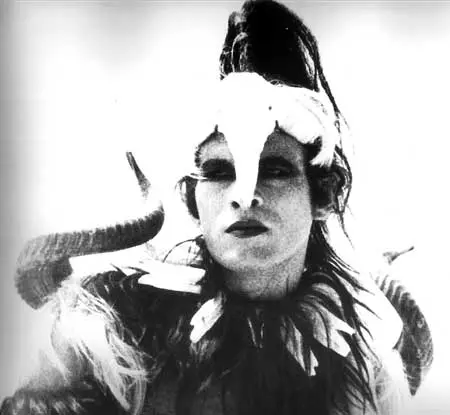
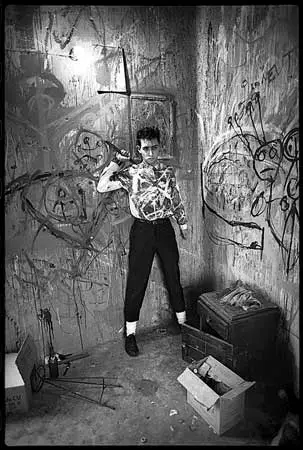
In the final segment of the exhibition, this emphasis on the documentation of performances and theater experiences gives way to the documentation of the world of rock music, specifically bands that adopted the radical proposals of British punk rock —which could be interpreted as a violent movement in response to a particularly violent moment in British politics and society, in the same way, that the bands featured in this portion of Perder la forma humana can be seen as interpreters of a point in history when Latin America is no longer dominated by Southern Cone military dictatorships. These are the years of the return to democracy and the rise of neo-liberalism, when the most ominous source of terror is no longer paramilitary forces or guerillas, the latter in clear retreat, but what Peruvian artist Herbert Rodríguez calls Violencia estructural, in a collage where the many faces of this structural violence are superimposed: terrorism, kidnappings, racism, corruption, AIDS, consumerism, drug addiction, etc. It is to this catalog of evils—where, by the way, femicide is absent—that rock bands like Chile’s Pinochet Boys or Argentina’s Poetas mateístas are responding with their sarcastic, aggressive aesthetics, very far from carnivalesque hedonism. And so do painters like Juan Dávila, from whom we see El arte e$ homosexual, a large painting comprised of five joined panels where a nude man kisses a harlequin painted in the manner of cubist-era Picasso, surrounded by shocking quotations from modern and contemporary artists. Or Viva Chile, a polyptych by the Chilean artist, which flirted openly with the savage aesthetic of American underground comics of the 1980s and 1990s, a la Crumb. To the anonymous, ubiquitous, diffuse violence that has long haunted Latin American cities, these artists and activists responded early with a parodic exaltation of violence, as though by incorporating it in their work they’d be able to exorcize the inhuman violence that dominated the streets.
CARLOS JIMÉNEZ
Art critic and independent curator. Professor at the European University in Madrid, Spain.