
Leaving Rodrigo Facundo’s exhibition, two ideas floated around in my mind. The first idea is that images are the eye of history. Inside the exhibition gallery, viewers encountered two large constructions resembling eyeballs where, in place of the retina, a small screen presented images of human history: ancient fire rituals; bourgeois couples; a parade of human phenotypes with some details of their postures and outfits. A history of mankind told through images like those from the famous Baldor high school algebra handbook, especially its cover, which I have never forgotten. For me, that cover was that book’s only marvel. According to Wikipedia (so easily dismissed by academics, yet so useful), the Baldor algebra handbook is the work of Cuban mathematician Aurelio Baldor and remains the most widely read book in Latin American schools. This rings true, I must say; very few students can possibly have been spared reading it, or at least carrying it in their bags. Wikipedia also informs us that the cover was an illustration by one D. G. Terminel (unknown, like most illustrators) depicting Persian mathematician and geographer Abu Abdallah Muhammad ibn Muaal-Jwaizmif, who lived between the Eighth and Ninth Centuries, in his “native Baghdad”.
This remembrance brings me to the second idea the exhibition left floating in my head: The eye of history is an illustration, in the dual meaning of the word: on the one hand the “illumination” of the Enlightenment, the intellectual movement in the Seventeenth and Eighteenth-Century Europe; on the other, illustration as draftsmanship. In my view, this exhibition unmasks the former and gambles in favor of the latter.
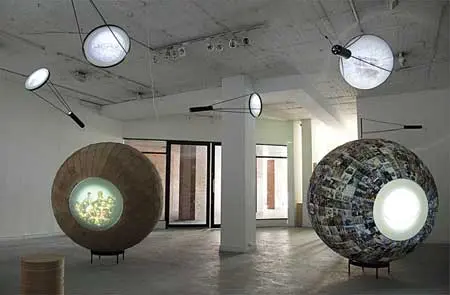
Illustration as draftsmanship is freer and more attentive to details, capturing for example the gestures of a stiff-lipped bourgeoisie as it exerted its power over peoples whose ancient cultures the Enlightenment erased with its insistence on making Europe the center of all History.
Illustration as draftsmanship allows for humor, artifice, private codes, fantasy, and extravagance, and ultimately for a widening of human culture as it describes it with unending curiosity. Illustration as draftsmanship cannot be restrained in its description of saris, hijabs, turbans, plume headdresses. Its gambit is for myriad ways of narrating history, where even the UFO phenomenon can be brought to bear because all truths are transient and fiction and reality commingle freely. With the many erasures operated by the Enlightenment through its power to interpret and classify, we realize with every passing day that History remains to be told. Or at least that it needs to be told from a less “enlightened” and more illustrative, more descriptive, more encompassing vantage point.
It seems that illustration is a regime of light and the Enlightenment a regime of shadows.
Rodrigo Facundo was born in Ibagué, Colombia, in 1958, and studied Fine Arts at Universidad de los Andes and the University of Illinois in the 1980s, a time of crisis for the premises of modern thought. That crisis helped Facundo define a way of making art as if against an interpretive apparatus in a permanent state of construction, an unmasking device that nevertheless retains the often anachronistic mechanical inventions that result from his observations as he travels through the center of Bogotá. With them, Facundo has created one of the most significant bodies of work in contemporary Colombian art. For example, Luz de América (1998) and Luz Perpetua (1998), works where adobe support (ruins) holds photographs of common-citizen lethargy or indifference in the face of violence in Colombia. Or En la punta de la Lengua (1997), another invention of many visual devices intended to stir our memory.
One more idea about Facundo’s work as I conclude this article. This exhibition is about art as a visual counter-discourse that exercises its freedom to shift definitions and explore ways of doing in complete disregard of the formulas of good taste; art, in sum, as a regime of light to sweep out all regimes of shadows.
NATALIA GUTIÉRREZ