
Slow Art is a label intended to counteract the quick scanning of artworks in exhibitions. Tim Slowinsky, an artist who created a commercial enterprise under that name in 1995, first used the term in the U.S. in 1978 in a scribble on his studio wall. A Slow Art Day movement, inaugurated in 2009, has been endorsed and honored by a growing number of museums around the world. The next Slow Art Day, scheduled for April 27, 2013, counts, at the time of this writing, 86 institutions intending to participate and guided by certain idealism and respect.
In spirit, the project of slow art resembles the slow food movement, introduced by Carlo Petrini in northern Italy in 1986 to fight the process referred to as the McDonaldization of the global diet. Initially prompted by a protest against the installation of a McDonald’s franchise in Rome, this movement now has communities in 150 countries committed to locally grown food and ecological balance as opposed to empty calories. In fact, it is here where the term “slow” acquired its international power. "Slow Food" has an ideological point and is consistent in its militancy. Slow Art, by contrast, is more haphazard in its thinking and actions.
Picking up on all this, the Swedish National Museum is presently offering a Slow Art exhibition1, to some extent counting on the seductiveness of the label. The title of this show is misleading, however, for the pieces on exhibition have all been selected from the Museum’s craft and design collection, based on the single criterion of the extraordinary amount of time used in making of the objects. The signage for the examples on view tediously equates the apparent excess of labor with meditation. A majority of the labels inform about the hours used in the production, the need for careful planning, and the danger of mistakes. It is also pointed out, as a negative option, that many pieces might be produced efficiently and economically using industrial means. It is then proposed that the artist’s time is to be answered with an appropriate length of contemplation by the visitor. All this–the superficial texts and the wrongly placed accents on what an art piece should be,–make the exhibition as a whole somewhat less than satisfactory. Some pieces, however, are exquisite examples of craftsmanship. Unfortunately, when mixed together with examples of mere laboriousness, their importance is lost.
The catalog, on the other hand, redeems the exhibit by putting it into a historical and cultural context and pointing out some issues of consequence. How time is used, both in the production and the appreciation of art is an important topic not often discussed in depth. It is these issues that deserve a discussion, more than the exhibition itself. To attempt this, I will have to refer to works that are not in the exhibition.
In certain respects, all applications of the concept of “slowness”, whether to food or art or science (“slow science,” for example, demands less time spent on publication and more time dedicated for reading) are reactions against an idea originally expressed by Benjamin Franklin in 1748: “Time is money.” This concept seems to have seriously messed up society and is something we are still trying to find ways to undo. Its construction has distorted our attitudes toward production, making it acceptable to drop certain activities simply because they are not lucrative, the products becoming nothing more than objects of nostalgia.
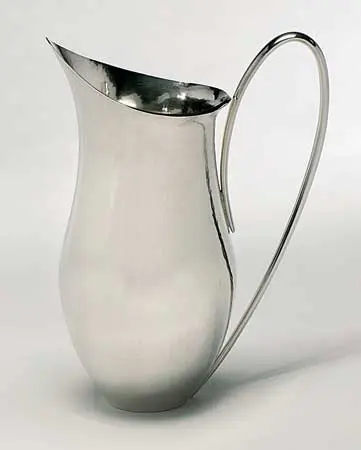
While this exhibition means to celebrate labor-intensive, non-lucrative craft, it nevertheless ends up reinforcing the Franklin-like diversion of focus from product to production time. For instance, in the exhibition, there is a stunning feat by Sebastian Schildt. Hitting a 4 mm silver sheet the size of a dinner plate with a hammer he fashioned a perfect jug. It required about 100 hammer beats a minute (the label helpfully adds that this is 6000 beats an hour) and it took him between 70 and 100 hours to finish his work. The jug has a beautifully elegant design, no matter how it was made, but here this only seems to be a secondary and validating feature.
The Slow Art exhibition is to some extent presented as a battle in which the enemy is Twentieth Century modernism and conceptualism, presumable perpetrators of a disregard of traditional crafts. One catalog essay quotes Terry Smith (a former member of the Australian section of Art and Language as well as an art historian): “The overwhelming success of mass-production/consumption modernity in the early and mid-Twentieth Century left craft as the obvious signifier of modernity’s opposite: tradition.”2
One might draw a parallel here: McDonald’s hamburgers are too good food what mass production is to well-crafted work. In both, slow food and slow art, the assumption is that good production and healthy consumption are reclaimed. However, the parallel is not very precise. In the food field slowness of production directly impacts the health of the consumer and the health of the community in terms of ecological footprint. The dialogue between growing, harvesting, cooking, and eating is very clear. In art, the connection between production and consumption is much less clear. In slow art what really happens is a shift of consumption from what art is to how art is made. When the emphasis shifts from product to process, it doesn’t matter anymore if the result is “art”. What is being consumed (appreciated) is the mechanical result of an activity, not the subjective impact of a feeling or thought.
No matter what theories are behind the Slow Art exhibit, the show carries this burden. In these times of cultural low tide caused by the lack of funding, museums resort to the trick of reordering their own collections without having to borrow work and pay for crating, moving, and additional insurance. This is done in the most elegant and catchy way possible and it is actually a positive move. It brings new life to items that otherwise remain buried under dust and cobwebs in spite of their quality. It forces museums to re-contextualize their holdings and reappraises their validity within a more contemporary frame of reference than the one that was used for acquisitions. Thus the intent of the exhibition is understandable, even if “Slow Design” or “Slow Craft” might have been more appropriate titles.3
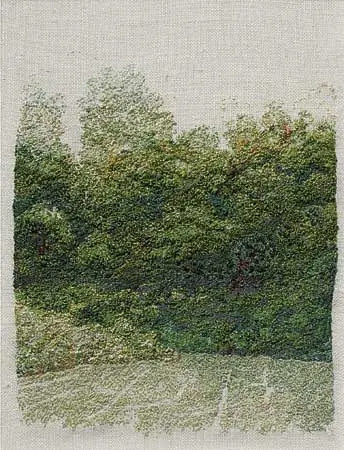
The problem with this emphasis on craft is that it tries to merge two things that don’t really connect together. No matter how deeply I may be immersed in meditation and how publicly I display my inner search, it’s more than unlikely that anybody watching me will fall into trance. So, no matter how intricate an embroidered piece is, even if I have to use a magnifying glass to appreciate the most minuscule stitches, I probably won’t be enlightened beyond an acknowledgment of the immense patience and skill of whoever did it. This is the case of Suzy Strindberg’s roughly 5 x 4 inches landscape that bears thousands of little threads. And, the label informs us that: “the process includes an element of meditation.”
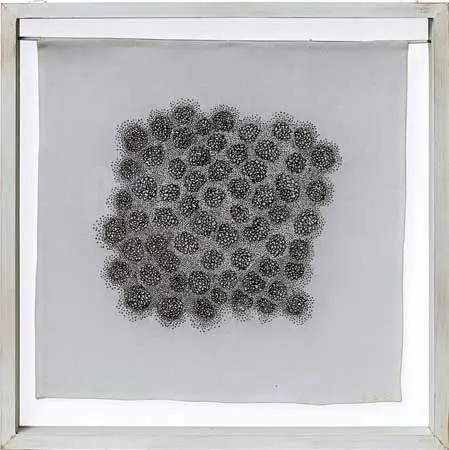
Cilla Robach, the curator of the exhibition, follows the previously quoted statement by Terry Smith with the comment that by being defined as anti-modern and reactionary, crafts were “dismissed and marginalized in public debate.”4 While this is factually true, the point only reflects on the shallowness of the discussions surrounding the issue. It is assumed that idea-based art views craft as interference, as an impediment to having ideas come through clearly in the object (or document) that presents them. But this is true only when the very presence of material and craft causes erosion of information. There is in fact something known as “conceptual craft,” in which obsessive labor is faithful to an idea and the result is a manifestation of the idea.
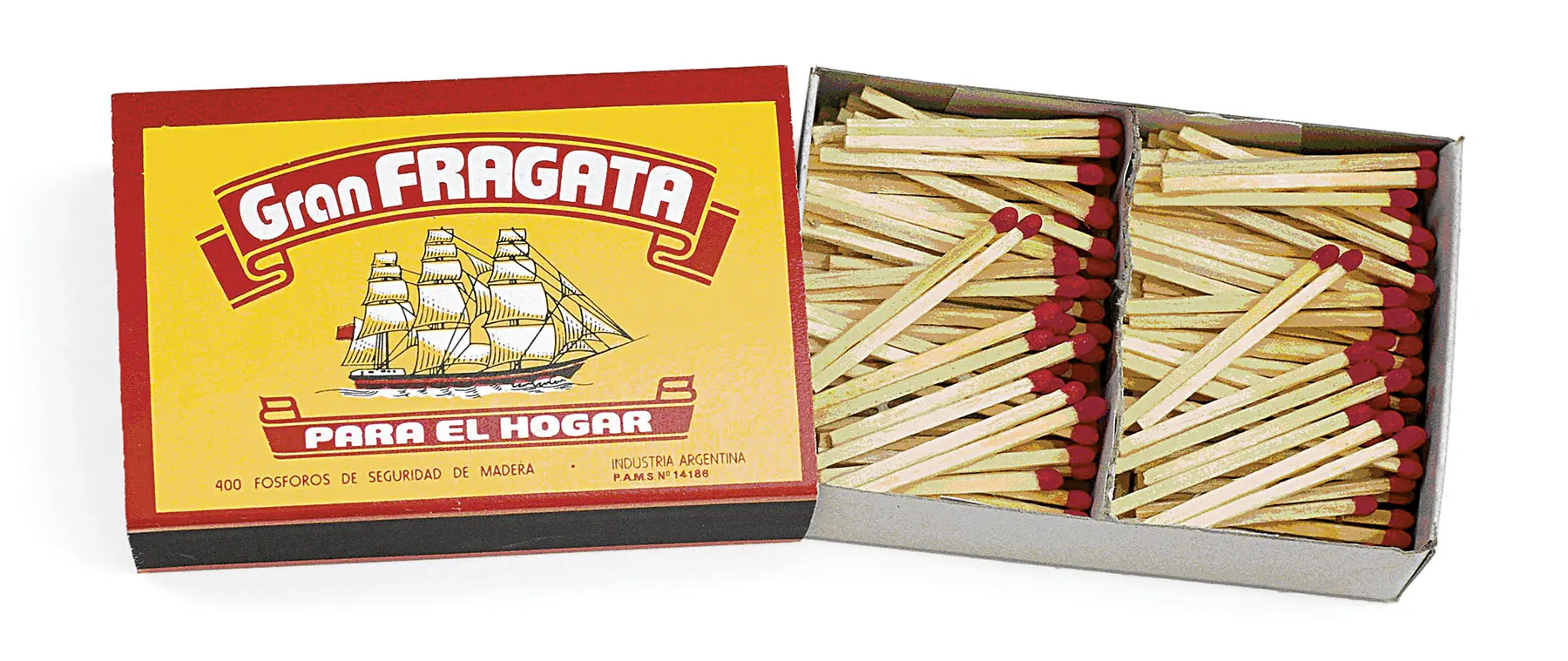
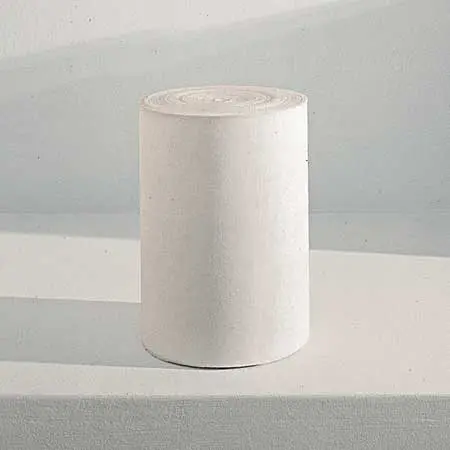
It may be here where art and craft can merge today. The question is how exactly to do that. Is it keeping or reviving the tradition of crafts that have been used and honed over the centuries, or is it searching for new angles that nevertheless fit into the rules? Are Andreas Gursky’s photographs, with their multiple shots and endless digital retouching, a possible example? Or Tom Friedman’s sculptures in which visible obsessive craftsmanship becomes tautological support for the work (as in his 1990 perfectly rewound roll of toilet paper lacking the internal cardboard cylinder). Or the less labor-intensive yet perfectly calibrated effort of Jorge Macchi in his Parallel Lives (1998), in which two open matchboxes, placed next to each other show the exact same random arrangement of the matches inside. In all of these, the craft is present and crucial to the completion of their pieces.
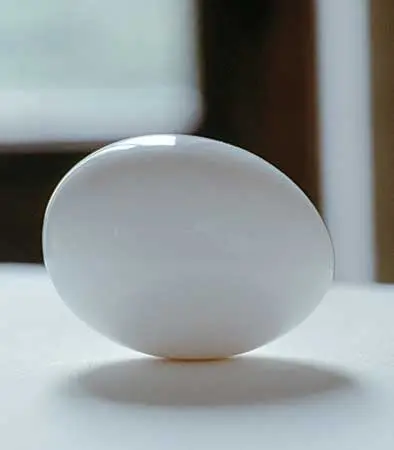
Many years ago Karin Sander exhibited a piece in the Venice Biennial, I believe in 1999, which may exemplify, perhaps paradoxically, the possible merging of art and craft. In Chicken’s Egg, Polished, Raw, Size 0 (1994), the high gloss egg is probably made out of glass, although the public has no way of knowing. The title, however, conjures an endless amount of delicate sanding and rubbing interrupted by unfortunate and messy accidents that force infinite optimistic restarts. On the one hand, the viewer is awed by the perfect representation of futility and dedication. On the other hand, the viewer’s dialogue with the piece is in reality unaffected by the production process. The impact is the same, whether or not it was actually made to the specifications of the title. The result is loaded with mystery.
To invoke a war between crafts and art is, in the end, misleading. The real issue is whether a tradition of excellence in a craft that respects the object but does not address issues of relevance to art deserves to be classed as art or not.
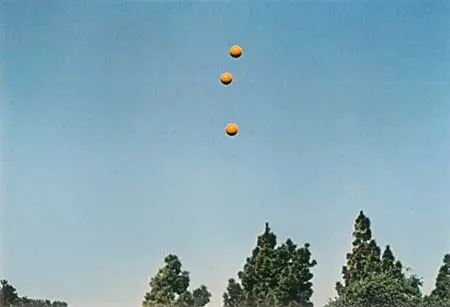
Craft, in the traditional sense, deals essentially with execution. Admiration is applied within the range of well done to exceptional virtuosity. The admiration is applied as much to the looks as to internalized mechanics used in the procedure. In her essays, Robach refers to the concept of “tacit knowledge” as opposed to “theoretical knowledge,” one that isn’t or doesn’t have the need to be expressed in words. Craft in that sense is a set of motor skills that have been absorbed beyond consciousness, like blind typing, or the whirling of pizza dough above the pizza maker’s head, or the masterful juggling of oranges or bowling pins. It’s what John Baldassari spoofed when in 1973 he threw three balls up into the sky trying, thirty-six times, to achieve and document a straight line (he failed). And then there is the admiration for the time contained (imprisoned) in the object. The crafted piece acts as a receptacle for the time used to make it and seems to keep it for the viewer’s awe.
Oddly enough, when there is a balance between craft-time and the intended appearance, craft ends up being taken for granted. It’s only when that balance is broken that craft takes over as an independent feature to be lauded or to be criticized for its lacking. When the craft is successful beyond this balance, it is because a transmutation takes place. Craft and time can produce a magical act like, for example, in Luciano Fabro’s Lo Spirato (Expiration, 1973). The shapes of bed linen carved in marble show the imprint of a body that isn’t present anymore.
The skill that transmutes linen into marble, in this case, isn’t Fabro’s, but that of anonymous craftsmen of a quarry in Pietrasanta. Somebody there followed Fabro’s instructions. This delegation raises biographical questions (would Fabro be able to carve the marble by himself?) and questions of authorship (would the piece be worth more money had Fabro carved it himself?), but does not affect the effectiveness of the piece.
The exhibition takes for granted that the authors made all the pieces and therefore eludes these questions. When the author is the laborer, and when there is no commensurable pay to be expected for the labor, we are in the presence of self-exploitation only justified by intangibles. Pasi Välimaa, one of the exhibitors in Slow Art, refers to his work as “luxury manufacturing.” The label explains: “The luxury consists of the indulgence of allowing oneself to work on a single object so long.” Other labels for other exhibitors include statements like these: “Her method is arduous and time-consuming”; “Her work takes time and requires utmost attention and patience. The process gives ample time for reflection”; “It consists of 35,555 knots divided into 225 rows, a work that took more than 200 hours to complete”; “Preparations sometimes take as long as the actual cutting process”; The process includes an element of meditation”; “For Gonjo, a repetition is a meditative act that gives her a sense of security, safety, and control.”
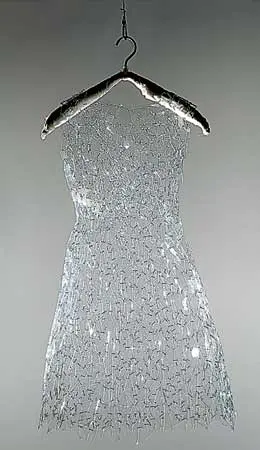
Meditation seems to emerge as a big incentive among those represented in the exhibition. Presumably, this means that performing the work oneself was chosen as preferable not for practical reasons (such as lacking means to employ someone else, or reluctance to delegate responsibility, or need for feedback from the material itself in the process of creation) but because the act itself had deep personal significance. The act of meditation, however, is a private affair, without direct relevance to communication with the viewer. One piece in this exhibition manages to connect to overcome this and directly connect the private act to the viewer, Mafune Gonjo’s piece with the unfortunate title Beauty has a Thorn. It is a dress built with small pieces of glass hooked together with wires, and casting eerie reflections of light on the walls. Though the signage emphasizes the importance to Gonjo of her personal need for “security, safety, and control” in her work, the end result is one of the few poetic and haunting works in the exhibition.
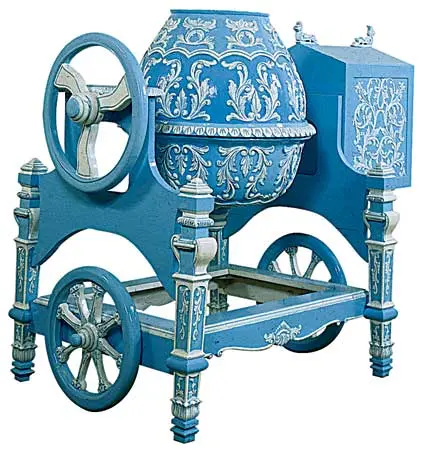
When the effectiveness is in the piece, the question that arises is what significance to attach to the investment of time in the production of the work. Clearly, if the craft is executed by somebody other than the author, we have an operation of paid labor in place. Wim Delvoye’s Concrete Mixer (1992) (another reference to a piece external to this exhibition) was made by Indonesian woodcarvers. Commenting about his piece, in an interview with Peter Hill, Wim Delvoye says: “I use craft, through others, in a very ironic way. I rape it, whereas he [Jean-Baptiste Ngnetchop] creates beautiful banknotes in wood. In my piece here, although it is still woodcarving it becomes a concrete mixer and traffic barrier. It also becomes totally raped. You must imagine that a lot of people in that part of Indonesia have never seen a concrete mixer in their entire life. And the nicest thing is that they find the original concrete mixer very beautiful and think that what they have done with their carving for me ‘as a job’ is awful. So the whole thing stays a very European way of working and seeing.”4
Delvoye here raises the topic of locality and how local tacit understandings—exemplified by the craftsmen’s relation to his concrete mixer—make the object relevant for local culture or just leave it at the level of an iffy example of contracted skill. This is where Slow Food has a big advantage. It manifests a concern for social communication, not only for the satisfaction of intimate needs. Slow Food, in that sense, seems to be balanced in concept and practice. Slow Art or Slow Craft as presently explored still seems hesitant and unresolved. Or, even better, the Slow Art exhibition is, at least, Slow Food for thought, but not more.
(Edited by Selby Hickey)
NOTES
1. Slow Art, Nationalmuseum, Stockholm, Sweden, May 10, 2012-February 3, 2013. Slowinski is credited in the catalog of the exhibition for having created the name.
2. A note in the introduction goes over the uses of “slow” and points out the existence of the term “Slow Design” and its ecological duties, and “Slow Craft” as having been used for a 2011 exhibition at Engelska Magasinet in Reijmyre, Sweden. Ibid. n. 5, p. 14.
3. Ibid, p. 17
4. http://www.superfictions.com/elgrecol/WimDelvoye.htm (accessed 10.19.2010)
LUIS CAMNITZER
Uruguayan artist. Emeritus Professor at the SUNY College, Old Westbury.