
The Premises of Sustainable Change
During the 1970s and 80s, the art scene in Mexico was traversed by an anti-establishment effervescence, be it spontaneous or relatively organized (through the foundation of groups), among artists connected to the 1968 student movement and deeply influenced by it. At the same time, and in parallel to this climate of social protest, two trends emerged and gained a solid foothold: first, a geometric trend, mainly in sculpture, and later the figurative trend that would come to be known as “neo-Mexicanism”. Such differing attitudes, which reflect different positions among different generations, ultimately express a shared aesthetic and existential nonconformity and seal a commitment to the new modes of expression that were confirming a complete emancipation from the (officialized) dominance of the Mexican School. Be it a narrative kind of figurative art featuring parodies, provocations, iconographic deviations, and “sexualized” cults of the self, or the beginnings of conceptualism, 1 the climate that extended over Mexico’s art world during this period expressed a desire to forge new artistic identities and to open the door to the international contemporary scene.
Before 1968—there can be no doubt that there is a before and an after 1968 in Mexican art of the Twentieth Century—new expressions were channeled and framed, to a greater or lesser degree, by the State, a role to be played years later by galleries and the market. At the time, the art market had a markedly more local than international outlook, and the new generation of artists following the first “rupture” (1960s) seldom traveled abroad and found it difficult to express themselves. There is only a handful of mostly timid galleries, unwilling to support marginal expressions and artists without an established national audience.
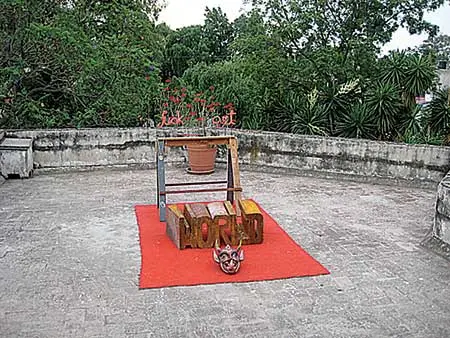
After 1968, the context changed. Many artists supported the student movement, questioned the legitimacy of the State, and exploded a large number of formal and institutional constraints. Some ten groups were formed—most heavily politicized—and inside them, a radical feminist posture started to assert itself (Maris Bustamante and Mónica Mayer). Performances and happenings were organized around topics that are both political and social in import, and artists spontaneously intervened the streets (with stencils and paintings on walls and fences), preferring the present instant and the ephemeral action as ends in themselves and at the same time placing art at the service of an idea and a cause.
The late 1980s and early 1990s saw the end of “neo-Mexicanism” and a spectacular reinforcement of neo-conceptualism. “Mexico opens itself up to the world, and the world enters Mexico”. 2 Mexican art’s adoption of a globalized aesthetic language created an unexpected situation for those young artists 3 who didn’t want to, nor could, adapt themselves to the fashionable modes of expression. There was among them an outsize need for freedom, and their desire to “create differently” 4 did not fit with what galleries were promoting at the time. Deprived of spaces for the expression of their rebellious energies, they found in La Quiñonera a way to fill that gap, a platform for the kind of change that crystallized in the “second rupture” in Mexican art.
The birth of La Quiñonera in 1988
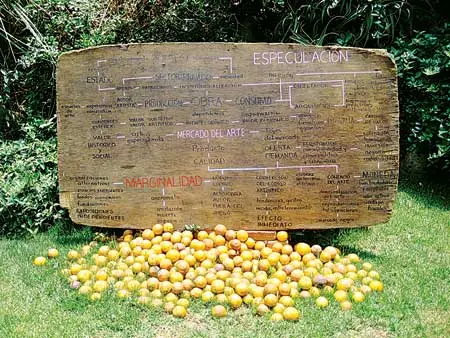
“La Quiñonera is a space open to the schizophrenia of artists in their unceasing desire to puncture the closed scheme of artistic creation. A space aspiring to an undefined number of vocabularies capable of generating evens or tendencies in many tones and verbs, without dictating the ‘proper mode’ of production.” 5
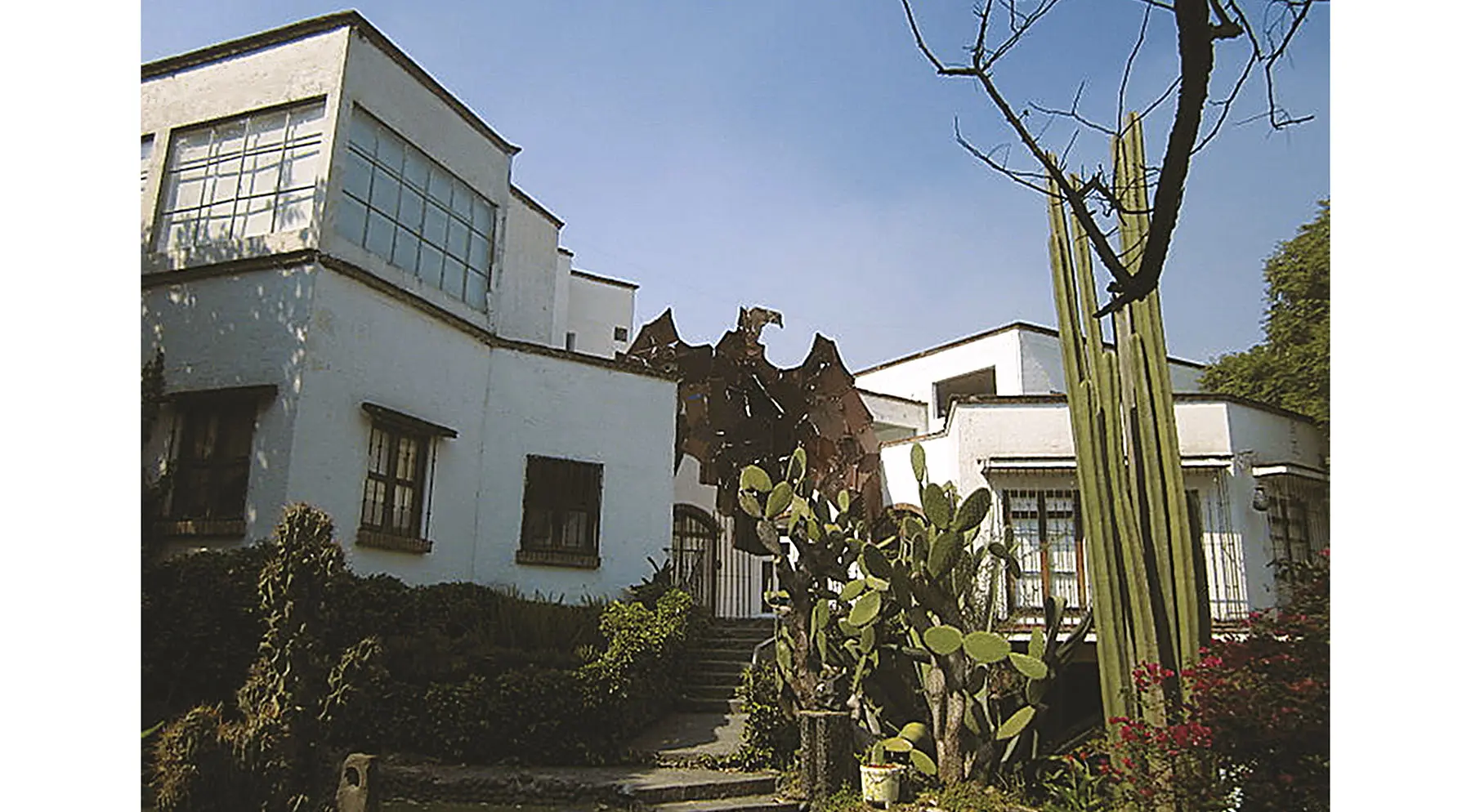
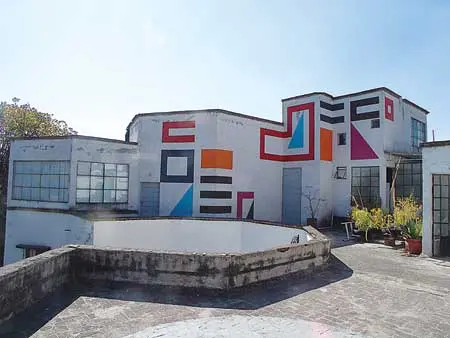
In 1986, the Quiñones family home, located in the La Candelaria neighborhood of Coyoacán, south of Mexico City, and occupied by twins Héctor and Néstor (born in a cultured environment in 1976), was not yet known as La Quiñonera. It was a meeting place for young artists who played music and organized memorable night- and day-time parties; soon, it became a magnet for youths, marginal or not, from all over town. Everything there was free and spontaneous: these youths longed for a safe and independent place to meet without surveillance. There was no defined project. The art exhibits would come later. Besides the Quiñones brothers, several artists established their workspaces there: Diego Toledo, Rubén Ortiz, Mónica Castillo, Claudia Fernández, Eloy Tarciso, Aldo Flores, Guillermo Santamarina, and Rubén Bautista (who died in 1990). Bautista was to become the true driver of the project, its ideologist and originator, and, many would say, the “soul” of La Quiñonera; he also came up with the name.
An artist, cultural promoter, and curator, 6 Rubén Bautista made La Quiñonera into an “alternative sculpture space”, transforming and adapting both the huge garden and the house itself. “Bautista”, writes Olivier Debroise, 7 “wanted to create a space that was open to all kinds of new trends, intergenerational, and free from the shackles (and the disinterest) of official institutions.” Bautista organized five group exhibitions at La Quiñonera between 1988 and 1990. 8 Los pintores-escultores (April-June, 1988) was his first formal exhibition; it brought together sixty artists from different generations and tendencies, among them Gilberto Aceves (painter), Juan José Gurrola (artist and theater director), Germán Venegas (painter), Nahum B. Zenil (painter), and Guillermo Santamarina (artist and curator). The third exhibition at La Quiñonera, titled Ya/juventud/ya, was held April-June, 1990, and included, among others, Roberto Turnbull, Francis Alÿs, Roberto Cortázar, and Jerónimo Toledo. A text by Carlos Monsiváis (“Hacia la refundación escultórica de Tenochtitlán”) accompanied the show. There, the Mexico City writer and chronicler emphasized the formation of new publics alongside the emergence of new artists. For Monsiváis, La Quiñonera was in the process of “building or advancing the new sensibility, outside of the strategies of the market”. Nothing like it had taken place since the first half of the 1960s, and it was “a magnificent spectacle (…) whose participants often have in common their natural disconnection from the aspirations and ambitions of the avant-garde. Épater le bourgeoisie and shocking society are no longer the objectives. The proposals are now more democratic, without interruption of the rejection of conventionalism or the link between today’s trans-avant-garde and the historical avant-garde.”
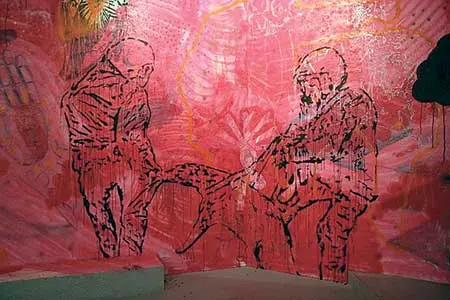
La Quiñonera held great appeal for artists and many intellectuals, given the dearth of alternative spaces and given the priority it gave to what they considered forward-looking. A kind of commune since its beginnings, La Quiñonera became a place for reflection and debate both around politics and art, a “kind of laboratory moving in all directions” 9 for the artists of the first group. 10 Pioneering the diffusion of new expressions, tendencies, and experiences, it presented electronic and rock music concerts; performances by César Martínez, Siro Basila, Marcos Kurtycz, and El Sindicato del Terror (Roberto Escobar’s extreme-art group which raised the flag of body violence in the same way the Semefo group would, years later, with their performance Viento negro); ephemeral site-specific murals; as well as collective street actions on walls and fences as a mode of social protest. The goal of these artists was to go beyond creative individuality and provide a social dimension for artistic interrogations.
La Quiñonera Between Adhesion to Zapatismo and the Solicitation of Art Galleries
Néstor Quiñones always defended a position of independence from insertion in the globalized-art market. “With its independence and the reach of its vision, La Quiñonera understood culture not as a static, closed, dogmatic phenomenon, but, on the contrary, as something in a perpetual state of evolution and change.”11
The same spirit of freedom that characterized La Quiñonera also kept it at a distance from the politicized leftist groups that emerged during the 1960s (among them Tetraedro, Mira, Suma, Proceso-Pentágono, No Grupo, TAI, Março, TIP, etc.) Even though they often shared their ideas, the La Quiñonera artists wanted to retain their autonomy. With Marcos and the Zapatistas, however, things were different: the artists assumed an ideological commitment and embraced the charismatic leader’s political position. This put them in a delicate situation vis-à-vis the local galleries, which, at the same time and because the evolution of the art world so demands, had begun to show a growing interest in their work and to solicit their participation. The situation soon became ideologically unsustainable, under the unabated pressure from the era’s most important galleries: Néstor Quiñones, Rubén Ortiz, Mónica Castillo, and Diego Toledo were selected by OMR Gallery, which promoted and exhibited artists of the “Neo-Mexicanist” movement; Galería de Arte Mexicano (the oldest one, established in 1935) also showed interest, as did Benjamín Ruiz Gallery, closest to contemporary art.
Parallel Alternative Experiences
The winds of independence blowing during this period over the Mexican art scene also promoted the emergence and flowering of other sites and groups. The more important was, no doubt, “Salón de los Aztecas” (Cuba Street 24, in Mexico City’s historic downtown), established in 1988 by artist, cultural promoter, and collector Aldo Flores. The Salon was intended as an experimental space, and its most spectacular action was “The Taking of the Balori”, on an early Twentieth Century building slated for demolition by the authorities, because of its decay; the artists occupied the building and painted its exterior with murals, calling the public’s attention and demanding its preservation (the building was saved). Another artist, Adolfo Patiño, who died in 2005 and was a founder of the experimental group “Peyote y la Compañía”, opened a neo-avant-garde gallery, La Agencia, which remained active between 1987 and 1993. In terms of groups, El Sindicato del Terror presented death-themed performances that would be repeated later at La Quiñonera by the Semefo group.
This period was extremely profuse and such experiences, most of them fleeting, came in quick succession. At the same time, the art market absorbed foreign-born artists such as Melanie Smith, Francis Alÿs, and Thomas Glassford, all of whom settled in Mexico City. Young artists turn their gaze then toward the growing international contemporary-art market and La Quiñonera, having lost some of its appeals, gradually slowed down its activities and moved into the shadows.
The Rebirth of La Quiñonera: Objectives and Exhibitions
La Quiñonera emerged from its relative dormancy after several years (it would rent its spaces to artists, but it had no specific project of its own). In 2008, two exhibitions were organized with the help of Fernanda Sequeiros. But the true reopening of La Quiñonera was a solo show by Manolo Cocho, in 2010, followed by three group exhibitions (so far). The project was well defined. Néstor Quiñones presented 12 the new foundations and objectives, articulated around three premises: “To acknowledge change; to cleanse the concepts of power and domination as civilizing values; and to accept death. (…) We believe that all the projects we are now developing question the present and reflect upon it, responding to a crisis on how human beings are understood, and that they point out the urgent need to develop new paradigms without forgetting our origins or our past. From the private to the global and from the material to the unsubstantial, we are defined by our actions, and any creative exercise that does not resonate with common sense tends to be only partially justified, unanchored to reality, and devoid of focus.”
La Quiñonera was at the heart of profound changes in the Mexican scene in the late 1980s and 1990s and at the point of articulation of the birth and death of the “Neo-Mexicanist” movement and the consolidation of conceptual positions in the international arena. As space at once marginal and undoubtedly emblematic for its experimental and avant-garde activities, today it wants to define itself as a true space for quality intellectual, artistic, and museographic reflection. Its experience on the ground and the independence it was able to sustain against all odds, make it possible for La Quiñonera (and its mentors, the Quiñones brothers) to propose, as a well-considered and mature project, “well-defined, different forms that continue to provoke an open critique of the contemporary world, always outside commercial and institutional hierarchies”. 13
NOTES
1. The FMGTC (Mexican Front of Culture Workers’ Groups, in its Spanish initials) was created in 1976, gathering several groups of writers and artists interested in conceptual art.
2. Néstor Quiñones, interview with Christine Frérot, Mexico City, May 2012.
3. Most are students at Mexico City’s main art schools, La Esmeralda and ENAP (Escuela Nacional de Artes Plásticas).
4. Néstor Quiñones, ibid.
5. Rubén Bautista, invitation to Los pintores-escultores, April-June 1988.
6. He worked at the Stedelyk Museum in Amsterdam and later became an assistant to Fernando Gamboa, the founder and director of Mexico City’s Museo de Arte Moderno, established in 1964.
7. “La era de la discrepancia”, catalog for the exhibition Puertos de entrada: el arte mexicano se globaliza 1987-1992, ediciones UNAM, 469 pp., Mexico City, 2006. p. 332.
8. “Los pintores-escultores” (April-June 1988); Escultura viva. Plantas, agua, seres (April-June de 1999); “Ya/juventud/ya” (April-June de 1990); Escultores diversos (April- June de 1991).
9. Néstor Quiñones, ibid.
10. Néstor Quiñones, Héctor Quiñones, Claudia Fernández, Francisco Fernández, Diego Toledo, Manolo Cocho, Tomas Gleason.
11. Néstor Quiñones, ibid.
12. An interview with Christine Frérot.
13. Néstor Quiñones, ibid.
CHRISTINE FRÈROT
Art critic. AICA Member.