Anna Maria Maiolino was one of the winners of the recently established MASP Mercedes Benz prize, and, as part of the result, had the opportunity to present a solo exhibition in the museum. With a career that harks back to the 1950s, when she still lived in Venezuela, Maiolino garnered significant critical attention with her participation in the most recent Documenta, last year. Her large-scale clay installation in Karlsaue park in Kassel carried forward the investigation started in the 1990s, with the Objetos escultóricos series. But whoever came to this new exhibition at MASP expecting to see similar works or adaptations, was mistaken.
The space was dominated by the black color of the walls and the floor. This dark hue accented to the importance given to the projections of video works and of works transcoded from Super-8. One of Maiolino’s best-known works, In/out (antopofagia), from 1973-74, welcomed viewers with its monumental mouths. The lipstick covering the lips confounds our perception. Are they a man and a woman? Chewing and baring their teeth, accompanied by a vertiginous soundtrack, they devour and vomit threads. These lines refer to another important work by Maiolino, Por un hilo (1976), where she created a photograph-based family tree through the juxtaposition of three generations of women: her mother, her daughter, and herself. Recalling the artist’s biography and her geographic journey between her Italian origin and her Latin American sojourns, could we perhaps visualize in her poetics an anthropophagic meditation on the idea of cultural identity, not by means of documents and archives but through the body, along a more existential path?
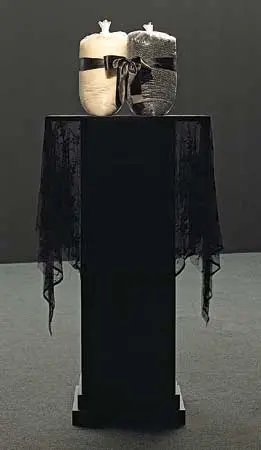
The presence of eggs in other works seems to contribute to such an interpretation, and foster reading in a surrealist key. The hands of Paulo Herkenhoff and Bruno Tauz, as in a football game, play with those small life deposits atop a table in + - = - (1976), another Super-8 film. Without winners, this allegory of the origin is left without a fixed site, moving back and forth within the fictitious boundaries of a table. The surface where food is shared becomes a ring. Its religious character is also echoed in an image from the series Fotopoemación (2010). The Christ painted by Leonardo in The Last Supper displays a decayed surface, contrasted with the digital insertion of eggs and an intact plate. Without an option to disappear, here the egg can be an allegory of the classical tradition. In another photograph, from the series Via afuera (1981), this oval-shaped character appears watching over what seems to be a window opening. Between remaining in the interior space and exploring what lies outside, once again what is being pointed out is the uncertainty of its fate due to the fragility of its structure.
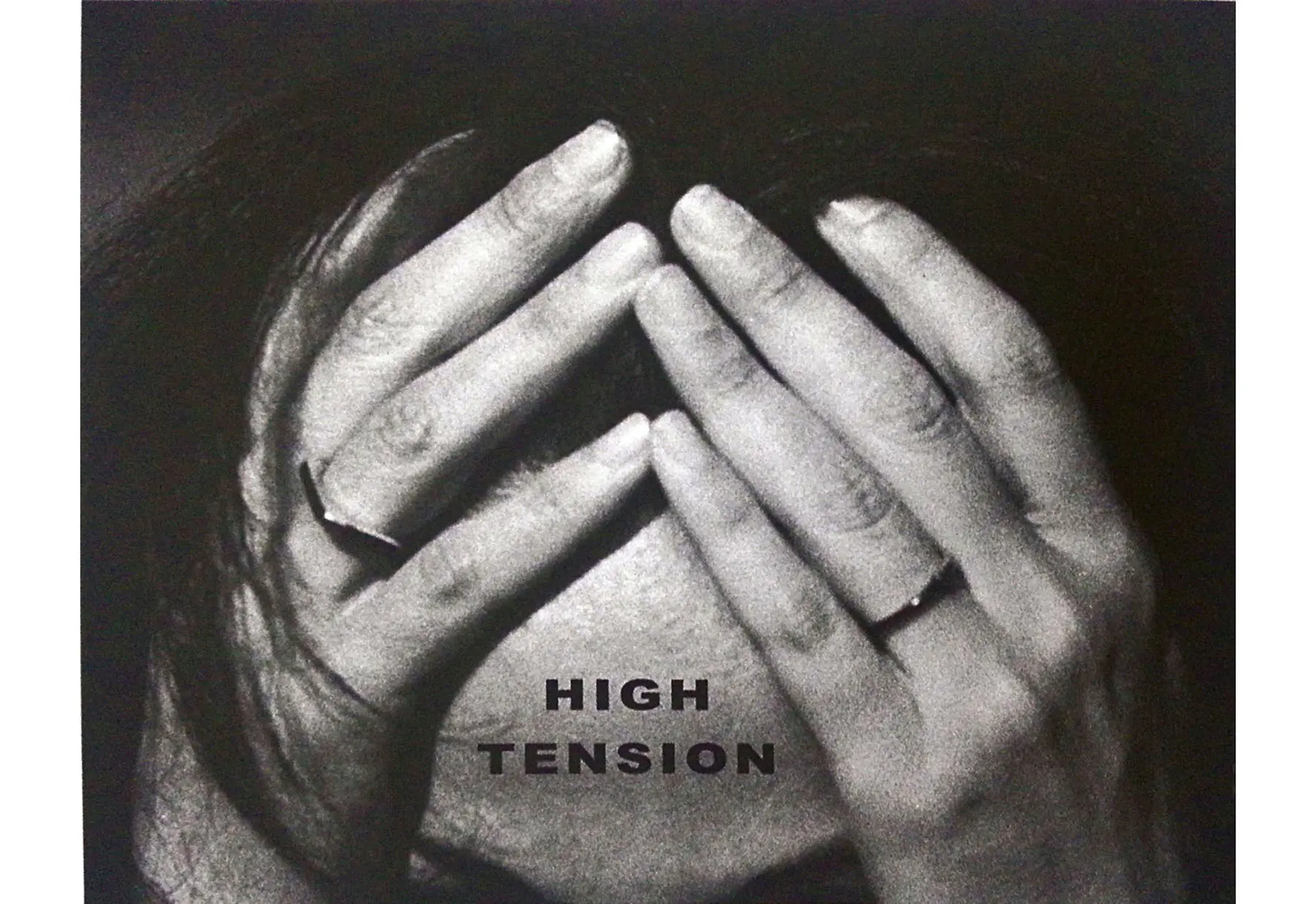
One element seems to connect these works from various moments in Maiolino’s career: a call to appropriate small details of the world through physical means. Great importance is given to the sense of touch, responsible for our perception of relief in the photographic copies of sculptures in A flor de piel (2009) and En partes (2010). Meanwhile, in another segment of Maiolino’s audiovisual production, the artist’s gaze contemplates in detail the expressivity of the hand. Hands play a central role in Ad hoc (a propósito), from 1982. While the images move quickly and create an inventory of interwoven shapes, in terms of sound a superposition of texts disorients the viewer. The lines of the hand are as deceiving as the wrinkles on a face. In Quaquaraquaquá (1999-2004), the artist’s own body seems to occupy the foreground and we can accompany it in the preparation of food in a domestic space. The hand manipulating the pot is connected to the mouth that sings an Elis Regina tune. Those lips are, in turn, connected to a first-person camera that substitutes for her eyes and moves around the scene.
This way of looking at the world in detail is a constant in Anna Maria Maiolino’s work, well defined, it seems to me, in the title of one of her photographic series: Fotopoemación. This is an articulation of image, word, and body; it photographs, enunciates, and moves. Vision, hearing, and touch are linked to that which we call human. While this exhibition doesn’t feature the same works Maiolino presented in Kassel, it is inevitable to establish connections. In the absence of clay-based three-dimensionality, what we do have is the two-dimensional representation of the sculptural element par excellence: human flesh. Instead of the small folds of the ceramic cylinders, we have the curvature of the mouth, the fingers, and an unstable gaze. The small chrysalises sculpted by the artist are left out; the persistent presence of eggs is a dominant element now.
In the end, Anna Maria Maiolino’s artistic investigation turns on the craftsmanship of life. While, on the one hand, this retrospective is based on technical images captured, imprisoned, recorded by photography, video, and audio, on the other all of these images refer us to exchanges between bodies. As one of the works on exhibit shows, we live at a moment in history when each individual is sitting on a chair, with a phone to his or her ear. We are able to see the others in front of us, but a large wooden table makes any contact impossible. Then, all we can do is to watch others as one analyzes a blank space.
RAPHAEL FONSECA
Critic, curator, and art historian.