
I have been making art for the last sixty years. Nobody ever hacked my account (as far as I know) to find out about my private mail or hobbies or activities. Whenever I produced new pieces, there never was a major public reaction. Generally, nobody ever wrote reviews, good or bad, unless I had a well-organized exhibition in a reputable place. So, now somebody hacked George W. Bush’s account, discovered that he is painting, and put images of the paintings up for public consideration. It became a big event in the U.S. art world, at least as reflected on Facebook. In two days Bush’s paintings (if they are indeed his) have received more critical reviews and comments than I have had in sixty years. That makes Bush, together with Cecilia Giménez, the biggest art hits of, at least, the last twelve months.
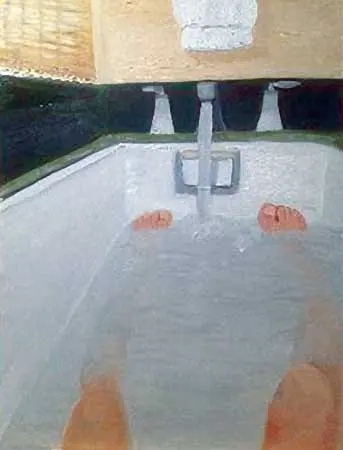
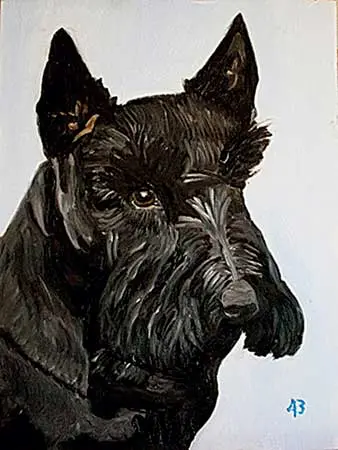
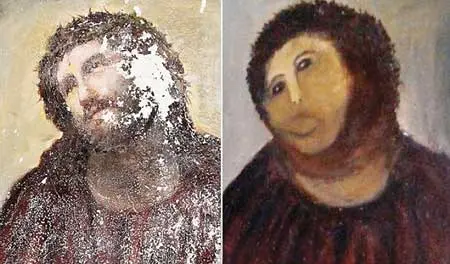
Giménez is the 80-year-old lady who retouched the Ecce Homo mural in the Spanish town of Borja to the point of appropriation. Bush’s paintings depict in one painting his legs in a bathtub and, in another, himself taking a shower facing a shaving mirror. Several clever people immediately used Photoshop to insert Giménez’s masterpiece onto Bush’s mirror, and thus tried to combine two phenomena into one. Giménez’s piece was public and will remain public. The town decided to use the publicity it generated, added to a miraculous transmutation from initial indignation into a wave of sympathy and admiration, to create a tourist attraction. Viewing of the retouched fresco costs the visitors 4 Euros, and Ryanair introduced a flight to Zaragoza, the nearest airport to Borja, to facilitate access.1 So far, Bush’s paintings had remained private, except for a portrait of his dog Barney. Barney died on February 1 this year and the painting was made public.

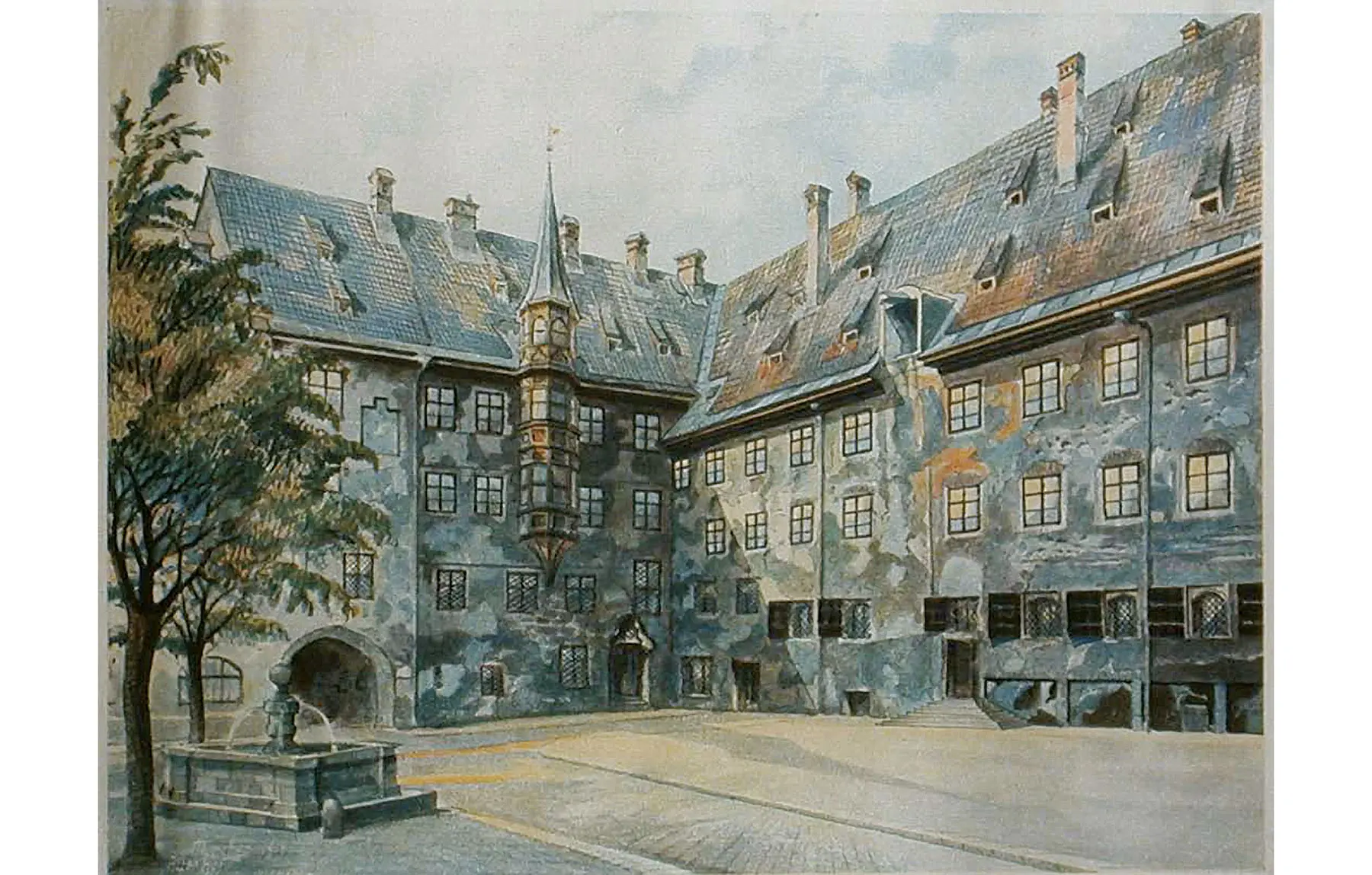
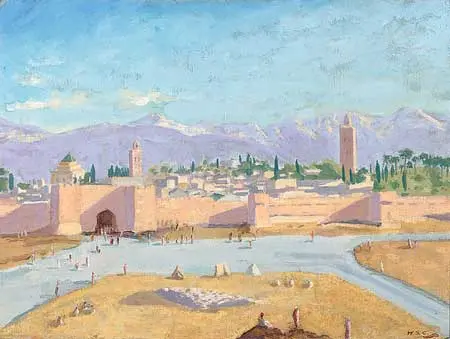
I was always intrigued by the combination of being ahead of state and making art. I seem to be alone in this fascination. I tried to identify examples through Google but don’t get any answers to my queries. Neither “presidents who paint,” “painters in government,” nor “heads of state making art” give any information. One has to know some names in advance if one wants to find out something. So far, therefore, Bush is in a small group formed by Hitler, Churchill, Eisenhower, and Putin. What brings them together is that they all painted or paint. Except for Hitler, they consider themselves amateurs. Eisenhower, although self-deprecating (he is quoted as saying that his hand is better for an ax than for a sable brush), used his paintings for White House Christmas cards. In spite of Eisenhower’s modesty, the cards could be considered an abuse of power and a misuse of public funds. Two more heads of state were connected with the arts, though not the visual arts: Václav Havel and Vyautas Landsbergis. However, both were established in their fields before becoming presidents. Havel was a well-known writer and playwright before he became president of Czechoslovakia. Landsbergis was a musician and a Fluxus artist, a friend of the founder of Fluxus George Maciunas, before becoming president of Lithuania in 1990.2
In spite of his professionalism, Hitler’s pieces achieved sales prices of 20,000 dollars, a small figure when compared with Putin and Churchill who both reached one million. In spite of his postcards, Eisenhower lags behind all of them with only 7,500 dollars. What Bush may achieve in this regard is yet to be determined. As an aside, Giménez’s works, very eclectic like Bush’s if one looks at other works, sell for about 2,000 dollars. However, in terms of critical acclaim of heads-of-state art, the situation is quite different. Comments are mostly devastating against all of them. This makes the review of Jerry Saltz, the art reviewer of New York Magazine and a critic with some standing, the more remarkable. He is ecstatic with Bush’s oeuvre.3
Saltz starts his article by trying to reconcile his past opinions of despising people and politicians with his reactions to the paintings: “Oh My God! Pigs fly. I like something about George W. Bush. A lot.” He ends his writing with: “Sweet, sublime, oblique oblivion. The visibility of invisibleness. Paint, George, paint. Paint more. Please. If you exhibit it I’ll write about it. The Whitney Museum of American Art should get on the stick and offer this American a small show. […].”
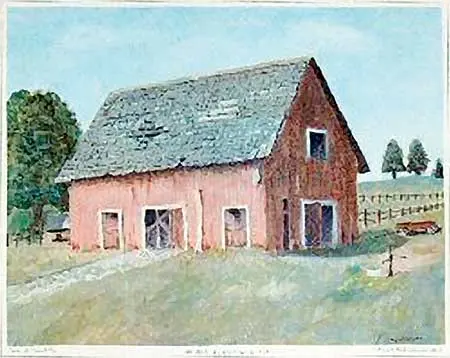
It is undeniable that the two bathroom paintings, at least as seen on the Internet, have a certain charm in their clumsiness and in their safe range of earthy colors. They are certainly unexpectedly coming from the same hand that, with the exception of the nuclear ones, detonated all the killing buttons available and condemned the world to live in its present instability, economic disaster, and a reign of violence without a predictable end. But it is also true that if my aunt had painted those canvases they would have elicited a sympathetic smile from my artist friends, but not much more. Or, if an established artist had painted them instead, the reaction would have been: “Why the hell did he or she change styles?”
One should, therefore, put things into perspective. It’s true that within the club of art-making heads of state responsible for genocides and mass killings (no matter what their rationale might be), Bush’s paintings seem to be ahead by some art historical years. At least considering his colleagues Hitler, Churchill, and Eisenhower. Putin’s work is only known through one example on the Internet and it is premature to make any judgment. He seems to have a firm brush stroke and no fear of abstraction, but who knows. The price of his painting achieved was probably caused by oligarchic adulation and not by serious art judgment.
So far all this information would seem as trivial and gossipy as it is. But one might, just as well, use the occasion to draw some conclusions. One is the obvious one: the world would be a better place if that quintet had dedicated their lives to art and not to politics. However, that is a truism that could be applied to any one of us, no matter what high opinion we might have of ourselves. The other is that the art field is really messed up.
The first question to be asked is what do Bush’s paintings contribute to our way of seeing or thinking, even if one restricts the question to the local boundaries of the U.S. How are his canvases enriching? I venture to say that the answer is negative. For some viewers, the paintings promise the charm of naïveté brought to a decent ending. In fact, this is consistent with the same demeanor that ensured Bush his unexpectedly high percentage of voters during his political life. What is surprising is that in that sense he apparently was able to be true to himself, whatever that might mean. However, there is no further revelation, nor any paradigmatic value in that truth.
Mostly for fun and derision, Giménez’s Christ image has been circulated profusely taking interesting positions on Che Guevara’s t-shirts, Last Suppers, crepes, and versions of the Mona Lisa. The result is that her version of Ecce Homo has become an icon thanks to a process similar to the market branding of commercial products. By now the image has embedded itself in our minds to a point that places it beyond any evaluation of quality. The initial shock it caused was based on comparison with the original and by the association of her well-intended work with vandalism. The painting she restored was already pretty bad, vandalism was not part of the project, and the author was a warm-hearted and devout octogenarian who in art terms was as uninformed and naïf as Bush is. If Bush’s pieces have some social merit, it is that they had remained a private affair until now and that they were made public by a hacker and not by himself. Once the anecdotal noise about Giménez’s Christ is over, the image actually might remain in public memory. Bush’s paintings, the same as other works by Giménez, will not.
One of the lessons, although not a new one, is that advertising has the power to influence our way of seeing. If pointed and persistent enough, we will absorb an image and integrate it into our culture to the point of bypassing critical questioning. Neither the bottles of Coca-Cola nor its logo is particularly pretty. And yet, they have become part of our daily iconography. The new aluminum bottle (2009) is much more elegant and echoes with the original, but it is unlikely that it will take over our imagination, at least not for a long time.4
Another lesson is the role that authorship plays in all of this. Part of this role forces us to pursue strategies of brand marketing for both the work and ourselves. Work has to be recognizable, that is, repetitious, in order to create a style. And then the style has to be attributable, so that any piece within it may become valuable in the market. It will be recognized as a “signature work”. We don’t know what Bush’s aesthetic future may hold and how his signature pieces will be defined. It’s possible that the Facebook response may push him to pursue the bathroom paintings. However, the echoes are not reflected on his page. There is only Barney’s conventional dog portrait while the rest seems to be dedicated to golf, family news, and some philanthropic causes.
Weirdly, for all of us who were espousing the disappearance between art and life, this event should be seen as a success. People stereotyped as insensitive to anything human suddenly show a glimmer of sensitivity. The elitism of art is being challenged. Anybody can be an artist. And so on, and so on. The éclat, however, is not based on the democratization of art, but on the consumption of celebrity. One might think that as long this remains transparent there is no harm done. Things become more complicated when this transparency is purposefully muddled.
Authorship is already bad enough, but it gets worse when it becomes synonymous with celebrity, or when a celebrity takes over. And even that could be kept as a separate transparent process of turbidity, and harm contained. Saltz wrote a semi-funny piece reflecting more about his surprise than about real art issues. At least I hope so. But the background against which all this is read is not Saltz’s self-satisfaction. It is one drawn by Gagosian Gallery when it exhibited work by Bob Dylan.5
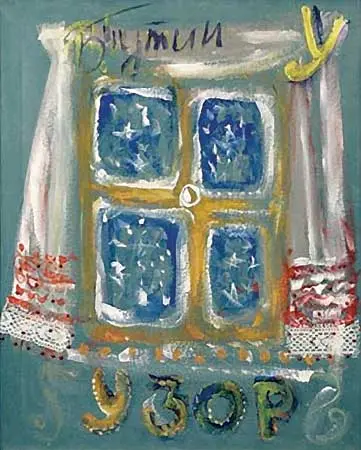
Normally one would describe Gagosian as the most powerful gallery in the world, with imperial museum ambitions both in international proliferation of venues and in how exhibitions are mounted. And also with bigger scandals involving millions of dollars than any other gallery. In a world where culture is suffering economic constraints, the gallery mounts museum-quality exhibits of the kind that real museums cannot afford anymore and that often are more memorable than a museum show. With that image in tow, the gallery presented Dylan’s work and prepared a press release that stated: “The most celebrated singer-songwriter of our time, Bob Dylan’s visual art is marked by the same constant drive for renewal that characterizes his legendary music.” Dylan’s show appears in the context of an endless list of artists among which one finds reputable names like Francis Bacon, Willem de Kooning, Tracy Emin, Yayoi Kusama, Richard Serra, and Cindy Sherman, just to mention a few. Dylan’s music certainly measures up to the visual arts produced by any of them. His art does not. Post-Fauve, his paintings are more accomplished than either Giménez’s Ecce Homo or Bush’s bathtub painting, but they are also more conventional. I could not find a review by Saltz, but prints reproducing his paintings in editions of 295 can be bought for around 2,200 dollars.
NOTES
1. Barry Neld, “Ecce Homo ‘restorer’ wants a slice of the Royalties,” The Guardian, 9.20.12. Giménez wants her cut to go to charities.
2. Technically speaking, Landsbergis was the president of the Supreme Council of Lithuania from 1990 to 1992 and as such the head of state. Parliament then restored the independence of the Republic of Lithuania.
3. “Jerry Saltz: George W. Bush Is a Good Painter!,” Vulture, 2/8/13
4. The new bottle was designed by Chris Garvey, of the firm Turner Duckworth.
5. “Revisionist Art: Thirty Works by Bob Dylan,” Gagosian Gallery, NY, 11/28/2012 – 1/12/2013.
LUIS CAMNITZER
Emeritus Professor of SUNY College, Old Westbury.