
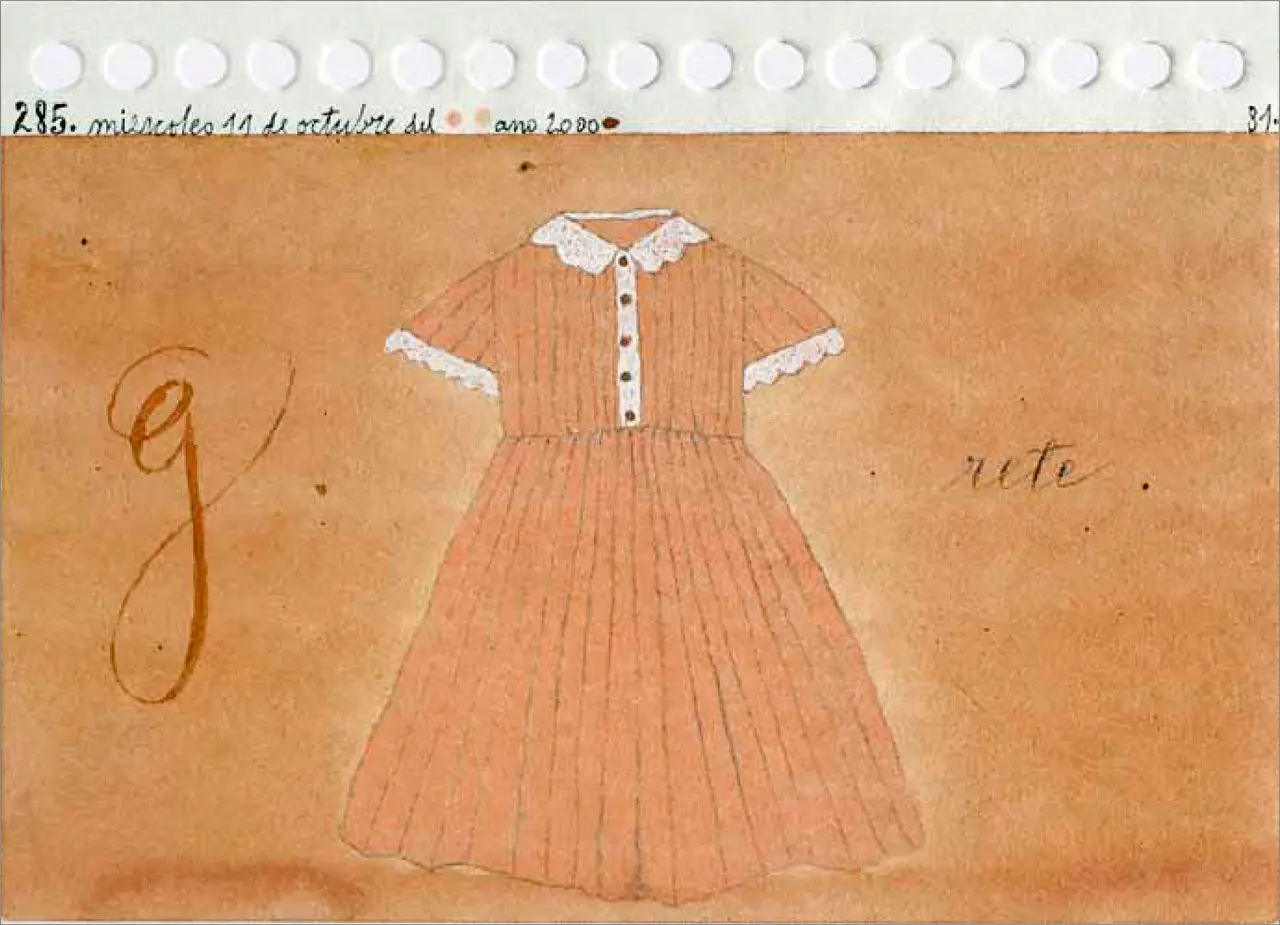
Works of art must have a minimum of two components: creation and documentation. The correct thing is that creation has a greater presence than documentation. It is possible to delve into the reasons why documentation must be part of the essential ingredients of a work of art, but that conversation falls outside this current review. Briefly stated: the historic moment in which the author works, his/her personal and professional situation, the elements that are registered in each work, and his/her environment are, among other factors, irrefutable and insightful documents that are essential whether these are presented in an overt or subliminal form. In the instance of The Yearbooks by José Antonio Suárez-Londoño, the coordinates offer an exhibition approach through a project that the Colombian artist initiated in 1997: namely, to create a daily drawing based on the book or series that Suárez-Londoño happened to be reading at the time. And he has been doing so until today. It is in this manner that José Antonio Suárez-Londoño established his work, the structure that sustains it, the documentation on which it is based along the artist’s interpretation of certain books. It should be pointed out that these are drawings that function as illustrations but with an emphasis on the creative media. Without being completely abstract, the drawings lean towards abstraction. Let’s say that the exhibited results are not limited to the usual narrative presentation.
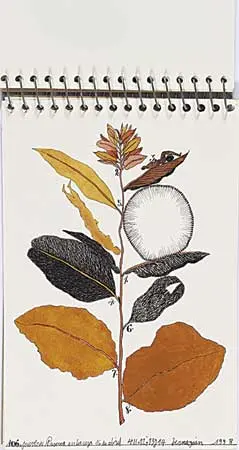
The drawings in this exhibition are the size of notebooks. Their measurements range from 6 × 8 in. and 8 ¾ × 10 in. to 3 ¼ × 7 1/8 in. Being vertical or horizontal, the drawings differ from each other in that some occupy two pages and others only one. Here it is convenient to remember the so-called Law of Adaptation to the Frame. Namely, the author must adapt his work to the size of the available paper support. When deciding that The Yearbooks would be of a certain form, material, and size, the artist predetermined his work. Because of the type of materials, a certain “bleed” is produced when the trace touches the next page or pages. Suárez-Londoño knows how to incorporate/resume these “excesses” in the drawing of the following page. The expression across space also pertains to the transmission of that which the lectures provoke in the author. This exhibition by Suárez-Londoño at the Drawing Room of the Drawing Center in New York offered viewers a unique experience: the artist decided for the first time to present some of his loose drawings, separated from the notebooks, so they are easier to observe by viewers and are presented in a sequential manner. The reading material these drawings are based on is quite diverse; from Ovid’s Metamorphosis to The Diaries of Paul Klee, and from The Rings of Saturn by W. G. Sebald to Franz Kafka.
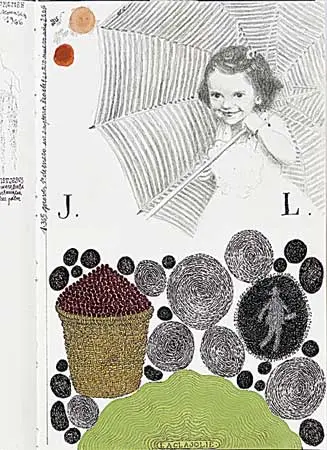
Many are the artists who throughout the history of art have drawn in a systematic and continuous manner—self-portraits, works inspired by books, analysis of a writer’s or composer’s work, etc. Mexican artist José Luis Cuevas earned the right to be mentioned as a referent of drawing for having elevated the discipline to an expressive medium in its own right—instead of its more common role as support for painting—by creating images based on books he read and for having done so about specific themes, but mostly self-portraits, every day and for extended periods of time—the latter brings Cuevas even closer in line with Suárez-Londoño’s approach. The titles and some phrases are often drawn on the pages authored by this Colombian drawer, engraver, and painter who still lives in his homeland. Suárez-Londoño has exhibited works created in those three disciplines at some of the most prestigious spaces of the contemporary world. On this occasion, he exhibits under the curatorship of Claire Gilman. On the other hand, Gabriel Pérez-Barreiro and Regine Basha were instrumental in making this exhibition a reality with the help of the Colombian Embassy. Likewise, the City of New York sponsored the promotion of the event, as no less could be expected when the venue is the Drawing Center.
GRACIELA KARTOFEL
Independent art historian, critic, and curator.