Curator and Collection
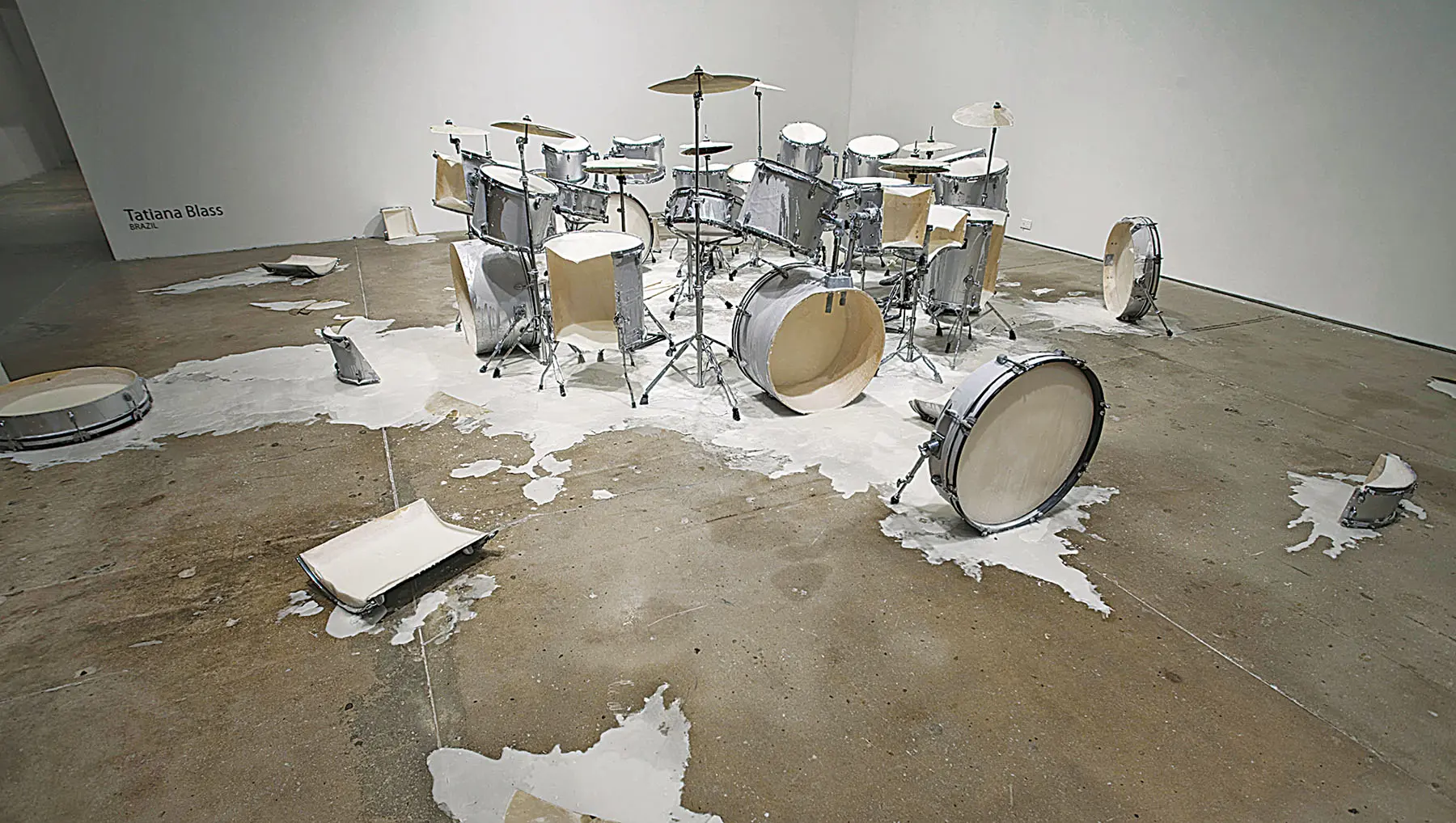
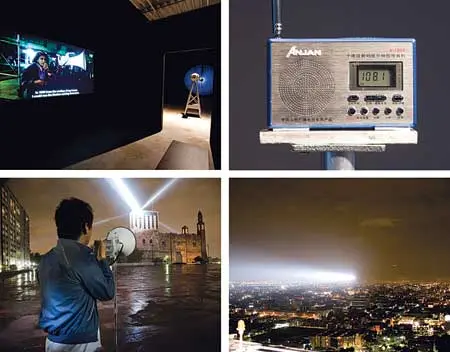
The exhibition Unsaid / Spoken at CIFO Miami, curated by Moacir dos Anjos and José Roca, which includes both works from CIFO and from the Ella Fontanals Cisneros Collection, fosters, on the one hand, the possibility of boldly taking the pulse of a topic that has always been present in the art of the post-avant-garde: communication, speech, and the power of symbolic expression as an unveiling of our relationship with the world. And on the other hand, it presents the process of gestation of the concept on the basis of which the curators articulated the discursive trajectory of Unsaid / Spoken. This implies putting in perspective, not the fact of possessing already a set of conclusions and having them unfurl through the selection of works, but the opposite: how to make the concept of the exhibition emerge from the body of works that the curators found. Something that would emphasize, without omission of its distinctive qualities, the relationship between the various poetics, that would explain the different discursive pathways followed by the authors present here but would do so on the basis of the conceptual horizon of the three works selected and the general framework for the project. These are: Metade da fala no chao (Half of the Speech on the ground-drums), 2010, by Tatiana Blass, 223 Conversation, 2005, by Joseph Grigely, and Voz Alta and Prototype, 2008, by Lozano-Hemmer. The symbolic domains of these works progressively build up the curatorial concept, to which then the remaining works in the exhibition are anchored. This curatorial exercise possesses a great inductive profile, since, as José Roca notes, “the argument started to appear on the basis of the works and not the other way around,” 1, with the added advantage of avoiding getting mired in the topic/filter when it came to erecting a gaze on the basis of works from the two collections.
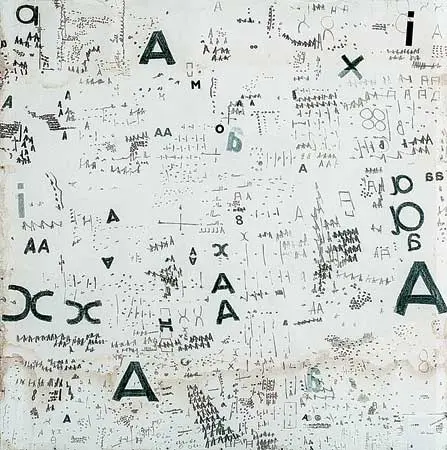
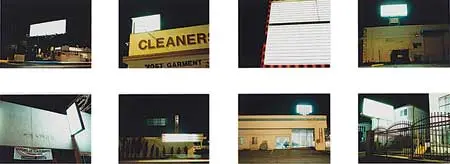
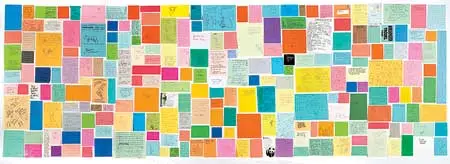
“What do these three works have in common?” José Roca wonders. “A quick review of their titles makes evident that the concept of speech is present in all three: speech, conversation, voice. This suggested that the show could be a reflection about communication: its impossibility, its difficulties, its failures, the distance between elocution and its reception.” 2 From these three installations, which establish a starting point, a point of interception, and on arrival, the curators threaded the remaining artists: Mira Schendel (Brazil), Ana Maria Maiolino (Brazil), Johanna Calle (Colombia), Detanico / Lain (Brazil), Ícaro Zorbar (Colombia), Pablo Helguera (Mexico), Los Carpinteros (Cuba), Doug Aitken (USA), Antonio Vega Macotela (Mexico), Rivane Neuenschwander (Brazil), Mark Dion (USA), Julieta Aranda (Mexico), Franz Erhard Walther (Germany), Chantal Akerman (Belgium), Carlos Garaicoa (Cuba), Felipe Dulzaides (Cuba), Gabriel Orozco (Mexico), Damián Ortega (Mexico), Francis Alÿs (Mexico), Félix González-Torres (Cuba), Tamar Guimaraes (Brazil).

Between the Image and the Curator
Beyond the process or method chosen by the curators to organize a reading of the collection, the boldness displayed in the construction of the discourse, and its translation into an exhibition with great expressive potency, Unsaid / Unspoken confronts us with a series of questions that we will now briefly sketch. For instance: What is a curator? Do images need to be curated? If so, what or why do they need to be curated?
The curator is above all a mediator, the person that puts in circulation a series of works for their interpretation within a given socio-cultural context. And this putting-in-circulation (for Roca, it is a “making signify”) also implies the construction of a discursive semantics that allows for the intermediation between the artist and the audience, facilitating a better understanding by the viewer of the work of an artist in general, and his or her aesthetic and discursive ideas in particular.
Referring to Unsaid / Spoken, Moacir says that the work of Tatiana Blass, Lozano-Hemmer, and Joseph Grigely had the most direct impact on the research process. For him, this “began what we call fiction, this is to say, the creation of a specific plotting of the meanings, which is woven only when two or more objects approach each other, and which also involves the discarding of all other potential meanings contained in the works.” 3 This selection is deeply marked by the traces left by the sense, and also by the translation of this mark into a fictional construction through the images.
The Image: “A Dialectics at Rest”
Returning to the question of why do images need to be curated, I refer to Walter Benjamin’s idea that the image is a “dialectics at rest.” While the relationship of the present with the past is purely temporal and continuous, its relationship with the now is dialectic: it is not a flow, but an image of discontinuity. “Only dialectical images are true images (this is to say, not archaic), and the site where we find them is language.” 4 For Benjamin, the fundamental character of the image is that it is pregnant with temporality (Lozano-Hemmer), but it is a temporality that evokes space, inasmuch as it includes also the traces and attributes of the space in which it is produced (Tatiana Blass), thus completing the synthesis, the moment of instantaneous fusion in which it acquires materiality, this is to say, the density of history (Joseph Grigely). So, in the dialectical image “what has existed in a given epoch is nevertheless, at the same time, what has existed always. As such, however, it only appears to the gaze of an epoch: to wit, that in which humanity, rubbing its eyes, recognizes precisely that dream-like image as such.” 5
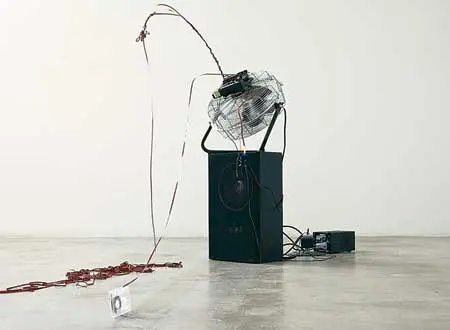
The syntax that is built on the basis of these three works taken as starting point, point of interception, and arrival situate in an aesthetic perspective the element of “dialectics at rest” that is present in all the works, calling them to dialogue within a powerful constellation of meaning (speech, communication), although preserving their respective poetic discursive domains. Under this conceptually and aesthetically elegant view, unsuspected series are revealed between works in formats, poetics, discourses, and aesthetics that are strikingly dissimilar.
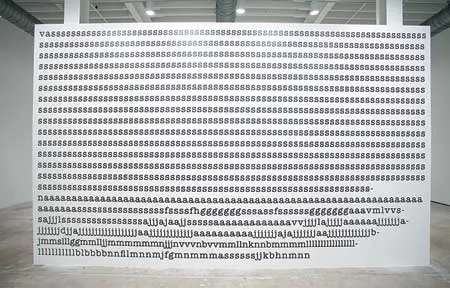
As Moacir dos Anjos puts it: “Other curators would surely establish different starting points under the same conditions.” 6 If the discursive poetic planes, rather than emphasizing the enunciates of speech and communication as Unsaid / Spoken does, presented a reflection about the way in which private space becomes more spectacularly public and how, paradoxically, public space is more and more a giant commercial center, the entire syntax of the show would change, and with it, it is meaning. This has one consequence from the curatorial point of view: it adopts as its own, in the words of Lucas Kiektik, a position where the work of art must be inscribed in the interior of a network of signs, refusing to consider the work as an autonomous original. The conceptual ability to attempt this curatorial vision, and to do so in such an expressive and creatively powerful way, is one of the main achievements of Unsaid / Spoken.
NOTES
1. José Roca, in Moacir dos Anjos y José Roca en el contexto del Premio a la Curaduría CIFO.Catalog for the exhibition Unsaid / Spoken. Cisneros Fontanals Art Foundation CIFO).Miami, 2013. p. 17.
2. José Roca. Idem.
3. Moacir dos Anjos, in Moacir dos Anjos y José Roca en el contexto del Premio a la Curaduría CIFO.Catalog for the exhibition Unsaid / Spoken.Cisneros Fontanals Art Foundation CIFO).Miami, 2013. pp 21, 22.
4. Walter Benjamin, Libros de los pasajes. Edited byRolf Tiedenmann. Ediciones Akal S. A., 2005. Madrid. p. 464.
5. Walter Benjamin. Idem.
6. Moacir dos Anjos. Idem. p. 22.
DENNYS MATTOS