
The photographs of María Martínez-Cañas are images of a search for identity captured in fragments of history and memory. They are the visual documents of a young woman entranced by the past, but very much of the present.
María Martínez-Cañas left Cuba, the country of her birth in 1960, at only three months of age, never to return. Her family lived in Miami and then settled in Puerto Rico. She took her first trip back to the United States in 1978 to attend the Philadelphia College of Art for a Bachelor of Fine Arts degree, followed by a Master's degree in Fine Art from the School of the Art Institute of Chicago in 1984. For a child of the Caribbean, the change to the Northeast was alienating and profound and would have a remarkable impact on her direction as an artist by providing her with the impetus to return, spiritually if not physically. It was in an art history class tour of Spain that she realized she "had come home" and that her Spanish heritage could provide the link to the past and to where she belonged. In 1985, a Fulbright-Hays Grant to study in Madrid signaled an emotional response that gave her the opportunity to put her work in focus —a focus gleaned from archival research on the original maps of Christopher Columbus's voyage to the New World and, most significantly, of Cuba. The voyage of Columbus became her voyage, documented in a unique photographic technique as complex and difficult as the archival records that inspired them.
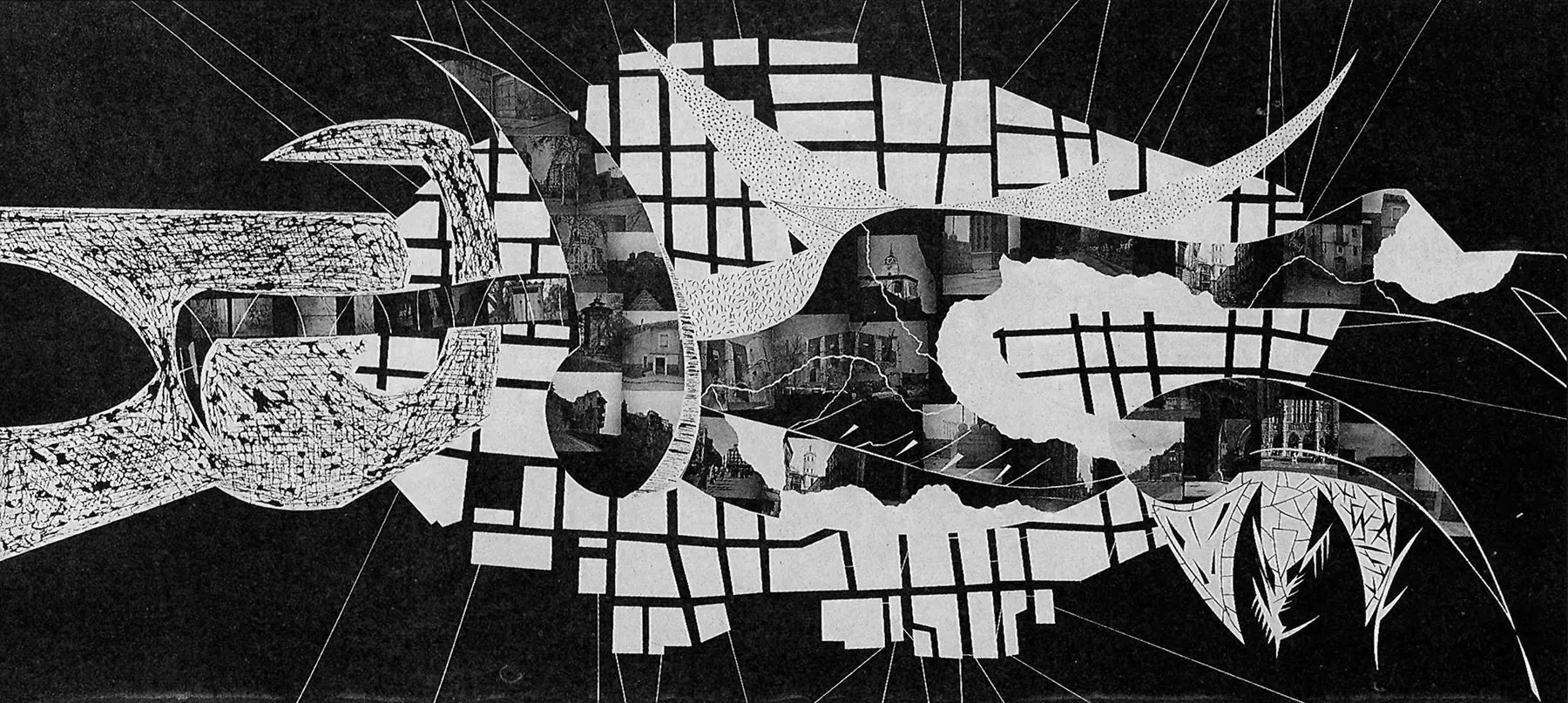
María assembles the eccentric images of old charts and city maps in a fragmented construction of amber-lith and image negatives. A "complete artist", she is involved in every aspect of her work, from the photographing to the cutting, the final assembly, and processing. This "hands-on" technique allows her to experience the tactile qualities of the scientific procedures involved in her photography; beyond merely pushing the shutter button and manipulating the images, she begins by cutting a sheet of amber-lith, an opaque masking film (clear plastic with an orange emulsion) used in graphic art. This creates a negative of knife-like flicks when transferred to photographic paper. She then adds the negatives of her camera work to construct intricate combinations which are printed as fragmented images and complex aesthetic patterns. Both the images and the cut patterns are significant and symbolic, their assembly conceived in series alluding to reminiscences and iconographic combinations. They create their own visual language, parts of which are recognizable, while others are too personal or incomplete to identify or fully understand.
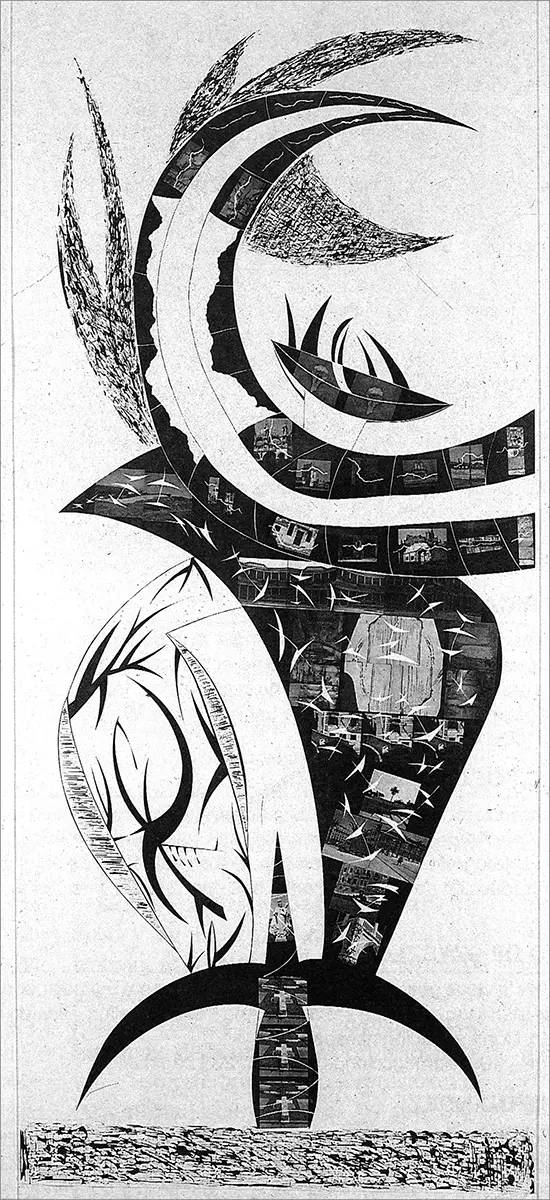
Bird (1990) is an elegant abstraction of a tropical bird containing within its lyrical form the photographs of architectural and figurative images in tight, orderly patterns. The graceful and repetitive "cuts" enhance the association with the bird in flight and beckon the viewer to come closer and join in the voyage for a bird's-eye view. The boat-like shape above the bird's feathers holds hot-air balloons, while the aerodynamic form rising like a phoenix from the sea below reiterates the invitation to flight and discovery in a tropical landscape.
The landscape is that of Cuba. With Havana in the Background (1991), the process is reversed to black and white to highlight the contours of an old map of the city of Havana. Like a bird hovering above, one sees a city that is mysteriously vacant; the few buildings seem isolated against the empty grid. The images are symbols of separation and enclosure. There are no people. With the map projects, María Martinez-Cañas says she “confronts her own terrible sense of enclosure, alienation-separation.” She has always had the desire to belong to a "particular place". The map of the lost city of her birth exists only in fragments to symbolize the tragedy of exile. The maps that served to inspire her work are not the tragedy of exile. The maps that served to inspire her work are not only representations of specific territories, but the source of organization for her images of the past.
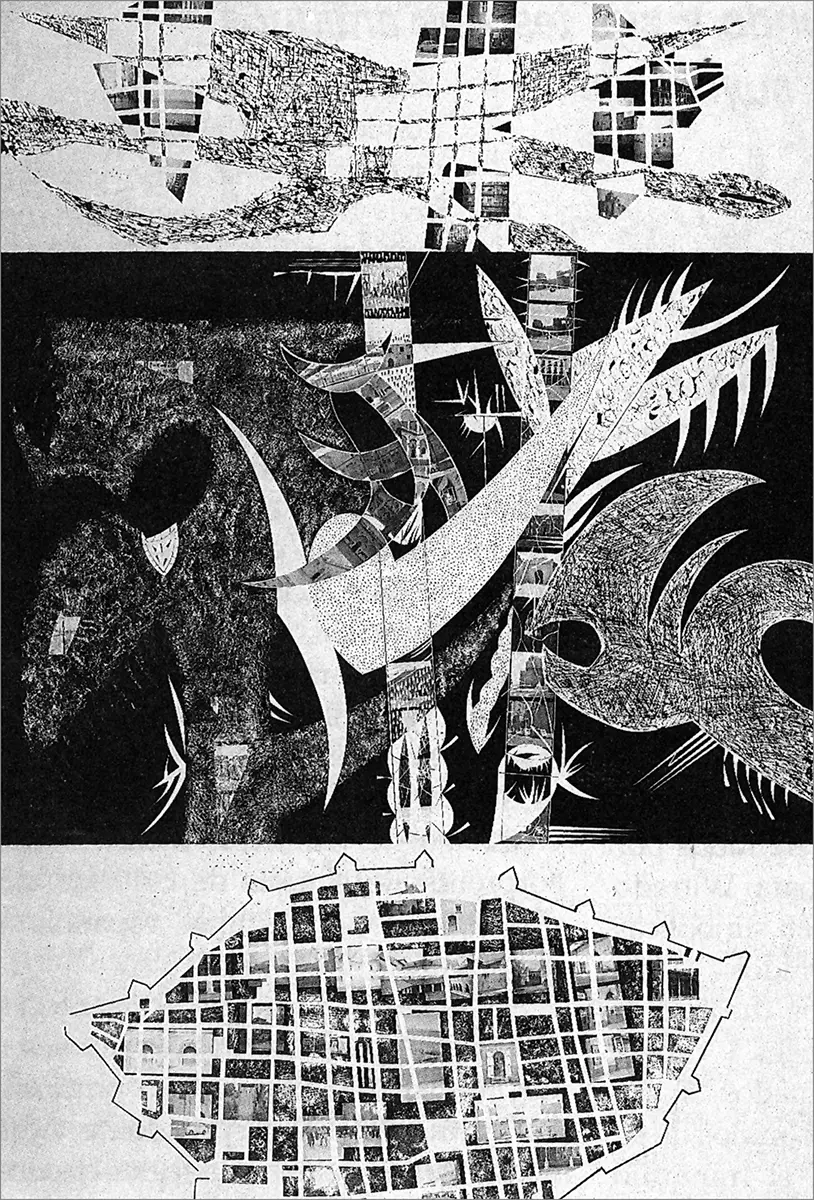
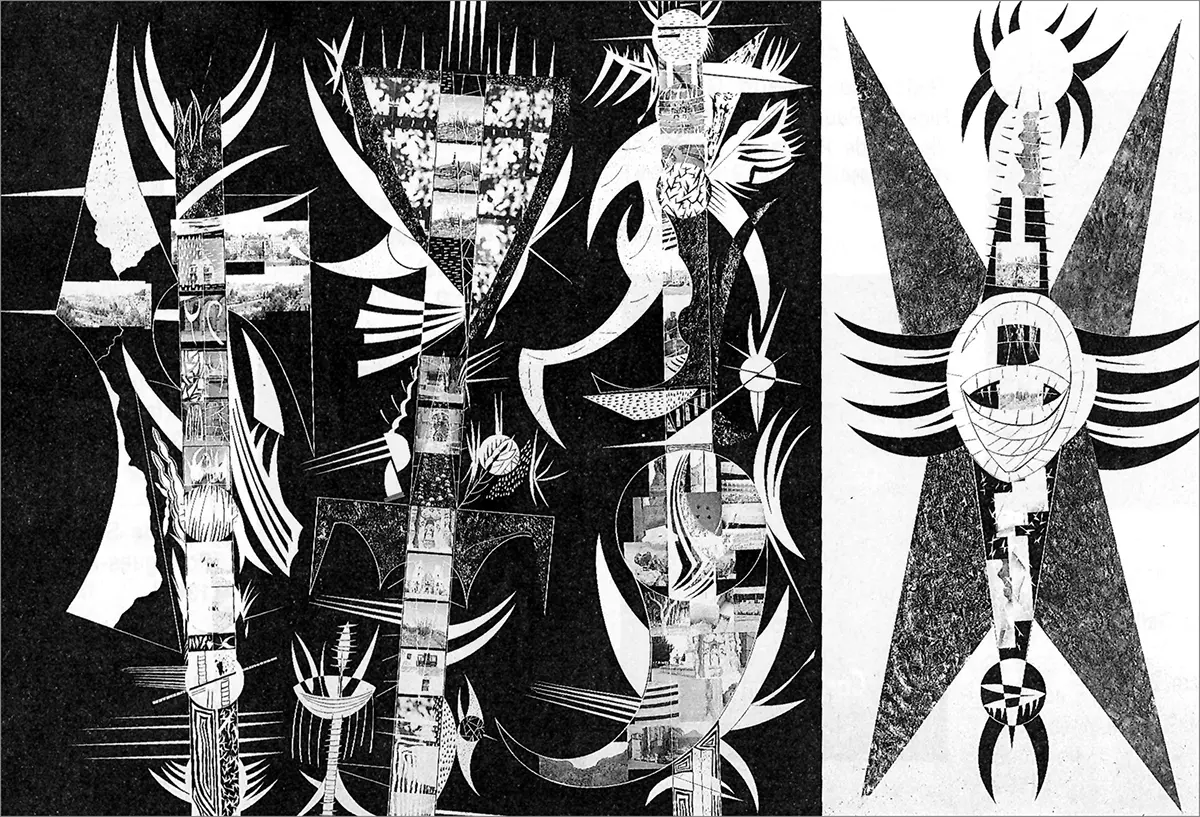
Rumbos de un pueblo blanco (1991) combines the map forms on either side of a triptych which features threatening plant-like shapes and totems emerging out of the darkness. The grids of aerial maps containing architectural images and hand-tooled patterns of graduated tonalities are printed on white-the city of the white people threatened by the sinister forces of the unknown rituals of their black citizens. Inspired by the works of the Cuban painter Wifredo Lam, the shapes symbolize the African rituals brought to the island of Cuba with the slaves during the colonial period. The Yoruba gods and goddesses were transformed into the Orishas of Santería, and the sounds of their music reverberated in the quiet of the tropical landscape. Fascinated by this aspect of Cuban culture, Mara creates her own version in the shimmering forms that take over the island's night. In Lam's work, replete with the symbols of Cuba's cultural mix, she found a logical continuation of the map as the clue to her identity.
The admiration for the paintings of Wifredo Lam is also present in Free Me: Figure with Totem (1991) and We Are a History of Distance (1991). The totem is only one element found in Lam's work, which contains a surprising synthesis of cultures as different as the Chinese, Spanish, and Afro-Cuban.
Allusions to magic, Santería, tropical foliage, and ritual objects and animals vibrate in his paintings. The same surprising synthesis characterizes the complex arrangements created by María Martínez-Cañas. The photographic surface has been manipulated to produce a variety of textures and cut-out patterns within the work's aesthetic construction of luxuriant foliage of the jungle and its fearsome predators. A sense of exotic syncretic iconography dominates My Presence Before Your Jungle (1991).
The integration of colonial architectural images and other vestiges of modern urban reality is a startling contrast, not unlike that of the Old and New Worlds, which is ever-present in Latin America and the Caribbean.
The Old World of Spain and the New World of Cuba symbolized in the maps and charts were the result of her own voyage of discovery into the Spanish archives helped to locate her past. In 1991, Mara embarked on a new project based on a collection of fifteen Cuban stamps. The stamps were printed between the 1930s and the late 1970s and depict religious imagery; masterworks of Cuban painters Wifredo Lam and Amelia Peláez; political themes; maps, flowers, and the Cuban tobacco industry. Miniature vistas of her homeland, and the stamps were symbolic connections between places that now gave her work a specific point of visual reference that was not present in earlier thematic projects.
These small tokens of Cuba also gave her the opportunity to do something different —to work on a smaller scale and produce a limited edition portfolio rather than large silver prints. Each portfolio contains fifteen original Cuban stamps and fifteen 11" x 14" gelatin silver prints based on the artist's interpretation of an individual stamp presented in a custom-made archival box. The elegant and meticulous technique that María uses in all of her works translates to a small scale with relative ease. The size of the prints enhances her artistry and calls forth reminiscences of the tradition of Arabic miniatures, also part of the Spanish cultural heritage.
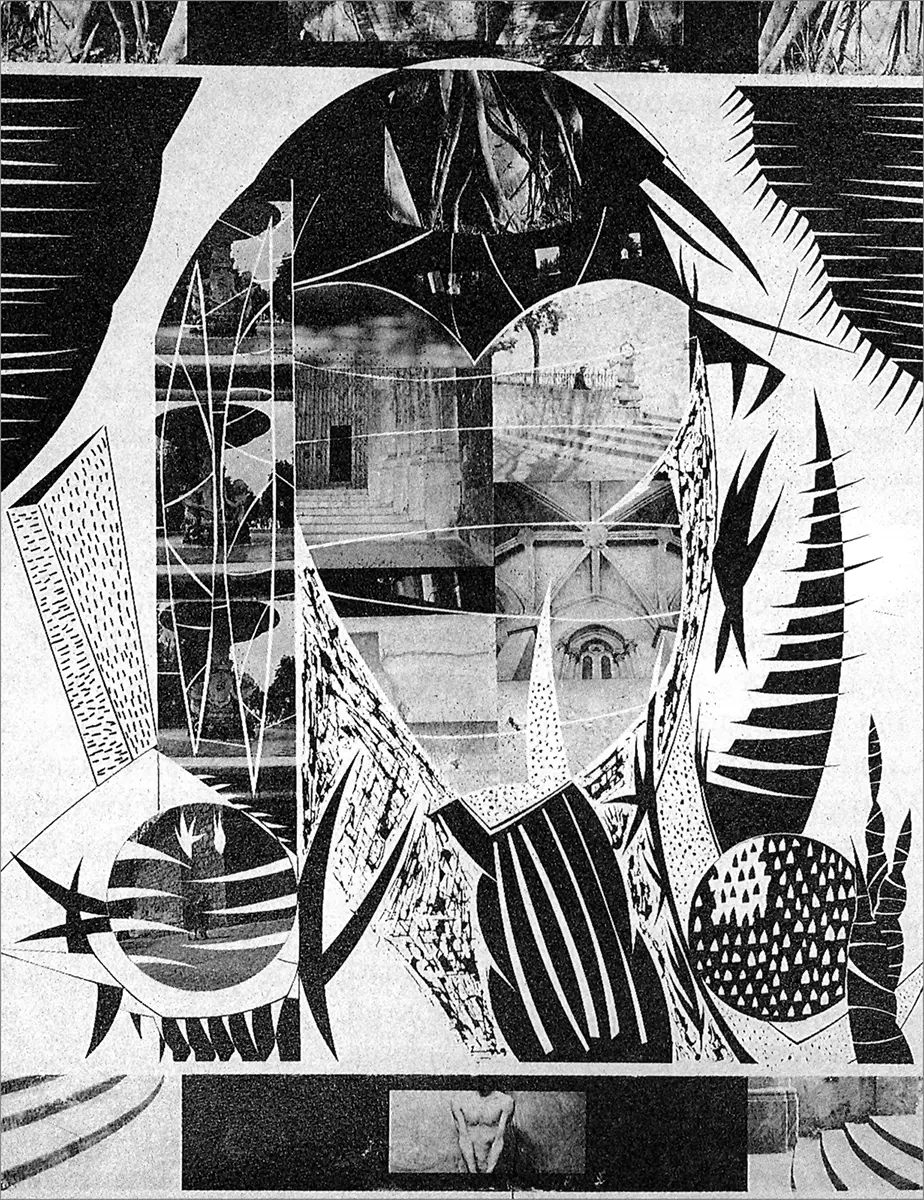
Fifteen Cuban Stamps: The Fifth Column (1991-1992) is based on a stamp that refers to World War II espionage. It was chosen to represent the terror her family experienced in the early years of the Castro regime when spies threatened their safety. Within the layers of images and meanings, isolated figures occupy deserted squares. The nude torso below is a snapshot of vulnerability.
Despite the grace of the sculptured lines and heart-shaped form, there is a sense of foreboding that dwells in the patterns of black and white, like the shroud of a ghostly presence.
It has a much different feeling from the print inspired by a stamp featuring a still-life by Cuban master painter Amelia Peláez, Fifteen Cuban Stamps: The White Table Cloth (1991-1992). Within the Cubist-Abstract table shape, which is the "stage-set" for Peláez's pictorial arrangements, the objects of the painting have been reinterpreted as a long-necked bird and replaced by a photograph of a Mayan pyramid. Unwilling to return to Cuba under the present regime to photograph its landscape, Mara travels extensively through other parts of the heritage-Spain, the Mediterranean, the Caribbean, and Latin America. In each location, she collects images that contribute to her pictorial assemblages and assist in reconstructing a definition of her own past. Amelia Peláez had also traveled away from Cuba before realizing that the art of international abstraction could be just as significant from her own personal perspective as that of the Europeans who inspired her style. She translated European modernism into Cuban modernism by incorporating the elements of her exotic and tropical surroundings into her paintings. María uses a similar technique. The scientific precision of the photographic process, which is the basis of her art, is the result of modern American training and a very contemporary aesthetic. This process becomes her own through the integration of personal images from exotic places inspired by private feelings of exile and alienation. The images combine with those of contemporary reality in a complex and syncretic interplay not unlike those of Amelia Peláez and Wifredo Lam, the Cuban painters she so admires.
Through the lens of the camera, María Martínez-Cañas has found the world of her heritage. The camera is the instrument that accompanies her on a personal voyage of discovery and provides the images that make that world and its antique treasures her own.
CAROL DAMIAN
Assistant Professor of Visual Art, Florida International University, Miami, Florida.