The eighth Visual Arts Biennial of the Central American Isthmus (BAVIC) took place in Panama City from January 15th to February 18th, 2013. The works selected in each of the region’s countries (excluding Belize) were exhibited in Panama’s Museum of Contemporary Art, with the exception of one work (a video installation by Erika Mierisch of Nicaragua) which was shown at the Los del Patio Cultural Center. The presentation of this regional exhibition has taken place in a different Central American capital every two years since its founding in 1998, initially as a biennial only for paintings. Considering the amount of funding and work that an international exhibition of this scope entails, one can only congratulate the organizers, sponsors, and institutions in the six participating countries that have managed to present it without interruption for fifteen years.
The year 2002, when the name of the event was changed to Visual Arts Biennial of the Central American Isthmus (BAVIC), marked the beginning of a more important phase in its development, with exhibitions that finally—and in a manner that was absolutely necessary—included artworks made in any of the techniques and media used in contemporary art. Another noteworthy improvement came about as of the seventh biennial in 2010 with the elimination of the prizes, following the practice established by other biennials in the region, which freed up funds that are now used for educational projects and also broadened the options regarding the kind of works and artists—or artists’ groups—that are allowed to participate. For the first time, this eighth BAVIC exhibited several pieces by multiple authors, including two duos from Costa Rica, as well as artists’ groups such as Veinti3 from Nicaragua and La Torana from Guatemala.
The eighth Central American biennial at the Museum of Contemporary Art seemed impressive due to its professional-looking exhibition design, a considerable step forward in comparison to the fourth biennial which had been shown in the same space. This time, in spite of the fact that there were again more works than could easily be accommodated, the exhibition was well distributed, allowing visitors to flow comfortably from one space to another. In the future, it would be interesting for the BAVIC to consider taking advantage of other locations in Panama City, including alternative exhibition spaces, as was done for the most recent Paiz Biennial in Guatemala, during which the artworks were displayed to the public in numerous buildings in the city’s downtown quarter.
In spite of the successful layout, and due mostly to the variety of works shown, the eighth biennial exhibition in Panama showed a lack of cohesiveness that has characterized these Central American shows since they began. Clearly, the time has come to rethink the format and to consider, as has been suggested on numerous occasions, the transition of the regional biennial into a curated exhibition, with a specific discourse defined by a curator, with whom the participating artists could have productive exchanges. In addition to the lack of a unifying concept, there is the fact that the selections in each of the countries were carried out in a different way, which this time fluctuated from local biennials with international juries (Honduras and Costa Rica), to decisions made by guest curators who related differently to the artists and the works (Guatemala and Nicaragua), to national selections carried out by committees of experts (El Salvador and Panama).

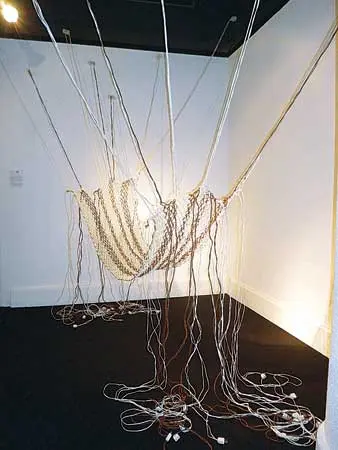
Regarding the advantages of exhibitions with a common thread, the current biennial provided a useful small-scale model. The presentation of the six works from Guatemala placed together in one space stood out for its esthetic and visual harmony. It included well-crafted individual installations by the artists of the La Torana group (Marlov Barrios, Erick Menchú, Norman Morales, Josué Romero, and Plinio Villagrán), as well as one piece they created jointly. The group presented an artisanal object that combined humor and symbolism, a hamaca woven out of electrical wire and hung up by the ends of the wires that were plugged into sockets in the museum walls. The ability to combine message and symbolism with irony, as well as the use of simple materials such as wire, wood, or ceramics, is typical of the La Torana artists, as visitors could observe in the works in this room, which seemed to communicate with each other and with the spectators.
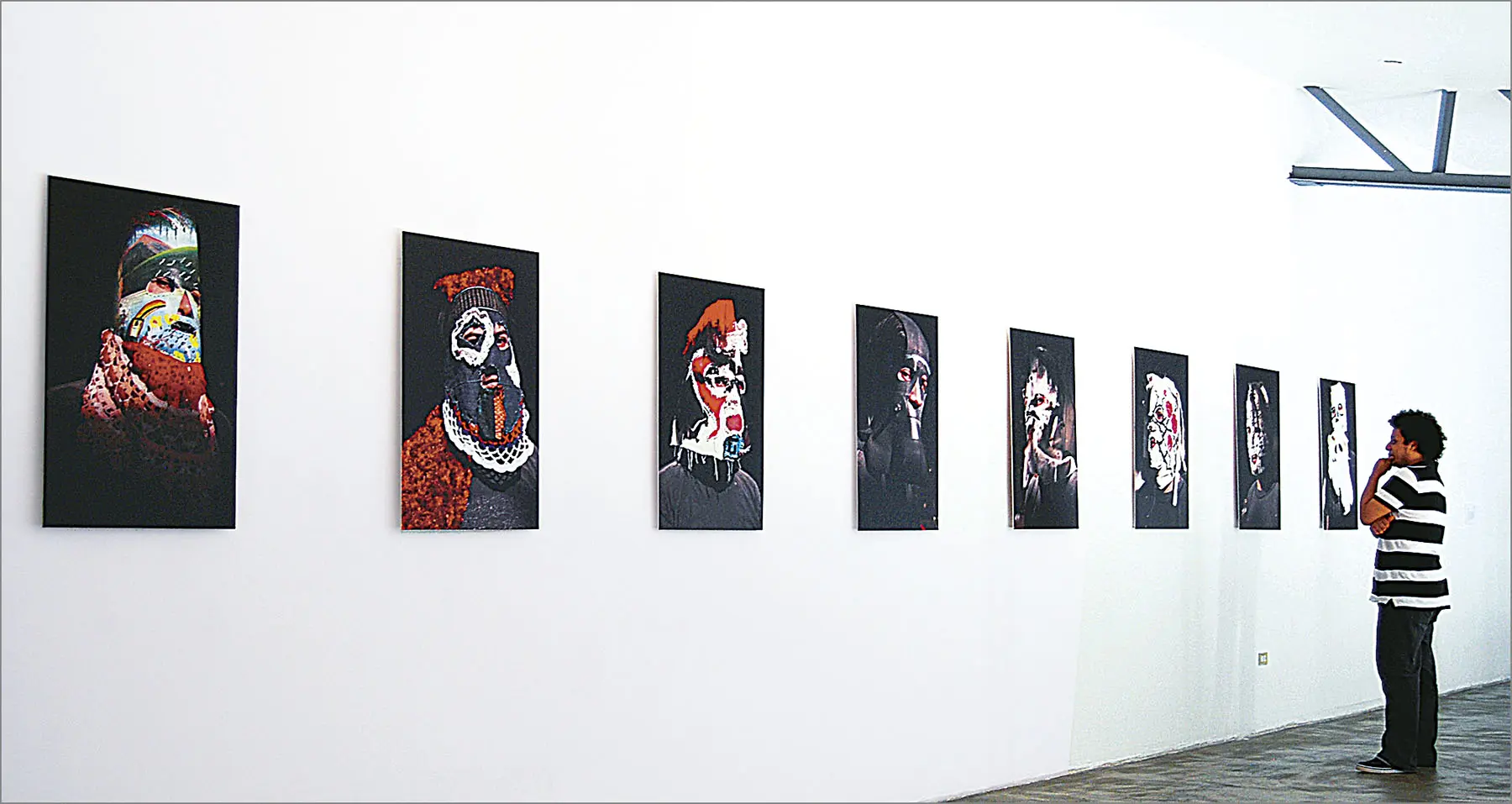
In the case of the Nicaraguan artists, the selected works were the product of a transformation that took place in that country’s most recent national biennial, in which “the jury considered that prior to the exhibition, it would be suitable to start a process to strengthen the artists through a series of workshops.”1 Based on this premise, the jurors operated as a curatorial and educational committee, proposing to the artists that they carry out projects, and sharing their knowledge with them through workshops carried out in Managua. The selection of works for the biennial was then based on the results of this extended procedure. The artworks by Patricia Belli and the Veinti3 artists’ group reflected a focus on art as a process and a search for meanings. Alejandro De la Guerra made masks which he and his collaborators wore as part of an artistic “action” at the opening, while the participation of Maruca Gómez was surprising, mainly because she is an artist born in the 1920s whose work has been unknown outside of Nicaragua.
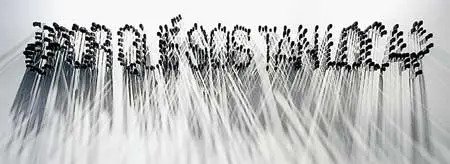
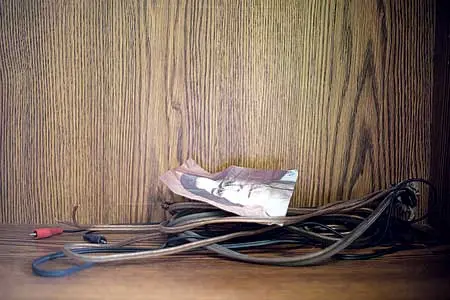
Over the years, the Central American biennials have offered ideal opportunities for the artists to meet personally during the week of the event’s opening, as well as to make their work known beyond their countries’ borders. The eighth biennial included several artists who were exhibiting in Panama for the first time. It was a discovery to see the works of Salvadorean photographer Rodrigo Dada, whose sensitive photographs suggest intimate stories and metaphors for past moments or lost relationships. Among the Costa Rican artists who were new to the Panamanian public were Elena Wen, John Juric, Carolina Parra, and Xavier Villagrán. Wen showed a refined animation on two screens that depicted the “before and after” of different human interactions. Juric’s work, titled Sillas de espera (Waiting Chairs) was made up of remarkable two-dimensional compositions in black and white that were carried out in collaboration with patients in the hemodialysis waiting room at a hospital in San José. Parra and Villafranco presented an installation called The Collector which reproduced, in a piece that was a cross between set design and Wunderkammer, the private study of an imaginary character. Better known among the Costa Rican artists was Roberto Guerrero, whose work asked the question Por qué sos tan loca? spelled out with knives, and answered with the phrase porque me da la gana2 written with silk flowers. This provocative installation made reference to social issues and human rights, as well as to the intolerance and violence that different lifestyles trigger in our region.
Themes related to violence or its consequences were also apparent, perhaps inevitably, in several of the works in this Central American exhibition. Jhafis Quintero showed self-portraits drawn by inmates in a Costa Rican prison, as well as rubbings of carvings scratched by interns on the walls of the former penitentiary on Coiba Island in Panamá. Following a similar vein, Danny Zavaleta’s sound piece played back a telephone conversation between a woman in an El Salvador jail and her partner on the outside, discussing the prototypical problems that arise as a result of poverty and criminality. The hand grenades painted like folkloric souvenirs and the Coca-Cola bottle by Honduran artist César Chinchilla made more direct, albeit ironic, references to political issues and the U.S. intervention in the region. In this regard, it is worth mentioning the extraordinary sculpture by Guatemala’s Marlov Barrios in which the Empire State Building rises over a Meso-American pyramid, all in carved wood.
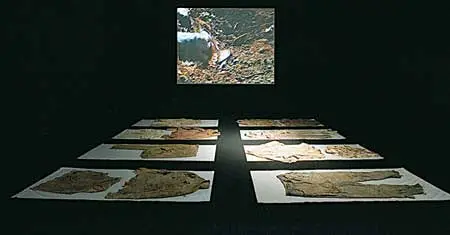
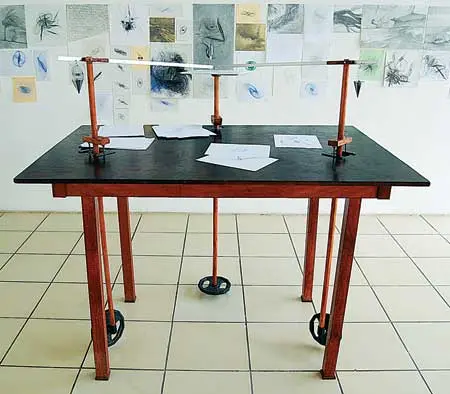
In the video installation Merma by Lucy Argueta, the torn and muddy clothing spread out on the floor relates to what the artist calls “the archeology of memory,” while simultaneously triggering reminders of the common graves in which so many victims of the dictatorial governments in the region were buried. The situation of the poor provides the backdrop for The Dinner, a video installation by Fernando Cortés of Honduras, in which he appears sharing the food he prepared for the family of a peasant woman and her eight children who don’t own “even a table on which to eat.” Fellow artist Lester Rodríguez showed a piece entitled Mecanofagia, which shows a set of chains and gears that move continuously, echoing issues around the African palm industry in Honduras which has caused social problems triggered by the expropriation of peasants’ lands.
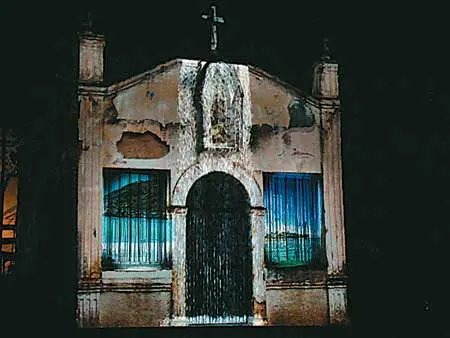
Gabriel Vallecillo recreated in the museum space his Precipitación de ternura (Precipitation of Tenderness), initially an outdoor piece with projections of images on the walls of old city buildings, representing “the historic disappointment we have felt in Honduras and the impotence regarding self-expression felt by a society submerged in violence and corruption. In his work, the people and the walls cry in silence.”3 The neglected cityscape is also central to Panamanian artist Darién Montañez, who created the term arquitectura feoclásica4 for a style of building that is increasingly common in Panama. In the biennial, Montañez showed a video of Panama City’s Matías Hernández River as it relentlessly dumps polluted water and huge amounts of garbage into the sea.

Ideas regarding social expectations and constructions were present in many of the biennial’s artworks. Luis Cornejo showed paintings of young, pretty women that hover somewhere between portraits and caricatures. Raquel Cochez, who has focused on the theme of women’s looks and eating disorders, showed a plastic children’s pool filled to the brim with caramel, which crossed the line between being sweet and seeming repulsive. Next to it, Cochez projected two videos that showed a child’s hands manipulating the malleable and loose abdominal skin of someone who has lost a great amount of weight as if it were play-dough. Photographer José Manuel Castrellón explored a different social phenomenon: that of young Kuna Indian men who express themselves through the language of rock or punk, an interesting subject that could have been displayed to greater effect.
All in all, the 8th Biennial proved that Central American artists have “conquered” the different languages of contemporary art and that they share certain themes and concerns. This became even clearer in the fruitful symposium that was held as a parallel activity under the title De facto: acciones desbordantes (De Facto: Boundless Actions), which focused on “the people, the strategies, the challenges, and the repercussions brought about by transformative projects in Central America, the Caribbean and Mexico”.5 Over the course of two days, there were presentations from Mexico by the artist Carlos Amorales and by Paola Santoscoy, Director of the Museo Experimental El Eco; as well as by curator Rocío Aranda-Alvarado of the Museo del Barrio in New York and by Professor Michele Dalmace for the Université Michel de Montaigne in France. Other talks were delivered by the editors and directors of different Central American projects, such as Andrés Asturias and Stefan Benchoam (Guatemala); Bayardo Blandino (Honduras); Raúl Quintanilla and Ernesto Salmerón (Nicaragua); Inti Guerrero (Costa Rica); and Monica Kupfer (Panama). There were also presentations by artists involved in educational or group projects including Lucy Argueta and Lester Rodríguez (EAT); Ernesto Bautista (The Fire Theory); Patricia Belli (Espira/La Espora); Alexia Miranda (Catapulta); and Humberto Vélez (Visiting Minds), among others. It was a productive meeting that multiplied the BAVIC 8’s achievements, increasing the knowledge we have about the research, art spaces, projects, and publications being carried out in our countries, and beyond them, to promote the development of contemporary art in the Central American region.
NOTES
1. Juanita Bermúdez. “La Bienal de artes visuales nicaragüenses da un salto cualitativo.” Managua: El Nuevo Diario, 1 October 2011.
2. A similar question in English would be: “Why are you such a queen?”. And the answer: “Because I feel like it.”
3. Samai Torres, “IV Bienal de Honduras: Arte que integra y propone,” Tegucigalpa: El Heraldo, 13 September 2012.
4. Feoclásico is a play on the words neoclásico (neoclassic) and feo (“ugly” in Spanish).
5. “VIII BAVIC se celebrará en Panamá,” press release posted on the Internet by ArtNexus, 19 December 2012.
MÓNICA KUPFER