With his subtle and original kinetic art, unknown in Latin America, this artist is a true find.
Three or four years ago, at a used book shop in Paris, Les annés 50,1 by France-based Spanish critic Gérard Xuriguera, grabbed the attention of Chilean gallerist Isabel Aninat and her daughter Javiera García Huidobro. Leafing through it, they found the name of a Chilean artist very little known in his own country: Iván Contreras-Brunet. Enthusiastic about their discovery, they decided to do a little research. The artist’s work had never been exhibited in his native country.
After many attempts and through common friends, they were able to contact him by telephone. It was the beginning of many conversations and visits that culminated in an excellent exhibition opened last year at the Isabel Aninat Gallery in Santiago. The process was slow and methodical. The gallerists had to gain the artist’s trust, and before that show, presented as a retrospective, they took some of the works to art fairs in Buenos Aires and Bogotá (2010, 2011, and 2012). The reception was very good everywhere.
It bears remembering that the gallerist’s intention was always larger in scope. They describe it in this way:
Talking in Paris with Iván Contreras-Brunet, we proposed to present a large-scale retrospective at the Museo de Bellas Artes in Chile. ‘It is never too late to start exhibiting in my country’, he said to us. The task took us two years, as we sought to construct the various parts that form the whole. However, due to the scarcity of historical works he has in his studio and the little documentation that exists regarding their location in private collections, we opted for a representative show…” 2
Today, the situation is different. Thanks to their perseverance, the gallerists have located a good number of works, which allowed them to plan a true retrospective. For now, the catalog for the show recently held in Santiago is the most up-to-date document in existence about this artist. It includes an introduction by the gallerist, a short article by Xuriguera, selections from an interview with Marcel Galarneau—whose 1999 book is a valuable reference for the study of the work Chilean3—a summary of Contreras-Brunet’ biography, a list of exhibitions and monumental works, museography, and a detailed bibliography, as well as some twenty photographs of the works on exhibit. All texts appear in a bilingual Spanish/English version. Almost all the works included in the exhibition traveled afterward to the Universidad de Concepción’s Talca Campus Museum, an important university center holding a valuable collection of modern Chilean art.
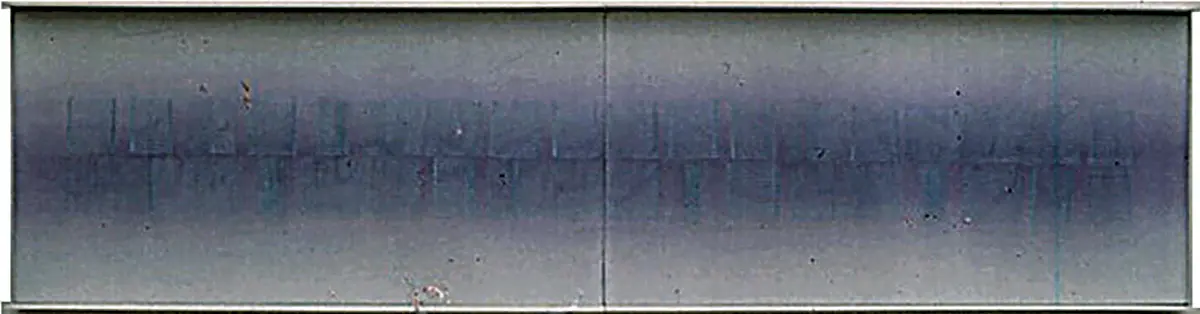
Iván Contreras-Brunet was born in Santiago in 1927. His first vocation was chemistry, then music. Around 1938 he started to copy reproductions of works of art, and later he developed an interest in landscapes in the impressionist manner, an interest that would last for over a decade. What interested him were the structural contents of impressionism: “reflections… the reflection of floating elements… the passage of light through solid elements… chromatic vibrations”. 4 The dematerialization of form within a geometric order is already present. Between 1949 and 1950, Contreras-Brunet frequented the Escuela de Bellas Artes in Santiago, and in 1950 he created his first abstract works. Dissatisfied with the city’s uninspiring environment, and encouraged by his mother, who always supported him, Contreras-Brunet decided to travel to Europe. On the ship that took him from Buenos Aires to Genoa, he met architect Mariano Clusellas, a member of the Buenos Aires Concrete group helmed by Tomás Maldonado. Clusellas advised him to visit Max Bill and Lohse in Switzerland, and Vantongerloo and Herbin in Paris. Arriving in Europe, he decided to go to Paris.” 5
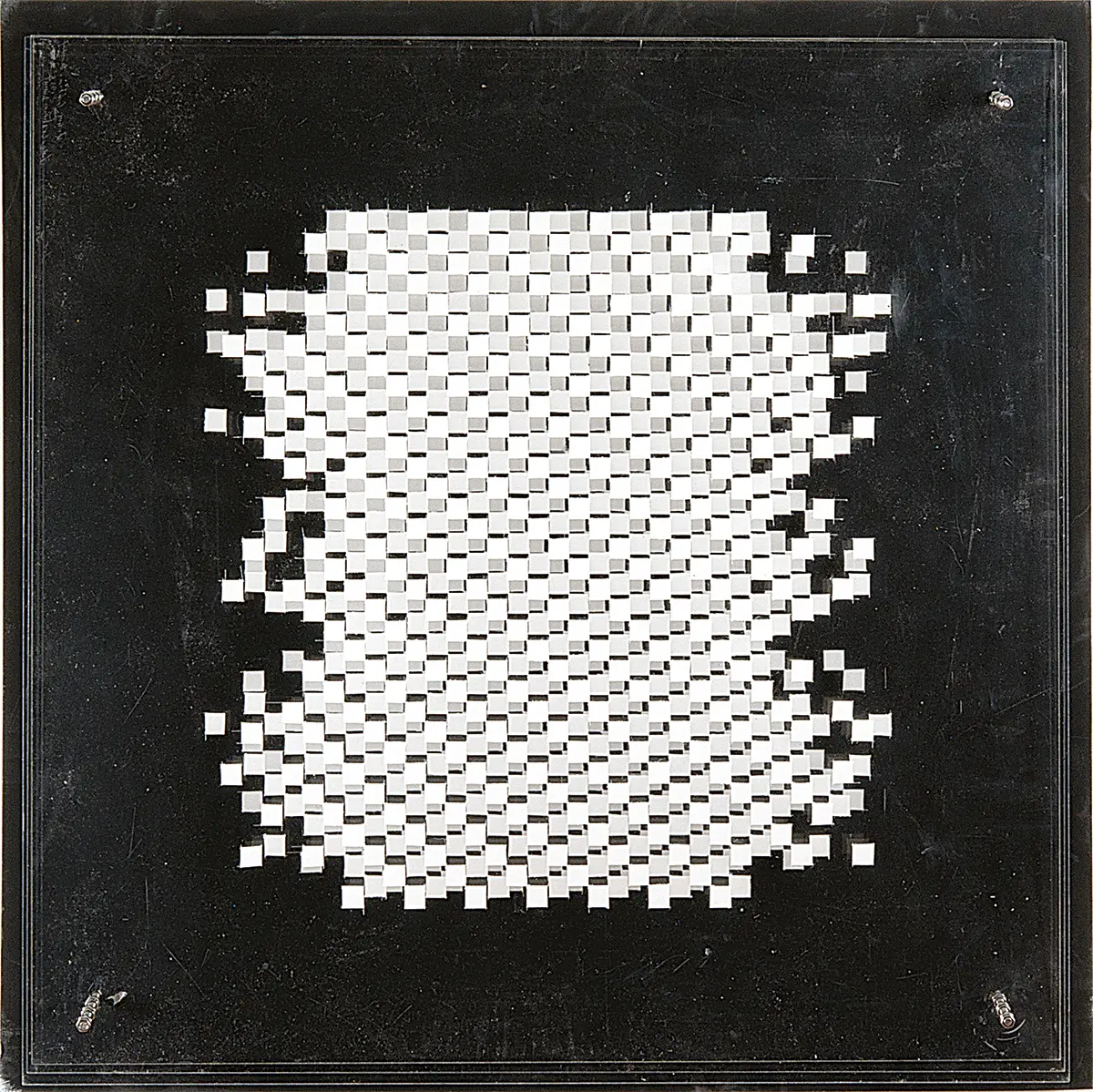
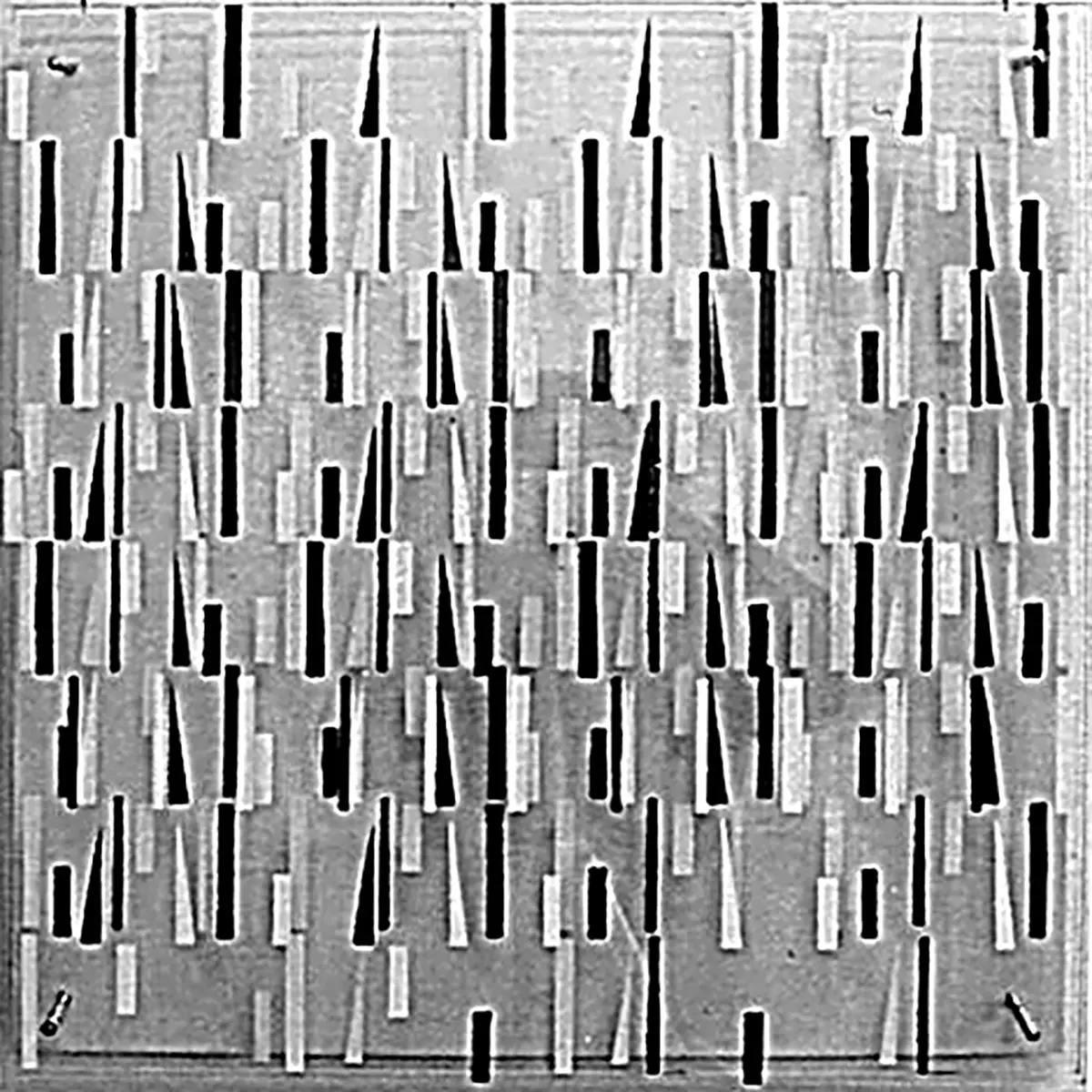
In the 1950s, Paris was ebullient with the new. Among others, Contreras-Brunet connected with Jesús Rafael Soto, initiating a friendship that was to last a lifetime. They shared many concerns and questions about art. Following a suggestion by his Venezuelan friend, Contreras-Brunet read key texts about the origin of abstract art, especially Kandinsky and Seuphor, and also the English translation of Moholy-Nagy Vision in Motion. At certain points, the proposals of the two Latin American artists are close to each other in their use of transparent Plexiglas as supports slightly spaced to superimpose two or three formal series that generate an unstable, “mobile” image with the effect of moiré. Soto preferred to use linear elements, while Contreras-Brunet used squares and rectangles. Not too long afterward, each would develop his own, unique language.
A new horizon opens for the Chilean after spending the 1953-1954 winter season in Vienna; like Berlin, this city was segmented into four sectors. Contreras-Brunet settled in the US sector and, more than the Austrian cultural scene, he became acquainted with aspects of American life. Back in Paris, he reasserted his intention of generating optical motion effects.
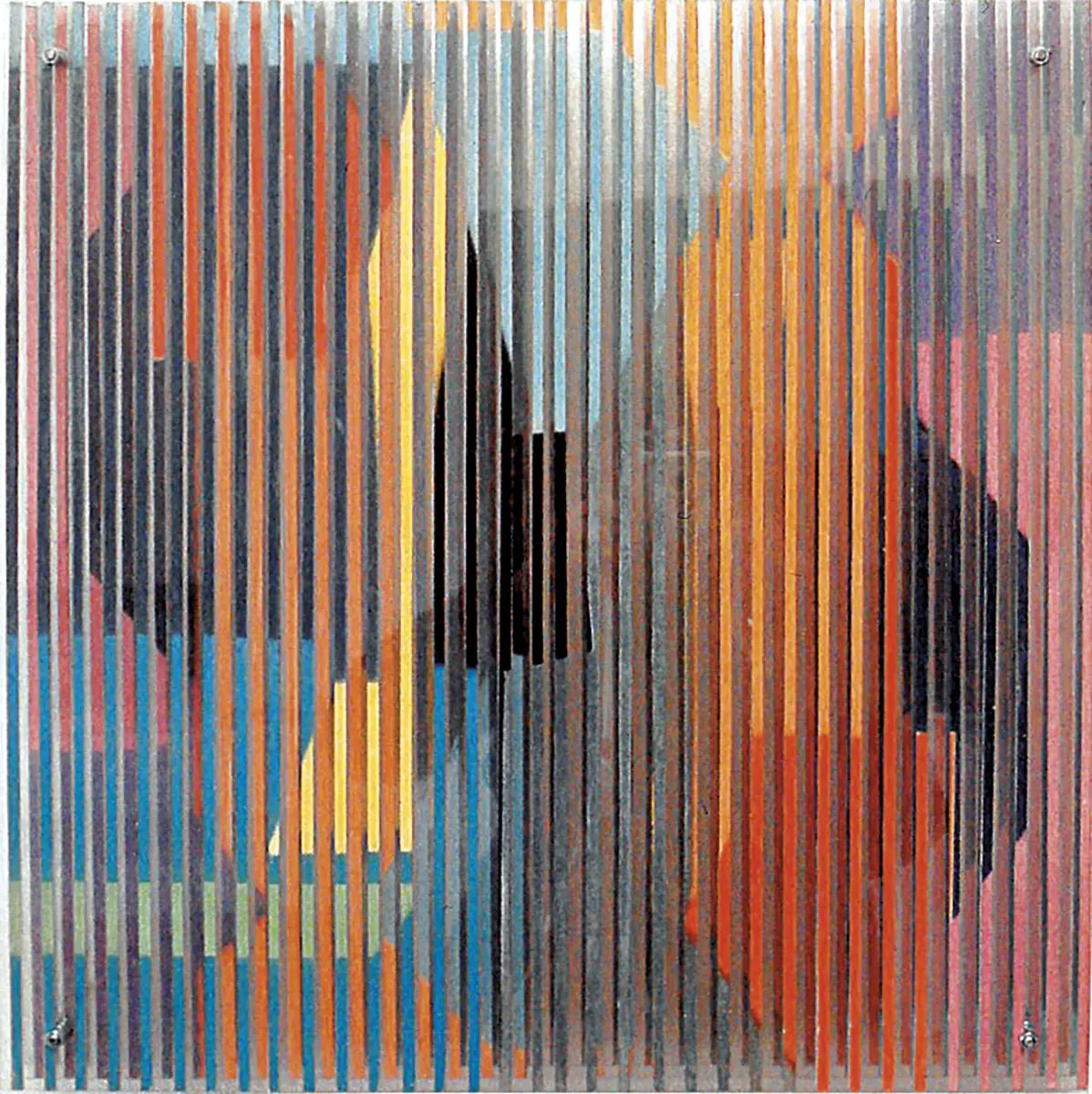
Three years later, Contreras-Brunet traveled to New York, motivated “by curiosity, because I wanted to see what was being done there.”6 He worked as an animator but found the medium unfulfilling. Meanwhile, he finished several of the projects started in Paris and try to have them exhibited, without success. The art scene at the time was captured by abstract expressionism7. In 1961 the artist returned to Paris. But before, in 1959, he had spent six months in South America, and in Santiago, following a request from the Rectángulo8 he gave a lecture about the new trends in art in the Escuela de Bellas Artes. At the time, the practice of abstract-geometric expression was barely starting in the country. Neither geometric abstraction nor kinetic art, which were his world, found acceptance in Chile at the time.
Settled definitively in Paris, Contreras-Brunet began a career that, over time, would include more than fifty solo exhibitions in France, Italy, Germany, Switzerland, The Netherlands, England, Lebanon, Israel, the Philippines, and Japan. He has also participated in a large number of group shows, including Paris’ most important contemporary art salons, and has created several monumental works for public spaces. In December of 1970, he said this about his work:
“In my mobile reliefs, I want to use motion to generate structural color relationships in space. It is a three-dimensional space in which suspended, unstable, transparent masses move. These sets where vertical-horizontal structures superimpose on each other are not indifferent to the environmental light, or to the viewer’s movement, or to the flow of air…” 9
In 1972, Contreras-Brunet was invited by Rome’s Italian-Latin American Institute as a Chilean representative to the Venice Biennale. The other artists invited were the Peruvians Eielson and Roca Rey, and Wifredo Lam, with whom Contreras-Brunet started a lasting friendship. Their exhibition spaces were contiguous. The text for the catalog was signed by Michel Seuphor, a highly regarded artist and theoretician of the European scene, and also a dear friend to Contreras-Brunet since first meeting in 1968. His opportunity, as the artist acknowledges, was the launching of his international career, with invitations from different galleries to exhibit in The Netherlands and Italy.
Alongside his creative endeavor, Contreras-Brunet worked in administrative capacities for important exhibitions or salons: in 1965 he was general secretary of the exhibition “Latin American Artists in Paris,” at the city’s Musée d’Art Moderne; between 1971 and 1972 he was a member of the committee for the Réalités Nouveles; since 1978, and for many years, he was a member of the committee for the Comparisons salon.
Contreras-Brunet’s work moves along two lines: sculpture (kinetic, attached, or free-standing) and watercolor on paper. These would seem at first glance to be entirely separate universes, and so they are in terms of their materiality. Yet, they have one common element: color. Or, better yet, the artist’s handling of color. In his hands, color is lightweight, suggestive, unstable, iridescent, almost magical. “I believe I am a chromatist. My explorations have moved in the direction of color, its possibilities, its organization, its relationships with space, its techniques, without forgetting the importance of the structures that constitute the skeleton of a painting or a spatial object.” 10 An intriguing conviction comes from an artist who is seen mostly as a sculptor. This is perhaps the secret key to his oeuvre.
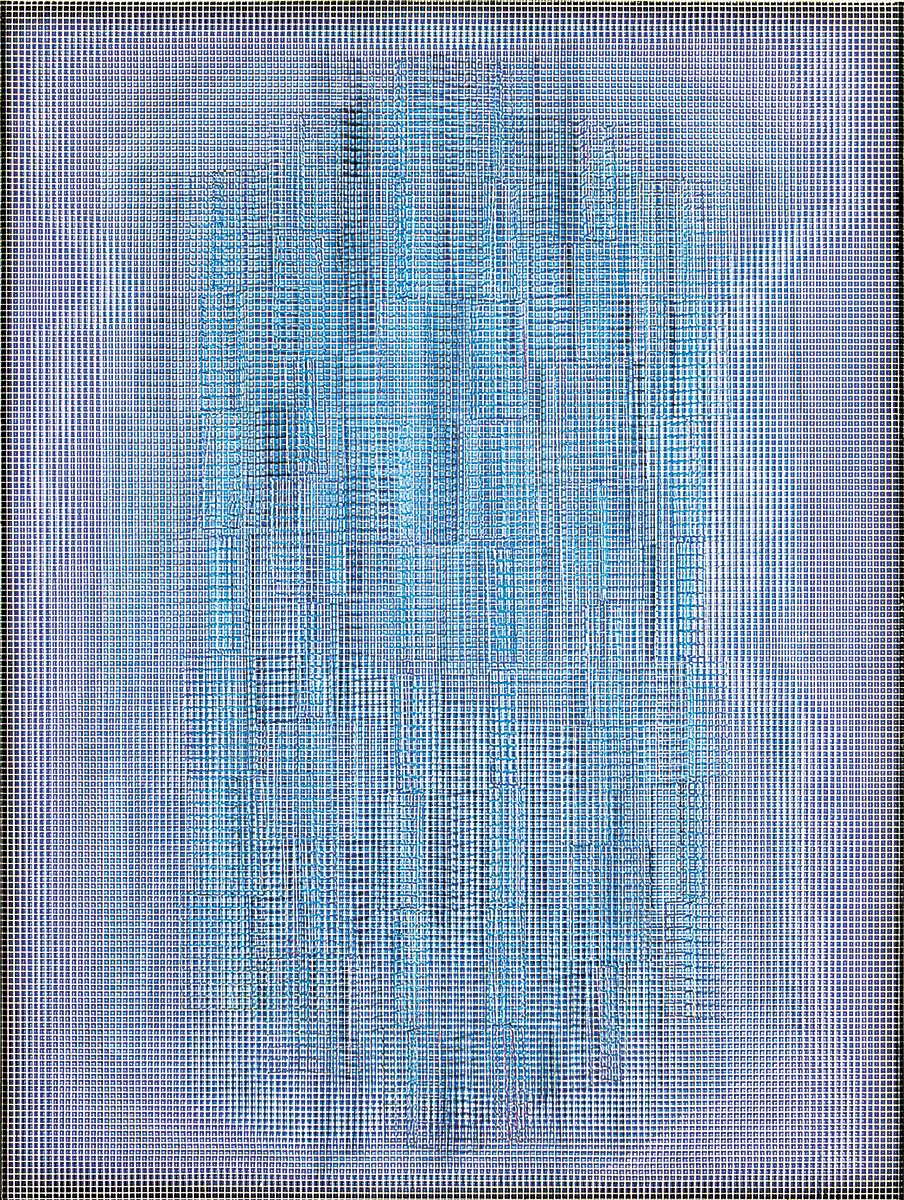
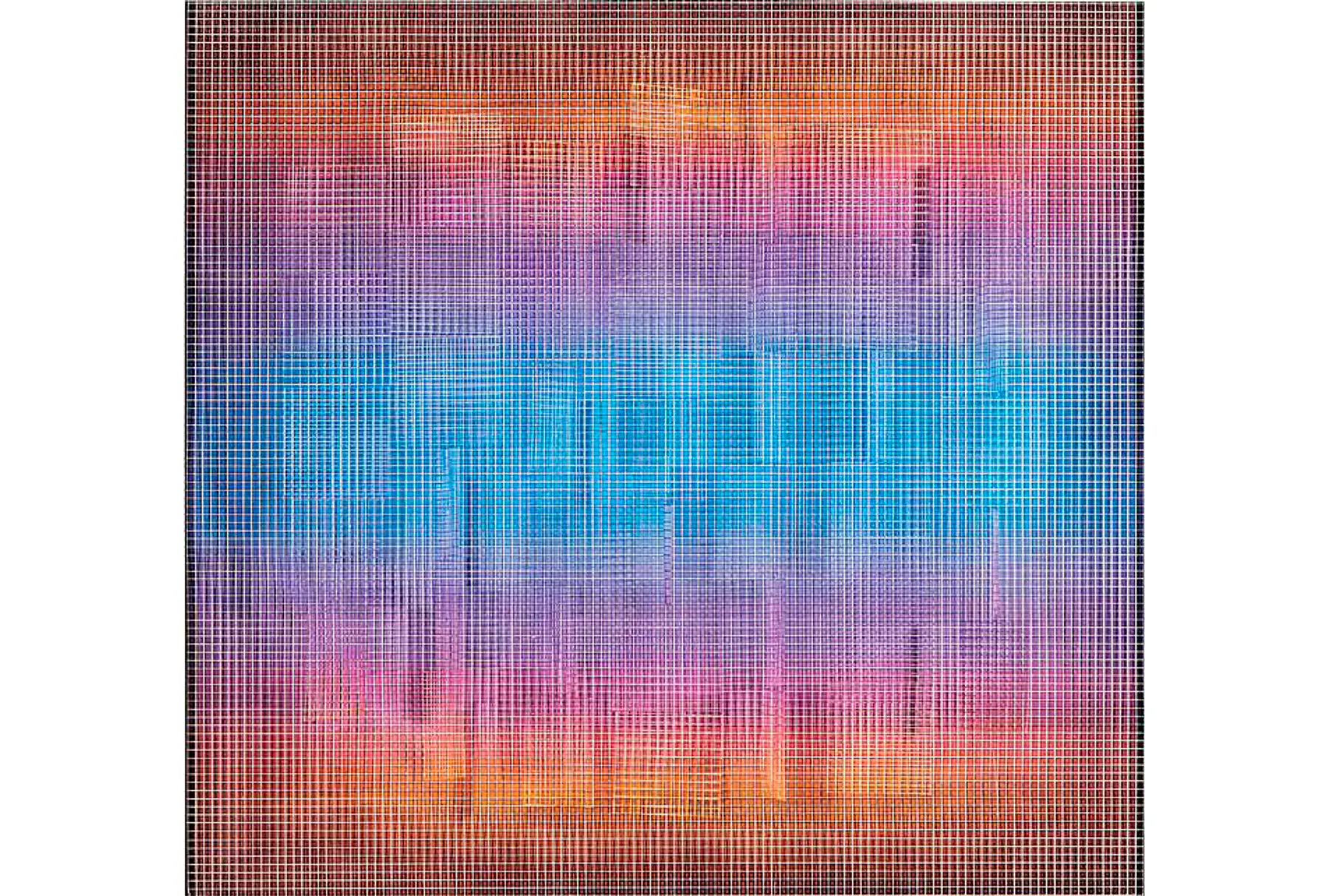
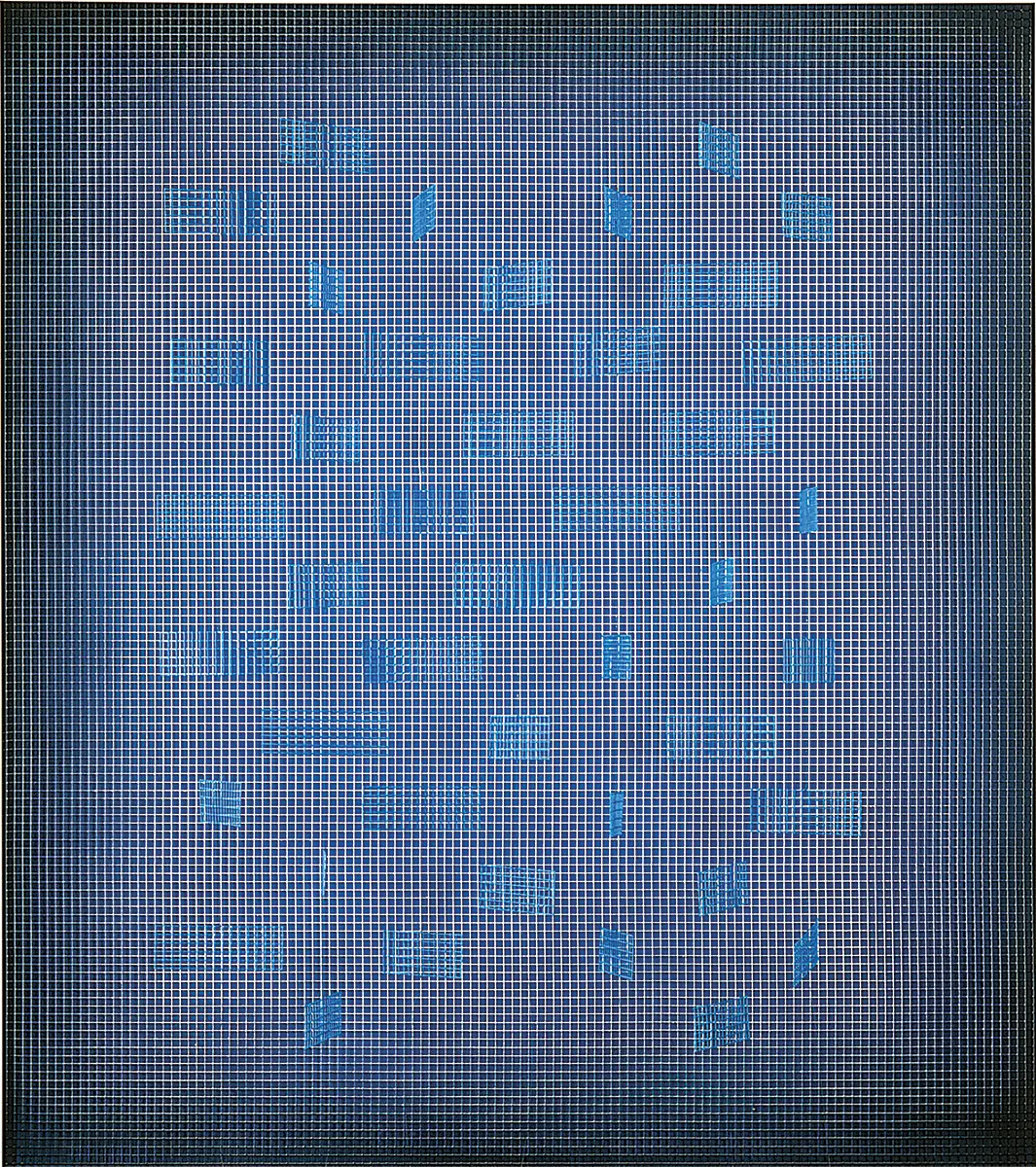
Contreras-Brunet’s reliefs and free-standing sculptures, placed on the ground or suspended, are built from a fine metal mesh that generates an open, uniform grid. With outstanding skill, Contreras-Brunet manipulates this simple basic element by folding, cutting, superimposing, or suspending squares, rectangles, or circles that seem to float by means of light ties against a flat backdrop, also covered by mesh. Solid elements become vaporous, unstable colors. The lightweight suspensions move with the viewer’s very breath, turning into a “metallic vegetation that connects the transparent to the effects of color,” as G. Xuriguera puts it in the catalog of the artist’s recent exhibition in Santiago. The chromatic effects are achieved, in good part, through the technique of frontal or lateral vaporization with aerosols. There are no abrupt breaks between the color tones, but fusions that have much melody and music. The colorist sculptor works personally and directly on his art with no third-party interventions, not even the manufacture of frames for his watercolors. Each work is unique, not modular, or part of a series. Contreras-Brunet proudly told Isabel Aninat that he doesn’t do multiples—a common practice among kinetic artists—because he is not a Pyme (Spanish acronym for small and medium-size business).
Contreras-Brunet is no less surprising as a watercolor artist. Even in large-format supports, sometimes over 50 x 50 cm, and with a special way of handling pigments and a complete mastery of his technique, he creates suggestive, delicate images, plots that in their way also generate visual sensations of motion, apparent volumes, as if the flat paper support were enriched with undulations and bulges, suggestions of nonexistent volumes. They seem like reliefs, rather than painted planes. Color determines nebulous areas, devoid of visible boundaries. The different hues interact like the colors of the rainbow, without breaks or interruptions. The viewer is absorbed by these watercolors that invite silence and withdrawal.
Sculptures and watercolors are, like their author, discreet, contained, profound. It is to be hoped that the work of Iván Contreras-Brunet becomes better known and appreciated, not only in Chile but throughout Latin America. For the time being, two important institutions, the Museo de Arte Contemporáneo in Buenos Aires and the Patricia & Philip Frost Art Museum (Florida International University) are both planning solo exhibitions for 1914.
NOTES
1. Les années 50. Peintures. Sculptures. Témoignages. ARTED, Paris, 1984. The author briefly analyzes the situation of the visual arts around the start of the 1950s and presents 102 artists active during that period, most of them born in the 1920s. Each artist gives his or her testimony, accompanied by a small personal photograph and color illustrations of two works.
2. Isabel Aninat, catalog for the show Contreras-Brunet, Retrospective, 1958-2012.
3. This book is the first in the series Abstracciones Geométricas, edited by M. Galerneau.
4. Xuriguera, Les Années 50, s. f.
5. Contreras-Brunet, M. Galerneau, p. 17.
6. Op. Cit., p. 18.
7. The first significant exhibition of optic and kinetic art in the New York scene: The Responsive Eye, conceived by William C. Seitz, was held at MoMA in early 1965. Mouvement, at the Denise René Gallery in Paris, preceded it by ten years.
8. Established in 1955 by Gustavo Poblete and Ramón Vergara Gres, it included Matilde Pérez, Elsa Bolívar, Ximena Cristi, and Uwe Gromann. On a geometric and abstract foundation, it sought to erase the referential nexus between reality and the work of art.
9. Text for an exhibition at the Le Havre House of Culture, December 1970. Cited in M. Galerneau’s book.
10. Interview with M. Galerneau, p. 88.
*The images illustrating this article are courtesy of Galería Isabel Aninat, Chile.
MARÍA ELVIRA IRIARTE
Ph.D. in art history. Member of AICA.