
As is already tradition, every two years Bogotá is transformed into one of the world’s photographic capitals thanks to the biennial Fotográfica Bogotá, an event promoted by FOTOMUSEO-Museo Nacional de Fotografía and directed by Gilma Suárez. Intended to communicate the culture and values of photography, the biennial is structured into a series of components that access and analyze the photographic image from a multiplicity of perspectives. The main components are the temporary exhibitions of works by important national and international figures. In accordance with the principles and purposes of FOTOMUSEO, the images leave traditional exhibition spaces and can be seen by passers-by in billboards and traveling exhibits in plazas and streets around the city. In parallel, there is a theory program featuring noted thinkers gathered to reflect on photographic production and craft. Added to this are workshops given by guest artists and a film cycle presenting award-winning films with a clear interest in photography as a narrative element.
The first Biennial was held in 2005; since then, the five editions organized by PHOTOMUSEO have established this event as one of Latin America’s most prestigious and renowned photography meets. Each one of the biennials has focused on a thematic axis and showcased a specific country. Fotográfica Bogotá’s most recent edition, held between May 4th and June 15th, 2013, showcasing the countries of Europe’s Nordic region—Denmark, Finland, Iceland, Norway, and Sweden—and also exhibited works from every continent, featuring 16 Colombian and 49 international artists. The Biennial’s central topic was “Landscape Views”. The exhibitions were presented in noted cultural sites around Bogotá, such as the Jorge Tadeo Lozano University’s Museo de Artes Visuales, NC Arte, Alonso Garcés Galería, the Gilberto Alzate Avendaño Foundation, the Museo de Bogotá, the Claustro de San Agustín, La Galería, and MAMBO.
The theory program, organized around the same topic, was presented between May 6th and 10th in the Jorge Enrique Molina Auditorium at Universidad Central, with the participation of thinkers such as, among others, Alasdair Foster, the Australian founder of Fotofeis and Director of the Australian Centre for Photography; Alejandro Burgos, from Colombia, under-Director for Dissemination at the Instituto Distrital de Patrimonio Cultural; independent curator, art critic, and PhotoEspaña Artistic Director Gerardo Mosquera, from Cuba; curator and historian of photography Jorge Antonio Villacorta, from Peru; Marta Gili, from Spain, the Director of the Jeu de Paume Museum in Paris; Michiko Kasahara, curator at Tokyo’s Metropolitan Museum of Photography; and Nissan Perez, from Israel, Senior Curator in the Israel Museum’s Noel and Harriette Levine Photography Department.
Through a series of exhibitions that approached the landscape from a multiplicity of perspectives, the Biennial engaged the topic with attention to its many definitions. The challenge for the curators was to avoid reducing the landscape to a single meaning, sustaining, on the contrary, a posture that was able to communicate to viewers the variety and depth contained in the term. Fotográfica Bogotá 2013 presented a dynamic proposal that found in the landscape both a natural space and the expression of a process for social formation, even reaching into proposals that touched on the oneiric and the intangible. Works were grouped according to the position adopted by each artist with regards to the landscape, opening the way for the thematic axis that articulated the Biennial. In what follows, we will mention these axes, highlighting the participation of some specific works.
Natural Landscapes
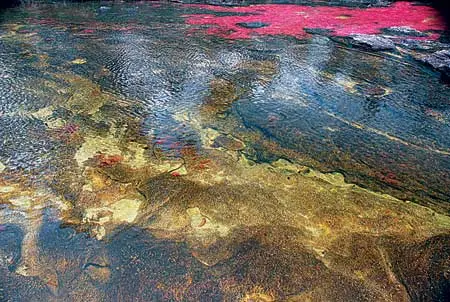
The first axis dealt with one of the most recursive topics in the history of photography: the search for a natural landscape. Since its inception, the photographic camera has been deployed as a mechanism for accessing and representing nature; proposals such as those developed by Colombia’s Sergio Trujillo are nourished by photography’s legacy of landscape art, asserting its value as an inexhaustible source and its sustained validity. Trujillo’s photographs denoted the evanescence of the landscape through their penetrating and intimate gaze, which transformed organic form into the morphological elements composing the image. Trujillo’s understanding of color, shapes, and textures revealed the pictorial legacy behind his photographs and brought to mind Romantic aesthetics in their depiction of rough landscapes intended to provoke an emotional rise in the viewer.
The projects grouped in this section not only manifested a growing enthusiasm for the appreciation of nature but also unveiled the intention of appropriating and interiorizing nature. This was clearly perceived in Apuntes de viaje, a work by Fernando Cano, from Colombia, which uses photography as the medium to document the landscape as it is traversed. Beyond their on-the-spot character, Cano’s images were revisited by means of annotations pointing towards the artist’s memories and remembrances. In this way, the journey of the work was not only directed towards the outside world but traced a path into the individual’s interior in search of self-knowledge and reflection.
Artificial Landscapes
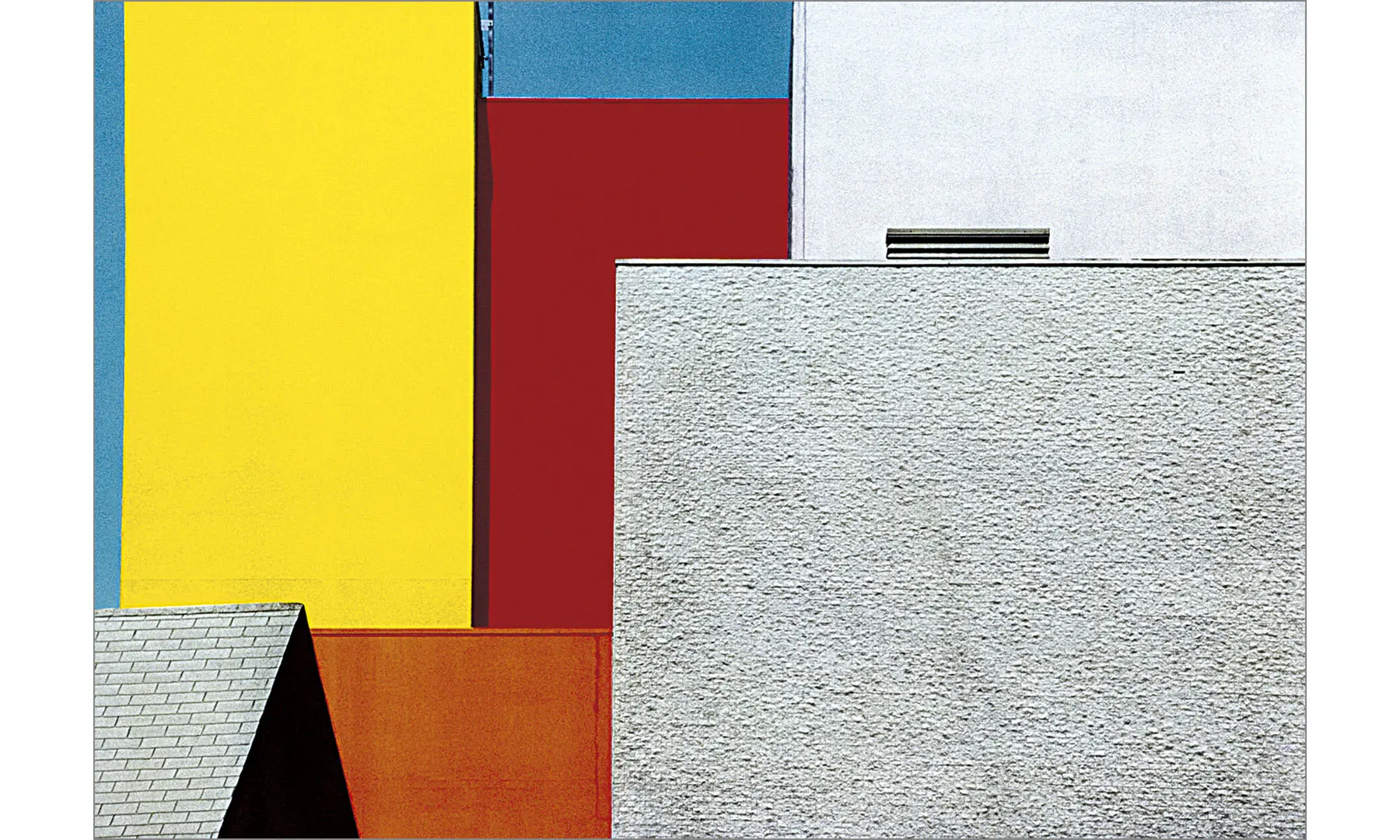
The pristine state of nature is altered by human actions, which turn the natural landscape into an artificial one. This second thematic axis explored the processes of transformation of nature through two intervention strategies: indirect and direct. The former examined the role of language and gaze as mechanisms for the description and recomposition of landscapes. The incidence of language in our perception of nature in 144 Paisajes, by Venezuelan artist Antonio Briceño, who, after a journey to the Lapland region noted how the Sami language enriches the apparent monotony of the Lapp landscape by using 144 words for its description Briceño created a series of photographs repeatedly reproducing a single landscape with slight modifications. The action sought to challenge and sharpen the viewer’s senses, inviting them to perceive the differences. For his part, Italian artist Franco Fontana dealt with the gaze as an instrument for composition by using the framing device to synthesize and annotate the urban landscape in color structures. Fontana’s formal exploration pushed the camera away from its traditional function as a recording device by considering shape and color over a mimetic relation with reality. The result came close to abstract art and brought to mind the decisive role played by the landscape in Modern art and in the achievement of autonomy for the image.
Direct intervention alluded to the physical transformation of nature by human action. Works like Ocupación, by Colombian artist Ana Adarve, displayed a clear concern for the consequences of urban development on the natural space. The photographs in her series focus on the Mexican city of Monterrey, which thanks to its economic growth has moved into the surrounding mountains. Adarve documents the planned and aggressive work of humans on Monterrey’s natural landscape, marking the process of industrialization. In addition, Adarve’s series visualized the future condition of the mountains by anticipating the results of their invasion and the physical transformation of their space.
Urban Landscapes
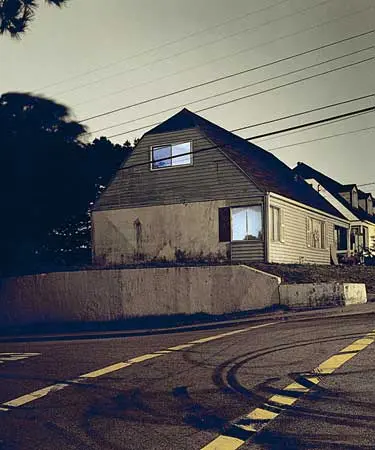
Urban landscapes emerge as a result of society’s industrial and economic development. The city imposes a reorganization of the geographic space and projects the life situation of its inhabitants. The diverse scenarios that evolve in the city were engaged by this thematic axis by contrasting its moments of silence and quietude with the hustle and bustle imposed by its development. Under the title House Hunting, US artist Todd Hido explored the landscape of anonymous suburbs in the nighttime. The photographs in his series were fueled mainly by the light emanating from inside the buildings, indicating that these houses were inhabited. However, that light was the sole indication of a human presence in a landscape that evoked loneliness and distance. The lighted interior both invited and restrained viewers, denying them access and stoking their curiosity for the mystery that surrounded the buildings.
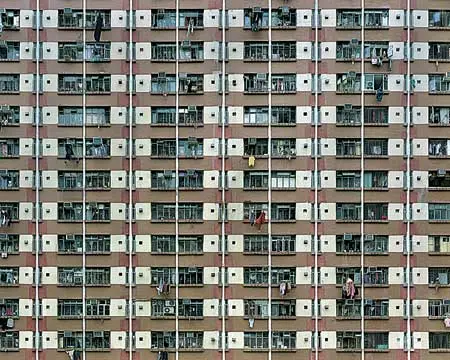
The urban landscape was also explored by the lens of German artist Michael Wolf, who presented the claustrophobia that envelops the city as a product of demographic density. Wolf’s rigorous vision recorded Hong Kong’s grid of buildings by means of reticules that formed geometric and chromatic patterns. At first glance, a formal reading was dominant, suggesting a carefully structured composition; however, on approaching the image, the viewer was able to penetrate the coldness and impenetrability of the buildings, discovering small traces of life. Wolf’s search for intimacy was intensified in the work of Canadian artist Alain Paiement by means of a series of images recreating the chaos of urban life. The city’s activity and speed drove Paiement to explore new languages of representation in order to communicate its dynamism. He opted for an aerial and fragmentary point of view, which made it possible to trace a schematic that dissected and reorganized the city’s components in order to recreate its frenzy.
Nostalgia Landscapes
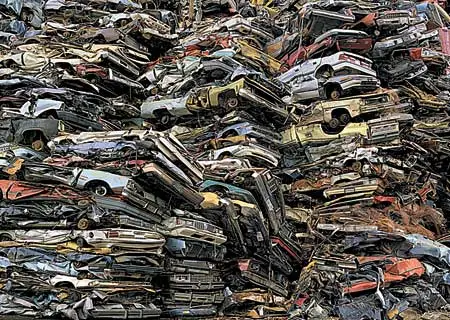
Contemporary society is faced with new landscapes born as a consequence of the overproduction that characterizes mass culture. Works grouped around this axis examined two instances of the relationship between man and nature, first exploring the landscapes that emerge from the residue of industrial development and, second, delving in greater depth into the consequences of human interference and the loss of the natural world. Such is the case of Intolerable Beauty: Portraits of American Mass Consumption, by US artist Chris Jordan, who in a series of photographs recorded the landscape of shipping ports and industrial areas. The viewer’s encounter with these photographs generated opposing emotions that oscillated between rejection and fascination. The responses generated by the images made evident both society’s attraction for the unsettling beauty of detritus and refuse, and its intolerance for the landscapes of consumerism due to the environmental damage they represent.
Landscape and Memory
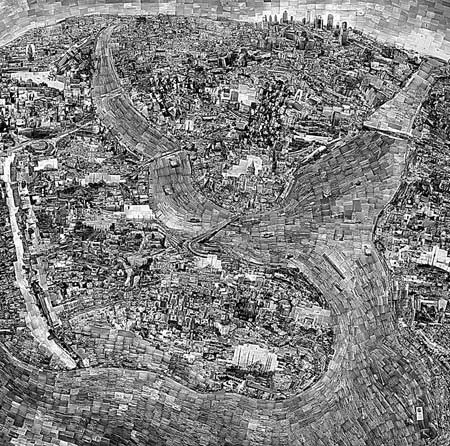
Landscapes have the capacity to be constantly recreated through the memories they generate. In this way, our perception of the landscape is mediated by memory, be it individual or collective. Individual memory creates a personal connection between the subject and the landscape, a connection examined by Japanese artist Sohei Nishino in a series of photographs reproducing his experiences in different cities around the world. Nishino captured fragments of the cities in which he traveled and reorganized them according to the dictates of his memory to form a kind of personal cartography. As a consequence, Nishino’s maps are not the product of a scientific view of the landscape that would organize its elements sequentially and under a single scale, but, on the contrary, they honor an individual’s gaze and memory as a singular way of approaching the landscape.
In turn, collective memory refers to the memories accumulated by society itself, where the image of the landscape precedes its physical encounter. This is reflected by Photo Opportunities, by Swiss artist Corinne Vionnet. The growth in the tourism industry has given landscape and monuments a commercial value as souvenirs, establishing canons of representation to facilitate their identification and distribution. Vionnet noticed how tourists follow such canons, shooting their photographs from the same distance and using the same framing device in order to emulate existing photographs of a given monument. As a consequence, the images created lack any indication of individuality, and an idealized view of the monument prevails over any personal gaze on the part of the tourist. Vionnet’s photographs signal the reach of collective memory in our perception, demonstrating how our encounter of the landscape becomes an encounter with an established mental image.
Landscapes and Identity
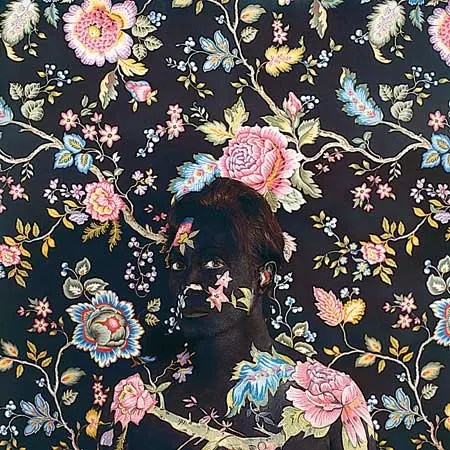
Understanding the landscape as a social context capable of defining or redefining the behavior of individuals inhabiting it, it is possible to identify the impact of landscapes in the formation of identity. This could be seen in Paraíso Esquivo, by Peruvian artist Cecilia Paredes, which reflected on human processes of adaptation caused by migration and displacement. In Paredes’ photographs, the body of the artist transforms its surface in order to adapt itself to the landscape, revealing traces of its presence. The work points towards the imposition of context on an individual, and the individual’s struggle to resist alienation.
In Existential Emptiness, Chinese artist Cui Xiuwen explored the inner path to identity. Indebted to Taoism and Buddhism, these photographs used the landscape as a medium to access the interior aspects of their author. At first glance, the images presented quiet, peaceful scenes, disturbed by the apparition of a woman and a life-size doll. The woman alluded to Xiuwen’s physical alter ego, while the doll referred to her immaterial alter ego, evoking the relationship between body and soul. This inner quest revealed not one but several Cui Xiuwen multiplied to reflect the complexity and different instances of identity. This is materialized through the links that each photograph established between the two parts, with the doll becoming a companion, a ballast, and a shield for the woman.
Imaginary Landscapes
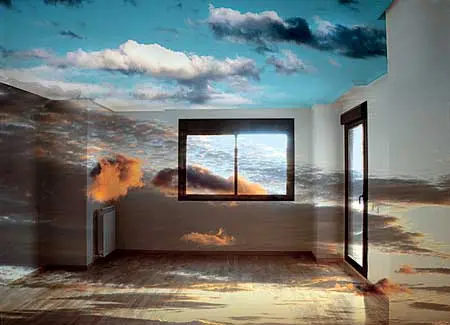
The nineteenth-century not only saw the birth of photography but also its enthronement as the ideal mechanism for the capture of the landscape, achieving the coveted copy of reality. In this way, the camera moved away from the subjectivity of the artist and approached the objectivity of the scientist. Such trust in the fidelity of the camera was challenged by artists and theorists who pointed out the close ties between photography and fiction, with the photographic camera not only reproducing nature but creating imaginary spaces. Photographs like those by Spanish artist Ciuco Gutiérrez opted for this second possibility, promoting an exploration that permeated the threshold of the real and moved into oneiric landscapes. Gutiérrez’s work, titled El Coleccionista de nubes, created a bridge between earth and sky, the closed and the open, narrowing their differences and blurring the boundary that separates them. On the basis of a metaphorical language, the series sought to create openings in closed spaces, liberating the imagination and materializing dreams.
Landscapes of the Spirit
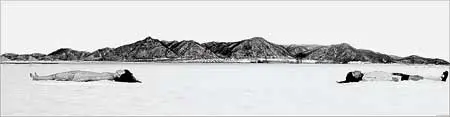
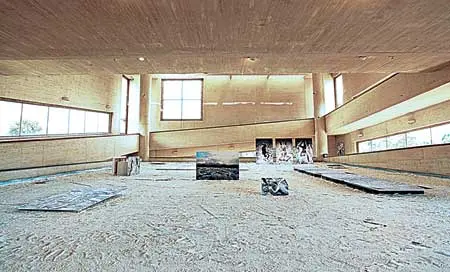
Ephemeral landscapes were grouped in this thematic axis, which, rather than focusing on the tangible and the earth-bound, sought to exalt what remains unseen and escape definition. Works like Anticipación/Retrovisión, by Soler, understand the landscape outside its location in space-time and launch into an unending cosmological journey. This work involved the participation of 1000 members in a performance where they lay on the ground and were covered in white dust; after standing up, they left behind the outline of their presence. This work anticipated death in the eyes of its viewers, giving them an opportunity to confront their own absence. The action invited viewers to reflect on their presence in an ephemeral landscape, establishing a relationship between their own microcosm and the macrocosm of which it is a part.
Landscapes of the North
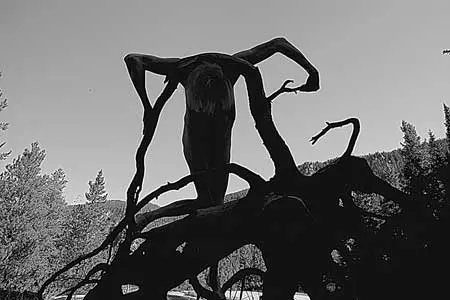
The last thematic axis brought together the landscapes showcased in a proposal that covered the different facets of the landscape in the Nordic region since the 1970s. With the participation of 22 artists, the selection offered a broad view of the landscape, encompassing positions that varied from aesthetic appreciation to approaches mediated by sociology and politics. The sustained connection between Nordic photographers and their region’s landscape is noticeable, for example, in the work of Finnish photographer Arno Raphael Minkkinen, who for over four decades has studied and explored the relationship established between him and his surroundings. Minkkinen’s photographs included self-portraits that intermix with nature in a surreal way. The nudity of the body fused into the landscape not as an imposition, but as a complement, establishing a single organic fabric based on natural forms. In subtle and poetic ways, Minkkinen strips man of all accessories and returns him to nature, as an integral part of creation.
In conclusion, this fifth edition of Fotográfica Bogotá sought to reach all audiences with a clear, carefully articulated proposal that appeals both to experts in the subject and to curious members of the general public. The combined work of the exhibitions, the theory program, and the workshops promoted a variety of readings about the landscape, making it their object of study. The result was an interrogation of the landscape as a delimited, passive space and its expansion into a term that is constantly being built, thus revealing its polysemic nature. The biennial redefined the boundaries of the landscape as the term was explored by each artist, encouraging a fresh critical reading of one of photography’s most prominent genres.
DANIEL MARTÍNEZ MOLKES
Master of Fine Arts from Jorge Tadeo Lozano University with a master's degree in Art History from the Hebrew University of Jerusalem, graduated Magna Cum Laude. Professor of art history at various universities in the country.