
The title I have given this article, paradoxical as it is, is a fitting description of the Venice Biennial, which, with this year’s edition, has become the sign or the expression par excellence of the phenomenon of “biennalization.” A phenomenon whose origins can be traced back to the year 1895 and located in Venice itself, and which today extends over practically the entire world. Because it is not only that, with 88 country pavilions—10 of which are entirely new—the Venice Biennale has broken on this occasion its own records of participation, but that it is necessary to interpret this extraordinary increase as a symptom or an expression of how important it is today to have contemporary art biennials for many countries from the five continents. Whoever organizes a biennial these days not only finds inspiration in Venice’s example; they also want to participate in Venice’s Biennial in order to strengthen or ratify their commitment to international art.
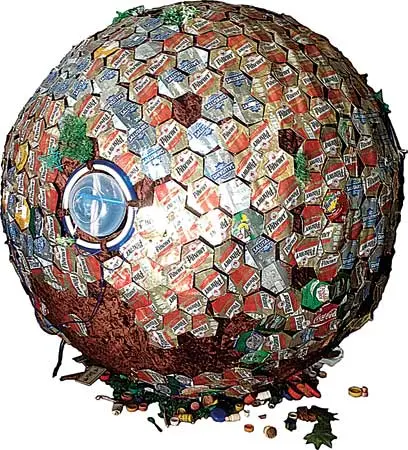
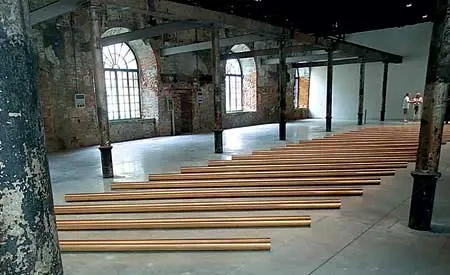
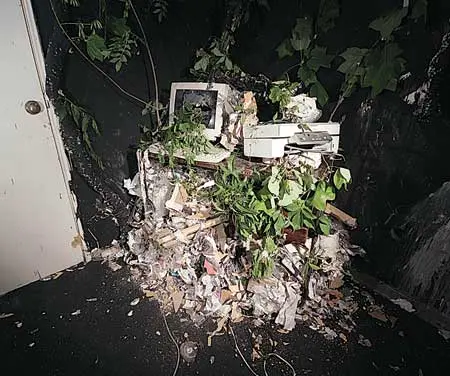
In the case of Latin America, Brazil, Venezuela, and Uruguay, they have limited themselves to the ratification of such a commitment because, as is known, the three countries built their national pavilions at the Giardini in the 1950s, when, after WWII, the Venice Bienniale was becoming a privileged platform for the relaunching of avant-garde art, marginalized or excluded from the international art scene by fascism and communism. In the cases of Argentina, Mexico, or Chile, in turn, the issue is to strengthen today a gambit for the kind of art which, for a variety of reasons, has received recognition and support on the part of those country’s governments until a very recent date. Cuba is a sui generis case, both because of its late incorporation into the socialist block, now dissolved, exempted its government from the obligation of accepting and imposing the socialist-realism orthodoxy, and because in 1984 a group of critics and promoters came up with the daring idea of challenging Euro-American cultural hegemony with a biennial conceived to be of the Third World and not solely situated in it, as was, paradigmatically, the São Paulo event established in 1951. Nevertheless, a space that was initially conceived as a means for strengthening Third World cultural independence from the First, soon became the starting shot for biennalization, which expanded rapidly across the world. The fall of the Berlin Wall in 1989 and the subsequent dissolution of the so-called Second World led by the Soviet Union brought with it an astonishing worldwide geopolitical shift that, among other things, reduced the Third World to political irrelevance. This pathetic situation is evoked by Salvadoran artist Simón Vega in Third World Sputnik, a sculpture installation made with discarded items found in streets and beaches in his country, set as a parody of the Sputnik 10 sent into orbit by the Soviet Union in the 1960s and exhibited in the Biennial’s IILA Pavilion.
The fall of the Berlin Wall also threw open the doors of globalization and of associated phenomena such as multiculturalism, whose assertive vindication of other cultures around the world implied an end to the West’s cultural hegemony, or at least its critique.
The Venice Biennial has been very sensitive to these changes. Indeed, the Aperto—the Biennial’s innovative section curated in its first edition, in 1980, by Achile Bonito Oliva and Harald Szeeman—represented the first serious fracture of its exhibition structure, organized until then exclusively around the country pavilions located in the Giardini. Because of this, the Aperto can be interpreted as an additional expression of globalization’s tendency to invalidate or at least neutralize national boundaries, and even to question the very existence of nations as such. One must also acknowledge that show’s decisive contribution to the implantation of an exhibition model that has accompanied the unfolding of biennalization across the globe. A model presided by the figure of a curator who scrutinizes the international art scene and divines the works and the artists with whom to compose an exhibition that will be the more successful the more spectacular it is. The curator practices his or her craft in a “trans-avant-garde” scene—as Bonito Oliva himself deemed it back in his day—where the “Darwinian” logic of the survival of the fittest that implacably dictated the sequence of avant-garde artistic movements since WWII had given way to heir coexistence, or even their dissolution into an “anything goes” situation. The arguments and exhibition strategies wielded by star curators are what since then, make the difference in the art realms that were previously established by the neo-avant-garde: action painting, abstract expressionism, minimalism, pop art, conceptual art, etc. In fact, Venice has just now paid homage to one of the first curators able to define trends at an international scale: Harald Szeeman. At the Prada Foundation, in coincidence with the Biennale but outside its program, the exhibition When Attitudes Become Form was a reconstruction of the legendary 1969 exhibition curated by Szeeman at the Kunst Museum in Bern, presented by Germano Celant (another referential curator) in collaboration with artist Thomas Demand and architect Rem Koolhas.
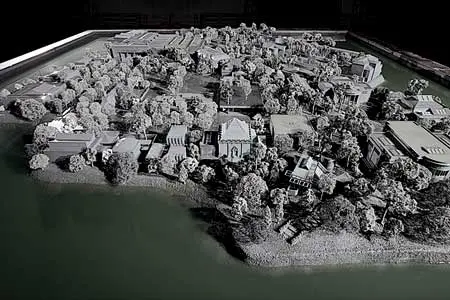
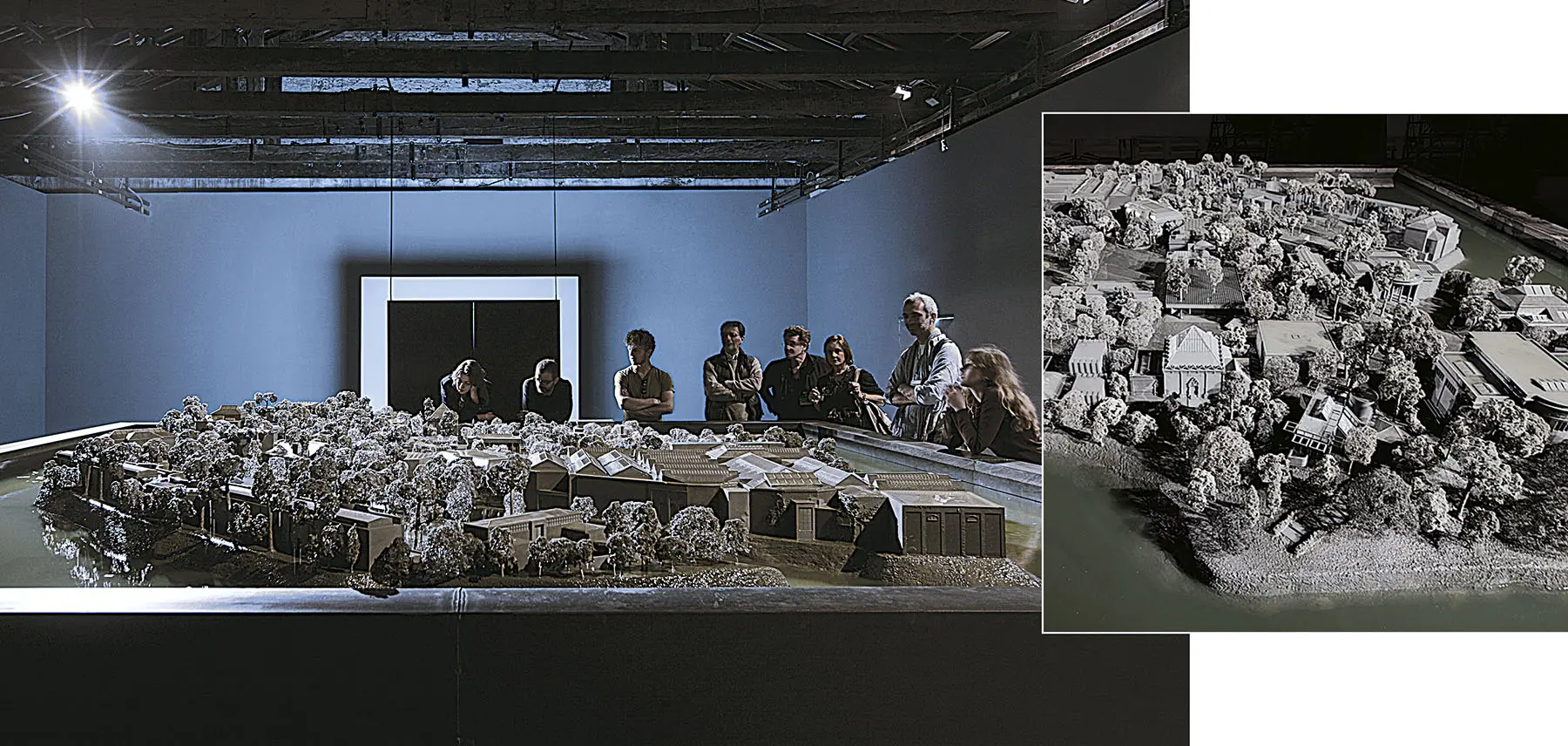
Massimiliano Gioni was in charge of the artistic direction of this 55th Venice Biennial, at a time when the event has definitively opted for the model first recognized in the Aperto. Like his predecessors since 1998, Gioni’s first responsibility was to curate a mega-exhibition of international art, to be presented in the former Italy Pavilion, today the Biennial Pavilion, and the old Arsenale. Behind are the times when the Aperto was presented for the first time in the modest space of the Dogana: now, the curatorial model it introduces plays a central role in the Biennale, obscuring or making more relative the country pavilions whose rivalry was, for a long time, the Biennial’s true driver. Alfredo Jaar has attempted to visualize and even reinforce this tension with Venezia, Venezia, an installation in the Chile Pavilion where a large-format model of the 27 pavilions in the Giardini intermittently emerges and is submerged inside a steel tank filled with water. “These pavilions and their architectures, which responded to a pre-WII world order, have been rendered obsolete by the globalized reality of contemporary art,” Jaar has said, as he asserts that his inclusion in the Aperto in 1986 meant his own personal entry into the international art scene.
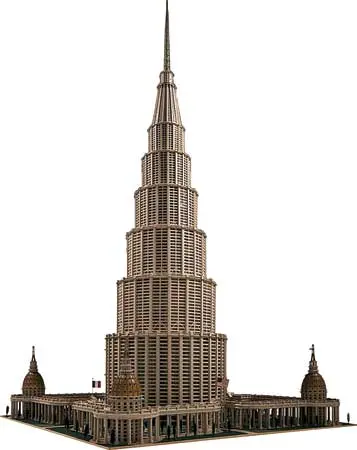
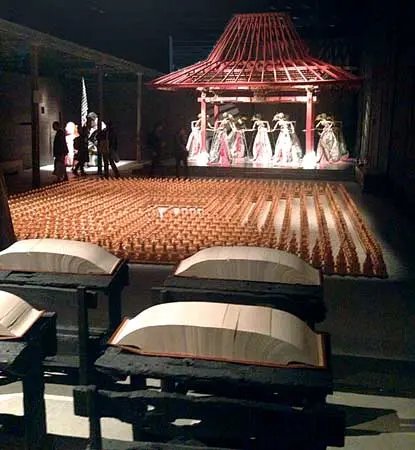
Gioni’s exhibition is titled Il Palazzo enciclopédico and its key is supposed to be contained in the Encyclopedic Palace of the World, a project presented by self-taught Italian artist Marino Auriti to the Federal Patent Office of the United States presented on November 16th, 1955. As Gioni explains in his presentation, this was “an imaginary museum intended to hold the entirety of the world’s knowledge” and to bring together “humanity’s greatest discoveries, from the wheel to the satellite.” And Gioni adds: “Confined to his garage in the middle of a Pennsylvania field, Auriti worked on his idea for years, constructing a scale model for a 136-story building that would each be a height of 700 meters and occupy 16 city blocks in Washington, D. C.” This model greets visitors to the Central Pavilion’s first gallery, and I am surprised by its fidelity to the neoclassical architecture of the official buildings seen in the Washington Mall. An architecture of closed, final forms that are little able to contain the documents and testimonies of human knowledge, which as we now know, tend to infinity, as noted by Le Corbusier in 1929 when he gave shape for the first time to his idea for an “unlimited-growth museum,” which thanks to its spiral shape would be able to expand forever. But such objections do not concern Gioni, who is interested in Auriti’s project only inasmuch as it embodies the “dream of gathering the entirety of universal knowledge, which it shares with many other artists, writers, scientists, and self-proclaimed prophets who have attempted, often in vain, to model an image of the world capable of capturing it in its infinite variety and richness.”

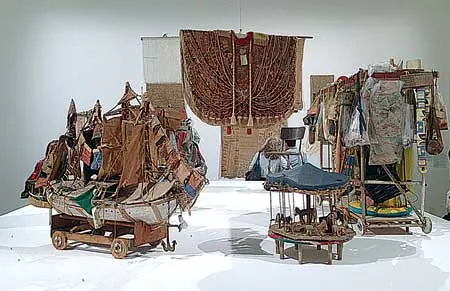
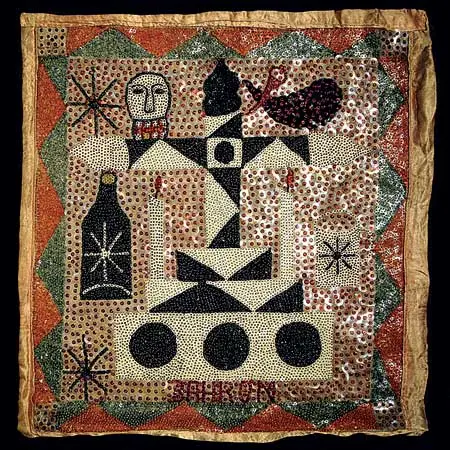
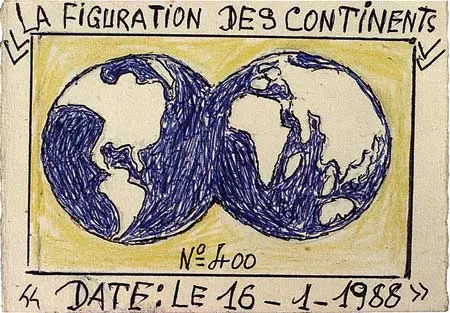
It is not absurd to see Gioni situating himself on this occasion in Auriti’s place and attempting with this show to “model an image of the world capable of capturing it in its infinite variety and richness,” even if he does so not with the encyclopedist’s exhaustive methods but with the synthetic methods of the poet. And it doesn’t matter either that the image offered by Il Palazzo… as a whole is marked by multiculturalism. And I say this, firstly, because the 150 works from 37 countries set together in the exhibition cannot all be considered “works of art” in the sense that this term has historically possessed in the West. Gioni acknowledges this when he writes, in reference to the content of his exhibition, that it “combines works of art with historical artifacts and found objects.” And, secondly, this heterogeneous mixture not only interrogates the Western concept of the work of art but also recognizes and values many “artifacts” and “objects” that are evidently marked by their belonging to or anchoring in non-Western cultures. The most clamorous examples of this are the tribal drawings compiled by Vienna ethnologist Hugo A. Bernatzik in Melanesia and South East Asia in the 1930s. Or the voodoo flags, the tantric paintings, and even the dresses, tapestries, pictograms, and texts by the visionary Arthur Bispo do Rosário, who, although a Brazilian who claimed direct inspiration from Christ, put into play in his works imaginaries and knowledge’s rather different from the Western ones that dominated his own country. Another visionary of the same ilk is Frédéric Bruly Bouabré, to whom God appeared in a vision Côte d’Ivoire in 1948, naming him Cheik Nadro (“he who doesn’t forget”) and urging him to establish his own religion, the Order of the Persecuted. Bouabré also set for himself the task of visualizing the nearly-extinct bété language by means of a pictographic alphabet with more than 400 characters. Since then, he has created a copious body of drawings, presented in books and series, of which a sample is on display.

It is important to note, however, that multiculturalism as a vindication of non-Western cultures is not, in the strictest sense, a new thing. On the contrary, it has historical precedents, among which the very notable one of the Surrealist movement. For the surrealists, the peoples generally are known as primitive at the time possessed a unique value, because they were free of the rationality that oppressed Western men and as such had more fluid access to the unconscious. Thus the high regard in which the surrealists held their art. Albeit, not only theirs, since the surrealist also valued the art of children, dreamers, visionaries, and mental patients, both for their fecund and powerful spontaneity and for their unconscious character. And it seems evident that the curatorial discourse in Il Palazzo enciclopédico is indebted to the cartography of surrealist art because, alongside the examples of tribal or subaltern art mentioned above, there are many instances of art created by dreamers and visionaries with the most diverse backgrounds and widely ranging obsessions. In fact, Auriti is one of them, as are Bispo and Bouabré. On the same list are Hilma af Klimt, John Bock, Aleister Crowley & Frieda Harris, Oliver Croy & Oliver Elser, Guo Fengyi, Emma Kunz, Agustine Lesage, Achilles G. Rizzoli, Jean-Frédérick Schnyder, Friedrich Schröder- Sonnenstern, Xul Solar, and Rudolf Steiner.
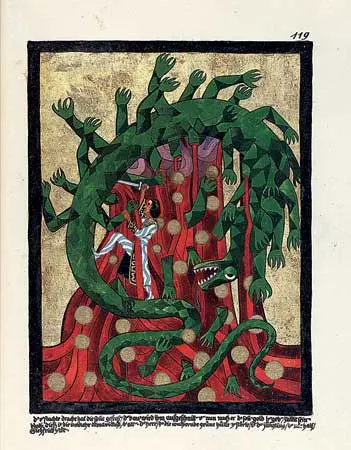
The surrealism lineage of the cartography outlined by Gioni is also in evidence, and forcefully so, in the pride of place given by his curatorial discourse to the celebrated Swiss psychoanalyst Carl Gustav Jung, whose Red Book was on exhibit in the same room with Auriti’s encyclopedic palace. It is an illustrated book where Jung wrote down, over the course of 16 years, fantasies and visions that first came to him spontaneously, and then he was able to self-induce in an application of what he called his Active Imagination method.
But let’s not confuse matters: Gioni’s exhibition is not surrealist, regardless of how much weight surrealism has in its composition. In truth, this is a multicultural exhibition, because the numerous examples of art and artists who do not squarely fit into what until very recently were the unquestioned canons of Western art, coined by equally homogeneous modernity, have not been selected by Gioni because of their connection with the theory of the unconscious, individual or collective, espoused by the surrealists. They are there because the curator believes that both that theory and those works must be a part, although not to the exclusion of everything else, of a promiscuous cultural landscape that, thanks to the urbi et orbi expansion of the biennalization phenomenon, already enjoys a worldwide reach. Proofs of Gioni’s critical distance from the surrealist’s passion for primitive mentalities also abound in the exhibition. I will mention three outstanding ones. First, the inclusion of Jimmie Durham, whose work, as interpreted by Hal Foster—a severe critic of the “ethnographic turn”—is a mordant parody of primitivist fantasy. Second, the deconstructive gaze, not conspiratorial in the least, with which Brazil’s Tamar Guimaraes and Denmark’s Kaspar Akhoj deal in their film installation with the map drawn by a member of Brazil’s spiritualist community, which traces “spiritual colonies” and “transit cities” occupied by the recent dead. This map is a version of the tropical Eden utopia imagined by Francisco Cándido Xavier, a spiritualist and medium in the 1960s and 1970s. Third, the inclusion of Walter de Maria’s work, which, regardless of its paradoxical title, Apollo’s Ecstasy, is set entirely apart from the irrationalism of the surrealists or of any flirtation with primitive art.
In case any doubts were left about the markedly multicultural nature of Gioni’s exhibition, the rest of the Biennial ratifies the fact that biennalization tends, inevitably, to multiculturalism. True, there are emphatic affirmations of an artistic discourse that remains hegemonic in the West, such as the one represented in the Argentina pavilion, occupied this time around by a complex intervention through which Nicola Costantino deconstructs the mythical figure of Eva Perón. Or the Brazil pavilion, where the inclusion of Odires Mlászo, and especially Max Bill and Bruno Munari, attests to the recurrent interest on the part of a significant sector of contemporary Brazilian artists for the modern legacy. Or the Mexico pavilion, located in the old Church of San Lorenzo, where Ariel Guzik placed Córdex, a machine destined to transform the experience of space into acoustics, inscribed in an electro-acoustic tradition that has in Luigi Nono, who in 1984 presented in the same space his Prometeo, his most outstanding representative. And one must even list here the Vatican pavilion, participating in the Biennale for the first time, with versions of passages of the Genesis created by Joseph Koudelka and Lawrence Carroll.
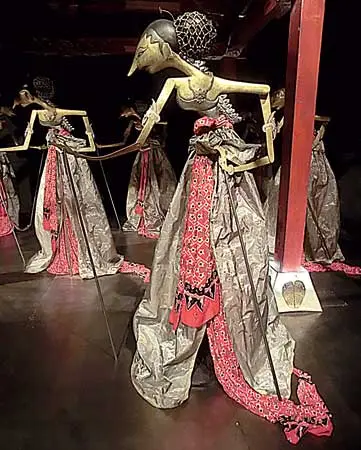
At the opposite extreme is the Indonesia pavilion, where Albert Yonathan Setyawan, Entang Wiheraso, Eko Nugroho, Rahayu Suppanggah, Sri Astari, and Titarubi situate their work in a stage designed to evoke their country’s traditional architecture and highlights a reinterpretation of its legendary marionettes. Or Portugal, installed on a boat in the Giardini docks and literally invaded by a deliriously baroque installation by Joanna Vasconcelos. Or Azerbaijan, Bahrain, Bangladesh, Côte d’Ivoire, or South Africa, to mention some of the most idiosyncratic.

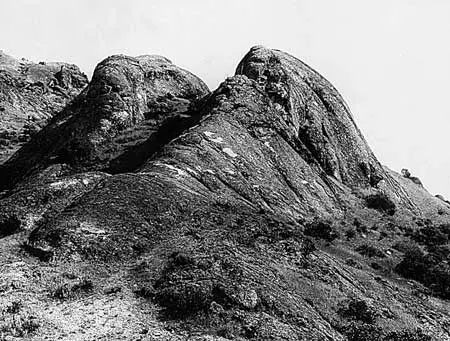
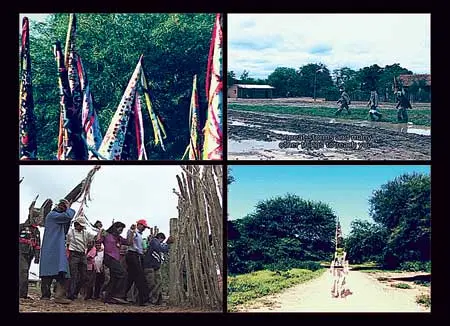
It is also worth mentioning the IILA pavilion (the Italian-Latin American Art Institute), as it includes works that explore traditions and contexts different from the Western canon. I am referring, in the first place, to the video installation titled Los Andes, by Chile’s León and Cociña, which conjures the spirit of a sacred messenger who has taken possession of a remote, decrepit office. Also, The Second and a Half Dimension-An Expedition to the Photographic Plateau, a video installation by Colombian artist François Bucher, who interrogates the explorations of Peruvian anthropologist Daniel Ruzo in the 1950s, and his discovery of a sculpture park more than 10,000 years old. Bucher interviews at length Severiano Olivaries, the park’s guardian. And also Ghost, a video by Paraguayan artist Fredi Casco documenting the Arete Guasude, a festivity of the chiriguana people, one of the Guarani ethnic groups that populate the country. It has the structure of a carnival where the costumes, masks, and dances offer a vibrant, intensely colorful spectacle. But as an effect both of Spanish colonization and the impact of advertising and of Americanized media, this homage to the group’s ancestral gods has seen its costumes hybridized first with conical hats and masks that are European in origin, and, second, with new ornaments such as CDs and Halloween or Spiderman masks.
CARLOS JIMÉNEZ
Essayist and art critic. He lives and works in Madrid, Spain.