
Carlos Medina (Barquisimeto, Venezuela, 1953) is one of the Venezuelan sculptors who have persistently created, throughout a harmonious artistic evolution, a body of work that has become a referent in the history of the visual arts of his country. For this reason, the presentation of a retrospective exhibition of his already vast body of work is, on the one hand, supported by the undeniable quality of his pieces and, on the other, by the need to develop curatorships that like this one are generated within the Venezuelan context, where the possibilities of investigative exhibitions and historical accumulation—common practices in the museums—have been diminished.
The exhibition was curated by Bélgica Robedríguez and covered twenty-six years of artistic production by Medina. The survey opened with the spectacular piece entitled Cilindro Infinito (Infinite Cylinder, 1987-1988). Measuring 458 cm high, this wood sculpture is representative of a period that revealed an admiration for Constantin Brancusi and Constructive Universalism. The unequivocal verticality of the piece confirms totemic connections that, nonetheless, reject representation in favor of simplicity, in a composition of straight lines and regular curves. Some of these formal solutions will continue to be investigated by Medina during the beginning of the 1990s when he chose to approach them through direct carvings on travertine marble.
The tensions between contained organicity and geometric aspirations have characterized the work Medina since the beginning of his career. In pieces like Fragmento de Lluvia (Rain Fragment, 1989) or Gotas Nazareno (Nazarene Drops, 1989-1999), this artist relies on a natural abstraction—drops of water—to immerse himself into a study of its volumetric dynamic, as he plays with its characteristics to convey weight and direction, through the overexpression of matter—in this instance, directly carved wood.
During the mid-1990s, Medina created works like Círculo Medio Interno (Medium Internal Circle) or the series Leaves, constructed with steel or iron. To create them, the sculptor began with simple forms that acquired movement through the inclusion of folds or perforations, resulting in pieces that look as if they had been frozen in time exactly at the moment of their transformation.
This apparent transformation of volumes could be understood as the eruption of emptiness into the matter, the inclusion of the immaterial as an expressive element that would gradually gain space within the production of this artist. During the early 2000s, Medina began to create works that, although minimal in nature, retained the geometric elements that continued to be part of his artistic evolution. In the series titled Spokes, he used thin bronze rods like lines to create drawings in the space. Sometimes he placed small spheres that interrupted the trajectories of the thin rods in order to create points of tension to energize the work. These works served as the precedent for the series Malevich (2013), created with thin stainless steel spokes that were bent or twisted and placed on white MDF surfaces. The juxtaposition of the wire against the fiberboards underscored the drawing-like effect created by the metal lines and their shadows.
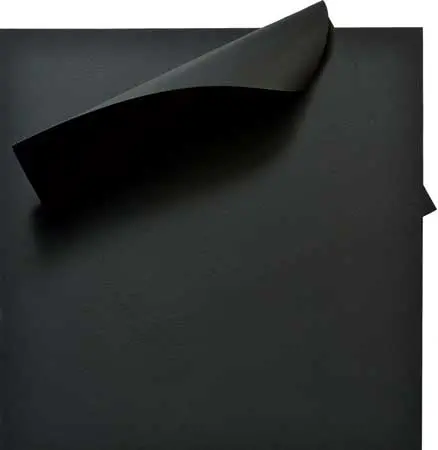
The series Surfaces—in which Medina created white planes superimposed on whites or blacks and folded into spirals—takes the inquiries that the artist first sketched with iron and steel during the late 1990s to the next level. There, the use of MDF and PVC signage material allows the artist to achieve the subtle quality of a fine plane that acquires volume through undulations as if it were a sheet of paper. The monochromatic nature of these pieces emphasizes the volumetric effects caused by the incidence of light and shadows in the cavities and curves of the arched planes.
The recent works by sculptor Carlos Medina—installations like Neutrinos or Fragmentos de Lluvia, were created in the manner of penetrables where aluminum or acrylic drops or spheres are crossed by fine nylon threads—are the result of a committed study of geometry, of the perfect and essential forms from nature. Because Medina’s approach to geometry has never been dispassionate, on the contrary, it has evolved into a revelation of the symbolic or sensual elements hidden in the purest forms.
The penetrable installations synthesize many of Medina’s preoccupations concerning the organicity of geometry. In them, he establishes a more direct sensorial, and ludic relationship with viewers, in a manner that maximizes the metaphoric resources that the artist has always been interested in underscoring.
KATHERINE CHACÓN