
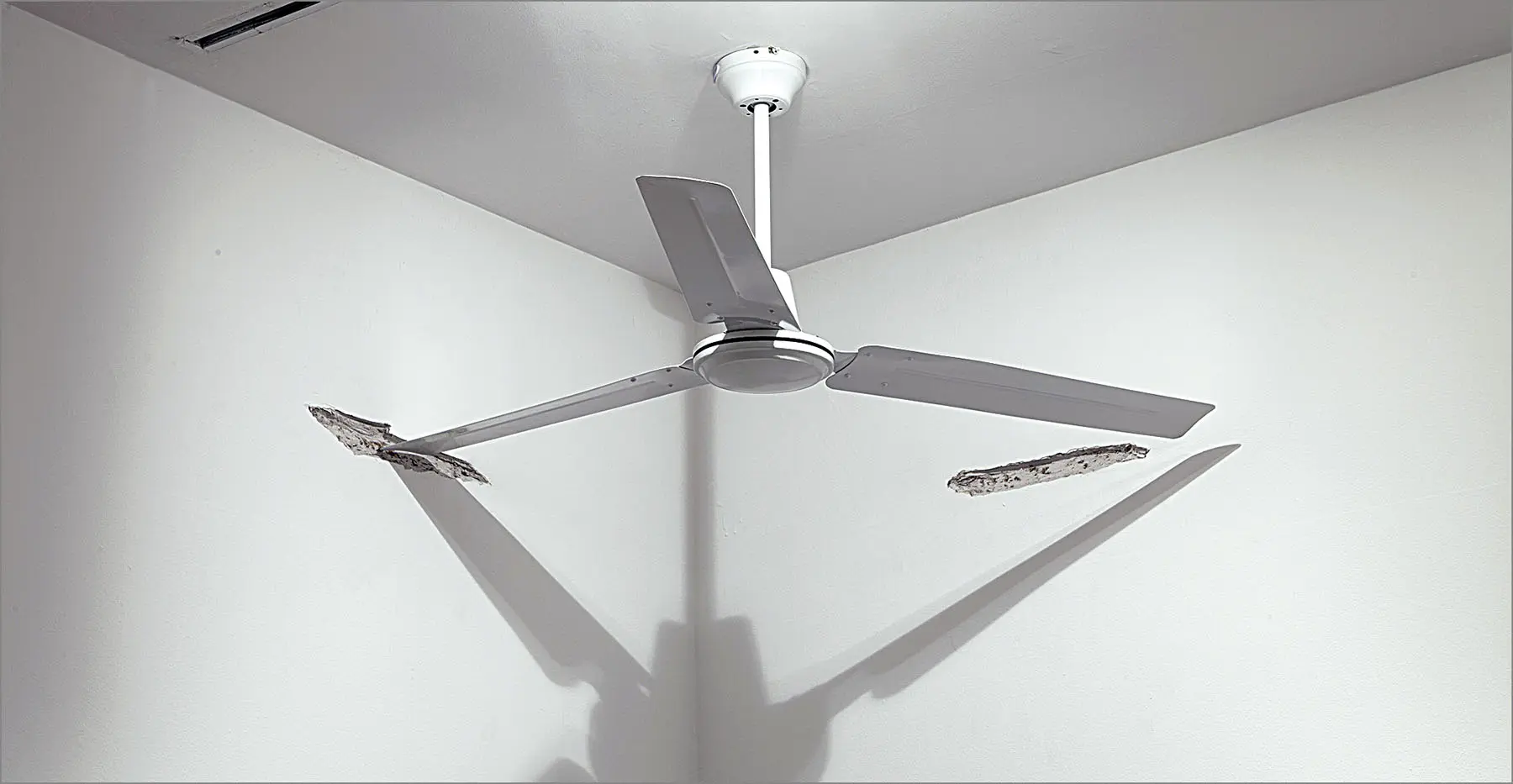
When the 43rd edition of the National salon opened its doors in early September, the exhibition was impeccably put together, with a degree of professionalism never before seen in this event, a carefully printed guide with diagrams of all the galleries, and a catalog with news and declarations from the artists, all ready to accompany the show. The exhibition unfolded in four spaces: the Botanical Gardens, with three works; the Museo de Antioquía, with thirty-nine proposals; Casa del Encuentro, with 15 spaces and their respective artworks; Museo de Arte Moderno, with 24 artists in its galleries and the old Shipyard, now known as Edificio Antioquía, with thirty-three projects. There was also a program of special events that included performances, concerts, tours, an opening and a closing theory forum, and a variety of other activities through the event’s closing on November 3rd.
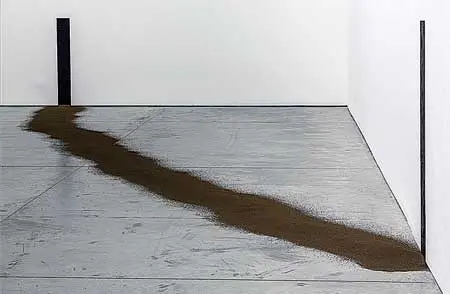
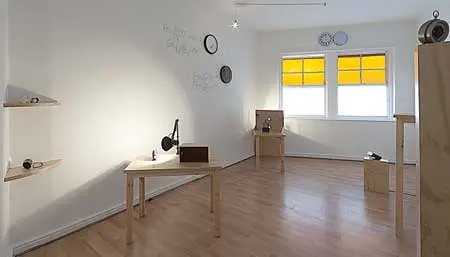
Five years ago, the idea of making the National Salon more international was posited as an attempt to attract more diverse audiences, especially those directly involved in the contemporary art system, be it gallerists, curators, collectors, or artists. It seemed like an idea whose time had come since in 2008 interest in contemporary Colombian art was just starting to take off thanks not only to the significant performance of some of the country’s artists in international spaces, such as Doris Salcedo and Oscar Muñoz, but to the drive of curators and gallery operators who accompanied the artists they selected or represented to biennials and fairs. In the time since, such interest in contemporary Colombian art has grown unexpectedly; let it suffice to remember the visits by officials from the Modern Art Museum in New York or London’s Tate Modern, followed or accompanied by international gallerists and collectors of various kinds, both individual and institutional. They all want to see contemporary Colombian art on exhibit but have only been able to find it in small doses, to say the least, in cities with its greatest concentration (Bogotá, Medellín, Cali). They also want to visit artists, meet them, and see their studios. This has translated into invitations, networking, and acquisitions.
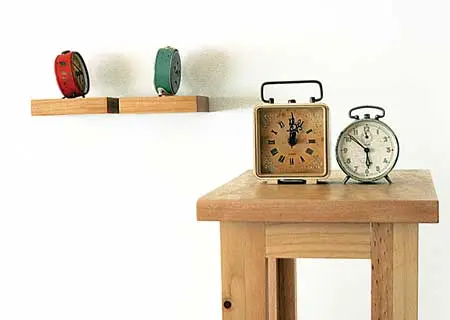
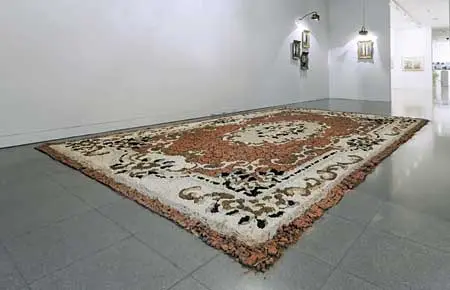
In this way, the idea of internationalizing the National Salon, with a more abundant presence of foreign artists, is no longer such a good strategy, and the expenditure is wasted. If the monies were invested, for example, to bring curators, museum directors, gallery operators, and collectors to see 108 Colombian artists of recent generations, the results would be different. International observers do not want to see artists from Afghanistan, Switzerland, Italy, France, Germany, Portugal, the United States, Canada, Martinique, Finland, the United Kingdom, The Netherlands, or China, like the ones who were part of this event, at least not in the mother of this country’s visual arts exhibitions. Artists have similar characteristics and many points in common with those working in Colombia, which is nothing surprising given the phenomenon of globalization. If anything, they may be interested in the Latin American artists from Cuba, Panama, Guatemala, Peru, Ecuador, Mexico, Argentina, Brazil, or El Salvador that were also present in this “Colombian” Salon.
The Ministry of Culture pushed for a high-interest international event and conquered the challenge, thanks not only to the curatorial team that designed the successful strategy, but to the entire staff that carried such a macro enterprise to its felicitous completion: executive and artistic directors, production team, recording, logistics, publishing coordination, and local and international press. But the character of the National Salon was thoroughly distorted not by any shortsightedness on the part of its audience, whose members were satisfied with the event and its staging, nor by the artists of their works, who could not have been better treated, but because of an erroneous internationalist intent based on the premise that if there are no foreign guests, people will not come. In fact, it has been Colombian artists and their best works that have concentrated attention in recent years, to the point that it is no longer necessary to beg for visitors or to plead to be taken into account; rather, the contrary is true.
“Knowing how to ignore” is as open an argument as it is contradictory, and the supporting texts and presentations have a somewhat confused apologetic tone as they conclude that “Knowing how to ignore allows us to recognize the impossibility of maintaining both dynamics as separate and opposite. We always conceive ourselves as confronted with the real, but in truth, there is no front-to-front, no knowledge, no ignorance: it is all a double illusion.” The resemblance to Pataphysics and the most gaseous realm seems inescapable, crowned by the words of Mariángela Méndez, artistic director and one of the event’s five curators: “The work of the 108 participating artists enrich our knowledge, others increase our concerns and grow our ignorance, others play the unique role of closing the gap with connectors and tensors that show how the canon, what we know, what we believe we know and ignore, are somewhat arbitrary, tentative categories, often thankfully incomplete.”
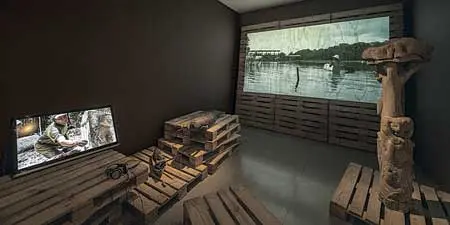
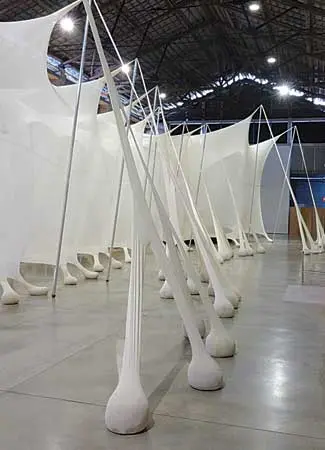
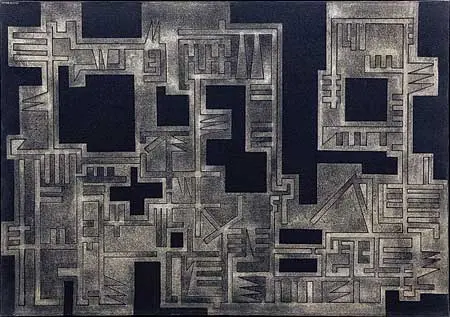
The international exhibition in this Salon is a point of reference in the local scene, and it does connect the Colombian artists selected to participate with the interests and preoccupations of their foreign counterparts. It is surely easier to illustrate the idea of not knowing than the idea of knowing. This is clearly in evidence in the Museo de Arte Moderno’s two parallel and confronted exhibitions. Destiempo, by Argentinean curator Florencia Malbrán, is most explicit with regards to the uncertainty of the future and the atomization of historical discourses that has resulted both in the dematerialization and the trivialization of the arts. Estado Oculto is more difficult to digest, due both to its artificial effort to appropriate ethnic elements and to its fruitless conviction that by making them more visible we help preserve them. In this connection, the responsible curator, Rodrigo Moura e Silva, from Brazil, decided to give his own country a central role, inviting eight of his acquaintances to participate (Isael Maxakalí, Alexandre Da Cunha, Jac Leirner, Cildo Meireles, Cristiano Rennó, Mauricio Yekuana, and Claudia Andujar, who is a Swiss national but lives in São Paulo). Malbrán, in turn, selected only three Argentineans (Victor Grippo, Jorge Macchi, and Sergio Raimondi) for her 9-artist Destiempo. In its monumentality and effectiveness, the work of Ernesto Neto appeared as a very playful “solo exhibition,” entirely unconnected to the other galleries, regardless of what was intended, but offering an opportunity to experience a major work by a key Brazilian artist.
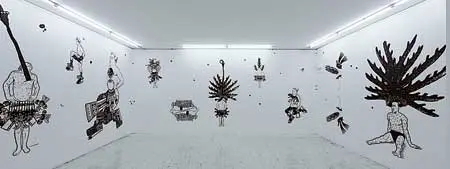
The three Colombian curators decided to intertwine their selections at Museo de Antioquia, Casa del Encuentro, the Botanic Gardens, and the old Shipyards, where individual projects were privileged and the artists chosen by Mariángela Méndez, Javier Mejía, and Oscar Roldán were able to interact with others selected by Malbrán and Moura. This intercontinental, international, promiscuous, and only partially national relationship was labeled with a naïve title: Uno con otro (“One with the Other”).
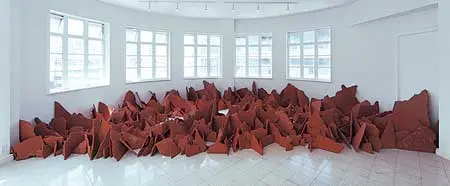
The curatorial criteria were as broad as the general idea of Knowing/Not Knowing. It resulted not only in a resurrection of the dead (Omar Rayo, Hernando Tejada, and Ethel Gilmour), the presence of veteran artists (Giovanni Anselmo, 1934; Lothar Baumgarten, 1944; Germán Botero, 1946; Jimmie Durham, 1940; Cildo Meireles, 1948; Miguel Ángel Rojas, 1946; Antonio Caro, 1950), the inclusion of artifacts, fakes, and representatives of various crafts (the Savannah Station clock; a small sample of pre-Columbian ceramic inventions by the Álzate family; cartoonist Álvaro Vélez; the defender of the yanomami Mauricio Yekuana; poet Sergio Raimondi, who works as Culture Secretary in the city of Bahía Blanca; indigenous documentarian Isael Maxakalí; Abel Rodríguez, “the Namer of Plants,” a member of the nonuya indigenous group from the Amazon region who creates realistic watercolors of rainforest flora), but also in the promotion of lesser-known foreign artists and others who are entirely new to the Colombian art public (Lida Abdul, Armando Andrade Tudela, Claudia Andujar, Giovanni Anselmo, Kader Attia, Marcos Ávila, Lisandra Ávila Romero, Lothar Baumgarten, Carlos Bunga, Iván Capote, José Castrellón, Benvenuto Chavajay, Liu Chuang, Donna Colon, Jonathan Harker, Alexandre Da Cunha, Annika Dahlsten, Markku Laakso, Jeremy Deller, Jimmie Durham, Anuar Elías, Radames Figueroa, Demián Flórez, Regina José Galindo, Alexandra Gelis, Victor Grippo, Nancy La Rosa, Fabienne Lasserre, Jac Leirner, Glenda León, Jorge Macchi, Gilda Mantilla, Isael Maxakalí, Cildo Meireles, Jorge Méndez Blake, Gian Paolo Minelli, Sandra Monterroso, Claire Morel, Joar Nango, Ernesto Neto, Sergio Raimondi, Cristiano Rennó, Karin Sander, Viviane Sassen, Fiete Stolte, Simón Vega, Vincent Vulsma, and Mauricio Yekuana), as well as the renewed presence of figures that are sufficiently familiar as to guarantee and secure the event’s resonance, via reflections that are both well-known and accurate (María José Arjona, Alberto Baraya, Francois Bucher, Johanna Calle, Antonio Caro, Nicolás Consuegra, Juan Manuel Echavarría, Clemencia Echeverri, Juan Fernando Herrán, Raimond Chávez, Jaime Iregui, Mateo López, José Horacio Martínez, Delcy Morelos, Mario Opazo, Bernardo Ortiz, Lucas Ospina, Nicolás Paris, Libia Posada, José Alejandro Restrepo, Miguel Ángel Rojas, María Isabel Rueda, Gabriel Sierra, José Antonio Suarez, and Carlos Uribe) and the highlighting of some emerging artists (which should be one of the Salon’s strong points, rather than an appendage): Freddy Álzate, Felipe Arturo, Juan Carlos Calderón, Leyla Cárdenas, groups like Octavo Plástico—Roberto Carlos Pérez, Ana María Padilla, Emmanuel Julio Pinilla—and Reproducciones—David Escobar, Lina Rodríguez—Cesar del Valle, Camilo Echavarría, Lorena Espitia, Éricka Flórez, Adrián Gaitán, Rafael Gómezbarros, Juan David Higuita, Miguel Jara, Edwin Gimeno, Alejandro Mancera, Kevin Mancera, Iván Navarro, José Olano, John Mario Ortiz, Fernando Pareja, Leidy Chávez, Yussy Pupo, Martha Lucia Ramírez, Antonio Restrepo, Santiago Reyes, Alex Rodriguez, Adriana Salazar, Wilger Sotelo, Angélica Teuta, and Giovanni Vargas. Of course, new artists do not represent great dividends for independent curators.
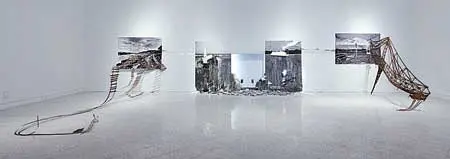
The artists on exhibit at Museo de Antioquia, Casa del Encuentro, the old Shipyards, and the Botanic Gardens participated with ambitious works that represented well the scope and reach of their thinking. In the generous and well-planned spaces, not only the most intelligent, well-executed, and forward-looking proposals shone in all their splendor, but less interesting works functioned as well, ameliorating their limitations. All virtues and advantages of good museography.
Cultural tourism, the media power of the various instruments of publicity, the productive avalanche of the vast landscape of contemporary art practices, the commercial bubble with its proliferation of investors and/or collectors, the anything but a negligible discourse that characterizes artistic products as the merchandise of a well-oiled international cartel, offer a jumbled and multifarious framework for any classification or assessment of this 43rd Salon. A State-driven effort to give Colombian art and artists greater visibility, where significant monies are in play. The municipalities where the provincial salons took place contributed 500 million pesos. The ministry put forth 2,400 million pesos for the preparatory regional salons held in 2011 and 2012. The Salon itself cost 2,000 million pesos, plus the 1,500 million pesos contributed by the Medellín Municipal Government.
In this loss of innocence, the event must take into account the context and cannot ignore the contradictory circumstances of the globalized stage. The National Salon must take advantage of the degree of professionalism reached all levels—and its budget—to put itself at the service of Colombia’s art and artists, questioning the notion that it is absolutely necessary to force a “dialog” with others in order to enhance both our production and our opportunities.
MIGUEL GONZÁLEZ
Professor, curator, and art critic. Member of AICA.