
To listen to Adrián Villar Rojas is to be initiated in the knowledge of a universe in constant, accelerating expansion. Everything propagates precipitously and in a networked manner, with no hierarchies, and in the midst of a disorder that is only apparent. Borders between past, present, and future—already diffuse—are blurred. Layer upon layer, images, and words are superimposed as in a single photographic negative exposed to light many times over. The final result is a surprising image featuring the generic and distinctive characteristics of an artist who enjoys getting somewhat lost in himself and being, in his own words, like a phantom navigating the different aspects of a given project.
About Time
The passage of time is a great constant.
2005. Not that long ago. Adrián writes in Bola de Nieve2 about his view of art.
The text begins by retelling the first eight minutes of the film Batman: Dead End. It tells the story minute by minute, using few words, just those necessary to establish the climate. It describes Batman’s fight with The Joker in a rain-soaked dark alley, the powerful paws of an Alien being who appears suddenly, a second Alien falling dead, Predator pouncing and landing in front of Batman, another furious struggle… At minute seven, the narrative is interrupted. All we have visualized up to that moment breaks apart; our mental movie is taken away suddenly. Our enthusiasm, that “fiery outburst of inspiration” provoked by the certainty that the hero will be eternal, ends; no longer are we certain that he will never finally fall. This is caused by a question that rips through the time and space of fiction: “What is the actor representing Predator think about seconds before representing its death? What thoughts and feelings appear at the precise instant when an actor-character closes his eyes and dies?” The veil of fiction is torn and what was hidden is suddenly in the spotlight, our point of view shifts, and the scene is now seen from backstage. The protagonist of the narrative has ceased to be an immortal hero: he is a man who will die. He will die in fiction; he will inevitably die. And the questions continue. “How much can happen in eight minutes of film?”
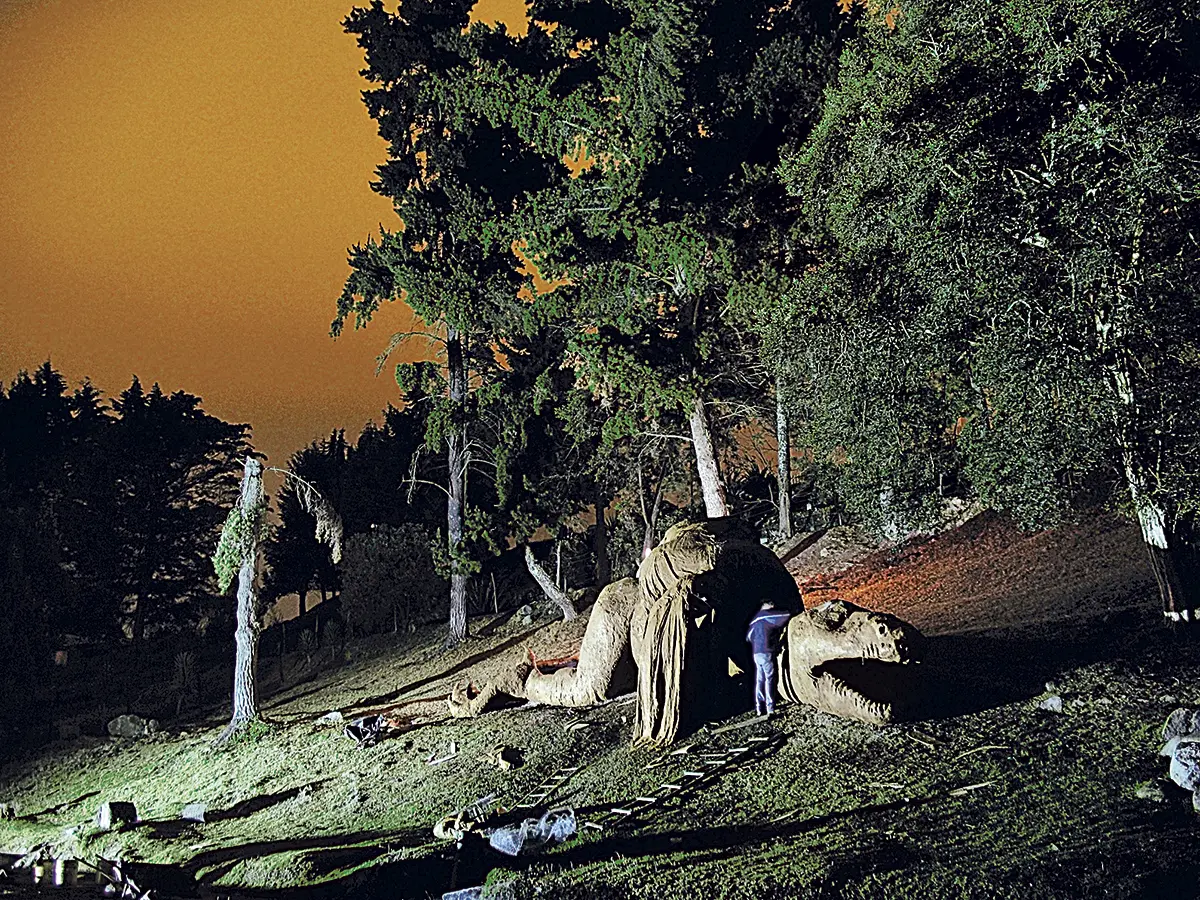
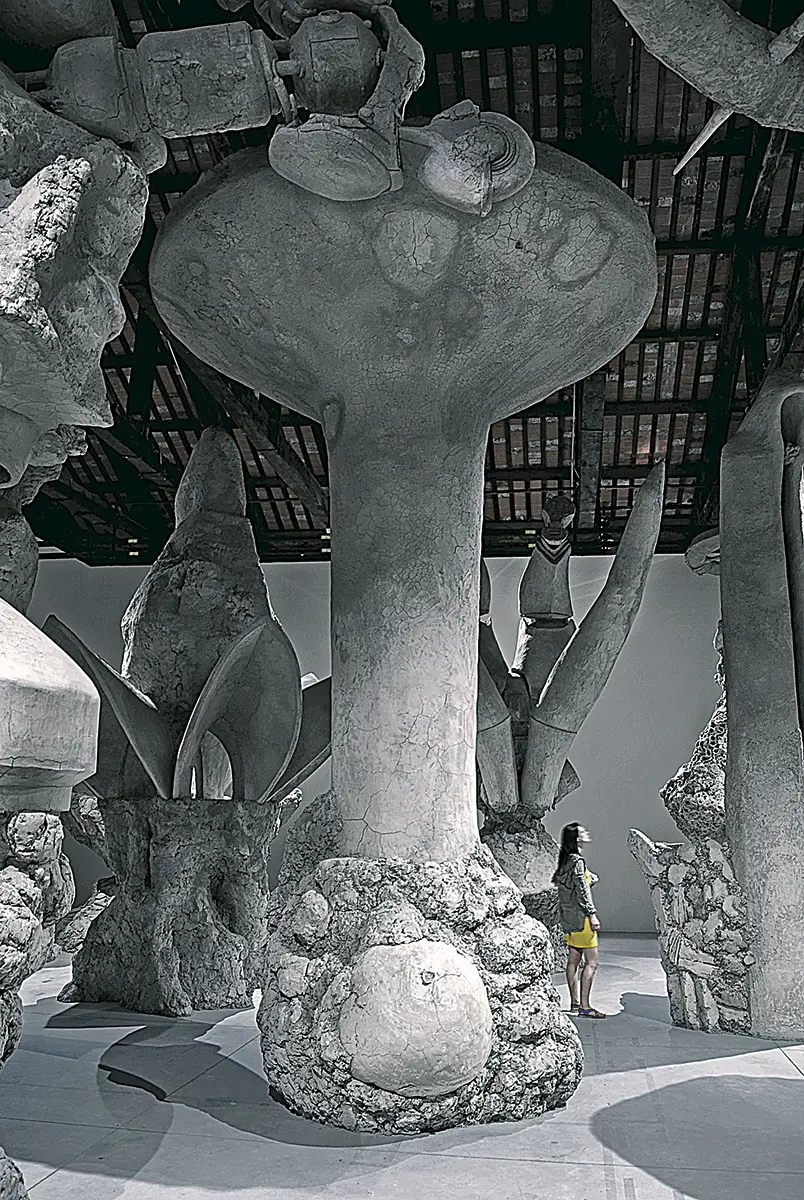
And, what is the rhythm that accompanies the passage of time? Barthes said that it was “uncomfortable” for him “a subject swaying between two languages: one expressive, critical the other.” Adrián Villar Rojas wavers between those two pathways without any discomfort. They are the extremes that demarcate the pulse of his work. The metronome oscillates and sends the signals needed to maintain a certain cadence. On the one hand, he seeks out emotion, as in a sad song that lasts only for three minutes. In response, the time of the materiality of his immense installations is also short: the use of unbaked clay begins in Lo que el fuego me trajo (Ruth Benzacar Gallery, 2008) and remains a constant to this day. Perhaps the first obligatory reference, due to its great international transcendence, is the almost inhuman work he presented at the Venice Biennale in 2011. Eleven 6-meter sculptures, two and a half tons each. A clay monument that disappears forever, like the dinosaurs. Titled El asesino de tu herencia (also the title of a song by Argentine punk-rock band Flema), it possesses a certain nostalgia, a sadness of finding oneself absent.
In the same text about his view of art, Adrián refers to sadness, which he sees represented in Kurt Cobain, one of his favorite musicians, whom he describes as “an entity of pure sadness [...] he represents sadness, lends sadness his body.”
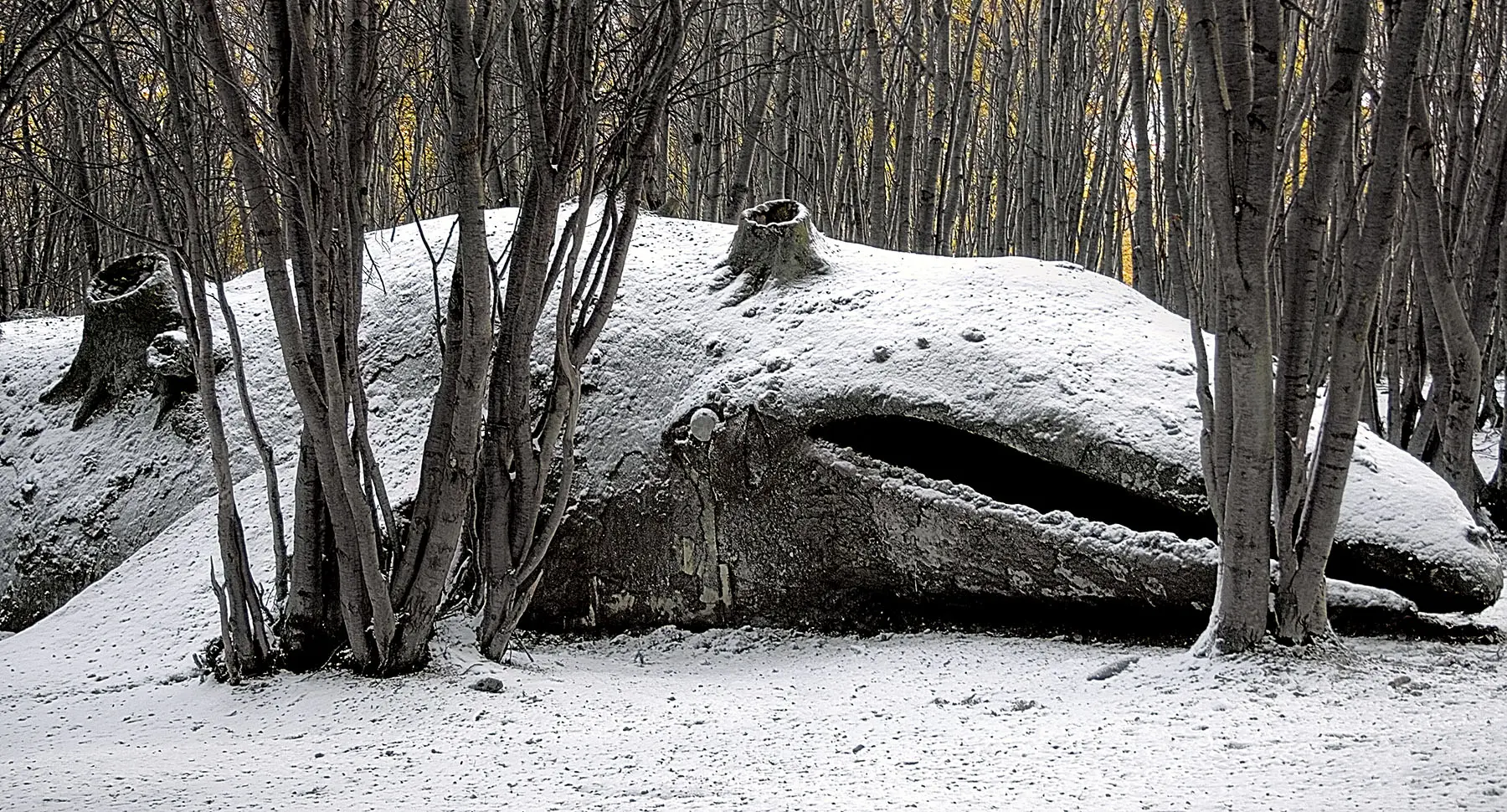
But even after this hollowing, after the volatilization of matter, the certitude remains that “projects never end,” that there always is a way to “push forward the process” that is the essence of each work. There appears, then, a need, the “hunger for conceptual life”: this is the second path. Mi familia muerta, presented at the 2nd Biennial of the End of the World in 2009, emerged from his enthusiasm for combining two shapes, a whale and a forest. But the material, after being transformed into a created world, once again fades away, returns to the Earth is energy transformed into questions. It is the material itself, once destroyed, that conceives those questions.
Matter 1: Clay, fold, crevice
Surprisingly, the universe’s smallest, less tangible structure offers clues for understanding the largest ones and vice versa.
Clay is a fine dust that results from the erosion of rocks. Each clay particle, invisible to the eye, has a laminar structure, each fleck has borders that seem formed by a series of laminates one on top of the other, like the pages of a book. In contact with water, the layers separate; as they dry, the space between the laminates contracts: such is the rhythm of clay. Adrián attributes to this material the ability of reading time more accurately than others.
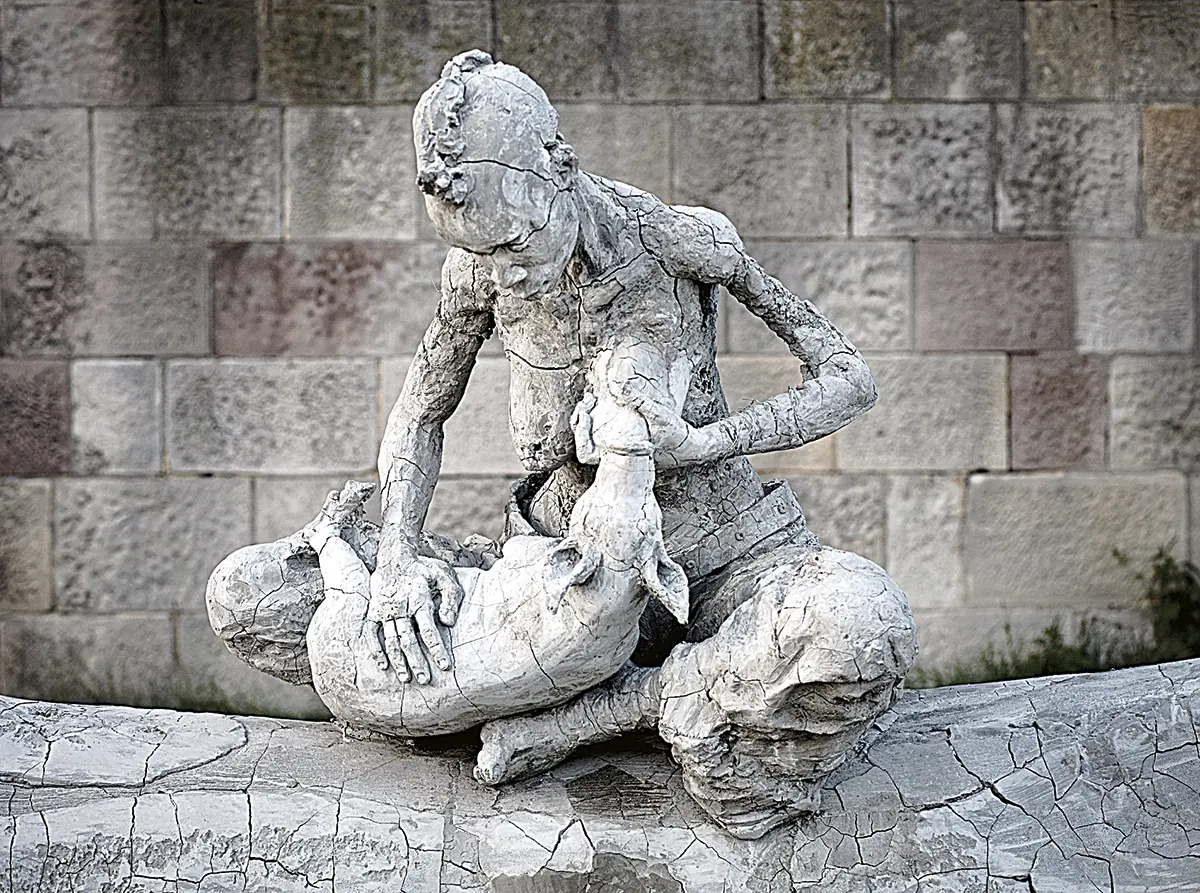
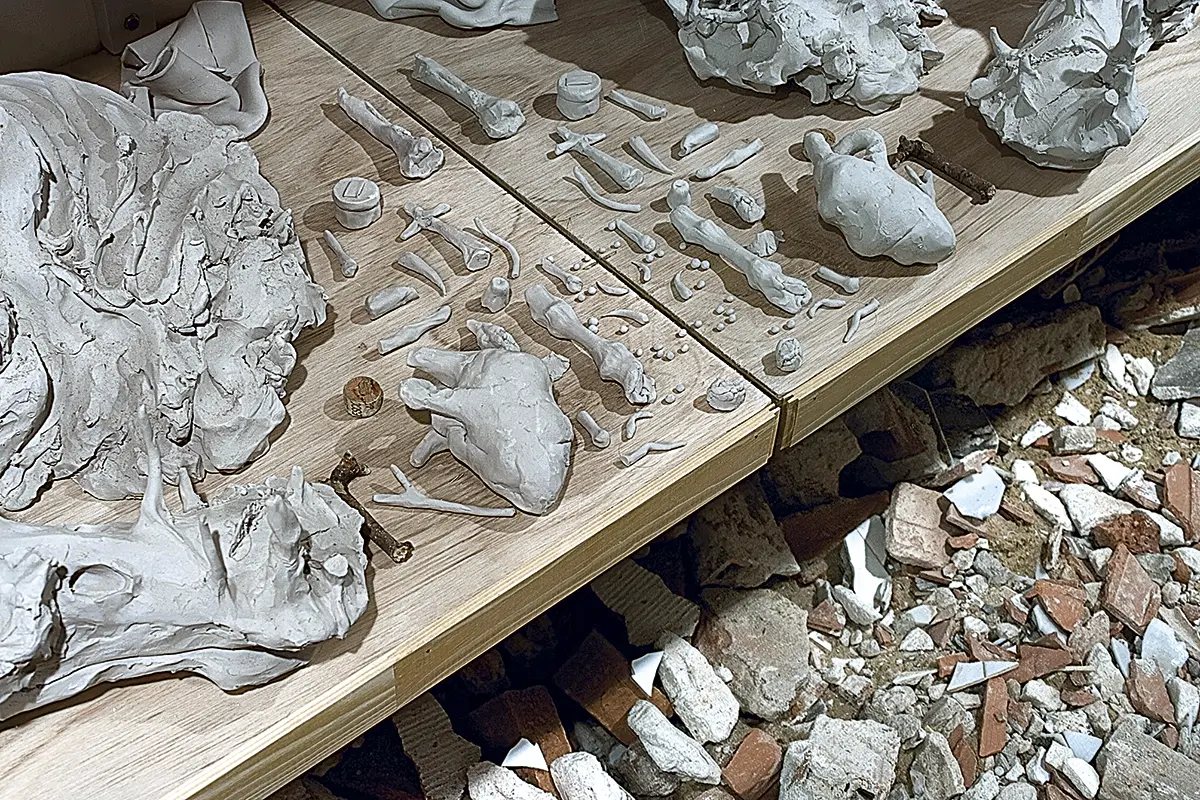
Clay also contains the potential for the most diverse shapes and textures. It can imitate Brutalisme or rationalist architecture, and it can also produce the baroque, ornate forms of the most fervid figuration. One can build fossils and ruins. There is no fiction in the decayed state of the item produced; “there is no design in the breakage,” the artist says.
What threatens the solidity and unity of the form is the crevice, the crack born silently from the contraction of raw matter.
Horror vacui and vacuum coexist in each site-specific project. The process is founded on a situation to which an answer is given. There is no production workshop where people “spin clay,” Adrián explains. The material is expressed in a determined scenario, takes shape particle after particle, carrying with it the symptoms of the given environment, its temperature, atmospheric pressure, humidity, rain. El momento más hermoso de la Guerra no sabe distinguir el amor de cualquier sentimiento was created for the 10th Cuenca Biennial in Ecuador, and it lasted only three days. After a process that lasted for a month and a half, the work vanished under torrential rain and hail. It was all lost. In his text, Adrián explained why it is that catastrophes take place: “They are the resulting effect of a high number of coincidences at work on a single space [...] Each coincidence that is triggered produces a new erosion of the natural flow of things. We (and everything) are very susceptible to chance [...]." There was an accompaniment to the work’s time of agony, and afterward, the mourning. But the reaction in the face of loss is once again the need, the act of resistance, the obstinate belief that a “poorly done” work will transform into something else. “The material taught me how to refine my way of thinking, it produces an epistemological shift [...] this is the education I received from the material,” Adrián explains.
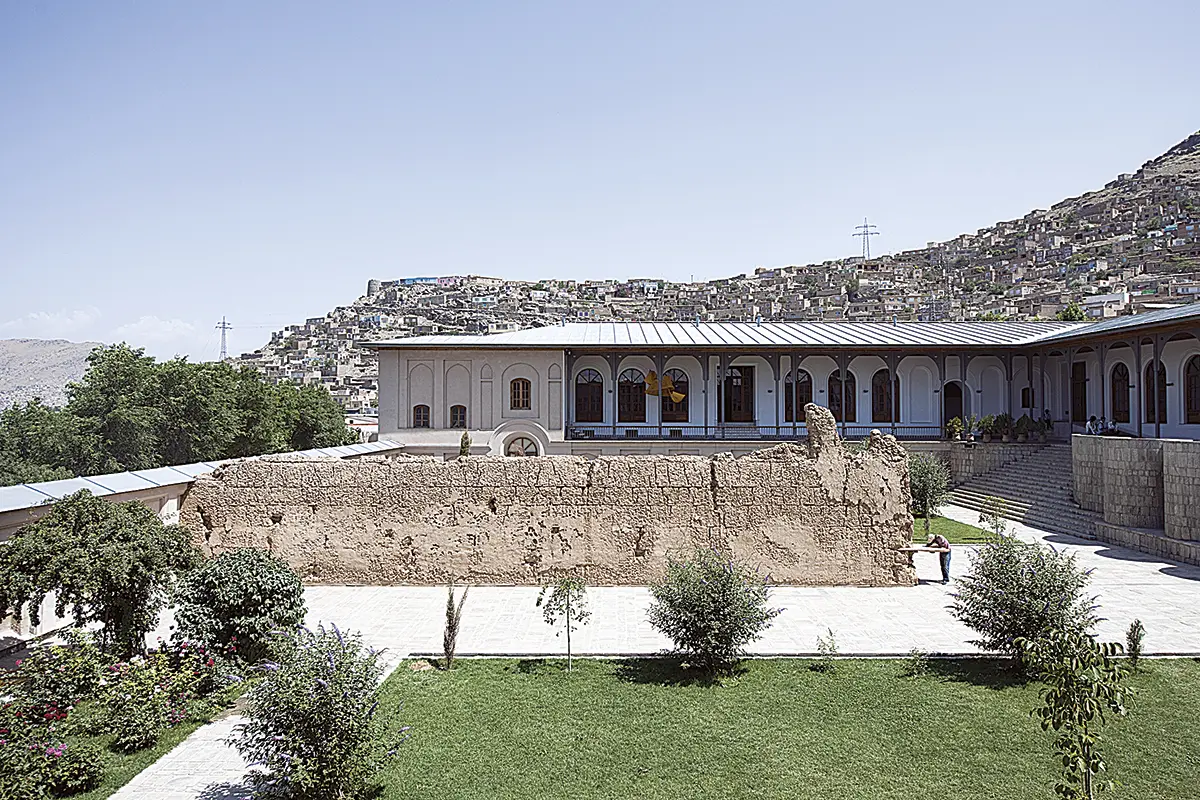
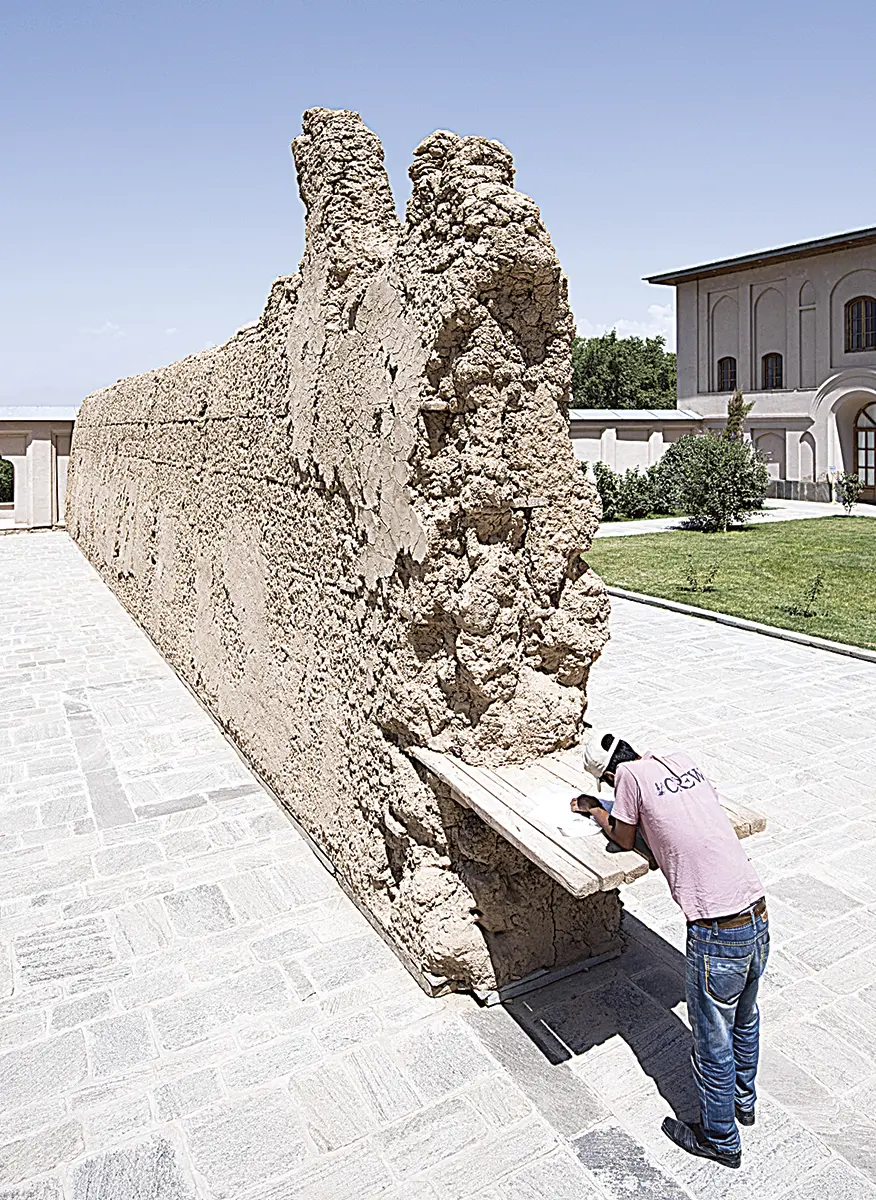
And the material returns. Return the world is a 24 meter-long mud wall built in Kabul, Afghanistan, as part of Documenta 2012. The unfinished wall seems to push forward according to its own logic, embedded in an architecture that is alien to its nature. It produces a fold in the landscape, a crease that incorporates the external space, more akin to its origin than to the site of its placement.
Matter 2: A human group in front of the mirror
“Where is the end of the work?” Adrián asks. And he answers: in the end, energy turns towards the people who made it. In order to carry out the projects, the effort of a human group, a community, almost a family, is necessary. “The matter on which I work is the human matter: to generate the best possible environment between the twelve people that comprise the team,” the artist says.
In 2013, a project evolved in Casa do Vidrio, architect Lina Bo Bardi’s emblematic house embedded in Brazil’s Atlantic forest, in São Paulo. El interior está en el exterior was a group exhibition conceived by Hans Ulrich Obrist in the residence where the architect lived. “The house is the landscape,” the curator declared.
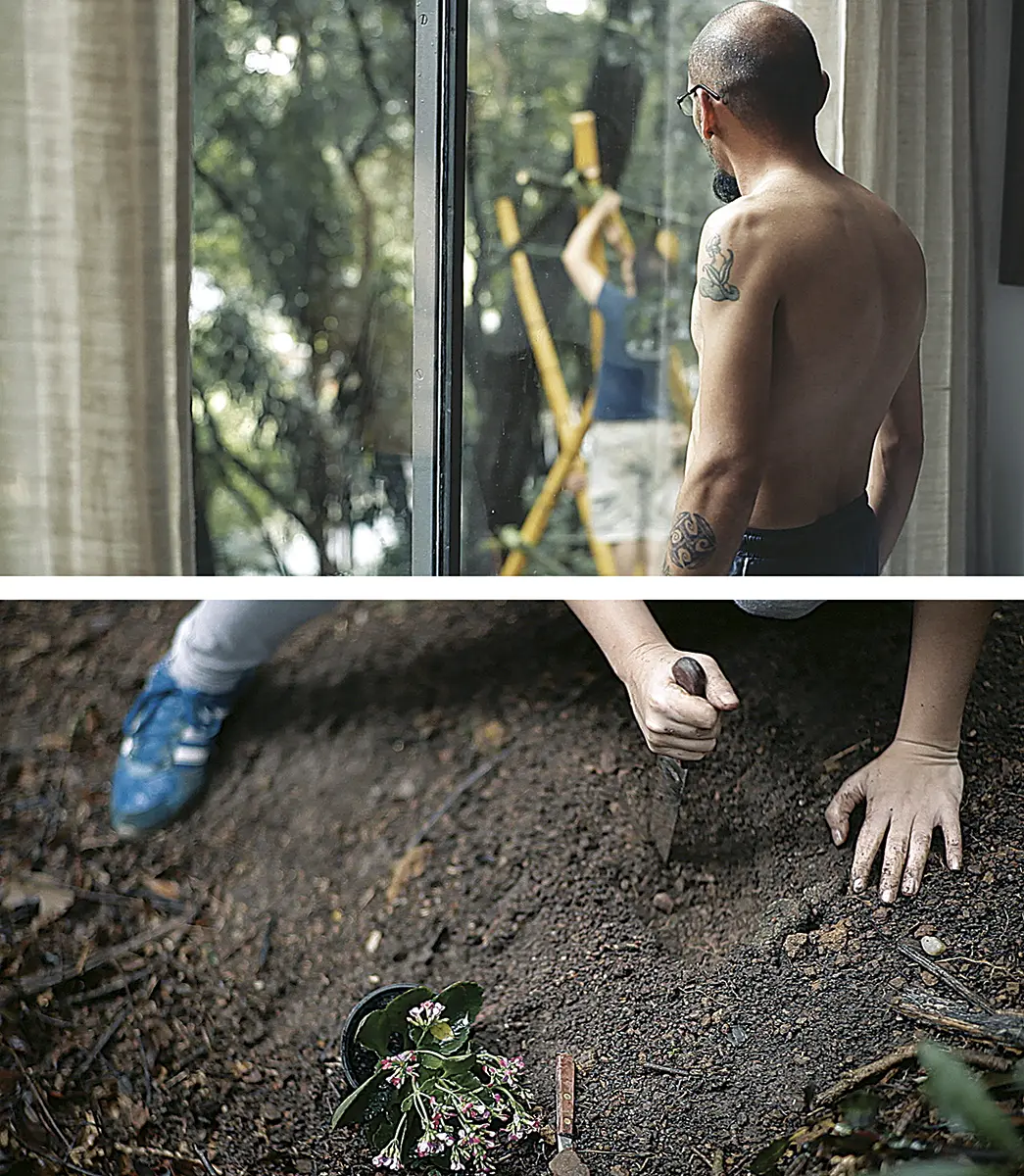
Responding to this proposal, Adrián Villar Rojas puts forth a new language, creating a film with the members of his team as characters. He wants to show how the work gets done, how the various layers coexist: assistants, builders, engineering tasks, calculations, it is a community devoted to producing thought. “I learn from what they think,” Adrián says. The artist played the role of director; he doesn’t appear in the film, covering the project only from outside. In the fiction, the team creates part of the paraphernalia used in movies: a lighting tower erected under the rain, a traveling-shot cart moving on wooden rails. The film is currently being shown at the Locarno Film Festival in Switzerland.
And the projects continue to exceed their capacity. Some time ago, after almost a year absent from the country, Adrián returned from Shanghai, and on the road from the airport to his hometown, Rosario, he saw a space that appealed to him. He goes to visit. It was a brick factory, located at the border between the urban and rural spaces. There are horses that grind horse entrails and mud to produce bricks. A family group seems to be in charge of the labor. The idea emerges then to have his own team, his family, attached to that community. A kind of parasitic relationship in which the host is not damaged. The intention is to incorporate themselves into a different ecosystem, propitiating some kind of symbiosis. Being there, working, and understanding the place. “The union happens at the level of the material, it is earth plus earth,” he says.
An interval of clarity: The blind spot
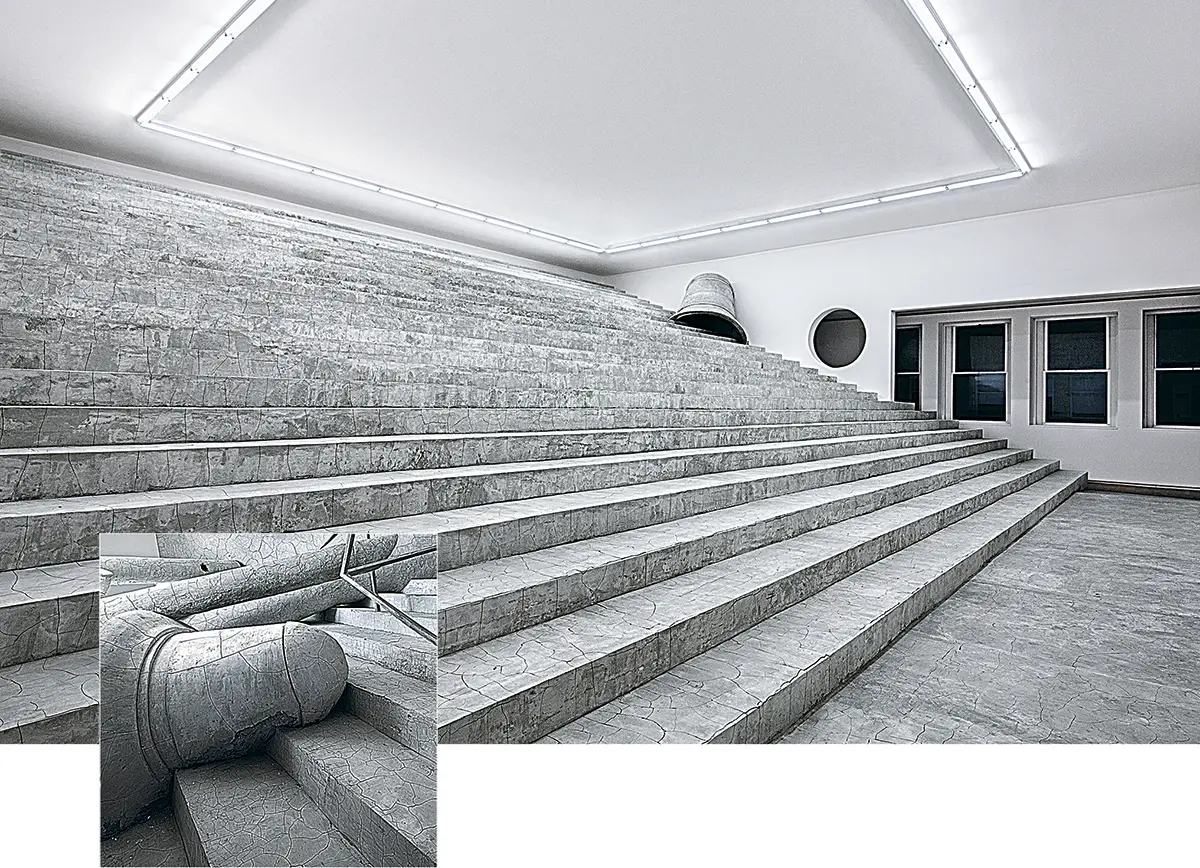
Adrián has been working for some time now in collaboration with institutions. Currently, he is presenting La inocencia de los animales at MoMA PS1. The relationship with the audience is rather close here, much more than in other proposals. The gallery’s broad staircases are literally inhabited, functioning at the same time as a space for EXPO 1 School, a site for the communication and assimilation of knowledge. The work transcends its own conceptual nucleus and becomes a space that is also the container for other conceptual projections. It mimics and intertwines with areas devoted to other ends by that great art institution that is MoMA. The relationship with the institution also becomes insoluble in the process of laying the foundations for the work, since it functions both as producer and collaborator, and also as a workshop. A number of boundaries are tensed, but it is also a fact that every institution has a blind spot, an interstice that can be penetrated for interesting things to happen. That vacuum is where the work is best revealed. The team works to incorporate the institution’s requirements and transform them into something else, integrating them into the project as a plus rather than as a demand that needs to be complied with.
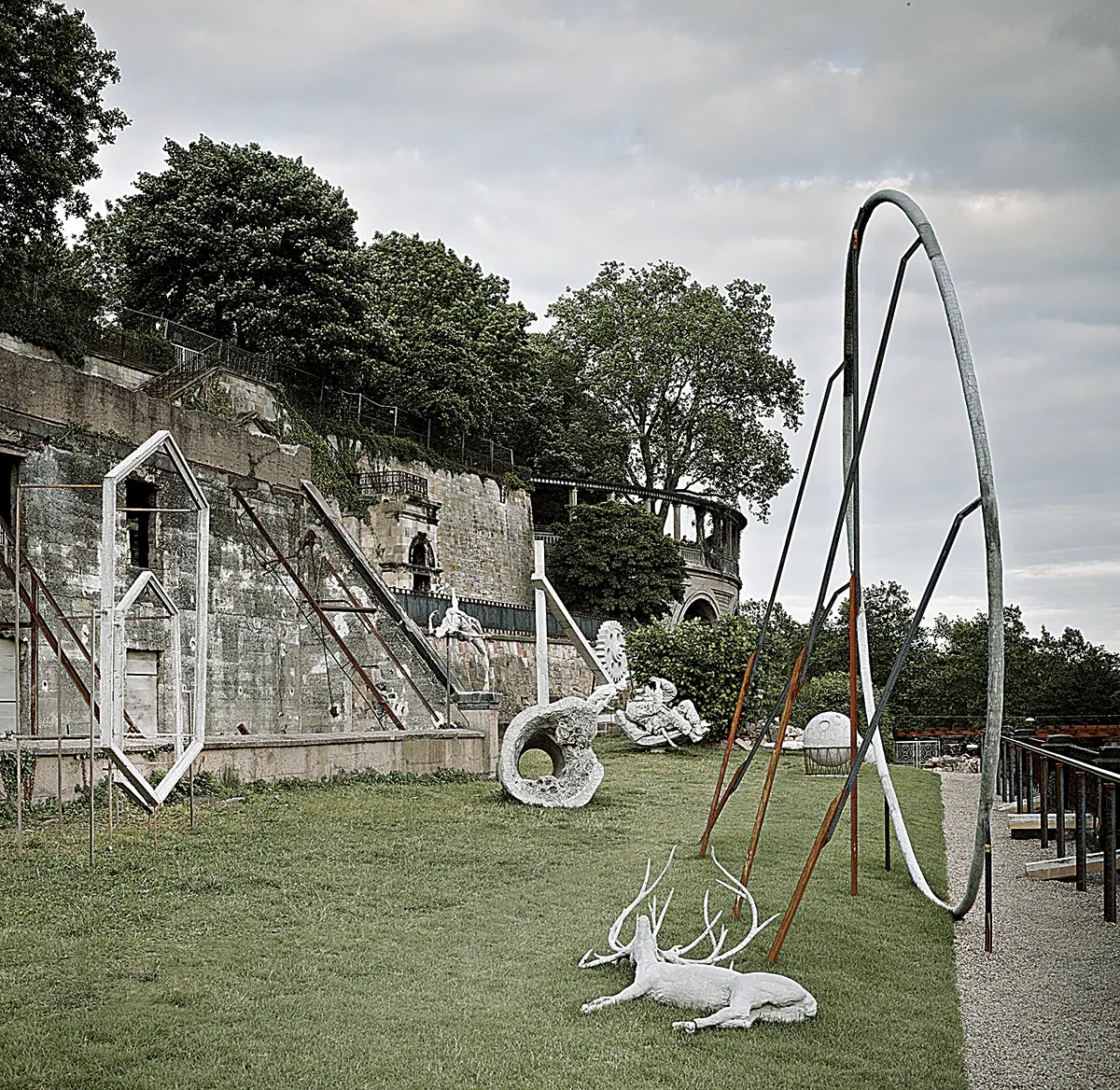
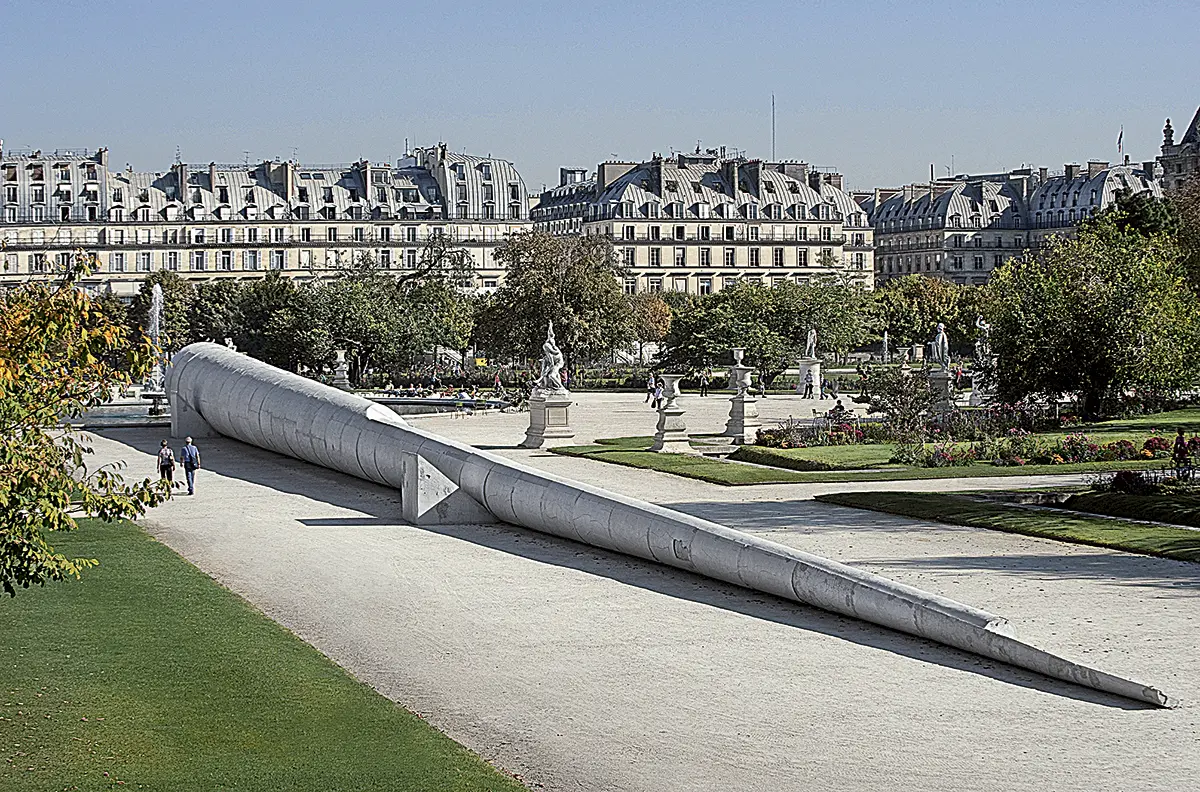
Poemas para terrestres was presented in 2011. There, Adrián worked with the Musée du Louvre. Another colossal, almost unthinkable implant into the Jardin des Tuileries, in Paris. Conceived as a sequel to El asesino de tu herencia, the twelfth sculpture, it completes a cycle. There is an absolute horizontality, different from the verticality that dominates the work installed in Venice. Our gaze is forced to descend, to move close to the ground. It is like a gnomon, a “vertical object whose shadow functions as a sundial,” but established contra natura. It is a large sundial device that overtakes the ground and perhaps responds to the time logic of a different universe. Its power to measure human time has been disfigured. Yet, as Ernst Jünger describes it3, “the sundial is the clock with the least human character… the course of the shade is independent of human beings”; with its circular movement, “we can imagine it continues turning in a dead world, devoid of humans and of any other living being.” Analogous as well to the outsize mast of a ghost ship, its 90 meters of length temporarily overshadowed the Parisian garden’s great fountain.
Signs: the melancholy tolling of the beds
“Eighty percent of what I produced no longer exists,” says Adrián. But something does remain from what was lost: the images of certain signs that repeat in search of a language.
In Return the world, the terraces of an old vineyard were occupied by a long series of sculptures. Almost at the end of the trajectory, a succession of bell-like shapes attached to the ground appeared. Their immobility and silence further evinced the lack of the metal necessary to produce sound. As a set, they are the notes of a mute musical drama.
They can be walked around, one can stroll about them, but unlike what happens with the series’ other sculptural forms, our point of view will not shift. Nothing goes in, nothing comes out; their interiority is extreme, as in a monad, whose main feature is to possess “a somber bottom… from it, everything is extracted, nothing comes from outside and nothing flows outside.”4 Historically, however, bells have been messengers, they called for gatherings and marked collective time rhythms. But, here, what is the probability that a sound will explode from inside? Is there an option to provoke some kind of resonance from their cracked exterior? Their presence gazes upon us and sets in motion the mental editing of the images that the shape brings about. The blurred narrative fragments of our personal encyclopedia are brought forth, as dissimilar as the Buddhist architecture of the stupa as of the reentry module of Apollo II…
And the shape repeats, reappearing in La inocencia de los animales. There, a single large bell sits like a precious object salvaged from a shipwreck, witness to the passage of those coming to give or receive knowledge, and also to the progressive, fatal sinking of the staircase.
And there is more: a brick oven is often bell-shaped, and inside it, clay particles are permanently fused. That is what fire can do.
NOTES
1. Gilles Deleuze. The Fold. Leibniz and the Baroque.
2. Bola de Nieve is an online database and virtual exhibition about the Argentine art world.
3. Ernst Jünger. El libro del reloj de arena.
4. 1. Gilles Deleuze. The Fold. Leibniz and the Baroque.
VIVIANA SAAVEDRA
Licensed in management and history of the arts. In charge of the Art Critic at the University of Salvador.