
In one of the recurring apocryphal allusions with which Jorge Luis Borges questioned the unmovable nature of reality and revealed the unnoticed arbitrariness of our constructions of the world, appears a classification of animals from a Chinese encyclopedia. Animals were divided into categories like “property of the emperor,” “embalmed,” or “drawn with the finest camel-hair brush,” among other categories whose strangeness is a mirror that could also be used to show our own reflections to others. After all, as Borges would say, ”It is clear that there is no classification of the universe that is not arbitrary and full of conjectures. The reason for this is very simple: we do not know what kind of thing the universe is.” Beginning in 2002, when Colombian Alberto Baraya created his iconic Herbario de Plantas Artificiales (Herbarium of Artificial Plants), his work production consisted of a series of taxonomic exercises that approached, in a ludic and paradoxical manner, the sociocultural and geopolitical stereotypes that emerge as the residual result of classifications and that often infiltrate the various spaces of representation, including historic and scientific ones.
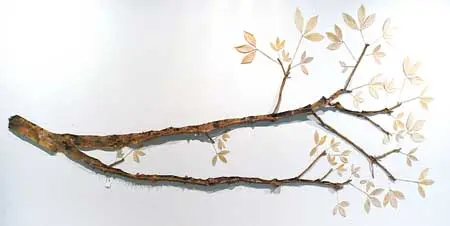
Immersing himself into his method and aesthetic with the task of the expeditions of past centuries, Baraya undertakes the recollection of materials in singular journeys to build his artificial herbarium. This not solely includes plastic or paper plants, but also laborious drawings or carefully created photographs with specimens in the foreground, and even methods to obtain botanical impressions. Nonetheless, this extraordinary collection is not an attempt to classify the abundant natural species, but instead to elaborate a description of the contemporary world—in the manner of a modern Marco Polo who relies on false samples from the plant and animal kingdoms—to reconstruct, not without suspicion, the cultural, historic and political narratives that circulate across the world. Curated by Francine Birbragher, the exhibition entitled Naturalism/Artificiality; Expedition, and Research of the Herbarium of Artificial Plants at the Frost Art Museum in Miami, includes several series that function as a revision of the issues that pertain to representation, as well as a critical journey to the forms of organizing the real that create forms of hegemonic relationships.
By placing a “real” specimen from the Florida Museum of Natural History, in Gainesville, near birds that appear to be alive, and next to photographs taken at another museum of natural history in Bogota, Colombia—so perfect that they appear to be the skins of the portrayed birds—we are brought closer, through make-believe, to the utopia of scientific representation.
The series Anthropometries consists of black and white photographs captured by Baraya during a trip to Machu Picchu. Some travelers agreed to let the artist measure their faces with an instrument that was used by social scientists from the 19th and early 20th Centuries “to understand the human and physical variations of native Americans, and the correlation between certain human physical characteristics and ethnic and racial factors.” Measuring practices used as a game allude to the danger of classifications that are connected, for instance, to the Nazi extermination of Jews and other groups. But, most importantly, it makes us aware of the preconceptions that we can interject in encounters with other groups or cultures inhabited by “the other.”
In tune with the Situationist theory of the dérive as a “pass-through technique” for a variety of environments, the work by Baraya is connected to Guy Debord’s inquiries into “the recognition of effects that are psychogeographical in nature and the affirmation of a ludic-constructive behavior,’ that opposes typical notions of traveling and outing. Carried away by the “demands of the terrain” that is often urban, Baraya documents in Long Beach, California, the performance action executed by his companion. She grabs a paper pineapple that was “collected” by the artist in a piñata store, and places it on her head while at the entrance of Carmen Miranda’s home. Here, the artist evokes the iconic fruit hat and its embodiment of the Latino stereotype that continues to feed Hollywood.
Also included in the exhibition, the dérive by Baraya documents his passing through a museum in Indianapolis that contains representations of the wars in which the US has been involved. In one of the exhibition rooms dedicated to staging the Vietnam War, Baraya recollected small branches fallen from other of his installations with fake plants. These recreate a hidden North Vietnamese army lying in wait inside the fake trees to eventually storm the unsuspecting US troops. The installation includes photographs of triangular glass boxes that are exactly as those sold in stores from the area. Baraya also presents an unmodified and empty version of that box—one hundred percent readymade, paraphernalia of the war—that is sent like a memorial with a US flag to the families of soldiers who died in combat.
Another piece suggests psychogeography of California based on a sort of photographic cartography that locates a group of telephone posts camouflaged like, and hidden among, gigantic palm trees. The naturalness with which these plants interact with the environment is endemic to an area ruled by the film industry.
The installation Árbol de látex (Rubber Tree) brings to the museum an imprint of the flesh from a Rubber Tree found in an area of Brazil that borders Bolivia. For nearly two months, Baraya worked with a tree from this family that had lost its leaves. He created a sort of covering made from the rubber of other trees, in order to obtain the impression of the bark and its branches without affecting it. The exposed branch remits viewers to the narratives of waste associated with logging, one of the industries of exploitation of raw materials that have left a violent mark on the flesh of the continent.
Each series is constructed from a dérive that transits through urban spaces without excluding natural territories. It is an exercise in psychogeographic interpretation marked by cultural and political elements; both as an implementation of that which, according to Bourriaud, constitutes radicant art. Baraya is another nomad artist who “makes an incursion outside of the frameworks assigned to thought and art. It is an expedition of the mind outside from identity norms.” In this manner, Alberto Beraya organizes an “exodus” that takes us away from the configurations established by the tribe.
ADRIANA HERRERA