
In these works, materialized through various printmaking and video-art techniques, sensible thinking is expressed in a range of poetic relationships. This is the first time that Porter exhibits her four audiovisuals (Para usted; Solo de tambor; Matiné; El zorro en el espejo), which complement her graphic arts works to transform the exhibition into a kind of layering with different levels of representation, with small figures and cartoons from the video breaking through the screen to appear in the paintings.
Liliana Porter (Buenos Aires, 1941) has explored printmaking in-depth, both in its technical aspects and in its conceptual character, and has been able to reconcile a strongly artisanal and pragmatic tradition with the new paradigms of contemporary art. Porter’s interest in discourse and words comes to the fore when she posits her graphic juxtapositions, creating meanings that suspend all formal logic and breakthrough into play, simulacrum, and wonder. This proves that it is no longer pertinent to differentiate between technique and concept because it is worth believing that conceptual art is not a rejection of “traditional technique” but the exercise of a technique for thinking.
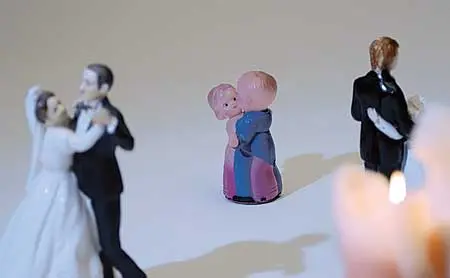
Porter’s graphic works demonstrate a kind of intuitive thinking with her silkscreens that include real cutouts in a kind of trompe l’oeil simulating shadows, assembling real fragments, and serializing a gesture. In works like Elvis: la lección de costura, Hacha, and Tigre, an action—such as sewing or scratching—is represented beyond the figures. All the prints included in this exhibition are large-format, the themes focusing in every instance on a couple of details that collide on the whiteness of the page as if staged in an infinite loop that makes everything take place in a contextless universe; the groundless figures lack any spatial references which renders them giant sources of meaning. Throughout her career, Porter has experimented with various ways of updating printmaking, such as incorporating assemblages and collages, creating environments, and also exploring the serial nature of the technique by means of commercial prints, ephemeral works, and mail/post exhibitions.
In terms of Porter’s conceptual motivation to engage transcendental human topics such as love, violence, mirrors, impotence, power, and such, in ways that are playful and highly ironic, her ideal media are drawings, lithographs, xylography, photo-engraving, intaglio, rips, and amendments. Statements are laid on the image like titles, texts, and works that encounter each other almost by chance, like two people may run into each other in the street. In Porter’s audiovisual works, a large number of short clips unfold to put on display just such discursive encounters, generating in that way harmless contradictions that are nevertheless amplified by the camera’s focus and the sensation of estrangement they cause.
Liliana Porter thus posits herself as a demiurge of a simulated environment, the conductor of entire semiotics of roles through which her small figures and objects experience their subtle events. They meet each other frontally, as in the clip titled Beso in Porter’s Solo de tambor video, their gestures are frozen in the surprise of the doll’s most commercial pose; they embody the souvenir of a time of accumulation and reproduction, where Porter’s role is to gather and arrange the fate of her versatile, diverse cast of characters. From Chinese ceramics, animal figurines, walking rope mobiles, they play the drum and the tambourine, art stamps, salt shakers, and receptacles (her “workers,” as she calls them), world-famous icons and anonymous dolls that one day were gifts or merchandise, the artist unravels deaths, loves, dances, symphonic orchestras, and many more things in order to create a large index of audio-visual poetries.
Video art has become a pertinent medium for Porter, closely connected to her explorations of printmaking; her clips can be seen in any order as mobile paintings, compositions that are projected one after the other without much of a gap in between, creating a fast connecting line that impedes our specific retention of them. Their power comes from their quantity and continuous reiteration, some leitmotifs that are definitely connected to the techniques of graphic art and their reproduction. Finally, we must stress the importance that musicalization (and silence) have in these audio-visual miniatures since the ambient is complemented by a kind of emotional synchrony where viewers see themselves reflected on the dolls, personalized as fable characters tend to be and identify in them their own fate, their ghosts, and fantasies.
BREYNER HUERTAS