
An Assessment: The Curatorial Symptom
Body. Eros and Politics is Gerardo Mosquera’s third and final curatorial entry for the International Festival of Photography and Visual Arts PhotoEspaña 2013. This sheer fact forces us to take stock of his work for the last three editions of an event that, leaping over the constraints imposed by the financial crisis and by Spanish society’s undeniable deterioration, has been able to maintain the highest intellectual and artistic level, becoming above all a reaffirmation of the timely slogan: “yes, we can”.
Mosquera’s new curatorial effort, an extension of the guiding axioms that made him an international critic of reference, is audacious and relevant in the extreme. His work deserves all respect and appreciation not only because of its felicitous results but also taking into account the seriousness of the country’s ongoing troubles. Two issues, essentially structural in nature, determined in no small part Mosquera’s management and curatorial maneuver: a new administration coming to power in Spain and fostering new waves of censorship, and the entrenchment of a model of response to the crisis whereby the cultural sector and its entire institutional landscape are seriously maimed.
Five conceptual axes or nuclei of argumentation can be said to outline Mosquera’s program as the curator of PhotoEspaña. First, a need to make his curatorial proposal more international than its predecessors and to smartly open it up to more, and more diverse, segments of the audience; second, the recourse to classic themes, handled now with the skill and knowingness of the contemporary gaze, which broadens its horizons and forges new orders of meaning; third, the naming of photographic language in its most radical autonomy and the plurality of its manifestations—which is to say, photography in the strictest sense, beyond its relationships or complicities with other languages in the pantheon of so-called postmodern artistic practices using photographic images as their foundation; fourth, the recovery of “Latin-Americanness” not as an exotic aspect of arguments shaped by a thirst for otherness, but an active part of the contemporary aesthetic dramaturgy, in which it participates on an equal footing of understanding and solvency; and, fifth, the implementation of an effective exercise in the decentralization of the figure of the “star curator,” via a “curatorship of curators” strategy. On this point, the decentralization is produced by Mosquera’s invitation to a number of internationally relevant curators to participate with their own proposals within the frame of his overarching curatorial thesis. In this way, his job became a de facto exercise in the curatorship of curators, rather than of projects ruled and managed by the typically overweening curatorial figure. The very fact of Mosquera’s favoring a much wider perspective and recovering other, somewhat more ubiquitous forms in the contemporary scene, overturned the festival’s image in terms of its scope and reach, with repercussions for the reformulation of its mission and its name: formerly the International Festival of Photography, it now incorporates the broader concept of the visual arts.
Although others might perhaps be noted, I think those have been the five structural lines shaping Gerardo Mosquera’s performance as Festival curator for PhoEspaña’s three most recent editions. He has left in his trail a highly personal imprint that meshes with the experience of multiculturalism, the post-colonial perspective, the restitution of alternativeness, internationalism in its noblest meaning, and the consummation of a dialogic model for agents in the art field that is based on the rhetoric of a much more democratic axiological paradigm.
The Body as Theme and Message: That (Rare) Cultural and Political Material
While the previous two editions dealt with portraiture (the widening of its cultural, aesthetic, and anthropological meaning) and the internationalization of the work and language of art (beyond the denomination of origin that strangles and reifies the very polysemia of art), this chapter focuses on the topic of the body as object and pretext for an epistemological and aesthetic exploration of a different scope and depth. The body is seen as an amplified matter that resonates, not only in the—now hindered and unmoving—order of eroticism and desire, but in the more conflict-ridden zones of politics, ideology, writing, and the mechanisms of the broadening and ontological fugue of the field of art.
The aesthetic imagination that turns on the idea of the body understood as fictionalized writing and cultural construct tends to manifest two essential rhetorical (in)variants: identification of the body as ideological material and its apprehension as a permeable narrative structure on which the most crucial and complex relationships with power are materialized. Its subsequent appropriation—with linguistic and aesthetic instruments—implies a reduction and disarticulation of models of obeisance and regulatory codes that emerge from the vertical, exclusionary propositions of the dominant discourse. Uniform genres, sexist vacillations, the control of sexual otherness, the interference with the realms of lateral subjectivity and eroticism are all at the foundation of this program of insubordination and disobedience through which photographers attempt to install a new domain of democracy where the body can flow in the freedom of its own emancipatory impulse.
It is precisely in this site of vindication where hegemonic schema based on phallocentric ideology, the regime of mandatory heterosexuality, and the scheme of religious authority are boldly dismantled. The work of photography becomes, then, an exercise in sabotage and deconstructive critique, all the while enjoying the complacency of itself being the motive for that fracture and the setting for the circulation of a new fugitive subjectivity.
Reclaimed by artists as a hermeneutic space for symbolic speculation and subversion, that body is presented as “perverted” and “pervertible” matter capable of credentialing the depth of a historical narrative that describes the landmark moments of its subjugation and its castration; also, of course, of its emancipation and its jouissance. The body is not, as has erroneously been posited, merely the evidence, the instantiation of physical, factual order, empirical in itself, subject to ratification in the order of materiality or of the photographic representation that precedes it; more than that, it is the mise-en-scène of a cultural instance that determines and transcends it. Thus, “speaking of the body implies not as much speaking of a permanent evidence or a constant and universal reality, but a historical category possessed by the imaginary.”1 Hence the cultural maneuvers for an extensive reproduction of its foundations and its axioms. The body discovers itself stalked by the weight of the norm, asphyxiated by its own contextual and epistemological reality. This helps explain the dissident impetus that animates contemporary artists in their effort to de-sacralize and de-authorize the ideological platform of the foundational models, subjected to the veracity and the misguided legitimacy of believing themselves unique and authentic.
This distances it from that other discursive option that rests on a tautology of the vacuum as an end in itself. Instead of establishing a model for the narration of the corporeal that would discover itself strictly astonished by strictly physical indicators, most photographers recover its social and cultural dimensions in order to charge against the authoritarian writing that has sustained their persuasive imaginaries on the basis of the rhetorical profitability of antinomic, exclusionary combinations. The paradigm of a vertical totality is replaced by that of a peripheral horizontality that embraces infinite possibilities of “being” in the world.
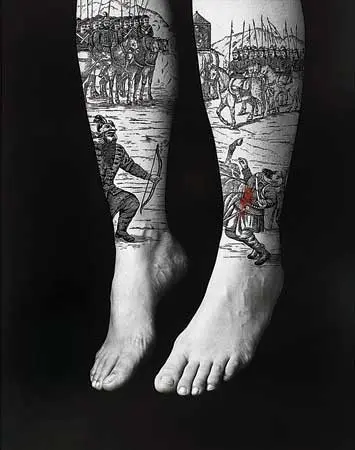
The four variants of the pattern of socio-anthropological disobedience described by Néstor García Canclini in his book Culturas híbridas: Estrategias para entrar y salir de la modernidad2 as intervals that emphasized the moment when “Latin-Americanness” gains or accedes to the status of Western modernity—understood as the processes of emancipation, renewal, democratization, and expansion—seem to me to be the four basic principles activating the most radical discourse of the body in the contemporary photography scene. These four categories are guidelines for the process logic by which the body is inscribed into a narrative with greater and more complex socio-cultural and semiotic associations. It is through them that the artist reaches greater degrees of profitability and efficacy in discerning bodily realities and their unending landscapes of signification. Only in this way, in the midst of this relationship of interdependence between emancipation, renewal, democratization, and expansion, does the artist achieve a real and audacious influence in the closed preserve of a hegemonic discourse that has rendered the body into an extension of its ideology. Art, then, plays to the terror of revealing the functioning of this devilish machinery, proud to reorder the scene of pleasure and discrediting the expansive license of sexist determinations.
The revolution all of this implies with respect to substantial and essentialist criteria is of such magnitude that the body is then translated into matter that is susceptible to re-writing and to the modification of its most vertical enunciates. In this way, the networks for the socialization of the body, which mediate all settings of exclusion and inclusion, are de-structured. This unveils a historical fallacy that assumes the body as an ontological truth segregated from the processes of construction and circulation of its imaginary models. The divisions and parceling-out of the practice of (heterosexual, phallocratic) power exert on the body-as-matter are revealed as maneuvers of subjugation and control, and are radically subverted by the discourse of art. The acritical delectation that reveres the prestige of authoritarianism or the acquiescence of historiography to that very bodily matter, collapses furiously.
The Exhibits: The Body, Fragmented, Usurped, and Expanded
The exhibition program was, as usual, apotheosis in the extreme, justifying beforehand the true impossibility of covering it in its full extension and depth. Something that, on the other hand, deserves our gratitude, since the offer belies any forecast paralysis due to the oft-mentioned crisis. The proposal featured works by more than 328 artists from 48 different countries, in both solo and group shows inscribed in the festival’s many programs: from the official selection to Encuentros PHE, the OpenPhoto program, and the Off Festival. On this occasion, new international sites are also incorporated, such as Prague and Brazil, which in the fall will open PHotoEspaña.br, a project to be held between October and December in São Paulo. Similarly, the city of Alcobendas will host the next international center for education in photography.
Thematically, the program is ruled, as in previous editions, by the principle of interpretive freedom and of access to the meaning (or meanings) of photographic language. The high quality of most of the exhibits, in terms of their statements and narrative theses, must be noted. Adding to this is the incorporation of new areas of interest, less explored in previous occasions, and the ample presence of proposals originating in Eastern Europe. All, in their way, substantive to a vision that overcomes standardized notions in order to launch a political critique of the global scale of expanded violence, be it racial, cultural, military, sexual, or gender-based. The classic aphorism, “The Body is a Battlefield,” has been the basis for the articulation of the entire mise-en-scène, arbitrating the various indices of profitability.
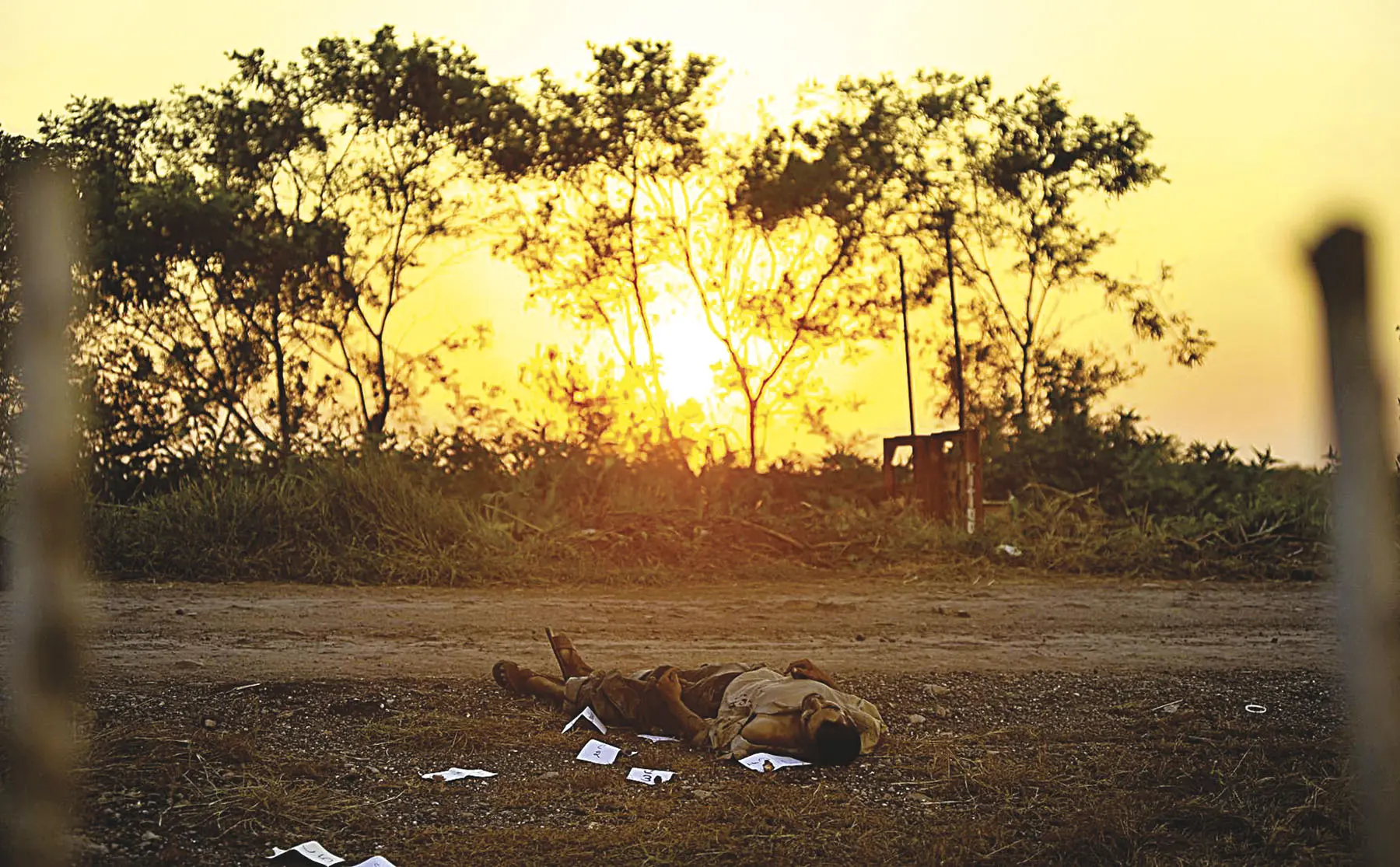
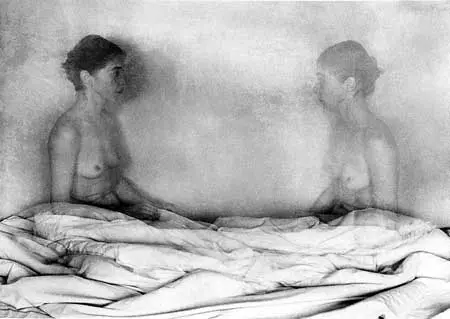
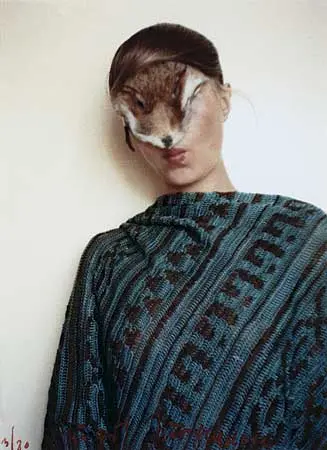
Precisely within this line of restitution and valuation of critical commentary in the hermeneutic locus of photographic representation, an extremely convincing set of exhibitions stands clearly out: from their very curatorial articulation, these shows have been able to outline horizontal stages by tilting the vertical, exclusionary perspective that is so dear to so many discursive fronts that take artistic images as the laboratory for new radicalisms, decidedly prone to the foundation of new modern specifics. In that sense, one of the most impressive exhibitions was Mujer. La vanguardia feminista de los años 70, comprised of works by more than 21 artists from Vienna’s Sammlung Verbund Collection and curated by Gabriele Schor, the collection’s director. The show featured work by Elena Almeida, Eleanor Antin, Valie Export, Alexis Hunter, Esther Ferrer, Birgit Jurgensen, Leslie Labowitz, Ana Mendieta, Suzy Lake, Martha Rosler, Cindy Sherman, and Francesca Woodman, among others. The self-determination of female identity and the radicalization (affirmation) of the female voice over and above the stereotypes of their representation-violation and the hetero-normative, phallocentric gaze, are the arguments of this splendid exhibition that outlines the narrative of a struggle for the conquest of a domain of freedom and emancipation. Also at the Círculo de Bellas Artes, noteworthy for its beauty and the way they deal with the matter of nude images, Él, ella, ello. Diálogos entre Edward Weston y Harry Callahan is a selection of 80 extraordinary works that bring us closer to the delicate world of two great, and widely recognized, US artists. Between them, such a subtle repertoire of images is woven that the proposal becomes a veritable visual poem. Tus pasos se perdieron con el paisaje was the title of an essay by Mexico’s Fernando Brito, on display at Sala Minerva and the winner of the 2011 Discovery Prize. True writing about death, violence, and disappearance in the general context of crime. His vision of photography places him in the location of an observer who, more than describing the drama, attempts on the contrary to interrogate the human context that generates such levels of barbarism.
Tú/mi placer, by Luis González Palma and Graciela Oliveira, on exhibit at Casa de América, was without a doubt one of this edition’s most beautiful and most carefully orchestrated shows. It presents four stages of the project titled Jerarquías de la intimidad, developed between 2002 and 2007. The narrative centers on the context of coupledom and family life, and it explores the many roles and random connections that are established between the individual body and that other social body that serves as the projection of the demands of the ought. The four stages exhibited out of the project are La anunciación, La separación, Tu/mi placer, and Cuerpos intangibles. In each, the record of images and their textual relationships put on display the high levels of psychological and social complexity that mark relationships of possession and control among human beings.
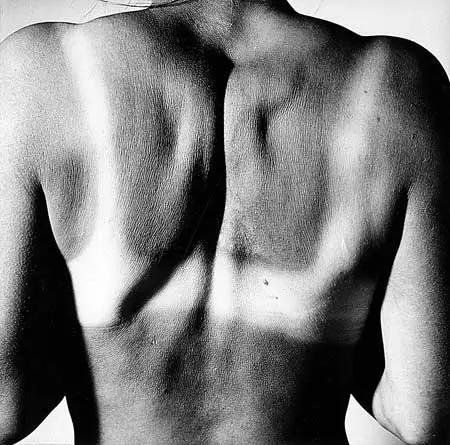
The modernist perspective on female nudes reached its most superb expression in two furiously spectacular, yet powerfully sober exhibitions: Body, by Polish photographer Zbigniew Dlubak, and Self-Portraits, by Lithuania’s Violeta Bubelyté. Both brought into focus a profoundly complex and recurrent topic and carried it into the contemporary debate: the subject/object of photography. In Bubelyté’s case, she was the first woman to photograph herself nude in her era—the female self-gaze is asserted through the creation of crude, direct images of an introspective tone and a poetic cadence with convincing discursive potential; in Dlubak, on the contrary, the gaze is articulated from the standpoint of male obsession with capturing the wide irradiations of the rare ontology of a female nude that escapes comprehension by the eye in its phallocentric exercise of conquering the object of its desire. Nevertheless, it is important to note that the work of these photographers remains at a significant distance from this persuasion maneuver. Their recursive framing devices, amplified in summaries, symmetries, and repetitions, strip the photograph of its erotic anchors and move the reflection towards the language of photography and visual perception.
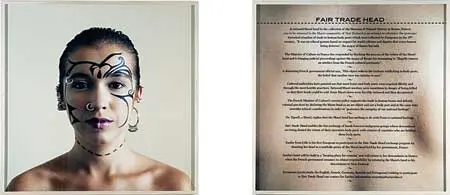
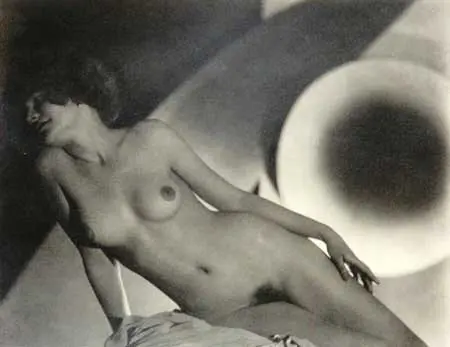
Most disappointing perhaps was Tableau Vivant, the exhibition of works by Azucena Vieites, from France, presented at the Museo Nacional Centro de Arte Reina Sofía, given that her approach to certain conceptual aspects of contemporary culture such as the aesthetic-linguistic recourses of multiplicity, fragmentation, and repetition, are oft-seen symptoms of contemporary aesthetics. Something very different occurs in Taxonomía del caos, a project by Rafael Doctor at the Lázaro Galdeano Foundation, which response to the initial thesis of the “curated curator” defended by Mosquera in his three editions. The idea was to present, using rather unconventional devices, a selection from the Rafael Doctor collection to reflect on modes and criteria for the representation of the human body, following two clearly defined narrative lines: nineteenth-century photography (from its inception through Eugène Atget) and the exponential—almost camp—the richness of everyday photography (from the emergence of Kodak through the fading of paper under the regime of the digital image). In this chaos, in his way of exhibiting in emulation of the structure of a nineteenth-century cabinet, this exhibition was able to sustain the efficacy of its statement: to offer a testimony of the visual anarchy generated by the culture of the image over the time of the vision, and how collecting as a taxonomic principle can presuppose, speculate, warn of possible cartographies to invest that universe populated by the substantive image of the ages of Man, his fantasies, his desires, and his fears, with a semblance of logic. MAPFRE Foundation hosted a splendid exhibition by American artist Emmet Gowin that gathered a wide sampling of his career landmarks, as well as an intelligent selection of those topics that have become veritable obsessions for the photographer. The Real Academia de Bellas Artes de San Fernando was the stage for Modernist Nudes, 1923-1929, by Czech artist Frantisek Drtikol, a clear narrative of the transition from pictorialism to modern photography focused on the nude body from the standpoint of symbolist and avant-garde visions. An outstanding selection that attests to the different moments of evolution and projection of the photographic image in direct connection with the nude genre as a theme and as writing. Exhibited at the Royal Botanic Gardens was one of the most interesting group shows, under the suggestive title of Knowledge is Power, with works by Maria Theresa Alves, Kader Attia, Sammy Baloji, Katinka Bock, Robert Doisneau, Jim Goldberg, Barbara Kruger, Manuela Marques, Boris Mikhailov, Jean-Luc Moulène, Marc Pataut, Mathieu Pernot, Fulvio Roiter, and Taryn Simon. Fourteen artists from eight countries, with discourses that deal with the body as a socio-political object and matter for ideological elongations-shrinkages. Here, the body is revealed and given a voice: from being an object, it becomes a “discursive subject” that speaks about issues of gender, race, the social, and the postcolonial as truth and fallacy of the postmodern model of coexistence, which already announces its most radical crisis. The ideological veneer in these proposals is in opposition, from the logic of a certain subversive imposture to the standardized representations offered up by the industry and the mass media. Colección VII, curated by Juan Vicente Aliaga and on exhibit at Centro de Arte Dos de Mayo, is yet another thesis-exhibition in this edition of PhotoEspaña. It comprises a broad selection of works from the collection whose interests reside on the way in which artists have approached the body from plural, subversive mechanisms that hold the power of a hegemonic discourse based on vertical and exclusionary perspectives.
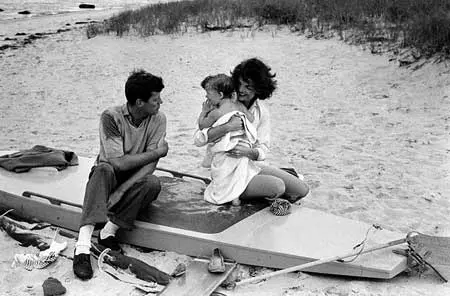
In that curatorial line established by Mosquera of recovering ubiquitous images that are nevertheless less encompassed in the canon of so-called artistic photography. One standout is The Kennedys, an excellent exhibition of Mark Shaw’s works at the Loewe Foundation. These photographs present a more intimate portrait of the US president’s family. One characteristic of these images is, precisely, their closeness and familiarity. In 1952, Shaw began working for Life magazine, where he produced 27 covers and more than 100 features. He also collaborated with other important publications, such as Harper’s Bazaar and Mademoiselle. Manolo Laguillo’s sophisticated and subtle exhibition Razón y ciudad, at ICO Foundation, was a detailed review of this Spanish artist’s production through a series of thematic sections that reveal the narrative nature of his most important lines of work.
Among the proposals in PhotoEspaña’s OFF program, a parallel event to the festival that deserves much more serious attention on the part of its organizers, the standouts for their versatility, richness, audacity in their handling of the medium, and significance in relation with the topic, are the exhibitions by Cristina Iglesias (Elba Benítez), Robert Mapplethorpe (Elvira González), Paz Errázuris (Espacio Mínimo), Badri Lomsianidze (Blanca Berlín), El cuerpo (in)subordinado: Mar Cuervo y Fernando Bayona (6más1), Julia Fullerton-Batten (Cámara Oscura), Juan del Junco (Magda Belloti), Nabuyoshi Araki (La fábrica), Ignacio Navas (Raquel Ponce), and the excellent selection of photographs by Pierre Molinier at Guillermo de Osma.
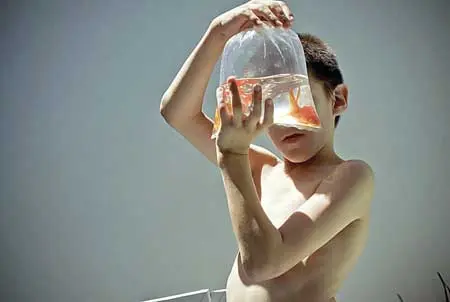
Lastly, the Latin American gaze surprised us in this edition with a show that, for the first time, sets aside the more traditional, schematic, and fetishistic points of view that tend towards that “thirst for exoticism” that so weighs down the ideology of a Latin American context spoken and articulated by others. [Re]presentaciones: fotografía latinoamericana contemporánea featured the superb work of 14 emerging artists: Leslie Searles, Humberto Ríos, Fabián Hernández, Luis Arturo Aguirre, Irama Gómez, Eduardo Jiménez, Mariela Sancari, Xtabay Zhanik Alderete, Ilana Lichtenstein, Nicolás Janowski, Juan Carlos López, Aglea Cortés, Colectivo Galería Experiencia. In their totality—hence the title of the show—these proposals deal with the multiplicity of criteria for representation and their ideological, aesthetic, and discursive mechanisms. None of them congeals a reality assumed as given; instead, they all offer a fragmentary view of the relationships between different states not only of cultural memory but of the circumstantial reality of the culture of the other understood as another section of that globalized universe that the logic of late capitalism has pushed forth with unexpected reformulations of the baroque impulse. The result is fresh cartography, alighted of the weight of the local that has so damaged a structured view, in terms of colonial narratives, of the complex particularities and depths of the context of reference. The poster for the show, by Roberto Tondopó, Peces dorados from the series Casitas de turrón, functions as an eloquent metaphor—as sophisticated as any—for the semiotic interplay between the gaze and the site of enunciation. The child who gazes from behind a water-filled bag without us being able to see his eye, and the eye of the goldfish inside the bag, haunting and following our own path across the image, are allegories for that state of contemporary discourse that asks, time and again, insistently, who are the others?
NOTES
1. G. Cortés, J. M.: El cuerpo mutilado (La angustia de muerte en el arte). Valencia. Generalitat Valenciana, 1996
2. García Canclini, N.: Culturas híbridas. Estrategias para entrar y salir de la modernidad. Barcelona. Paidós, 2001.
ANDRÉS ISAAC SANTANA
Critic and essayist. Author of Imágenes del desvío; Nosotros, los más infieles; and Sin pudor (y penetrados).