
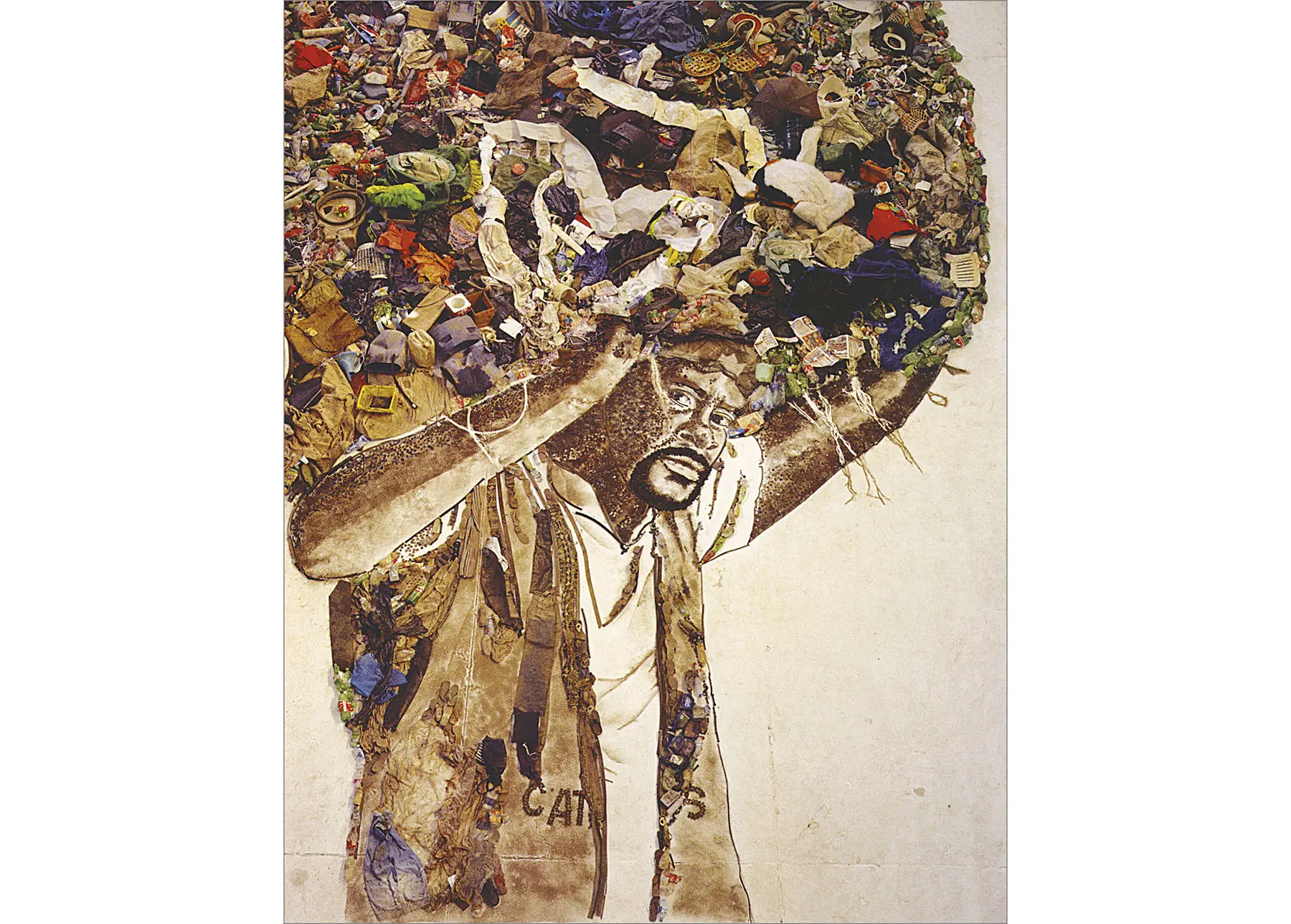
The exhibition Vik Muniz: Closer to the Image at the Museo de Arte del Banco de la República includes works created by the Brazilian artist (São Paulo, 1961) of the last two decades. The show offers a wide-ranging view of the great number of approaches used by Muniz to construct and perceive images. His interest, in reality, takes him into an inquiry of the object, a study that he approaches from several perspectives: historic, perceptual, political, and economic.
In this exhibition by Muniz, nothing is what it appears to be at first sight. A chocolate stain magically transforms before our very eyes into the dying image of Saint Ludovica, a pile of plastic toy soldiers reveal, when seen from afar, the portrait of a soldier, and a landfill becomes a trash collector. Every image appears to have several layers that can solely be appreciated by changing points of view. Magic, optical tricks, humor, and obsession are some of the central aspects of this work.
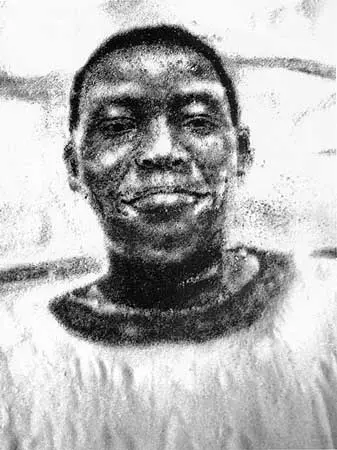
Although the best-known images created by Muniz are those able to seduce viewers with games in which, for instance, traces of pasta on a plate become Caravaggio’s Medusa, early on the exhibition makes it clear that there is much more at stake than the initial amazement. What at first appears to be a clever optical illusion that compels viewers to stop and take a second look—to admire the virtuosity of someone capable, for example, of recreating a Monet with small fragments of color papers—is only the beginning. Muniz proposes to viewers to immerse themselves into the image and to subjectively doubt what is observed and what is imagined.
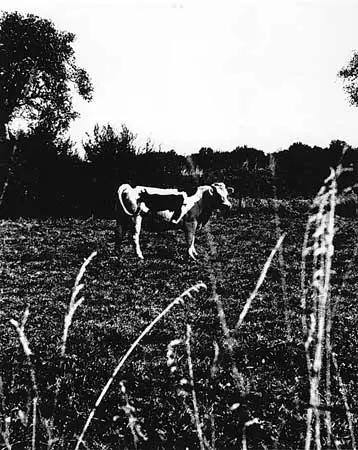
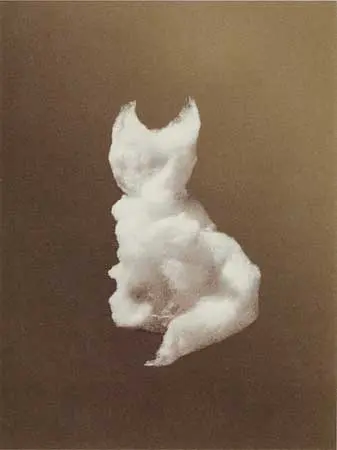
Latin America is one of those places of fortuitous encounters, where news of sightings of the Virgin Mary on a humid wall or on the bark of a tree in the middle of a previously forgotten town—a seemingly ideal location for such apparitions—often occur. Objective chance and critical paranoia—among other mechanisms—established by surrealists at the beginning of the twentieth century, reveal the existence of other levels of reality and represent essential tools to approach Muniz’s work. This becomes evident in Dos Vacas (Two Cows, 1997), as visitors can only initially observe one Holstein cow until a second gaze helps them discover the shape of the second cow outlined by a black marking on the first one; or in the work entitled Equivalentes (Equivalents, 1993), where Muniz reconstructs the works of early Twentieth Century US photographer Alfred Stieglitz—photos of clouds forming singular shapes that incited the imagination. Muniz’s versions are created with cotton and make viewers wonder whether they are actually images of clouds, cotton, animals, teapots, rowers, or simply figments of their imagination. In these two early productions—according to the chronology of the exhibition—the artist reveals an interest in exploring the point in which the imagination and the image merge into the perception of reality.
Muniz’s constant dialogue with the history of art casts him as an iconoclast and iconophile. In the first exhibition room, for instance, Muniz appropriated the artistic styles of Edward Hopper, Andy Warhol, and Claude Monet to transform works from the history of art into amazing media constructions fashioned with shredded paper collage. This approach works on several levels. Firstly, it masterfully reproduces the images; secondly, it encourages viewers to take a closer look to discover other equally relevant images within the complexity of the construction; and thirdly, it invites viewers to question the nature of representation and its importance in today’s world—where such artistic referents have become a part of the common cultural baggage.
Muniz’s versatility is, however, not reduced to the obsessively ordered use of materials. On the contrary, material and theme are inseparable elements in his work. He applies the same intensity to the peanut butter and jelly representation of Mona Lisa—as if it were a sequel to Warhol’s work—than when he approaches the sons of a sugarcane farmer on the island of San Cristóbal, to shed light on their living conditions. In the series Niños de Azucar (Sugar Children) and Imágenes de Desechos (Images of Waste), Muniz evidences the complex symbiotic relationship between theme, material, and medium in his work, as one element necessarily invokes the other in a sort of vicious cycle. The diverse works on display at the exhibition Vik Muniz: Closer to the Image speak of an unstoppable matter-driven process that relies on photography as an encompassing medium. Muniz freezes instants of constant occurrence, as everything appears to be in a process of construction or about to be dissolved.
Muniz amazes not only because of the mastery and successful utilization of his technique but, most importantly, for the surprising reflections that remain after the initial impact, concerning the poetic of chance, the nature of representation, and the sensorial and conceptual notions of reality that his work projects onto the global culture.
MARÍA CLARA BERNAL
Associate Professor of the Art Department - Universidad de Los Andes.