
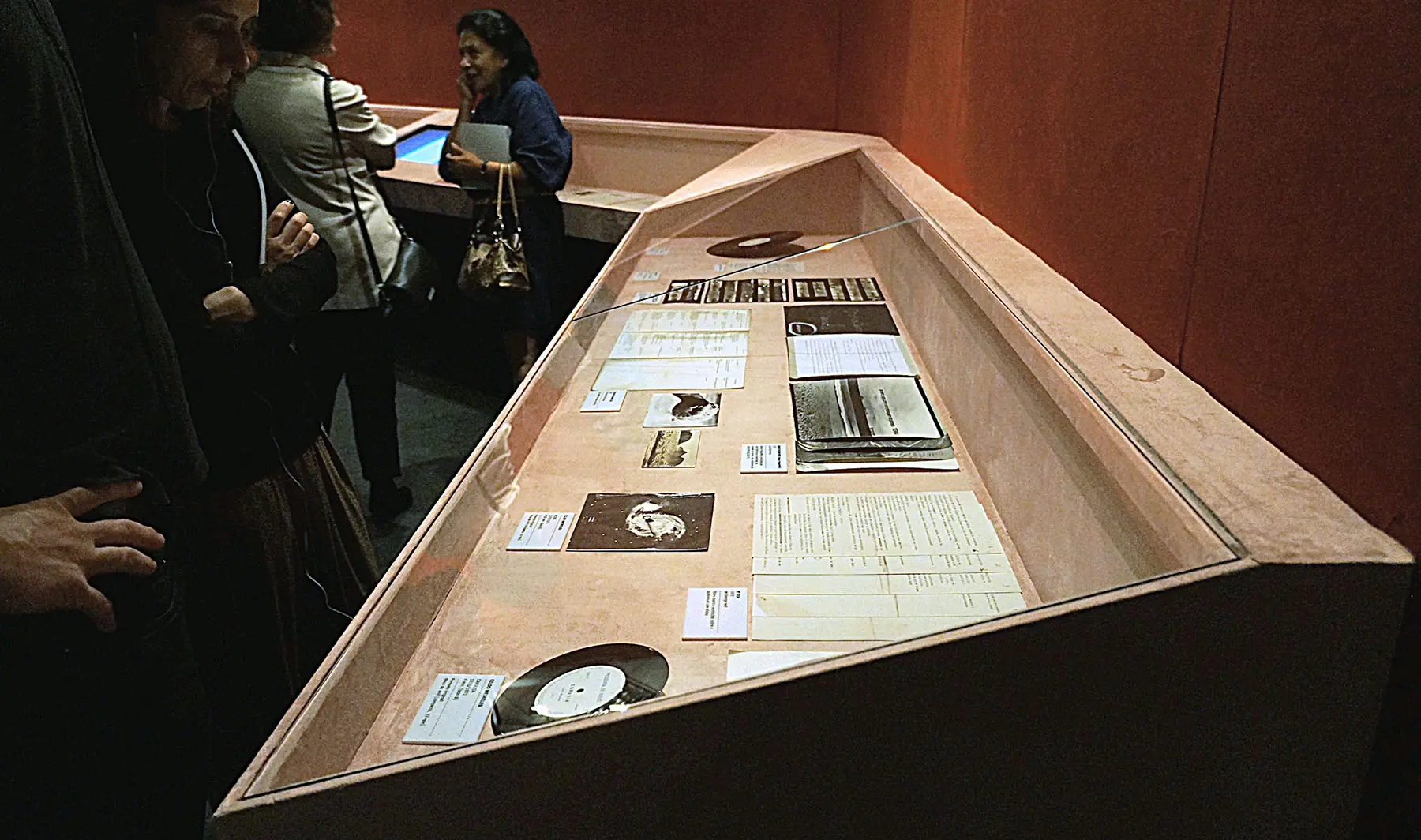
São Paulo’s SESC Pinheiros presents Expoprojeção 1973-2013, a panoramic of film and video production by artists in the context of contemporary Brazilian art. The show explores 40 years of video art in Brazil through 62 works. From a historical perspective, it presents the work of 47 artists interested in experimentation with these media.
Curated by Aracy Amaral1 and Roberto Moreira dos Santos Cruz2, the show is organized into historical and contemporary sections and provides a wide view of artistic expressions supported on audiovisual media during the past forty years in Brazil.
The starting point for this retrospective was Expoprojeção 73, organized by Aracy Amaral at the headquarters of GRIFE (Independent Experimental Filmmakers Group, in its Portuguese acronym), which presented works created using then-new audiovisual media such as slides, Super-8, and 16mm film, as well as sound-art works. That exhibition was the first curatorial initiative to gather such productions, little known in the country at the time, which translated the thematic and aesthetic diversity of the era’s cultural scene into images and sounds.
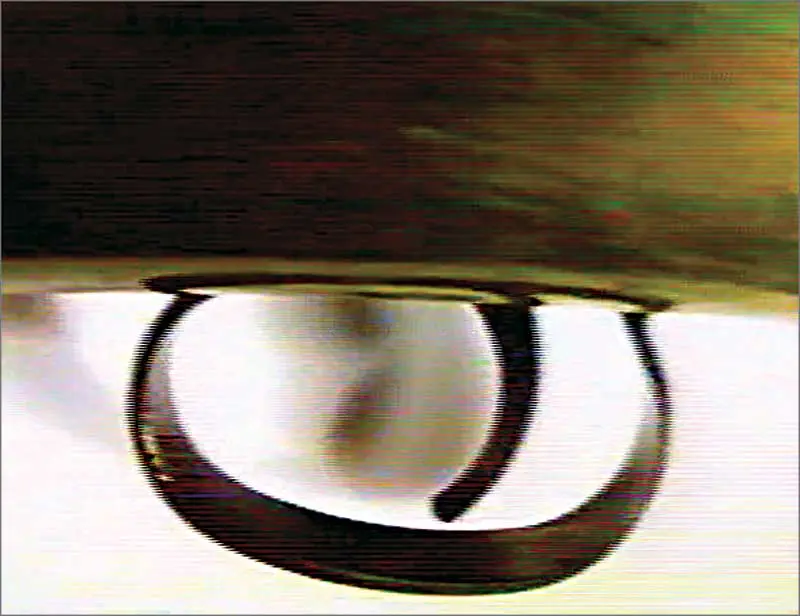
In the early 1970s, several artists were interested in languages different from those of conceptual art or painting, drawing, printmaking, performance. Audiovisual explorations in Super-8 and 16mm film, as well as sound, had an experimental intent. The Brazilian context at the time was that of a country under military dictatorship, with censorship imposed over any attempt at free expression. This forced artists to seek out strategies to skirt many obstacles, with disguised political allusions, metaphors, and allegories. The effort to break through such barriers moved towards a discovery of new supports for artistic creation.
Enthusiastic about these possibilities, Aracy Amaral conceived at the time the idea of bringing together artists who were working on those experiments in an event that presented their works to the audience. Starting with some names she was familiar with in São Paulo, like Marcelo Nitsche, Gabriel Borba Filho, Donato Ferrari, and Fridman, as well as Mario Cravo Neto in Bahía, Amaral began to expand her references in Brazil and abroad, establishing contacts with self-exiled friends such as Helio Oiticica in New York and Antônio Dias in Milan. Amaral speculated about which artists would be interested in those experiments.
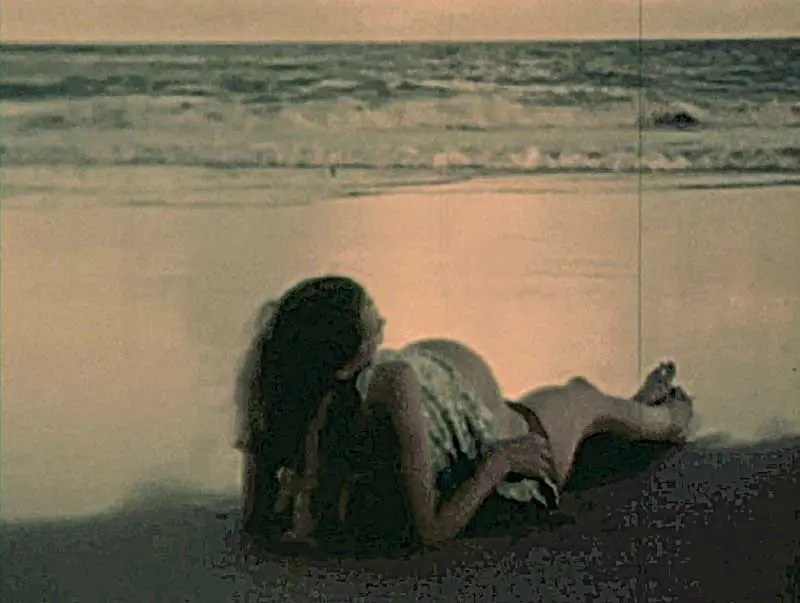
She also contacted Marco Sampaio, a critic in Belo Horizonte, in order to include artists from Minas Gerais state. Paulo Fogaça, from Goias, joined the group. Amaral’s contacts opened avenues to the inclusion of artists like Iole de Freitas, Raymundo Colares, Cildo Meireles, Ana Maria Maiolino. Working by correspondence was essential, Amaral remembers, as Oiticica and Dias prodded her to search for other names.
Based on these mappings, Aracy Amaral organizes a pioneering media-arts exhibition at Expoprojeção 73, bringing together young artists who are widely recognized today. The event took place at the GRIFE, established by Abrão Berman, who supported the exhibition and ceded the space.
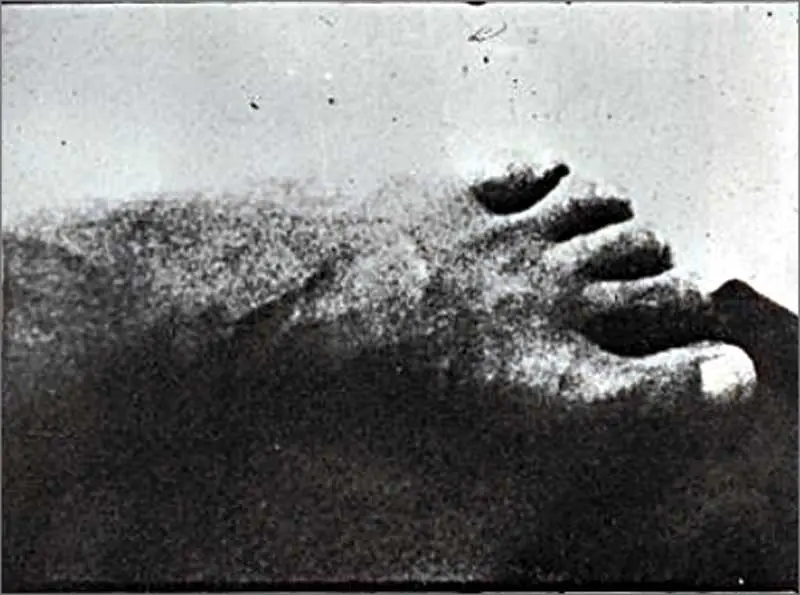
This is the historical basis for the exhibition now presented at SESC Pinheiros, Expoprojeção 73-2013. The historical section prepared by the curator makes it possible for visitors to revisit proposals from the 1970s and 1980s with works preserved and restored especially for the exhibition, added to the works originally featured in Expoprojeção 73. The contemporary section includes works created in the Twenty-First Century, mostly installations, objects, and projections.
The exhibition opened on October 22, 2013, with an inaugural lecture by Barbara London, media curator at New York’s MoMA. London shared with the audience her experience as the founder and curator of MoMA’s video acquisition and exhibition, and gave testimony of her 40-year tenure at the institution, focusing on new media.
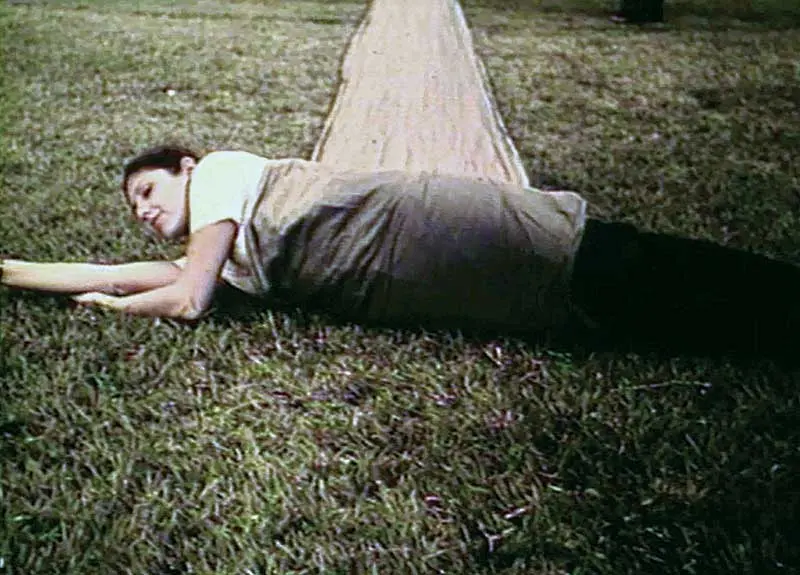
A significant number of works originally presented in 1973 were brought back for the exhibition at the SESC, resulting in a research effort that involved, in many cases, the restoration and remastering of works. This allowed the inclusion of 29 artists and 45 works, restored for display conditions, from the 45 artists and 100 works in the original show. Some of the works not included in Expoprojeção 73-2013 have been lost, others stolen, and some may be in possession of the artists or their families, but were not found.
Besides these salvaged works of art, visitors had access to Aracy Amaral’s own personal archive, with dozens of letters and notes. A rich documentary archive that, through the dialogs between the curator and the artists, provides an account of the intensity of the search for audiovisual material behind the 1973 exhibition, as well as the process of its organization.
The exhibition is completed with an anthology of experimental art produced over the course of the following decades. These are films, installations, video installations, and single-channel videos, comprising a segment with 17 works. If Expoprojeção 73 was a vector for this kind of artistic production, subsequent years, extending to our own time, reveal stylistic evolutions that define the main characteristic of audio-visual creative endeavors in Brazil: a poetics of the image; the body as a tool for experimentation; open, non-linear narratives; an investigation of form and technology, to mention some of the features observed in the works on exhibit here.
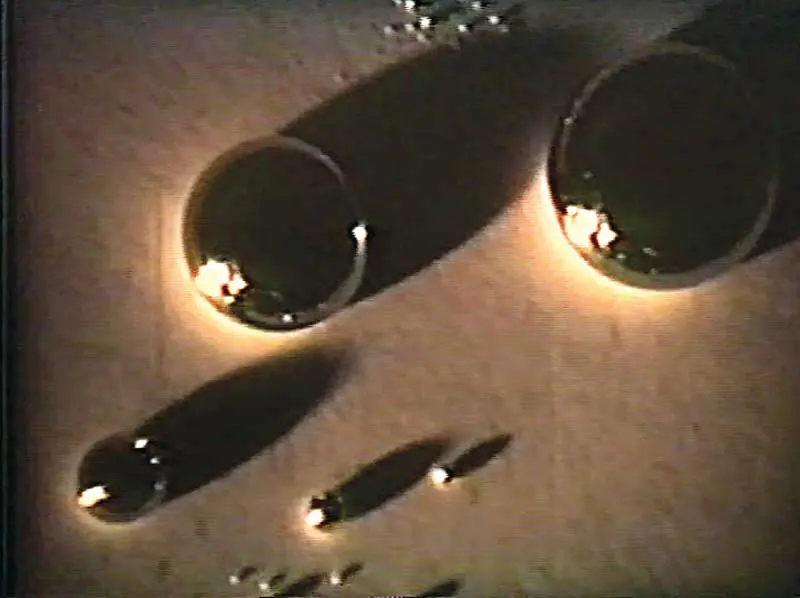
According to Aracy Amaral, to re-edit an event four decades after its inception requires enthusiasm, patience, and a team ready to reconstruct the presence of the works in search of contact with the protagonists. Roberto Moreira dos Santos Cruz adds that Expoprojeção 73 was a landmark in the context of Brazilian art exhibitions in the 1970s. According to Moreira, it is still possible to trace a timeline from exactly that moment to the current era, covering many tendencies and styles in the production of contemporary films and videos marked by an experimental intent. That was the premise guiding the curatorial proposal elaborated by Aracy Amaral and Moreira dos Santos Cruz for the selection of the 62 works in Expoprojeção 73-2013. The chronological dialog articulated in this show celebrates the historical importance of the 1973 event, reviving many of the works featured there and extending an analytical look over what came afterward in the context of those four decades.
The historical component also includes works created at GRIFE after the 1973 show, such as Regina Walter’s 1976 Advice from a Female Crocodile, one of the earliest experiments with film installation in Brazil. It was produced in Super-8 film and was mounted as a counterpoint between two screens facing each other. Walter is one of the first Brazilian artists to incorporate audiovisual and installation elements into her work. The success of her experiences motivated the production of a vast oeuvre in the 1980s.
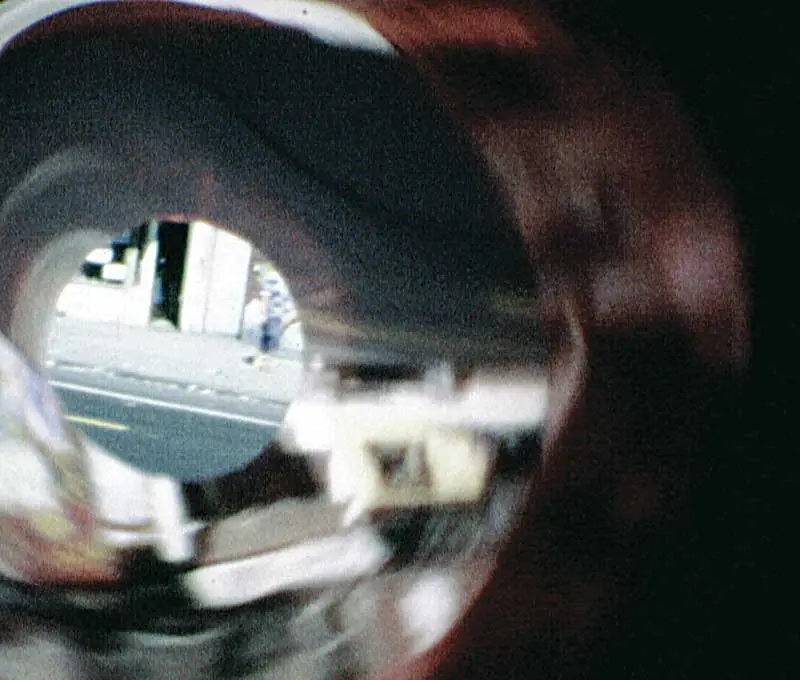
The ample development of new technologies rendered Super-8 film and projected-slide installations obsolete. Video gained increasing currency in the context of these artistic endeavors, accompanied by expanded interest in contemporary art in the international circuit. New media had provided a vast array of possibilities, as well as a solid technological basis; the result has been a teeming production over the past few decades. Artists like Regina Silveira, Leticia Parente, or even Roberto Aguilar, from the 1970s, assumed video as an expressive language and a means of documenting their work processes.
Starting in the 1990s, the relationship between video, film, and visual arts has become even tighter in Brazil. Exhibitions and shows have made this tendency evident, along with experiences in international contemporary-art events.
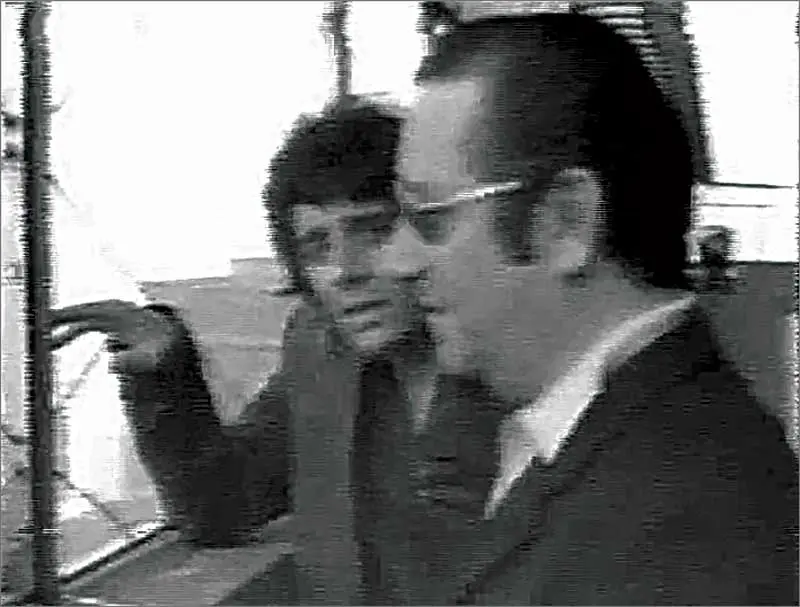
The vastness of such possibilities, allied to the traditional practices of photography and installation, make it possible to work in a kind of technological hybrid, entirely intervening a photograph, promoting interactions, bringing together sound, motion, video, and interactive proposals, all of which breaks down barriers in a feedback process: technology offers new possibilities which, in the hands of artists, generate new needs and discoveries; the market responds with enhancements and technological innovations, expanding the range of tools for the construct and providing new supports.
Today’s technological ease has made possible marriage of design, interactivity, storage, and web-based immediate distribution, which has, in turn, provoked a wide appropriation of technological supports in contemporary art.
Expoprojeção 73-2013 facilitates in this way a specific appreciation of the earliest creative gestures in experimental audiovisual languages, during the embryonic period of Brazilian contemporary art, and highlights the limitations and difficulties encountered in the beginning as well as the artist’s and the medium’s capacity for reinvention and enhancement. In parallel, it gives an account of what happened in subsequent decades, with artists who expanded the field of speculation with images in motion.
NOTES
1. Critic and curator, former director of the Pinacoteca do Estado de São Paulo, MAC/USP, curator of the 8th Mercosur Biennial and the Chile Triennial.
2. Curator, professor, and cultural producer, an advisor to Itaú Cultural in the fields of audio-visual art, artist’s films, and video.
HÉLCIO MAGALHÃES