
Since
early in the twentieth century until today, Latin America has been producing
meaningful and unique forms of abstraction. In the recent show at MoMA: Inventing Abstraction 1910-1925: How a
Radical Idea Changed Modern Art, Eastern and Western Europe together with
the United States were described as the international lieu of a rich network of
interconnected thinking where the radical new idea of abstract art was born. As
we are generally talking about the category of ‘Western art’ we may accept this
genealogical principle in this context, but the aesthetic of the abstract (or
the ‘will to abstraction’ as it was coined by Wilheim Worringer in 1906 in Abstraction and Empathy) has been
present since ancient times in the art and culture of Africa, Ancient Egypt,
Celtic, Islamic civilizations, the Orient and Pre-Hispanic cultures in Latin
America, as we find it in architecture, textiles, pottery, jewelry, sculpture,
sacred objects, drawing and more. The distinction with modern abstraction is
that when the latter emerged as Leah Dickerman explains, ‘by 1912, one’s
ability to describe the world in terms of a firm correspondence between what
was seen and what was known has been thoroughly shaken.’1 Not only
science, technology, modernization, but war and political regimes were the
backdrop of this radical change in art. Latin America created its own unique
forms of abstract art, between the 1930s and 1970s, also in the context of a
transnational dialogue, complex processes of modernization and dictatorial
regimes. It has now been accepted by more ‘canonical’ academia that trends such
as Arte Madí in Argentina, Arte Concreta and Neo Concreta in Brazil, or forms
of Kinetic art in Venezuela and Argentina can be seen as original in their own
terms.
Latin America has its own complex history of abstraction and its roots are wide and diverse. At the basis of the drive for modernization, modernity and abstraction in Latin America there was a twofold situation. On the one hand, it was a project of liberation from the dominance and dependency from European Colonialism and overcoming underdevelopment, and on the other, the inevitable continuity of the same dependency. For example, Concrete and Neo Concrete artists in Brazil in the 1950s and 1960s were looking at De Stijl, Suprematism, Cercle et Carré, Bauhaus, to create their own form of ‘constructivist’ art, adapted to the Brazilian context, relativizing an over rationalist approach to geometric art. Though abstraction represented a strategy of resistance to the specific nationalist-populist ideologies of their time, much of it took place during the long and receding dictatorial regimes throughout many countries in Latin America. These existing contradictions in the ‘Modern project’ in Latin America is one of the fertile grounds of exploration for abstraction in the continent today. In interview with Catherine Walsh, Walter Mignolo stated in 2003 that ‘(…) “América Latina” se fue fabricando como algo desplazado de la modernidad, un desplazamiento que asumierons los intelectuales y estadistas latinoamericanos y se esforzaron por llegar a ser “modernos” como si la “modernidad” fuera un punto de llegada y no la justificación de la colonialidad del poder.’ 2 In the same way that the future of critical thought in Latin America—the decolonization of knowledge—cannot and is not solely the reinterpretation of European and North American academic knowledge, abstract art in the continent may function with its own specific referents including the Pre-Hispanic abstract aesthetics found in ceramic, textile and architecture, that César Paternosto has poignantly argued for in his book The Stone & the Thread: Andean Roots of Abstract Art, 1989/1996.

It is agreed that since the 1990s, all over the world abstraction has become a renewed field of art. The reasons are manifold. In Latin America, abstraction never ceased to be important, even though between the 1970s and 1990s this field was relevant because of the continued experimentation by artists already working in this arena and others who started to explore abstract art during this period despite it not being the center stage of art at the time. Today, within the postmodern pluridisciplinary approach to art, we maintain a paradoxically ‘traditional’ genealogical Euro- and America-centric way of continuing to define the limits of what a relevant abstract art may be, rooting the rationale and forces behind it to be the complexity of the ‘post-capitalist’ metropolis located in the same centers where abstract modern art was ‘invented.’ For example in the Phaidon Press 2009 survey book Painting Abstraction: New Elements in Abstract Painting by Bob Nickas, only one artist from Latin America out of eighty is included, the Argentinean painter based in London, Varda Caivano.
In a 2013 compilation on abstraction by Maria Lind, she maps what she defines the three main strands of abstraction: formal, economic and social abstraction. In the section on Formal abstraction, she includes texts by Helio Oiticica, the Neo-Concrete Manifesto from 1959, and Gabriel Pérez-Barreiro, and for the other two sections there are no references to abstract art in Latin America, and fundamentally this is because the ways in which these fields are defined do not pertain to the art of our continent. Within the framework of Formal Abstraction, it is difficult to insert the relevant production of Latin American artists such as Amadeo Azar (Argentina, 1972), Adan Vallecillo (Honduras, 1977) or Iosu Aramburu (Peru, 1986) revisions of the ideologies and colonialism of modernism in Latin America.
According to Lund, Economic abstraction refers to ‘an increasingly abstracted world in terms of its economic, social and political conditions. Such economic abstraction is primarily dealt with in art as a subject or theme’.3 This trend refers to the abstract nature of modern finance, and an ever more abstract existence. How could we insert the production of abstract art from a rural village in Guatemala such as San Pedro de la Laguna by artists such as Benvenuto Chavajay (Guatemala, 1978) and Manuel Antonio Pichillá (Guatemala, 1982) whose work dialogues with the specific aesthetic and cultural Mayan traditions, references that thus far have been excluded even from discussions about modernity, in an ‘abstracted’ discussion about the late capitalist economy? Counter to this approach, and because of the long history of exclusion of Latin America from dialogical participation in forms of knowledge, we are aware—and following Walter Mignolo on this—that the history of knowledge is geographically bound and it involves a value and a place of ‘origin’, therefore knowledge is neither abstract nor non-located.

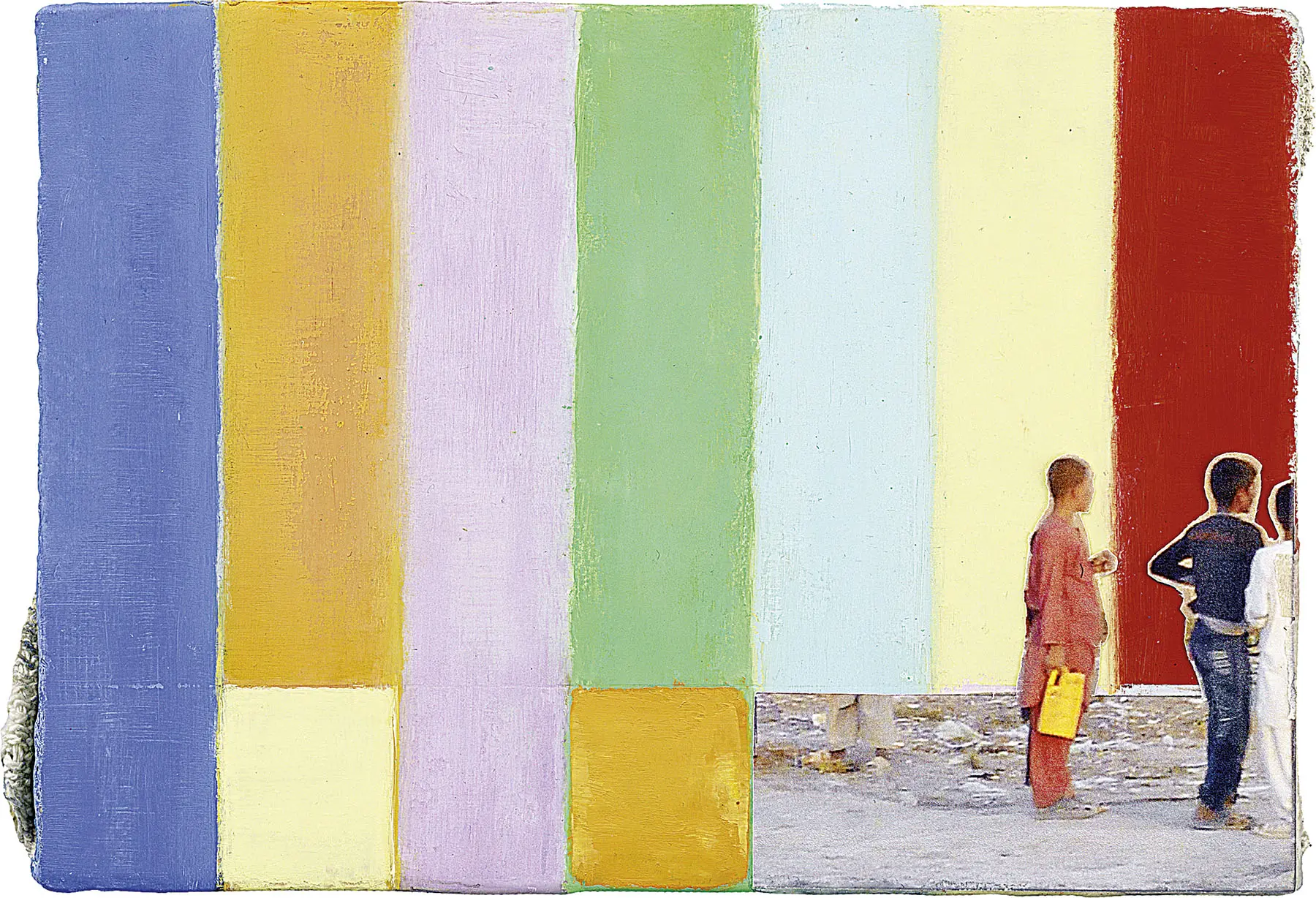
Lund explains that Social Abstraction refers to the ‘emergence in art practice of social strategies of abstraction, or withdrawal. Among other things, social abstraction implies stepping aside, a movement away from the ‘mainstream’, suggesting the possibility that artists could have more space to maneuver within self-organized—‘withdrawn’—initiatives in the field of cultural production.’4 Here again, the politicized or conceptual abstract art being produced today in Latin America in dialogue with complex social and political contexts, as in Francis Alÿs’ (Belgium/Mexico, 1959) recent color bars paintings, as in Untitled, 2011-12, which combine abstraction with scenes of Afghanistan that address the impossibility of representing the daily reality of war; or Jorge de Leon (Guatemala, 1976), a dilapidated sheet of zinc from shanty homes in Guatemala that show signs of social violence such as bullet holes, find no resonance.
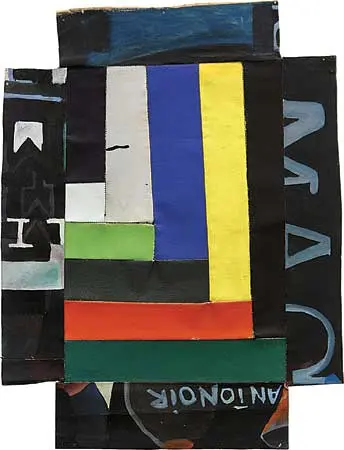
In Latin America it may be said that abstraction is a strategy of critical intervention in social, political or any kind of life/culture. Sometimes it is an urgent form of participation through forms of abstraction that are embedded in the daily fabric of life itself, whereas through the appropriation of popular and mass culture, or the direct undertaking of social, cultural, conceptual or ideological issues. To believe that ‘representation’ is a ‘certain’ form of grasping reality, such as war, is to pretend that the critical role of art may be more feasible and less problematical from a recognizable relation to reality, and also it presupposes the old fashioned idea that abstraction is intended to move away from reality, to empty itself from it. This is based on the conventional acceptance in the dichotomy between abstraction and representation which no longer stands, as there is no opposition between the two. In the introduction to Discrepant Abstraction by Kobena Mercer, she contests the institutional narrative of abstract art as a monocultural, monolithic quest for artistic ‘purity’ to encompass a notion of multiple cross-cultural modernities, where abstract art’s main quality is its openness, and that it is critical, hybrid, partial, multidirectional, pluralistic and attempts to de-center the conventions of visual representation.5 Mercer’s cross-cultural perspective description of abstraction is fitting to think about abstraction in Latin America.
Abstraction, particularly in Latin America, may be seen still as a realm of resistance, and differently from the early 20th-century utopianism, it is an investigation from within the ideological, symbolical, and physical reality of today, therefore loaded with content and references to the real world—not in contraposition or denial of it. Here it is pertinent to cite Yasmil Raymond: ‘an abstract resistance, in the broader sense, is the work of art that refuses an idealist narrative of normality while confronting the commodity of comfort with the barricade of contradictions and irreverence.’ 6There are many ‘themes’, names or ideas under which we could group or map out certain insistent areas of abstract art in Latin America today. As the focus of this text is an abstraction that contests ideology and critically interpellates reality, we will only refer to some themes or ideas of abstraction, such as: ’Intercultural abstraction’, ‘post-colonial abstraction’, ‘political abstraction’ and ‘the ideological critique of modernity.’ In another essay I have already discussed ‘abstraction and modernism’, ‘the monochrome’, ‘abstraction and popular and mass culture’, ‘open or uncertain abstraction’.7 Other issues are pending discussion such as: ‘abstraction and gender’, and ‘discarded abstraction.’
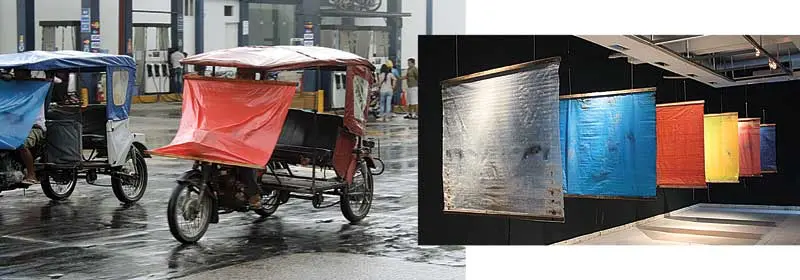
The specificity or broadness of these issues may allow or require for some of these themes to overlap or develop into new problems or questions. If for example, we explore a work such as Adán Vallecillo’s (Honduras, 1977) Pantone, 2013, as an exercise of de-colonialism and deconstruction of a genealogical idea of modernity, as he delves into the effects of modernity and the precariousness and hybrid nature of its subsistence in places such as Iquitos, we may enunciate it as: ‘post-Colonial abstraction.’ Or if we analyze it from the perspective of cultural specificity and hybridity—as the artist reflects on the resourcefulness of the people in Iquitos in deploying sheets of colorful plastic to protect their motorcycle taxis, thus creating a popular and unselfconscious form of live abstraction—we may enunciate it as ‘intercultural abstraction.’ The point here is that on the one hand the complexity and multiplicity of cultural referents of abstract art in Latin America today demands thoughtful and heterogeneous frameworks which are not final but unstable and mobile, and on the other, this ‘resisting abstractedness’ may not be pigeonholed into safe though uncomfortable categories, especially the ones which the mainstream insists on constructing by continuing to ignore and exclude a large area (Latin America) of this transnational field.
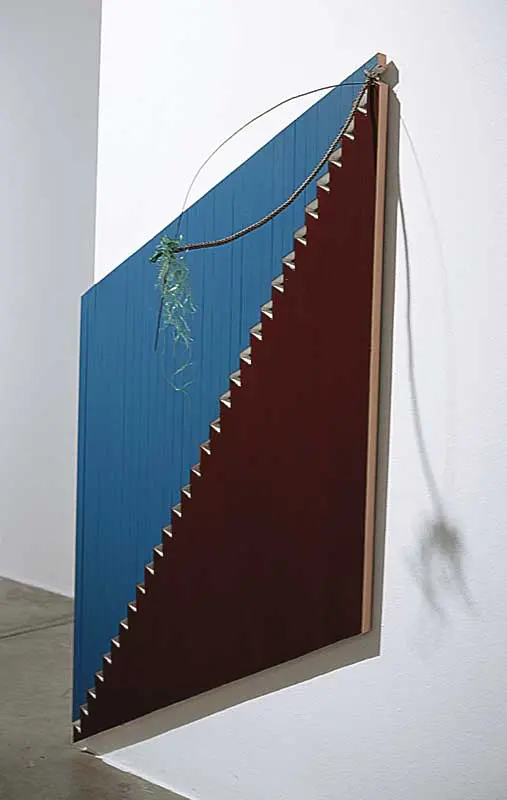
Some artists produce work, definable as abstract or not, that may be thought of as ‘intercultural abstraction,’ which incorporates dialogues with cultural codes that may refer to pre-hispanic and/or live indigenous cultural traditions and material cultures such as textiles, sculpture, and architecture, expanding thus the established aesthetic codes of abstraction and/or interpellating the ideology of colonialism.
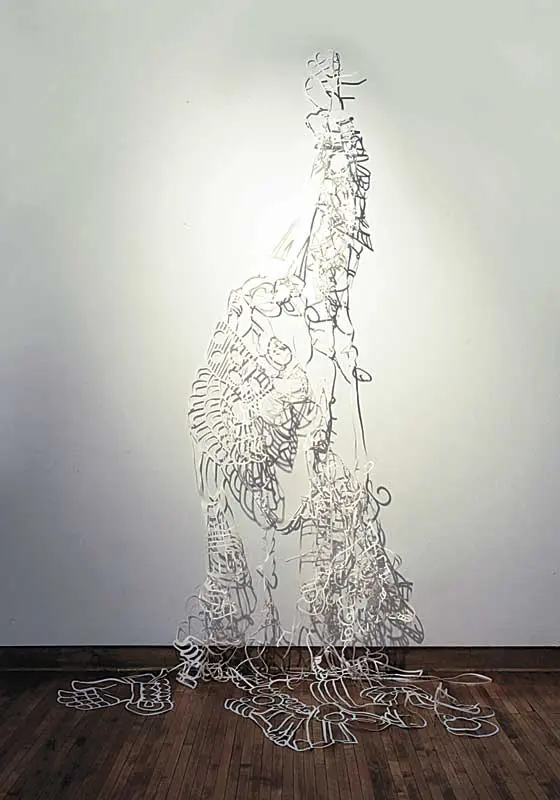
For example, Manuel Antonio Pichillá (Guatemala, 1982) in Nudo Típico, 2006 superimposes in tension, a traditional contemporary Mayan textile arranged in a symbolic knot on a flat red geometric background; in Diana de Solaris’s (Guatemala, 1952) work No hay ruta corta al paraíso, 2007, (There is no short path to paradise) we observe references to prehispanic architecture, while also incorporating debris from today’s streets in Guatemala. Mariana Castillo Deball’s work The Stronger the Light, your shadow cuts deeper, 2010 is a paper cutout that traces the intricate shape and details of Coyolxauhqui, today a ‘relic’ depleted of its symbolism by the agency of an archaeological practice at the service of the State. The delicate and complex shadow that the cutout throws in the space, reveals both the coexistence of the power of the Aztec moon goddess and its representation, and simultaneously the abstractedness and inaccessibility of its meaning to us today. Also in this arena of the ‘intercultural’/‘contextual abstraction,’ we find artists whose work is rooted in and explores specifically—often politically—the realities and material culture of daily life such as Alí González (Venezuela, 1962), Jorge de León (Guatemala, 1976), Aníbal López (A-1 53167) (Guatemala, 1964), Pepe López (Venezuela, 1966), Moris (Mexico, 1978), Pablo Rasgado (Mexico, 1984), Ishmael Randall Weeks (Peru, 1976), Luis Roldan (Colombia, 1955), Jaime Ruiz Otis (Mexico, 1976) and Adán Vallecillo (Honduras, 1977). Todasana, 2011, is a collective project by Pepe López, with the participation of Armando Pantoja, Isabela Eseverri, Claudio Medina, Paloma López, Venturi Pantoja, and the drummers and singers of Todasana, where he painted with geometric shapes on forty carved traditional wooden drums, and these were then played by traditional musicians of San Juan in the Caribbean Coastal Village of Todasana in Venezuela. This work is relevant in the Venezuelan context, being this a country where modernity and modernization—particularly its abstract traditions as emblems of an ideal but mostly failed progressive modernity—has coexisted in tension and with indifference to other social and cultural popular realities of the country.
One of the interesting characteristics of abstraction in Latin America today is that it is often produced by artists who work in different arenas, as they may work simultaneously with figuration, with performance, conceptual art, video art, the ready-made, and other art forms. Examples of this are found in artists such as Armando Andrade Tudela (Peru, 1975), Mariana Castillo Deball (Mexico, 1975), Danilo Dueñas (Colombia, 1956), Mauro Giaconi (Argentina, 1977), José Luis Landet (Argentina, 1977), Marco Maggi (Uruguay, 1957), Mariela Scafati (Argentina, 1973), Miguel Angel Ríos (Argentina,) and Luis Roldán (Colombia, 1955) to mention only few artists. Others work also with art historical genres and referents, such as Fernanda Laguna (Argentina, 1972) and Adriana Minoliti (Argentina, 1980), with different degrees of abstractedness or none at all. Most of these interdisciplinary artists would not comfortably define themselves as abstract or any other classificatory term. And it is this discomfort, this not fitting, this soluble and sometimes conflicting interplay between art forms, including abstraction, that makes their work both meaningful and important to discuss the possible role of abstraction in art today.
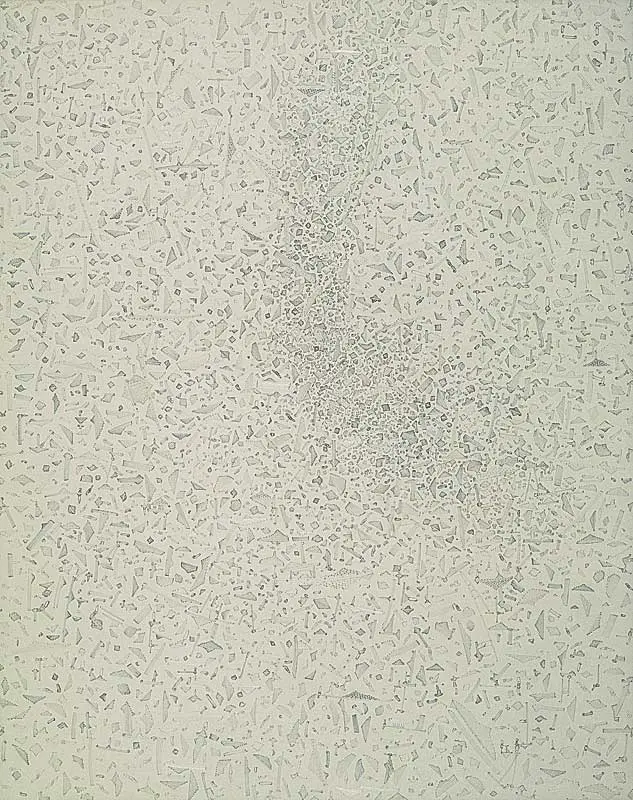
Some of the artists deal with popular and mass culture, thus expanding and contesting the arena of the ‘pop’ as popular hybrid material culture that coexist in contemporary culture in Latin America. Examples may be Darío Escobar’s (Guatemala, 1971) incorporation of different craft traditions from Guatemala in his work, or Rubén Ortiz-Torres’ (México, 1964) appropriation of low riders car culture.8 Occupying a more ‘political’ or critical arena of abstraction we find, for example, Marco Maggi who addresses today’s ‘semiotic indigestion’ and attempts with a paradoxical overdose of detail—in Micro, Micro, Marco, 2009 for example—to lower speed and distance, to give visibility to time while staying away from any form of transcendence. Mariela Scafati is preoccupied with producing an art that allows the participation of the spectator while it functions both intimately and politically in the public arena. Her work, as we can appreciate in 5, 2003, combines abstraction with popular forms of communication and ‘propaganda’ such as posters, billboards, signs, while mixing painting, printing techniques and combining the public and the private space.
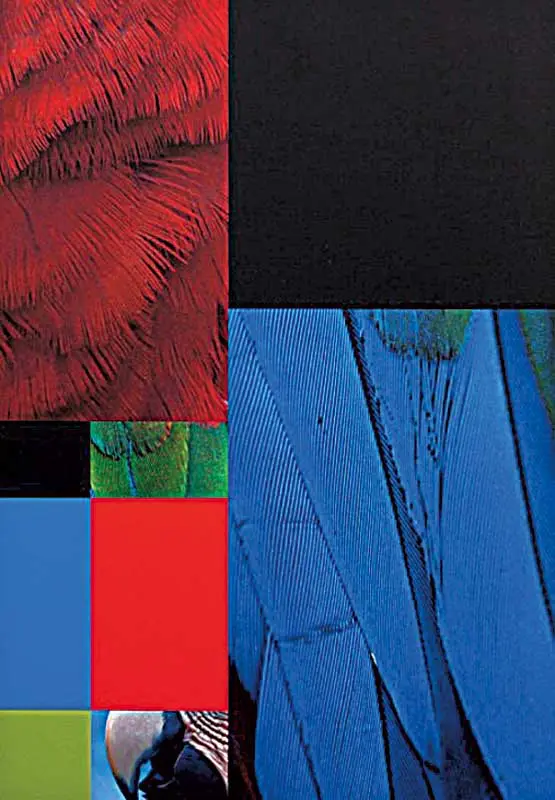
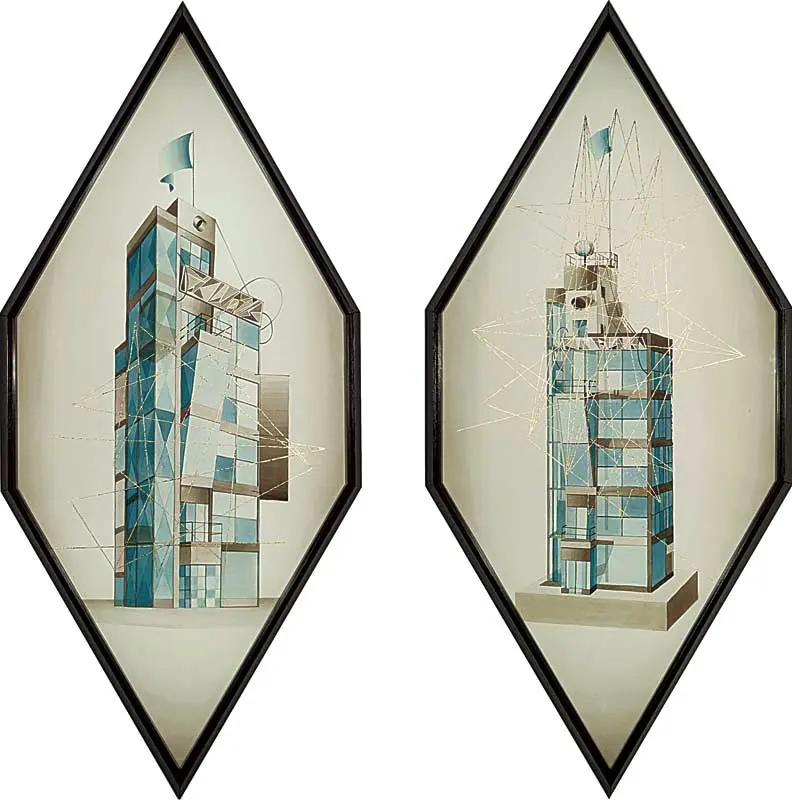
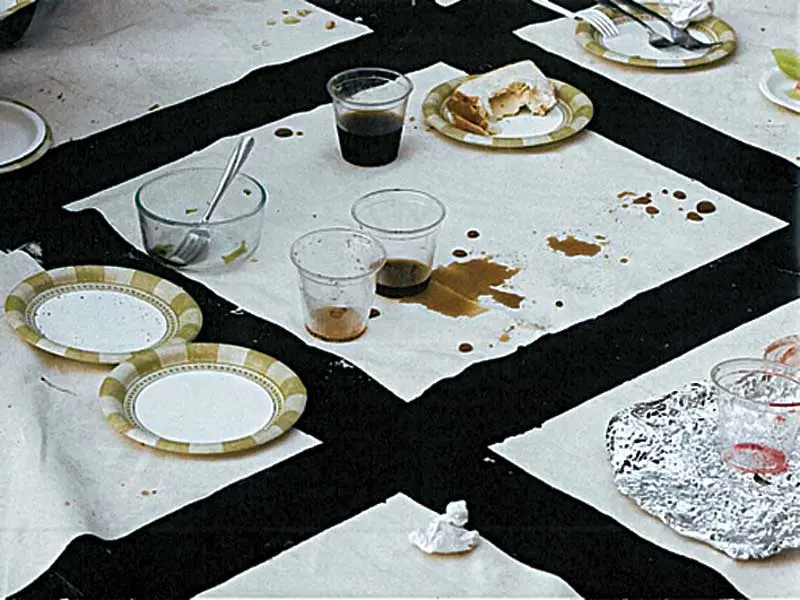
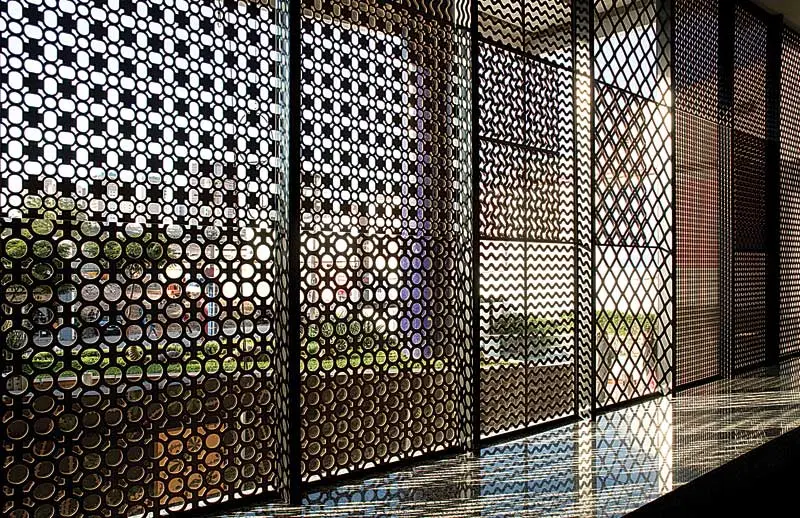
What may be called the ‘Ideological critique of modernity’ encompasses artists such as Alexander Apóstol, (Venezuela, 1969), and his continued deconstructions of narratives of modernism in Venezuela, as seen in video Contrato colectivo cromosaturado, 2012; Amadeo Azar, (Argentina, 1972), who proposes an almost obsessive investigation of the Russian Avant-Garde and Raúl Lozza’s Perceptismo, in works such as Melnikov + Lozza, 2013, to create friction and critique of the conservatism of Peronism; Eugenio Espinoza’s (Venezuela, 1950) key explorations on the grid, to expand its rigidity, and challenge its canonical precepts to embrace space, fragmentation, and the public interaction in works/events such as Etnic (Pic-nic) at INOVA, 2008, where the public was invited to have a picnic on top of a gigantic printed grid. The work was then exhibited with the stains and remains of the public action of drinking and eating, transforming thus bidimensional space into a live sculpture and communal work. Lucia Koch’s (Brazil, 1966) intervention of public and private spaces, are described by Moacir Dos Anjos as ‘ambience art,’ as an ‘ongoing critical reinvention, through a meditated use of light, of the conventional ways of understanding space.’9 In Matemática Espontánea (Conjunto A), 2008, Koch merges different architectural traditions from vernacular to modernist, from mass-produced, common place to highly elaborate crafts and material culture, to produce dialogical works that collapse the habitual perception of space and architecture in the public and private arenas, creating shared, contingent, open-ended immersive experiences. Miguel Angel Ríos’ (Argentina, 1943) video The Ghost of Modernity, 2012, deconstructs the supremacy and hygenized nature of the white cube and its autonomy, while he reveals the social contradictions of Modernism in Latin America.10 Finally, Sergio Vega in his Parrot Color Chart, 2009, proposes an alternative way to mythologize abstract art as a Latin Americanist construct and poses questions such as: ‘What is the message these parrots have for us?’, ridiculing the great paradox of the insistent stereotype assigned to Latin America, by bringing together the theme of nature as “utopian/exotic” in relation to geometric art.
The directions explored are only precarious and incomplete ideas that can be distilled from contemporary abstract forms in Latin America today. It is tempting to think of them comprehensively as forms of conceptual abstractions, nevertheless they elude any possible categorization. It may be said that they are meaningful abstractions.
NOTES
1. Leah Dickerman, "Inventing Abstraction" in Inventing Abstraction 1910-1925: How a Radical Idea Changed Modern Art, The Museum of Modern Art, 2013, p. 27
2. Catherine Walsh. "Las Geopolíticas del conocimiento y colonialidad del poder". Entrevista a Walter Mignolo’ in Polis. Revista Académica Universidad Bolivariana. Vol. 1, No. 4, 2003.
3. Maria Lind. Introduction. Abstraction. Documents of Contemporary Art, Whitechapel Gallery, London & MIT Press, Cambridge, MA, 2013. P. 18
4. Ibid, p. 20
5. Kobena Mercer, Ed. Discrepant Abstraction, Annotating Art’s Histories 2, Institute of International Visual Arts (inIVA) and MIT Press, London, and Cambridge, MA, 2006, pp. 6-29
6. Yasmil Raymond. "Contending with Comfort: The Possibility of an Abstract Resistance" in Abstract Resistance, The Walker Art Center, Minneapolis, 2010, pp.16-17
7. See text Contemporary Abstraction in Latin America in abstractioninaction.com
8. This is an ample area of abstraction and many artists could be explored but this is beyond the scope of this text, such as: Omar Barquet (Mexico, b. 1979), Georgina Bringas (Mexico, b. 1975), Alberto Casari (Peru, b. 1955), Emilio Chapela’s (Mexico, b. 1978), Abraham Cruzvillegas (Mexico, b. 1968), Danilo Dueñas’ (Colombia, b. 1956), Darío Escobar (Guatemala, b. 1971), Richard Garet (Uruguay, b. 1972), Thomas Glassford (USA/Mexico, b. 1963), Gabriel de la Mora (México, b. 1968), Federico Herrero (Costa Rica, b. 1978), Jorge de León (Guatemala, b. 1976), Valentina Liernur (Argentina, b. 1978), Aníbal López (A-1 53167) (Guatemala, b. 1964), Pepe López (Venezuela, b. 1966), Jorge Méndez Blake (Mexico, b. 1974), Gabriel de la Mora (Mexico, b. 1968), Marco Maggi (Uruguay, b. 1957), Moris (Mexico, b. 1978), Ramiro Oller (Argentina, b. 1982), Sebastian Preece (Chile, 1972), Pablo Rasgado (Mexico, b. 1984), Ricardo Rendón (Mexico, b. 1970), Luis Roldán (Colombia, b. 1955), Jaime Ruiz Otis (México, b. 1976), and Luis Zerbini’s (Brazil, b. 1959). Some of these artists have been discussed in Contemporary Abstraction in Latin America in abstractioninaction.com
9. Moacir Dos Anjos, "Set Practice" in Lucia Koch, Series Arte Bra, Rio de Janeiro, 2009, p.28
10. I discuss at some length abstraction in relation to the ideology of modernist architecture and the urban space in Contemporary Abstraction in Latin America in abstractioninaction.com
CECILIA FAJARDO HILL
British/Venezuelan art historian and curator in modern and contemporary art specialized in Latin American art, based in Southern California. This article is part of an ongoing research on contemporary abstraction in Latin America together with Sayago & Pardon of the multi-platform Abstraction in Action.