Before and after its colonization, Latin America has never ceased to evoke and crystallize in Europe as many passions as fears, resulting in the creation of myths and irrational images around a mysterious, fascinating, and at the same time terrifying continent.1 These expectations, which combine a thirst for adventure, a search for virgin natural spaces, and a need for infinitude, generated stereotypes that have nourished artistic creation and sustained living memories, thus contributing to the construction of a shifting yet fixated gaze upon the Americas. A desire for the different or mimetic blindness, the gaze that is directed towards Latin American artists are outlined more by the content than the formal aspect of their work, but also as a function of the ideas that dominate an era.
Writers in their novels, painters in their paintings, and commentators in their criticism cultivate the idea of the exotic, associated with the strangeness of a geographic place and the impressions of a touristic expedition, under the superficial and folkloric appeal of any culture that is different from one’s own. About Latin American artists—and these observations could apply to all foreigners—the vocabulary of criticism found in the French media in the Twenties and Thirties reflect that thirst for distant novelties, with the typical reductive amalgam of the primitive, the local, the origin, the Earth, nature… and the exotic. During the same period, the nationalistic climate centered on local identity fostered the rise of xenophobic sentiments, openly expressed given the growing presence of foreign artists who were described as meddlesome newcomers and accused of infiltrating the streets as well as the “Salons”2. Indeed, they were accused of subjecting the local arts to “the pressures of a foreign invasion devoid of an artistic past, of aesthetics, and, to be frank, purely barbarous,”3 threatening French art with their works to the point of corrupting it.
While since the early Twentieth Century French artists, writers, art historians, and critics focused their curiosity on the art coming from abroad—“where primitivism played a guiding role in the expansion of modern art”—they did so above all in order to open new formal pathways to their own creations and enrich them with faraway images, not as a manifestation of their real interest in a different kind of art and the acceptance of its modern character, above and beyond its difference. Praised and criticized at the same time, the exhibition Magiciens de la Terre, organized at the Centre Georges Pompidou in Paris in 1989, under the direction of Jean-Hubert Martin, broke with such compartmentalized views. Bringing together contemporary artists and craftsmen from several continents, the exhibition attempted to render the dominant aesthetic canons relative. Provoking a break with the old order, it opened, albeit slowly, a pathway for other events that put the question of origins, the connection with “the other,” and exile in play, such as” (curated by Carlos Basualdo) at the Musée d’Art Moderne de la Ville de Paris, in 2001, or Paris pour Escale at Espace Elektra (Paris, 2000-2001). The exhibition Partage D’exotismes (Lyon Biennial, 2000), also curated by Jean-Hubert Martin, shook up the prejudices of critics by confronting modes of contemporary expression from a variety of geographic origins and undermining the discriminatory view—and often the ignorance—that dominated at the time the French art scene. It was necessary to wait almost fifteen years to gather the fruits of these combined efforts and to verify that the clichés, although deeply rooted, have lost some of their force.
With the new exhibition of the permanent collection of the Musée National D’art Moderne, titled Modernités plurielles, the Centre Georges Pompidou attempts to help us forget what critic Philippe wrote with regards to Latin America,4 describing the art of the region as an art of “turtles and chameleons.” The museum conservators explored their collections in order to exhume never-exhibited works from continents up to now practically marginalized by the curators due to the persistence of stereotypes. Reestablishing a chronological museography that highlights styles and movements—something set aside in the previous presentation of the collection—Modernités plurielles, as the title indicates, features artists who have been “unjustly relegated,” be it French or from Latin America, Asia, or Africa. With over a thousand works of art and nearly four hundred artists, it is presented as a “manifest-exhibition” and brings forth the entire diversity of artistic experiences, from experimental cinema to photography, from the visual arts to architecture, with the intention of proposing a new global reading of the history of art. These readings bring into high relief the crossing influences and the exchanges between local movements and Modernism (thus far conceived solely as a European phenomenon), placing on an equal footing the production of female artists or those of Art Brut. Nevertheless, the pertinence of these museographic concepts may not always be clearly perceived and understood by dubitative visitors.
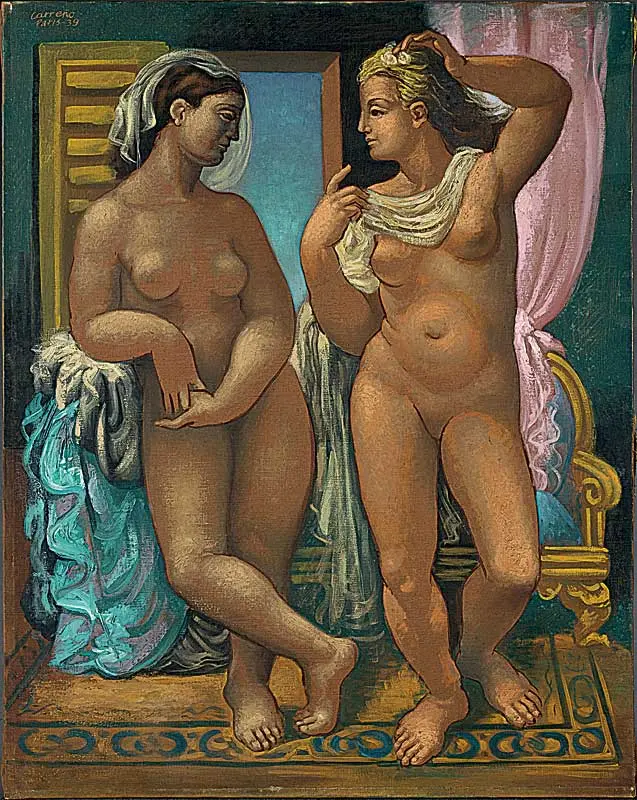
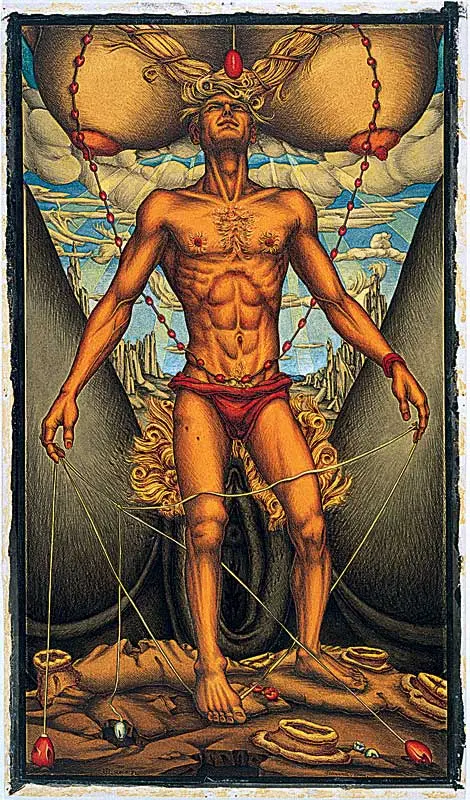
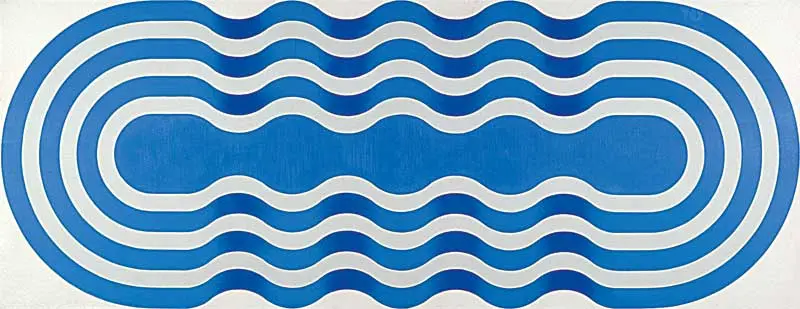
In the desire to open themselves up to “borderless art” with their proposal of a “universal language” for a “history of world art,” the conservators at the Musée National d’Art Moderne (among whom we can mention Catherine Grenier) gave the same importance to figurative art in all its facets—realism (Alfonso-Angel OSSORIO (1916, Manila, Philippines – 1990, East Hampton, US); Sonia DELAUNAY, (1885, Gradizhsk, Russia – 1979, Paris), indigenista art, magical realism, surrealism, international futurism, and primitivism—then to Art Déco, architecture, photography, and international abstract art. One of the curatorship axes was to highlight the interbreedings and sources of inspiration that vernacular and primitive arts represented for art in general during the second half of the Twentieth Century. Key works punctuate this exploration, such as Constantin Brancusi’s potent oak Caryatid (1943-1948); the bluish, waving geometry of Japan’s Kumi Sugaï; or Cildo Meireles’ emblematic Coca-Cola bottles, Inserçoes em circuitos ideologicos: projeto Coca Cola from 1970.
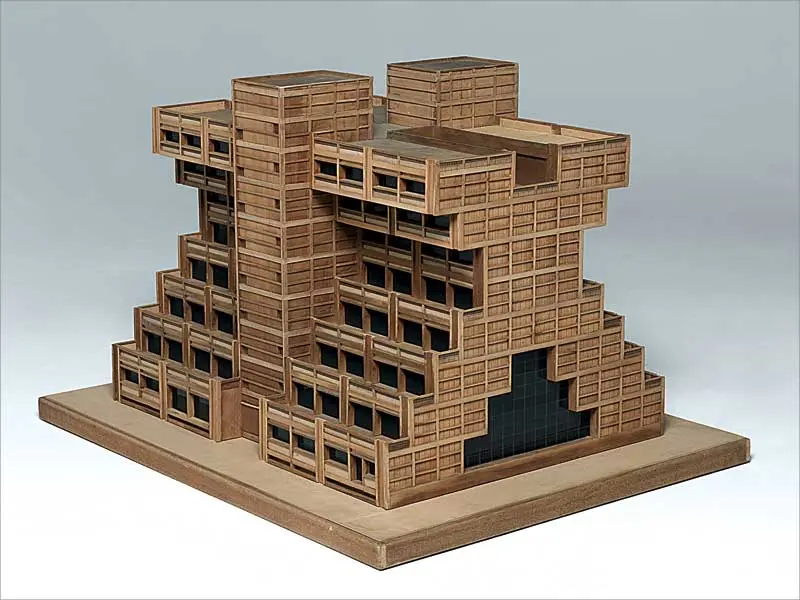
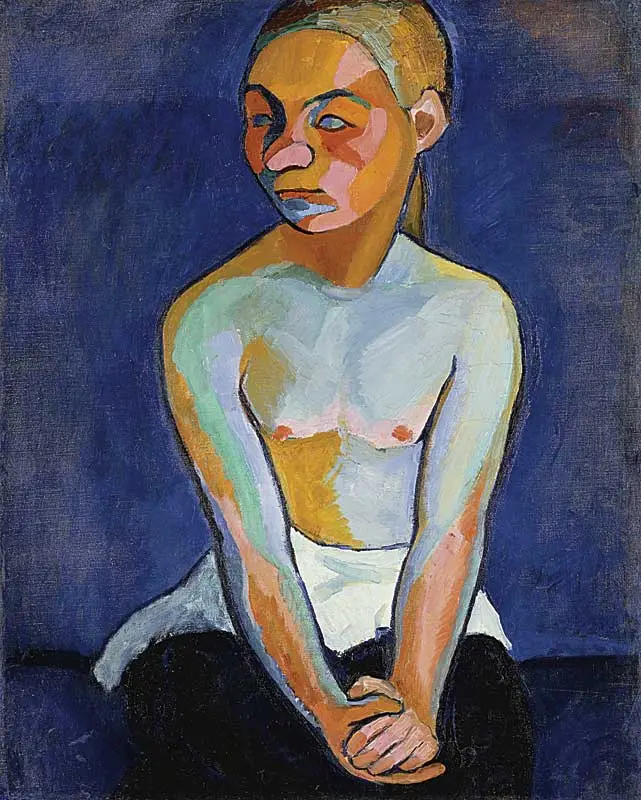
The exhibition gives a preferential place to Latin America in several galleries (“Lam,” “Matta,” “Kosice,” kinetic artists, “Architecture,” “Antropofagia,” and “Under the shadow of Latin America”), without forgetting the transversal contributions of many other artists in several thematic rooms, especially with the commanding presence of Joaquin Torres-Garcia in the section titled “Universal composition” (six paintings, wood toys, and documents of the “School of the South”). In the section titled “Realism in the plural” there is an entire gallery devoted to Brazil’s Antropofagia movement, with the only Tarsila do Amaral painting held in France alongside works by Di Cavalcanti, Lasar Segall, and Vicente do Rego Monteiro, who lived for a long time in Paris (although they did not participate of that movement!) In the “plural modernisms” of Japan and China, the landscape art of Foujita does not cast a shadow on Hengetsu Yazawa’s sacred landscapes or Shuhong Chang’s portrait of a child. Architecture and the city are amply documented, be it from India, with magnificent plans and models, especially those by Raj Rewal, to whom an entire room has been devoted (National Science Academy, New Delhi, India, 1983 – 1990), or from Japan, with a wooden model of The Church of the Light by Tadao Ando (1987-1989), in Osaka. Latin American, and especially Brazilian, architecture also has a special place here, with models and drawings by Ruy Ohtake, Oswaldo Arthur Bratke, Luiz Carlos Ramos, and Decio Tozzi and, at the center of the room, an imposing sculpture set by Mathias Goeritz.
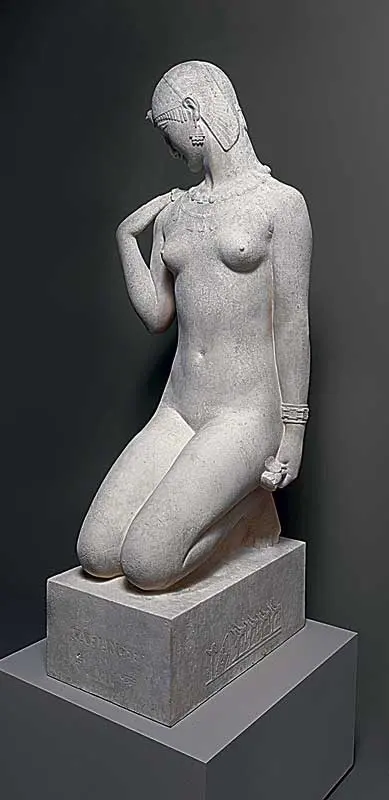
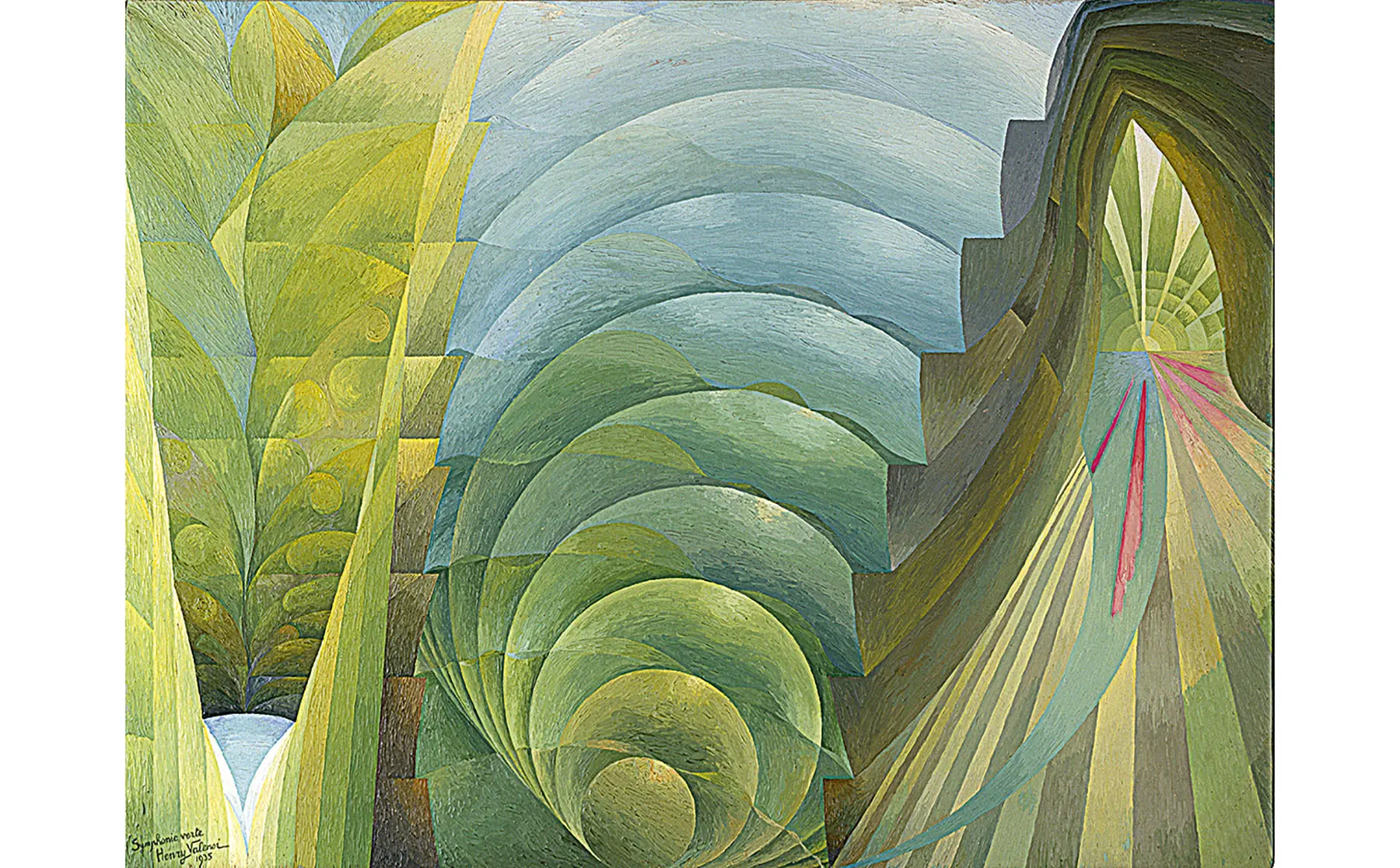
The exhibition also seeks to highlight the production of artists from the Maghreb—a northern African region encompassing countries of Arab culture and ethnicity: Algeria, Morocco, Tunisia, Libya, and Mauritania—Henry VALENSI (1883, Algiers-1960, Bailly, France) and the Near and Middle East (Mahmoud MOKHTAR (1891, Mehallah El-Koubra, Egypt - 1934), with the exhibition in various transnational sections a selection of works enriched with recent acquisitions, especially the section devoted to the development of abstract art between 1950-1970 (Huguette CALAND (Beirut, 1931)). In terms of the African presence, this is the first time that the different artistic expressions that emerged between 1950 and 1970 in the sub-Saharan region of the continent (albeit with little formal transcendence) are included in a history of world art.
Several sections present videos and photographs that go from Erwin Blumenfeld’s political caricature (The Dictator, 1937, the Erwin Blumenfeld estate) to an entertaining film of Josephine Baker’s on-stage gyrations in the 1920s. “Photographed Africa” presents the flow of photographers to the continent starting in the 1930s. Some selected local physical types and habitats (especially Pierre Ichac and the Touareg, André Steiner, and Pierre Verger), while others, bringing the formal explorations of surrealism and the visions of the new art, invented a modern exoticism. The section titled “Under the shadow of Latin America” puts on display the photographic fascination the region has exerted upon the West, with photographs by Paul Strand, Henri Cartier-Bresson, Gisèle Freund alongside Manuel Alvarez Bravo, Manuel Carrillo, and Sergio Larrain. The selection titled “Optical art – International Kinetic Art” gives pride of place to works by Jesús Soto, Marta Boto, Gregorio Vardanega, Horacio Garcia Rossi, Julio Le Parc, and Carlos Cruz-Diez.
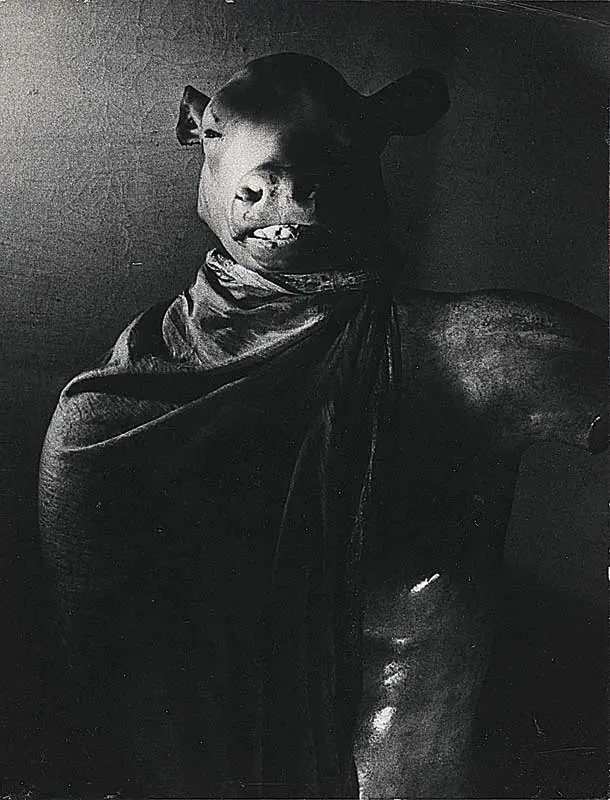
As we said at the beginning, the qualitative tenor of the solo galleries devoted to Wifredo Lam, Roberto Matta, and Gyula Kosice, capital figures in Latin American art—many of whom lived and worked in Paris—attest to a new awareness on the part of the responsible functionaries in French institutions. Nevertheless, it is to be lamented that the Kosice room was relegated to the back of the exhibition, next to African figurative art from the 1960s, and it is surprising to find Diego Rivera and (to a lesser degree) Frida Kahlo in the room devoted to surrealism.
The exceptional documentary holdings of the Kandinsky library guides and accompanies this trajectory: modernist art publications from every continent are connected to the presentation of the works and help clarify the visit. In this way, the show overcomes the prior lack of a broadened view of the history of art, and the winners are those who gambled—in a completely unusual and innovative way—for an international dimension of modern art. This panoramic vision of the multi-disciplinary essence of art across the world makes traditional European modernism relative and enriched. It presents visitors with the dialectical interconnection of both the artists and the movements, and commits them to never forgetting that modernism also developed in other regions, in their own way and at their own pace, with other tools, but always with an interest in rupture and innovation without renouncing its origins.
To do away with a Eurocentric conception that has lasted too long.
NOTES
1. As Miguel Rojas Mix described it in América Imagnaria. Barcelona: Ed. Lumen, 1992. p. 251.
2. Camille Mauclair, “A pictorial campaign”, La Farce de l’art vivant I, Editions de la Nouvelle revue critique, Paris 1929, p. 215, and “Newcomers against French art”, La Farce de l’art vivant II, Editions de la Nouvelle revue critique, Paris 1930, p. 214
3. Georges Rivière, “Avons-nous encore un art français?” (Do we still have a French art?) L’Art Vivant, Tribune libre September 1, 1930, pp. 721-722.
4. On the occasion of the Latin American art exhibition presented in the same location in 1992, Amerique Latine á Paris.
CHRISTINE FRÈROT