
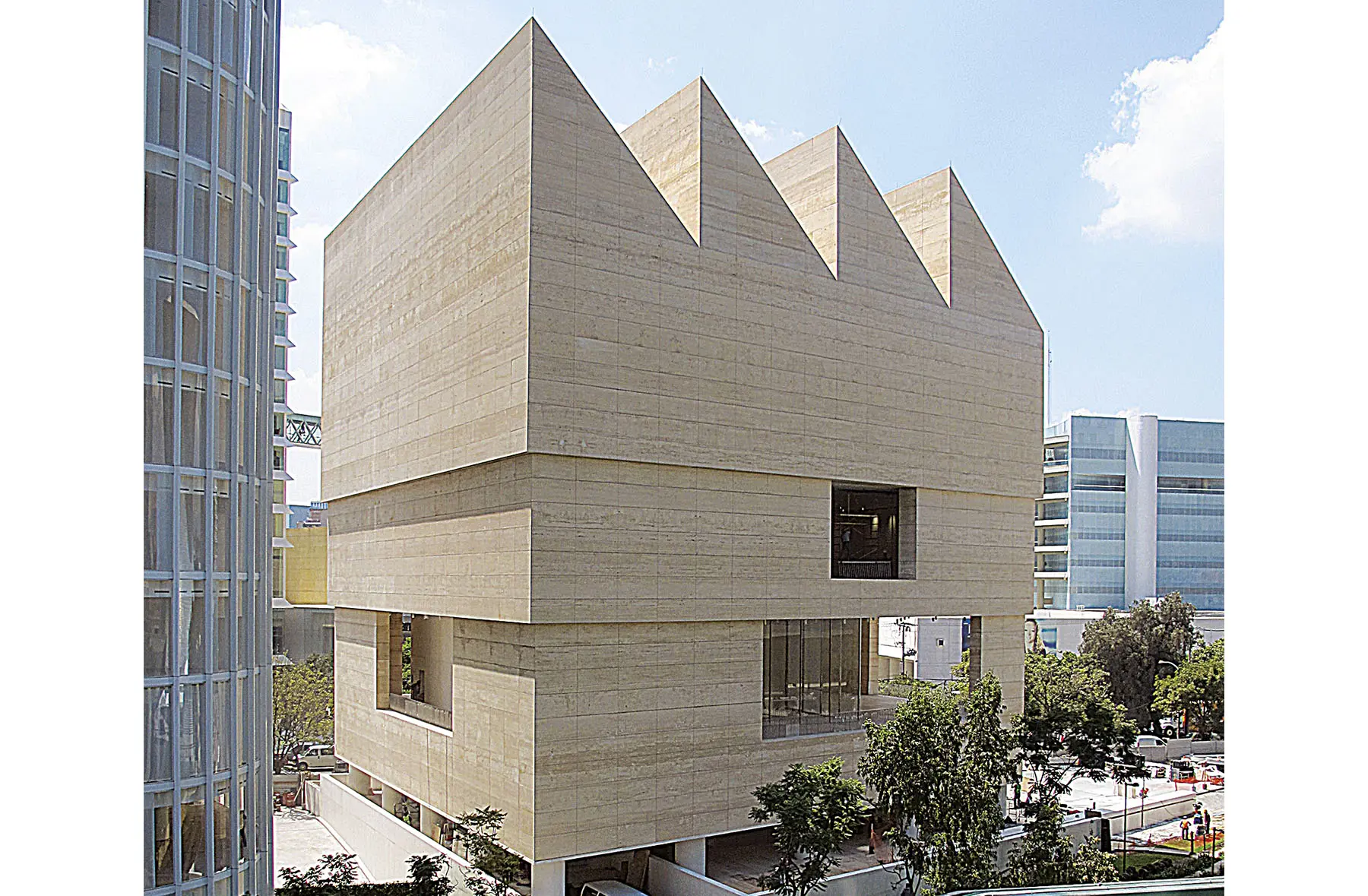
The museum landscape in Mexico has changed in the last half-decade with important remodeling projects and architectural adaptations in spaces that were already overwhelmed, but also with the establishment of new spaces that come to supply a number of key missing links in contemporary visual culture. Such is the case of the recently opened Museo Jumex.
Located on a 2,500-square meter property, and with 6,600 meters of available exhibition space, this new location, authored by David Chipperfield, has changed our reading of the urban space on which it has been built.
Surrounded by a number of flavorless corporate buildings and a pretentious museum that functions as a kind of warehouse open to the public, Museo Jumex provides a visual breather with its ample, silent walls as discreet protagonists, its generous walkways, and the large windows that connect it with a surrounding exterior that, with its presence, is rendered notably smaller.
Among the things that most powerfully grab our attention as we enter this building are its large wooden doors and its 6-meter tall crystals. As Patrick Charpenel, director of Museo Jumex, explains, this is the largest single-piece windows in Mexico.
Visiting this space during its construction was one of the most revealing adventures in terms of museum technology: its electric ground connections have a high-voltage capacity, which allows them to support any sophisticated equipment requiring great power. The lights for the works on exhibit are latest-generation, and although their motion and directionality in the galleries are manual for now, their intensity is controlled from an iPad.
On the third floor, the imposing gallery with 15-meter tall ceilings is lighted almost entirely by natural sunlight, which bathes the room through large vertical windows separated from one another by the triangulations of a structure that evokes the vents of old factories and industrial buildings, a coquettish reminiscence by David Chipperfield of the first locale for the Jumex Collection, which was inside the well-known Jumex juice manufacturing plant in the outskirts of Mexico City.
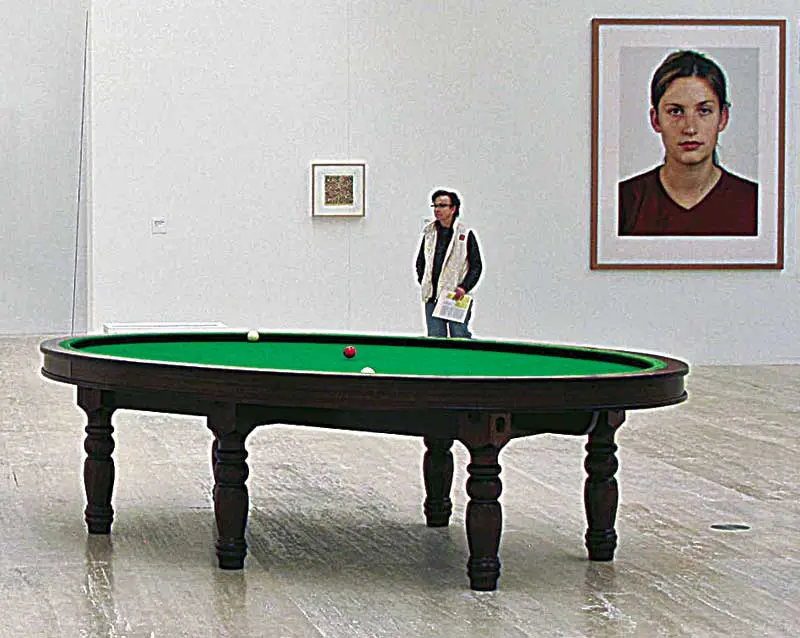
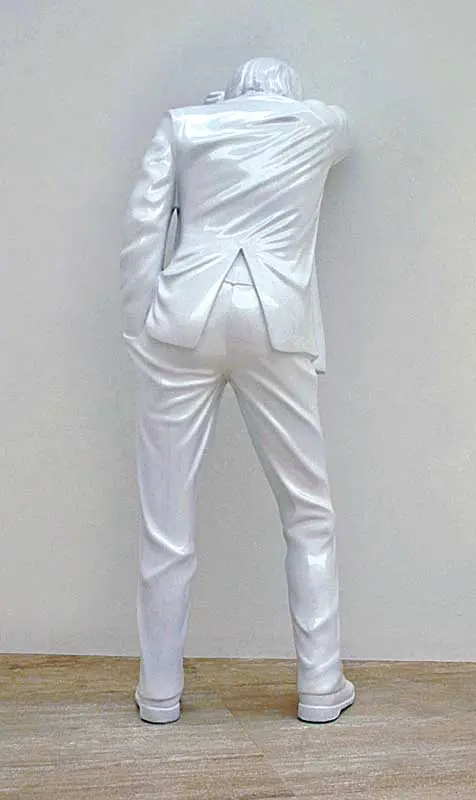
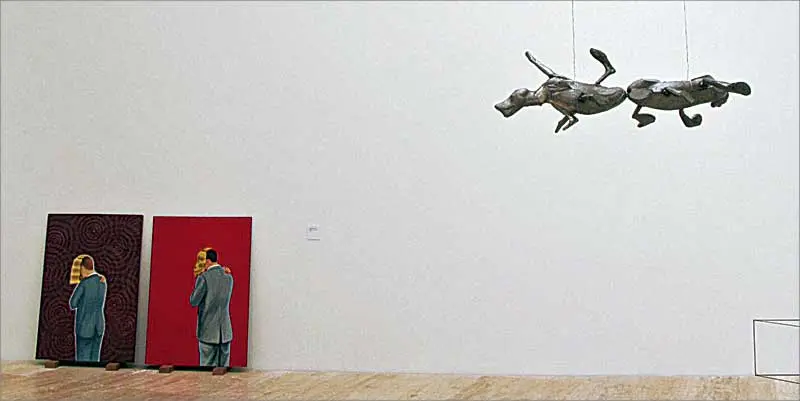
In this room, also known as Gallery 3, we find the exhibition titled Un lugar en dos dimensiones. Una selección de la colección Jumex + Fred Sandback, curated by the director, Patrick Charpenel. Although rather summary, the selection provides a good account of one of Latin America’s most complete collections of contemporary art: Francis Alÿs, John Baldessari, Maurizio Cattelan, Daniel Guzmán, Demian Hirst, On Kawara, Teresa Margolles, Gonzalo Lebrija, Richard Artschwager, Gabriel Orozco, Yoshihiro Suda, Eduardo Terrazas, Paul McCarthy are one of the artists featured in this inaugural show.
Museographically, this space made it possible for works like Eduardo Terrazas’ and Daniel Guzmán’s to be seen in their full amplitude, alongside renowned items such as Orozco’s pool table and Hirst’s cow head. At the same time, Museo Jumex’s largest gallery emphasized the smallness of Suda’s Spring of Wood, located between the floor and the wall in one of the space’s highest-ceilinged areas.
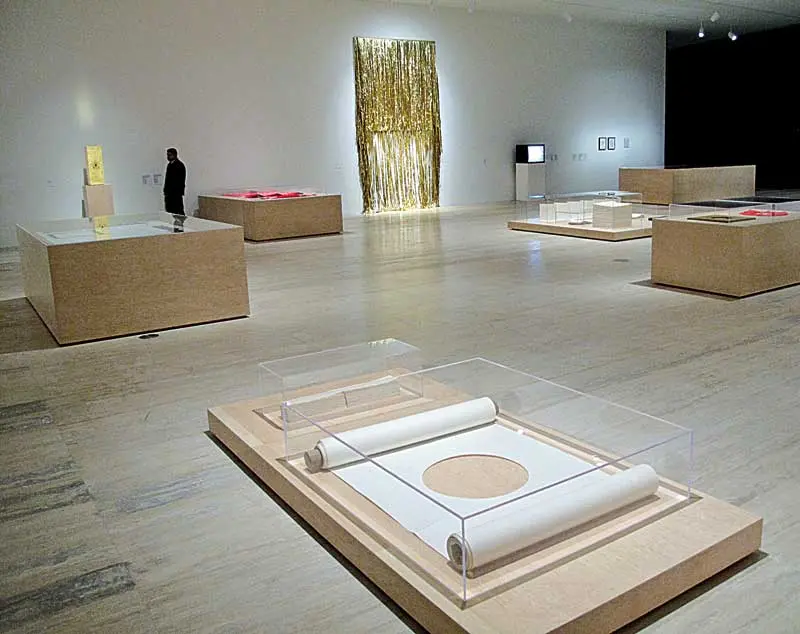
Aware of the postulates regarding parallel realities or dimensions made by quantum physicist Hugh Everett (1930-1982), Charpenel included in the show, alongside the collection’s holdings, a number of installations by Fred Sandback (1943-2003), highly minimalistic in nature, so that to walk around the show means to encounter Sandback’s delicate thread structures as they travel from wall to wall or from ceiling to floor, with visitors not noticing until the last moment when they are about to run into them.
This element of surprise that inhabits the gallery thanks to Sandback’s delicate works, entirely unrelated to the collection’s holdings with which they coexist, reasserts the connections that exist between objects created with different intentions and techniques of much greater physical presence and volume, and these barely perceivable works in thread that are, in the strictest sense, an exhibition within the exhibition.
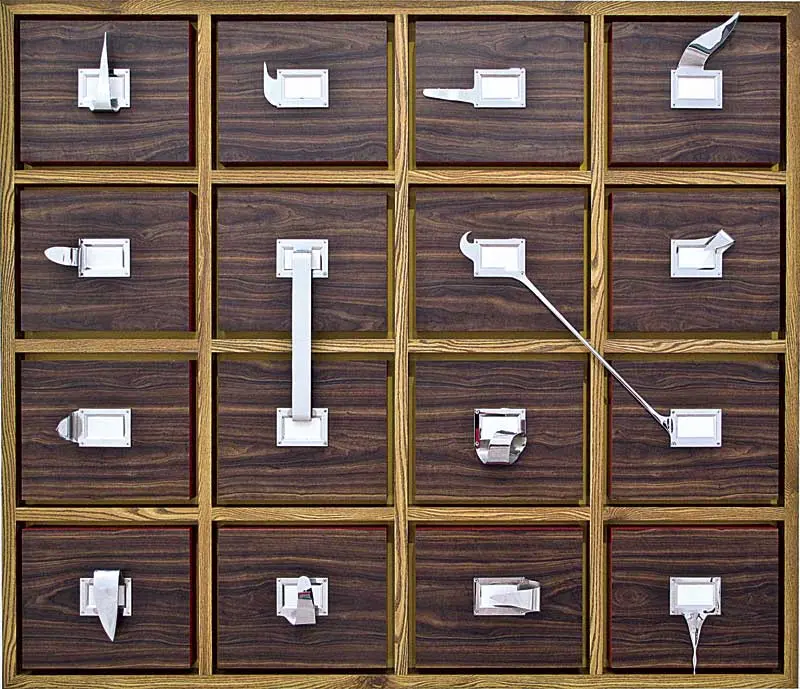
Seven works by Sandback suffice to question the customary linearity of an art exhibit and to assert the principle of dimensional simultaneity, which establishes, as the curator tells us, that two or more physical objects or perceptions can coexist in a single spatio-temporal scheme”.
In turn, Gallery 2 features James Lee Byars: ½ an Autobiography curated by Magali Arriola (curator of the Jumex Foundation) and Peter Eleey (curator and Associate Director of MoMA PS1). This is an unprecedented event, the first time that a collaborative effort between PS1 and Museo Jumex has its debut not in the New York institution but outside it.
The large corpus of works by James Lee Byars (1932-1997) includes everything from large format objects to tiny studies of an intriguing intimacy. His tireless quest for beauty carried him to New York, Venice, Kyoto, Bern, Los Angeles, and Cairo, where he died. In each one of his works, we perceive a ceaseless need to interrogate himself. So much so that the artist once said that “a question is the best statement of reality I know of”.
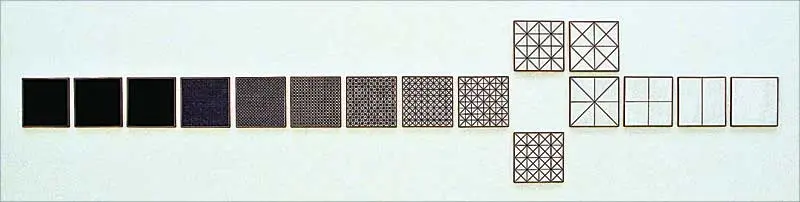
Objects, studies, installations, stand-alone works, and videos of actions are all included in this ambitious exhibition, undoubtedly the largest selection of works by this artist ever gathered in a single space. Throughout his life, Byars built around himself a large myth, turning his very existence into a constant performance; in this way, he became one of the most provocative figures in the art scene of the second half of the Twentieth Century.
Finally, Las ideas de Gamboa refers to the mythical figure of Fernando Gamboa (Mexico, 1909-1990), a mandatory point of reference in the field of museum management and cultural promotion in Mexico, with a great influence in the construction of the national imagination and the formation of public collection that remain key to the Mexican State’s artistic heritage. The show is accompanied by a book, also titled Las ideas de Gamboa, by Mauricio Marcin.
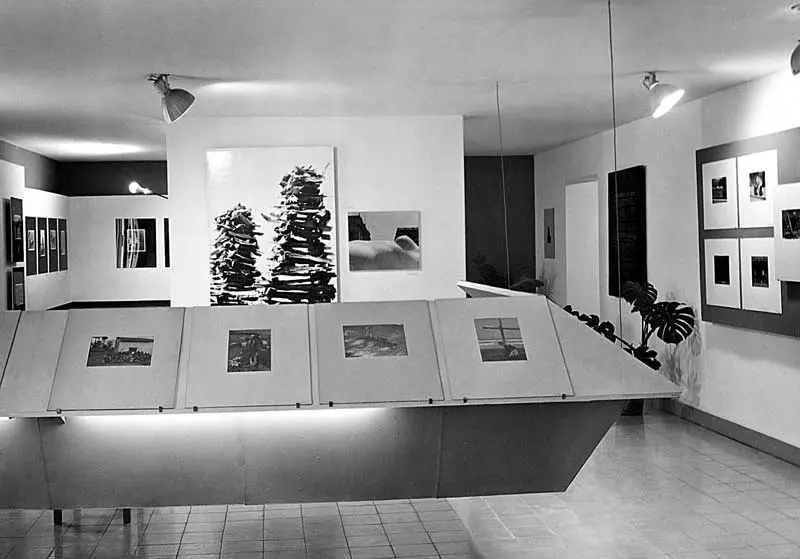
Gamboa’s discreet presence in Museo Jumex’s galleries pays unassuming tribute to a greatly relevant figure and reconstructs, using photographs on loan from Promotora Cultural Fernando Gamboa, some of his most significant exhibitions, set up in Gamboa’s own unique style, with benches for the audience and plants in his planters, objects he used in an innovative way during a time when such things were practically unheard of.
The birth of Museo Jumex, located in the Nueva Granada area (also known as Nueva Polanco, in reference to the trendy neighboring neighborhood, with its intensive commercial activity and high-priced real state), comes to complement Mexico City’s cultural offerings, where contemporary art exhibitions are generally incomplete and highlight, at best, the only segment of the vast universe of visual creativity both in the country and abroad.
Audiences have welcomed the new museum, opened in November 2013, which undoubtedly reveals great interest and knowledge among the new generations of new modes of expression, supported by a solid team of researchers and a well-stocked library. Congratulations.
* The images illustrating the text, except for the last one, belong to the Jumex Collection. Courtesy of Santiago Espinosa de Los Monteros. © Edeloseme.
SANTIAGO ESPINOSA DE LOS MONTEROS
Art critic and curator.