The four galleries of the
Museo de Arte de la Universidad Nacional were taken over by works in the
exhibition ¿Y creemos en el mismo dios?,
curated by María Belén Saez de Ibarra, based on the museum’s collection. The
selection of works were dated between 1948 and 2011, with Carnaval by Carlos Correa being the oldest and Variaciones sobre el purgatorio by José Alejandro Restrepo the most
recent. The time span between these two artworks—understood as a temporal,
cultural, and ideological gap—can be understood as a setting in which
Colombia’s contemporary history can be inscribed, because it was within its
boundaries that some of the most important historical, political, and economic
events determining the course taken by the country during the second half of the
Twentieth Century took place.
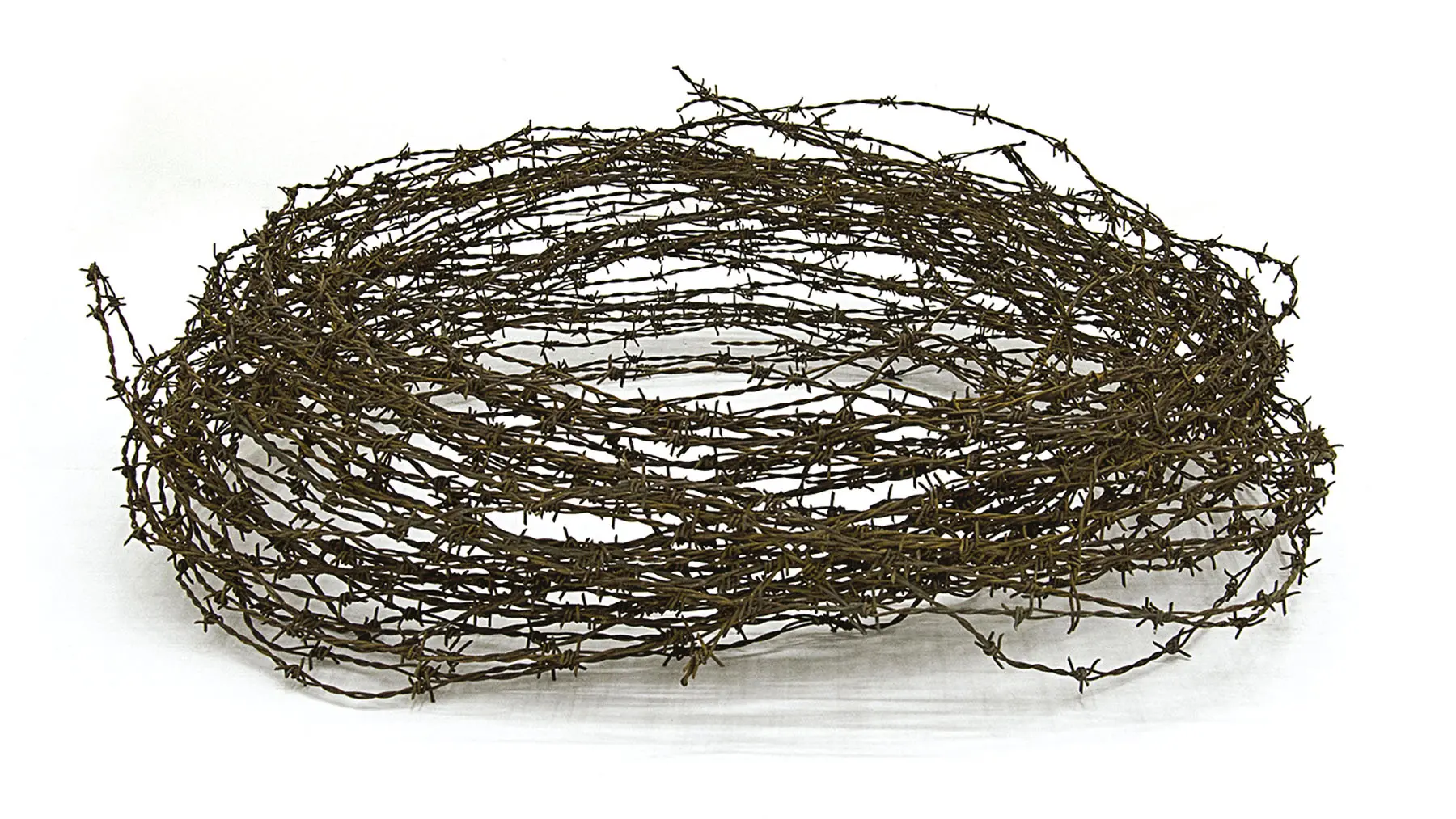
Active over the course of the little more than sixty years covered by the exhibition was a diverse group of artists that included, besides Correa and Restrepo, Clemencia Echeverri, Antonio Caro, Luis Paz (whose work lends its title for the exhibition), Beatriz González, Bernardo Salcedo, Feliza Bursztyn, Luis Ángel Rengifo, Juan Fernando Herrán, Delcy Morelos, Juan Leal Ruiz, Johanna Calle, Alvaro Barrios, and Miguel Angel Rojas. They are artists who come from different periods, stylistic movements, contexts, and conceptions of art. Yet they seem to have in common an element of solidarity with the victims of horror and injustice.
The curatorial narrative on which this exhibition is built has to do with an investigation of the different cultural representations able to bring forth the gaze of the victims of Colombia’s armed conflict, within the artistic practices that take place in the country. To make this exercise possible, the curatorial gaze seemed to highlight the heterogeneity of options art can offer to encompass the experience of horror. Reading the title of the exhibition, one cannot avoid thinking of the hegemonic power wielded by the Catholic church throughout Colombia’s history. Church power was for a long time, too long, to tell the truth, joined to political power, and perhaps because of this reason, a diversity of social actors in Colombia’s violent conflict throughout its history have proclaimed their faith in the same God present in the churches based on Christian belief. Yet, such faith has never stopped the implacable destruction.
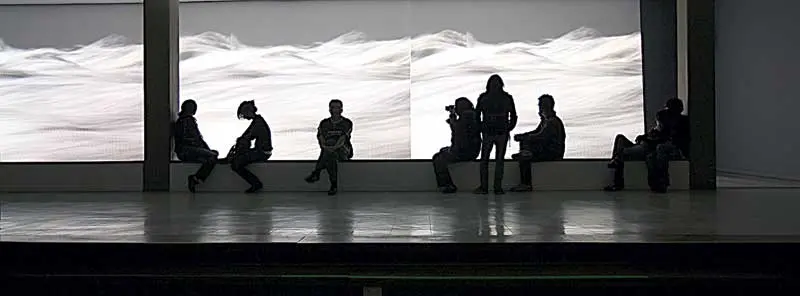
The museum’s Sala 1, it's largest and most versatile, was devoted to the generation of a dialog between two monumental, unsettling video installations. These were variaciones sobre el purgatorio #4, by José Alejandro Restrepo, and Treno, by Clemencia Echeverri. Both were created during the first decade of the Twentieth Century, and both coincide in a revision of the metaphorical, metonymic, and symbolic capacity of water, in connection with the architectural background and with a sound context.
In Treno, a word meaning “lament,” a large flow of water—recorded on the Cauca river—seems to submerge the viewer in the experience of being inside the turbulent current, pulled by it. Despite lacking any additional event, the subtle shifts in water levels and color, and the sounds it produces in its implacable acceleration, appear to suggest that something has been swept along and silenced.
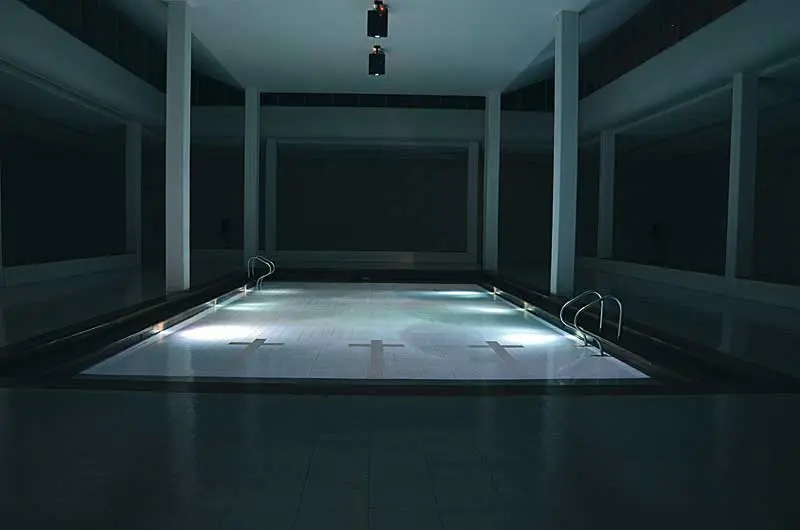
In Variaciones sobre el purgatorio #4, the image of a swimming pool is superimposed on an architectural feature characteristic of the gallery’s central area. The subtle motion of the water seems to suffocate an audio recording captured in the Colombian Congress as members were debating the adoption of a controversial Justice and Peace Bill sponsored by Álvaro Uribe Vélez. As we hear some sentences that stand out in the general murmur, the word “perdón” (“forgiveness”) appears and makes us think of the water as the material where we can purge our guilt or make amends for our actions.
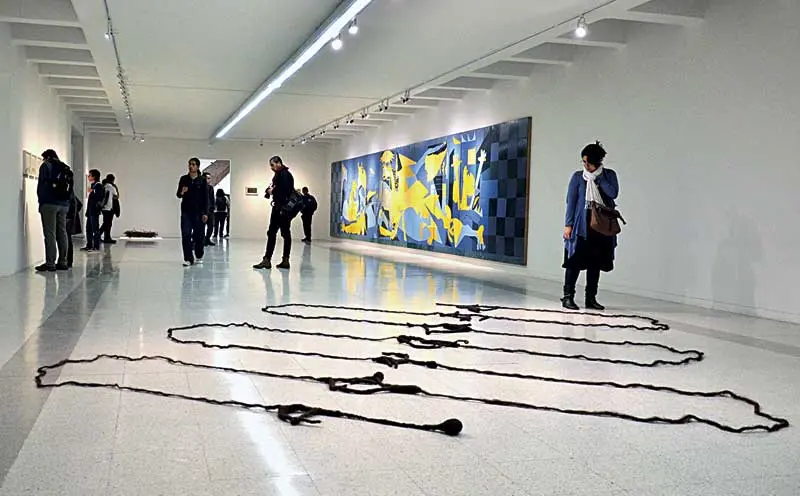
In the museum’s remaining three galleries, the curatorship proposed encounters between the works according to three different axes of articulation, which generated different situations in each case. In Sala 2, with the largest number of artworks, a connection between the experiences of the body, the territory, and death was suggested. Beatriz González’s Mural para fábrica socialista stood out for its scale and chromatic dimension. The work was conceived as a site-specific intervention at the Museo de Arte de Bogotá’s project room in 1981. It emerged from an appropriation of Pablo Picasso’s Guernica, adapted by the artist to a different format and transferred to another color palette, polychrome and lively. The materials used in its execution, as well as its finish, effectively simulated the appearance of ceramic-tile murals used in several architectural projects in the modern era.
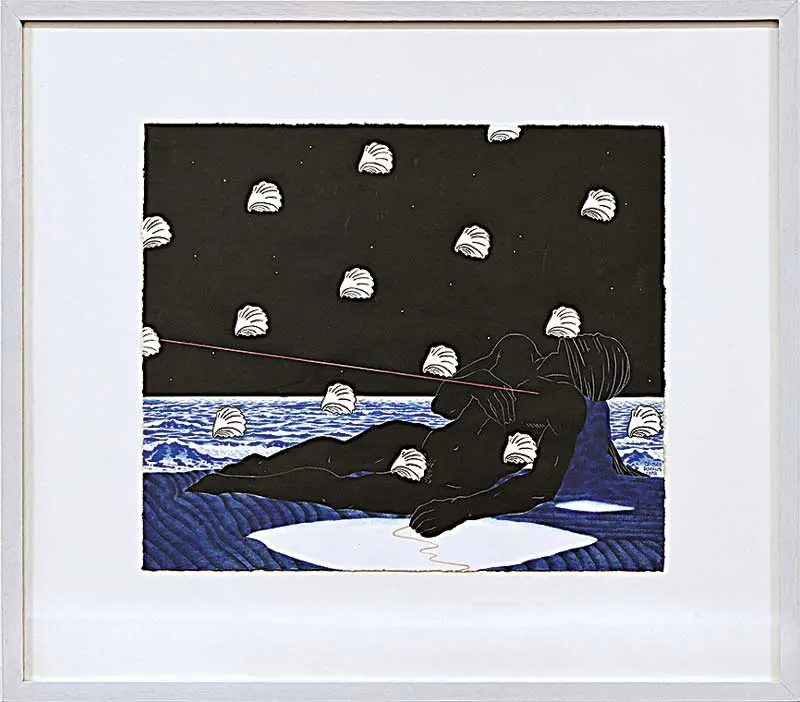
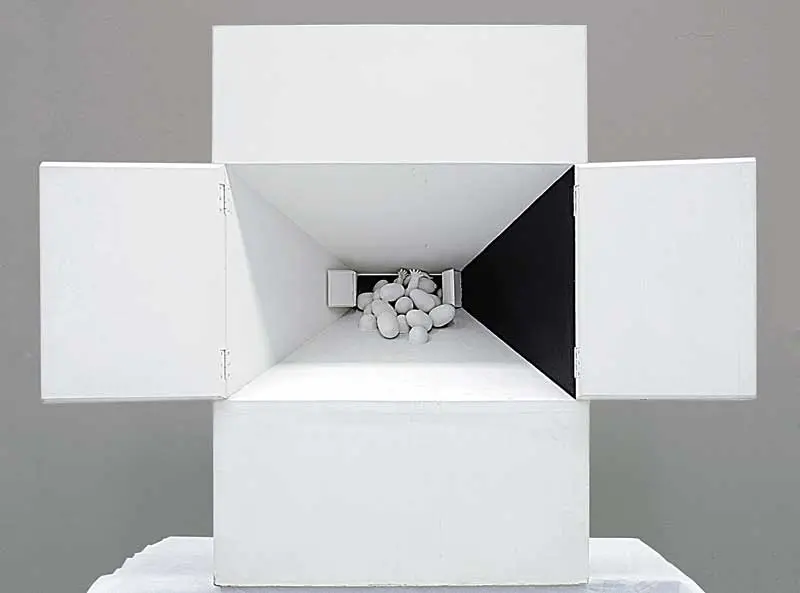
The themes and cultural references in Mural para fábrica socialista encouraged a dialog with the ideological and social implications of Luis Angel Rengifo’s and Luis Paz’s prints, seen in other walls of the same room. The allusion to the idea of mutilation present in these prints also posited a connection with Bernardo Salcedo’s work, Lo que Dante nunca supo – Beatriz amaba el control de la natalidad, formed by the assemblage of a variety of objects within a box set in the wall. Johanna Calle’s and Antonio Caro’s works, despite their wider field of reference, formed a cultural complement that functioned as the background for the art described before. In the same gallery visitors found Color que soy, by Delcy Morelos, and Sin título (7 objetos), by Juan Pablo Herrán, which, covering the space from one end to the other, provoked reflections about the horizontality of the body, in turn, mediated by Flexidra, by Feliza Bursztyn, situated on the floor between the works confronting the body with the issue of physical limitations.

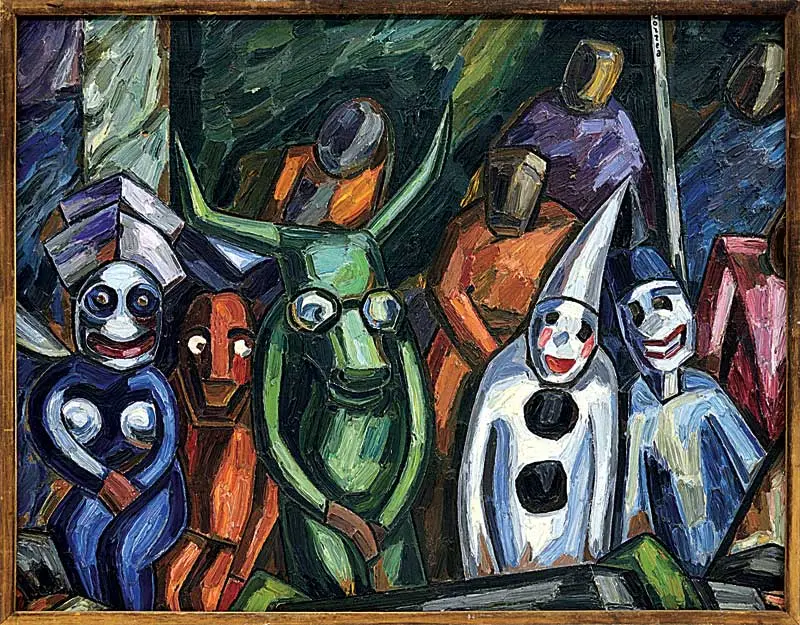
The museum’s Auditorium, despite its size, held only two works: Carlos Correa’s Carnaval and Juan Leal Ruiz’s La petite madelaine. These works, separated by 53 years and coming from even more distant conceptions of art, seemed intended to situate the viewer in the middle of a similar ceremony, between commemorative and sacrificial. The sound component in Juan Leal Ruiz’s work generated the sensation of a back-and-forth between the two spaces intrinsic to the two artworks.
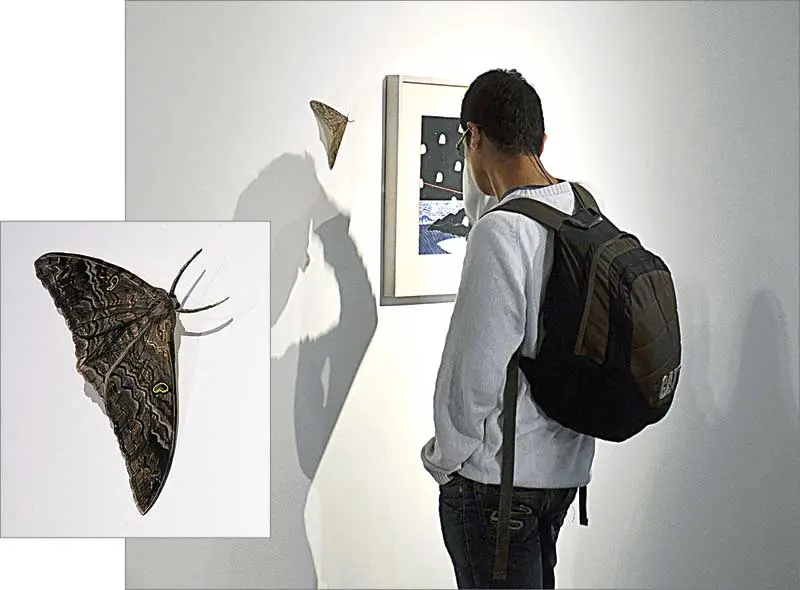
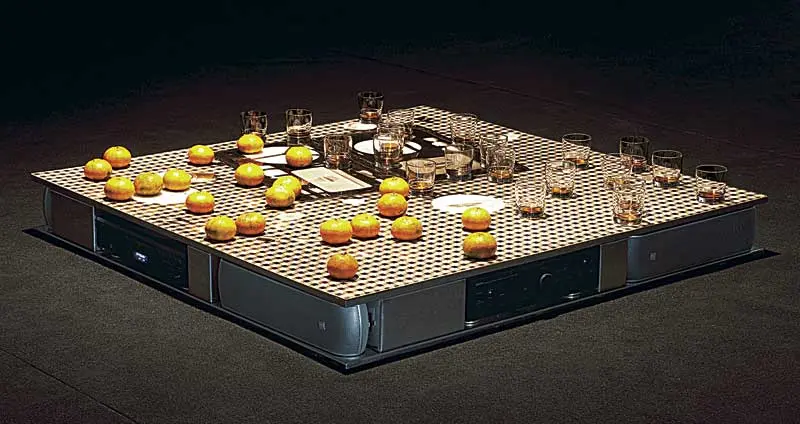
The museum’s Sala 3 proposed a connection between three works: la Visita, by Miguel Ángel Rojas; Sin Título, by Álvaro Barrios (allusive to Saint Sebastian); and Sepoltura coperta dal cielo, by Juan Leal Ruiz. La Visita, a mall painting, seemed to simulate the real presence of a black butterfly (a bad omen symbol, related to death) alighting next to a drawing by Álvaro Barrios. In the middle of the space was Juan Leal Ruiz’s installation, comprising what seemed to be candelabra with its candles halfway consumed. Looking at them more carefully, one noticed that there were fragments of texts on each of their bases. The technical card informs us that these are by Gabrielle D’Annunzio, considered a forebear of fascism and that the shape of the candelabra was generated by a fragmentation of the Star of David. In this way, different ways of alluding to martyrdom and death came together in the gallery and were contrasted with the ways in which cultural conceptions and beliefs negotiate situations and experiences of adversity.
The show was accompanied by a bibliographical exhibition, featuring several kinds of publications from the last 70 years of history, from reports and documents of the violent conflict in Colombia to academic volumes. Yet, the entire curatorial effort behind his exhibition seemed to point towards the validation of a return to the experience, knowledge, and ideas that can be put across by art’s unique ways of communicating, and in particular, those that artists deploy when they attempt, usually in vain, to establish some symbolic reparation of the horrors suffered by the victims of the kind of hatred of which only human beings are capable.
JAIME CERÓN