
An acute, narratively non-literary, non-textual, or post-conceptual, theoretical practice has been developing in the work of some women photographers, especially in Mexico, and particularly in Graciela Iturbide’s artistic practice. Is this work anthropological, continualist, revisionist, ideological, traditional, post-modernist? The answers to these questions constitute the critical note to the exhibition by Graciela Iturbide at the Spencer Throckmorton Gallery in New York, for which an accompanying catalog was produced that must be mentioned because of the two significant portraits that open and close the publication: Autorretrato en mi Casa (Self Portrait at Home, 1974) and Manuel Álvarez Bravo (the 1970s). Iturbide is an accepted value. The social, anthropological, historical, technical, and thematic qualities of her photography are indisputable. Is this a revisionist exhibition? Are the characteristics of these works presently relevant? Yes, they are, but at the same time some of the works—or photographic lines—may raise a few eyebrows among viewers. Will those who know her work be able to find something new in these proposals? Undoubtedly, but there is a temporal-spatial filter between those who know her work and the accelerated present. Those who do not know Graciela Iturbide’s work will find an immense discovery. How can this be? In short, not all of us have traveled the same route, taken the same trains, and walked the same landscapes.
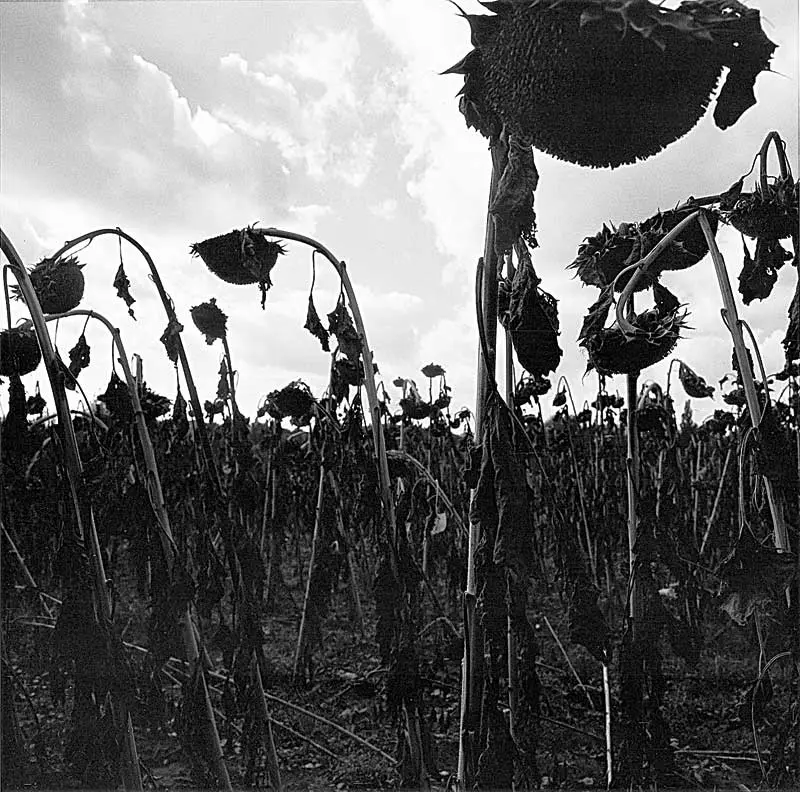
In their willingness to contribute to the knowledge of mankind, visual artists cater to the various structures, spheres, and paths of society. When photography is established, it also does it independently of the anthropological discipline. Graciela Iturbide is not focused on language or archeology but on human worlds and their social aspects—some prefer to qualify some of her works as ethnographies. Her work could very well ascribe to the synonym or facet of cultural anthropology that best understands it. Are Magic Realism, anonymity, the value of black and white, and the presence of women in nature themes that she has made her own? How much of this has Iturbide perceived and inherited from her teacher Manuel Álvarez-Bravo? This line of inquiry leaves a lot to be analyzed, but let’s focus on a few examples. While in his early works Álvarez-Bravo would report on urban reality, Graciela Iturbide approaches the portraits of Omar Torrijos with a different focus that is, nonetheless, also urban but anonymous. From early on Iturbide became interested in writing and cinematography; and the special and profound, landscape-oriented gaze of that photographer-filmmaker of the skies, Gabriel Figueroa, appears in certain works by Iturbide.
What is the reason for reviewing in a contemporary magazine the work of a highly recognized author who exhibits her work in major museums in London, Spain and Mexico? Having created her own serene and mysterious path, modernist, humanist and figurative artist, Graciela Iturbide, travels the world and dares to envision certain proposals that change the scale of values. Without neglecting women’s issues, ancient cultures, or the landscape, she also shows the influences of her experiences in Italy as the discovery of part of an articulated anchoring culture. Civitella (2001) and Lugo (2008), offer a mysterious and percussionist intensity. Arguably, they are the antithesis of the images of Mexico that catapulted her to fame in the world, in books and exhibitions like Nuestra Señora de las Iguanas (Our Lady of the Iguanas, Mexico, 1979) and Santa Maria Xadani (Juchitán, 1979), or her beautiful works centered on cemeteries and piano celebrations, brides and traditions of Mexico.
It is the first time that a great number of images by Graciela Iturbide are exhibited in the United States. This group of works was selected by Spencer Throckmorton—the gallery owner that represents her in the US—from her exhibition at the Museo Amparo in Puebla, Mexico, the exhibition in London, and, logically, from works in the artist’s studio. One of the winks Graciela Iturbide has included in her works can be observed in Texas (the US, 2009), where masses of emotions are replaced by a constructed theater, a stage with wood flooring, and a painted landscape—instead of all the beautiful natural scenery available in the US. But there is also the rigidity of the lifeless worlds made of plastic, isolated posts with public payphones where nobody looks into your eyes during a conversation, and where the characters are presented to the camera with a ridiculous natural innocence, like in Magnolia con Sombrero (Magnolia with Hat, Juchitán, 1986), Mujer Ángel (Angel Woman, Sonora, Mexico, 1980), and Barcelona (Spain, 1980); images that are like sharp hooks as heartbreaking as the sculptural visions of Eduardo Chillida’s Spain.
Graciela Iturbide has traveled the world but does not renounce her original early works. She concentrates on looking into certain phenomena of transmodernity in which the visions and values of life have changed. Without isolating these from the spirit that initially nourished her images, she defines and confirms them in a powerful and poetic manner, as she places her unblinking gaze upon women and the landscape.
GRACIELA KARTOFEL