The exhibition Indústrias
Poéticas, opened last November, presented the Brazilian public with an
opportunity to encounter the pioneering investigations of a multimedia artist
from the 1960s, 70s, and 80s, which brought together art, technology, and
communication.
Julio Plaza (1938-2003), born in Spain, came to São Paulo in 1973; he was an important presence in the local art circuit, as an artist, professor, and curator. As a professor, he worked in the Multimedia Department and the Communications and Art School of Universidade de São Paulo, where he became an important point of reference for the new generations of artists then emerging. As a curator, he was an important collaborator for the USP’s Museu de Arte Contemporãnea, where, alongside its director, Walter Zanini, he organized several exhibitions presenting innovations in the field of art and technology. Resulting of this collaboration with Zanini are the contemporary art shows titled Prospectiva 74 and Poéticas Visuais (1977).
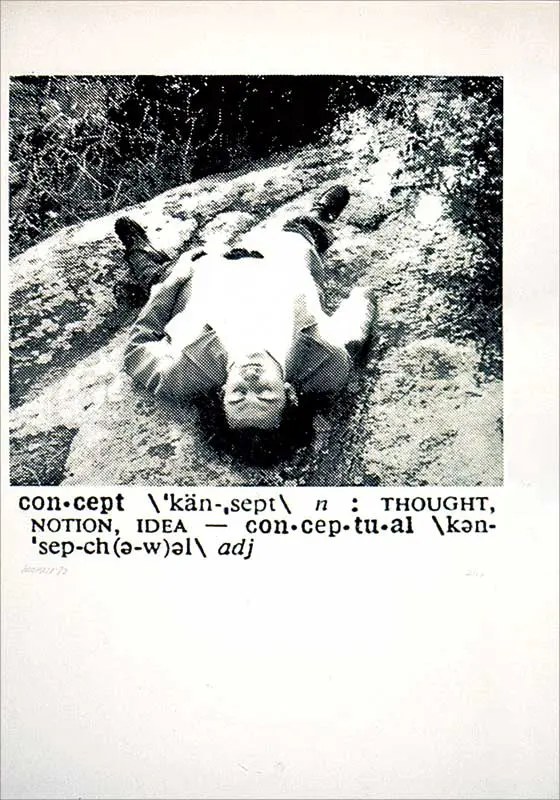
Plaza was an early adopter of the concept of “network” as a method for the construction of exhibitions and the circulation of art, and brought to the Brazilian museum exhibitions of postal art. Plaza lived for a while in Puerto Rico between 1969 and 1973 he was an artist-in-residence in hat country, from which he brought back the experience of organizing one of the earliest postal art events, the world-renowned Creation/creación (1972).
According to Cristina Freire, curator of this show of Julio Plaza works, the exhibitions he organized were based on the principle of communication and gave the museum a chance to amass one of South America’s most important public collections of international conceptual art. In this practice, the curator says, Julio Plaza “built language laboratories and inter-semiotic translations”; in these artistic exchanges, Freire identifies “a network built in a pre-internet era”.
Later on, and still in collaboration with Walter Zanini in the curatorship of the 1981 and 1983 biennials, Julio Plaza participated in the organization of the shows Arte postal (1981 Biennial) and Nova Media (1983 Biennial).
As an artist, he participated in the 9th, 10th, 17th, and 18th São Paulo International Biennials, and created urban interventions like his projection of poetry on a light panel in Vale do Anhangabaú, in downtown São Paulo. Besides de São Paulo MAC, his works are in the collections of MoMA (New York), Museo de la Universidad de Puerto Rico, Stedelijk Museum (Amsterdam), and Biblioteca Mario de Andrade (São Paulo).
Another field where Plaza also stood out for his excellence was the production of art books. Plaza understood publishing as a laboratory for language and exhibition, as well as a possibility of political intervention during the difficult era of dictatorial governments in Brazil. Plaza believed that such books could become a non-official channel for communication.
His art books are included in the MAC show. The curator used an interesting methodology for their exhibition: while each book is presented in a display case, as a work of art and as a document, it is also exhibited on the wall, reproduced by a plotter on hard plaques, blown up, page by page, so that the audience can have more effective contact with its contents. This favors the perception, by means of reading and observation, of the book as a unit.
The MAC exhibition presents Julio Plaza as a restless creator, a seeker after transformation, an artist who uses a variety of media to produce his works: from photography and video to telematics, as well as videotext and holography. For the curator, Plaza’s investigation explores the work of perception and the boundaries of the use of technological devices in the art.
Julio Plaza’s work also expanded to the editorial terrain, especially in his collaborations with concrete poet Augusto de Campos and artist Regina Silveira. Seeing and reading say Cristina Freire, alloyed, gives material form to the idea of creating new media for different interpretations and spaces.
It is important to highlight in this exhibition two publications: Reduchamp (1976) and (Poética política (1977) both by S.TR.I.P., the Portuguese acronym for the Union of Workers in the Fine Arts or Poetic Industries. These examples help us understand how, in fact, publishing was for Julio Plaza a field for experimentation for language and represented the potential for inter-media work, which gave the artist what he was seeking: a non-official communication channel and exhibition space in itself.
Graphic design and visual communication became important tools in Julio Plaza’s work. Between 1967 and 1969, in one of his Brazilian sojourns before settling definitively there, he had studied at the Escola Superior de Desenho Industrial (ESDI) in Rio de Janeiro. It was there that he met the concrete poets Augusto de Campos, Haroldo de Campos, and Décio Pignatari, and developed an abiding interest in Concrete aesthetics.
Julio Plaza’s video work also underscores his will to experiment with the technology available in the 1970s. The videos featured in the show were specially restored for the occasion.
The context created by the curator brings into relief Plaza’s innovative poetics in the field of conceptual art.
LISBETH REBOLLO GONÇALVES