The exhibition Pop Art. Figuración Estados Unidos-Venezuela, curated by María Luz Cárdenas, closed recently at Centro Cultural BOD. One of the most significant in the local scene for 2013, this show displayed two virtues—from which others of great importance derive—to wit: the research behind the curatorship and the selection of works, all coming from Venezuelan collections and many previously unseen by the local public.
The central goal of the exhibition was an appreciation of one of the most fertile modern art movements of the Twentieth Century produced in the 1960s and 70s, Pop Art. In that sense, the many facets of the movement in two different contexts, Venezuela and the United States, were considered. The show featured works by artists who preceded the emergence of Pop Art in both countries, as well as its later impact. The works on exhibit brought forth the movement’s conceptual and stylistic variants, encouraging the conclusion that this was an inherent characteristic of Pop Art: a movement that transcended geographical boundaries and presented variations according to the realities in each country.
This exhibition can be said to have been more than the analysis of a given artistic era. The presence of individuals and pre-existing manifestations, like for example Marcel Duchamp in the North American case, acquires great significance. Duchamp was among the first European artists to reach the United States fleeing from WWII, and alongside other exiles and a cohort of Americans hungry for novelty and experimentation, gave shape to a new New York-based avant-garde. The way in which the concept of the Ready-Made transcended Duchamp’s initial sphere is palpable; thus we see it, under a different perspective, in the first barrel used by Rolando Peña to launch his famous series around the topic of oil extraction. Other precedents are found in Robert Rauschenberg’s and Jasper Johns’ works on paper, with the artists taking part in what was known as neo-Dada.
The inclusion of these works prompts a reflection about the importance that graphic media had for Pop Art practitioners, as they experimented with them and used new materials and procedures. At the same time, both artists gave new value to the image, in particular with Johns’ work with iconic images (such as the US flag) emerging as a distinctive seal for his style. Another Pop Art precedent included in the exhibition was Larry Rivers, who came from the American gestural tradition and so worked with an expressive spontaneity towards a figurativism that incorporated elements of everyday life as well as historical and artistic references.
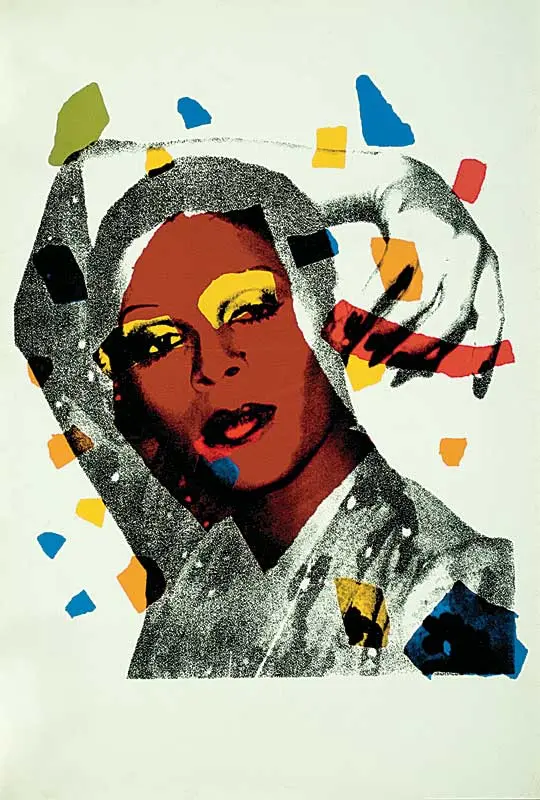
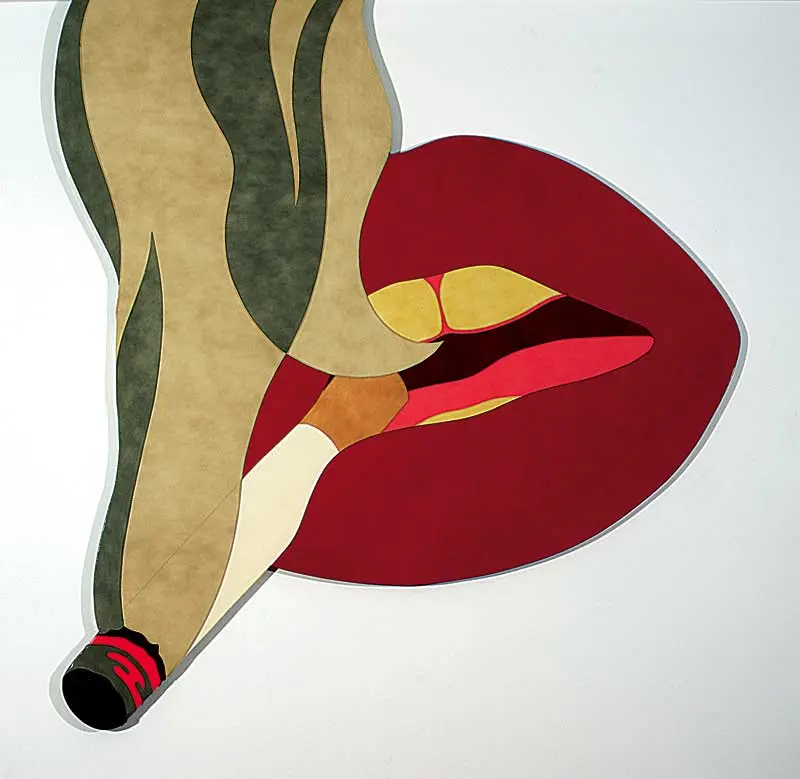
An important fact to note is that Pop Art emerged in both countries as a reaction to two kinds of abstract art that are perfect opposites: against Abstract Expressionism in the US, and against Geometric Abstraction in Venezuela. Nevertheless, there were common conceptual and stylistic elements. The most important among them: a renewal of figurative art that connected it closely with surrounding realities. For that, it was necessary to also renew the expressive resources to be deployed: first, recovering the supremacy of the topic, connecting it to everyday elements such as urban landscapes, television, advertising, popular customs, and images. In the United States, it was Andy Warhol who made art, though his use of iconic images of his country’s popular culture (such as Campbell’s soup cans, Coca-Cola bottles, portraits of Hollywood stars, among others) a reflection of US culture. The identification of art and life was so deep that it produced not only art made in America, but an American art, as the curator points out. There was, for the first time, an identification between an artistic style and a lifestyle, and the images thus created became emblematic of US culture. Such is the impact of American Pop Art that it was incorporated into other genres, such as literature, film, music, mass media, drama, and even couture. In the case of painting, the images are characterized by their clarity and communicative capacity, and by being produced in “pure, stark, phosphorescent colors with industrial-use associations,” generally without a volume effect due to their suppression of chiaroscuro. On the other hand, there was interesting experimentation with graphic techniques generally applied in silk-screening, collage, and photography. Adding to this were techniques coming from advertising, comic books, and other mass genres. Alongside the artists mentioned above, the show featured key works by Robert Indiana, Tom Wesselman, Jim Dine, Red Grooms, George Segal, and John Clem Clarke. They were considered representative of Pop Art in the United States.
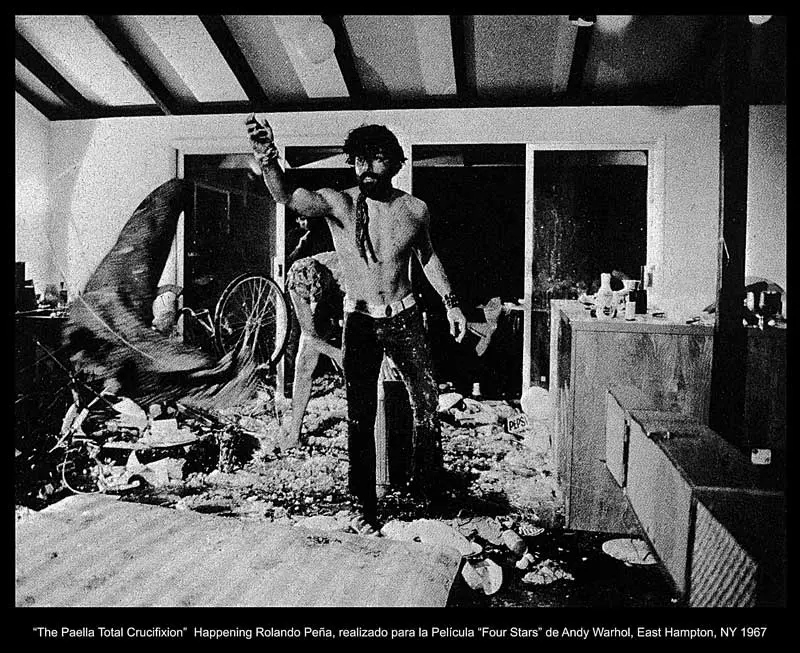
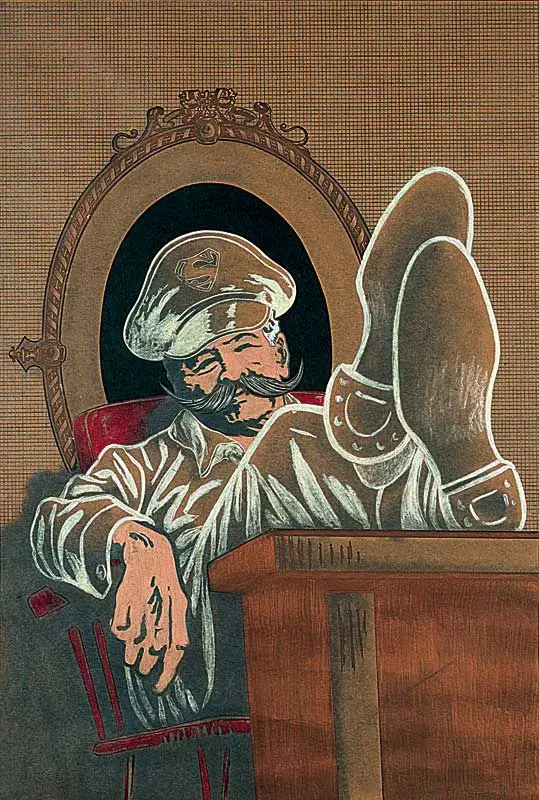
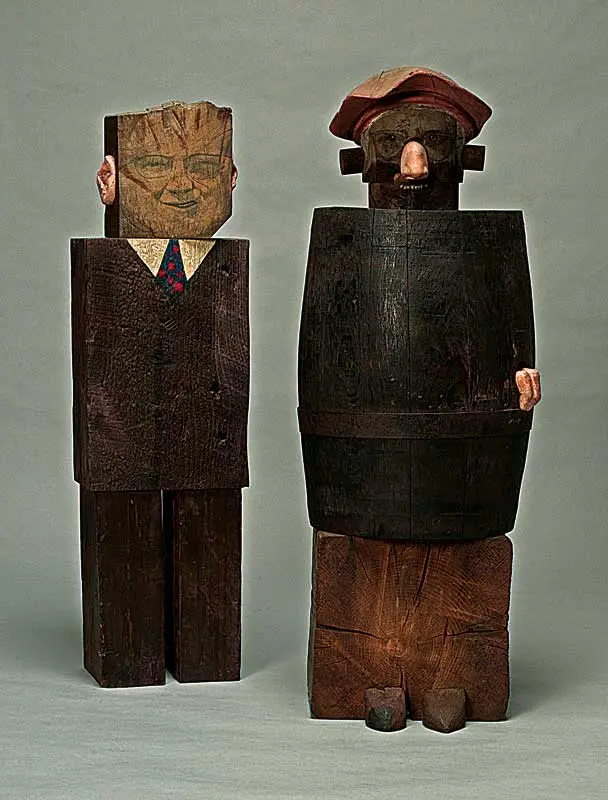
In Venezuela, the movement evolved in a highly diversified way. As a precedent, a drawing by José María Lares, a Venezuelan illustrator and graphic designer from the early decades of the century who was seen as a precursor by the curator because of his experience in advertising and his creation of covers for significant magazines, which can be connected to a Pop Art aesthetics. A special place is given in the exhibition to Marisol Escobar and Rolando Peña as representatives of Venezuelan Pop Art. Escobar’s work transcends the local sphere not only because of her residence in the US but for her unmistakable sculptural style. Like Peña, Escobar met Warhol and worked in one of his films. Her work, usually in wood, features a highly personal style, recreating characters unique to the period with a great sense of humor. Peña, on the other hand, lived in Manhattan, worked in film with Warhol, and his work was not only pioneering in Pop Art and conceptual art but also developed the first happenings in a Venezuelan context, as well as performance-art experiences in the 1960s. His series Santeria, exhibited here for the first time, are collages that integrate images both from popular religious beliefs and the history of world art. His participation also includes a series of photographs of film productions with Warhol.
The selection of works for this exhibition is significant not only for their quality and the fact that some of them have never been seen before but also because they rescue from oblivion a number of relevant artists active in the country during the 1970s. This is the case of Nelson Moctezuma and Luis Domínguez Salazar. The former was one of the most outstanding draftsmen in Venezuela towards the end of the decade, who worked with the language of the comic book and illustration to create an oeuvre that was highly critical of US policies (the figure of Uncle Sam) and at the same time deeply rooted in the local context (dictator Juan Vicente Gómez, to give an example). Luis Domínguez Salazar’s work, meanwhile, is not widely known, in particular this Pop series. This artist is represented by works that bring him notably close to the preferences of Pop Art with allusions to comic book images, like the American flag.
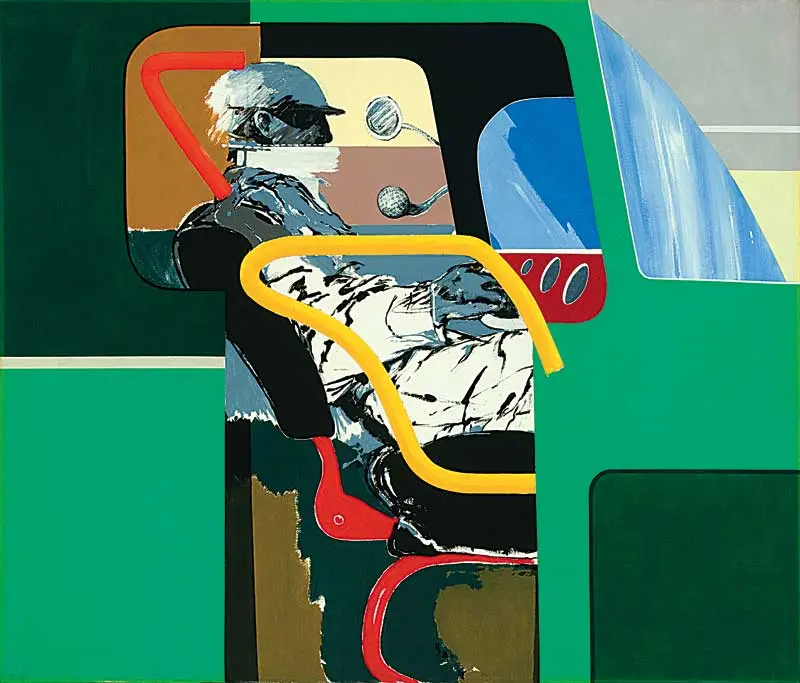
The selection is complete with the exhibition of memorable works such as José Antonio Dávila’s, an artist who had previously worked in a socially-themed style and in the 70s developed his Cabinas series. These paintings are associated with Pop Art procedures by their outlining of figures—representing workers immersed in their labor—and, of course, their use of flat, strident colors. For his part, caricaturist and painter Pedro León Zapata has been able to bring his audience closer to the surrounding reality. His humorously titled Monóxida Lisa sculpture represents the frontal part of a taxicab with two occupants, one of them a reference to the Mona Lisa.
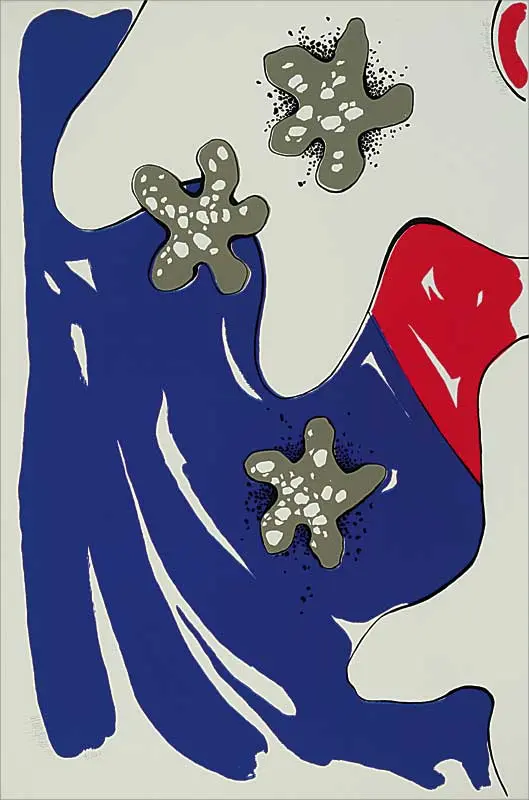
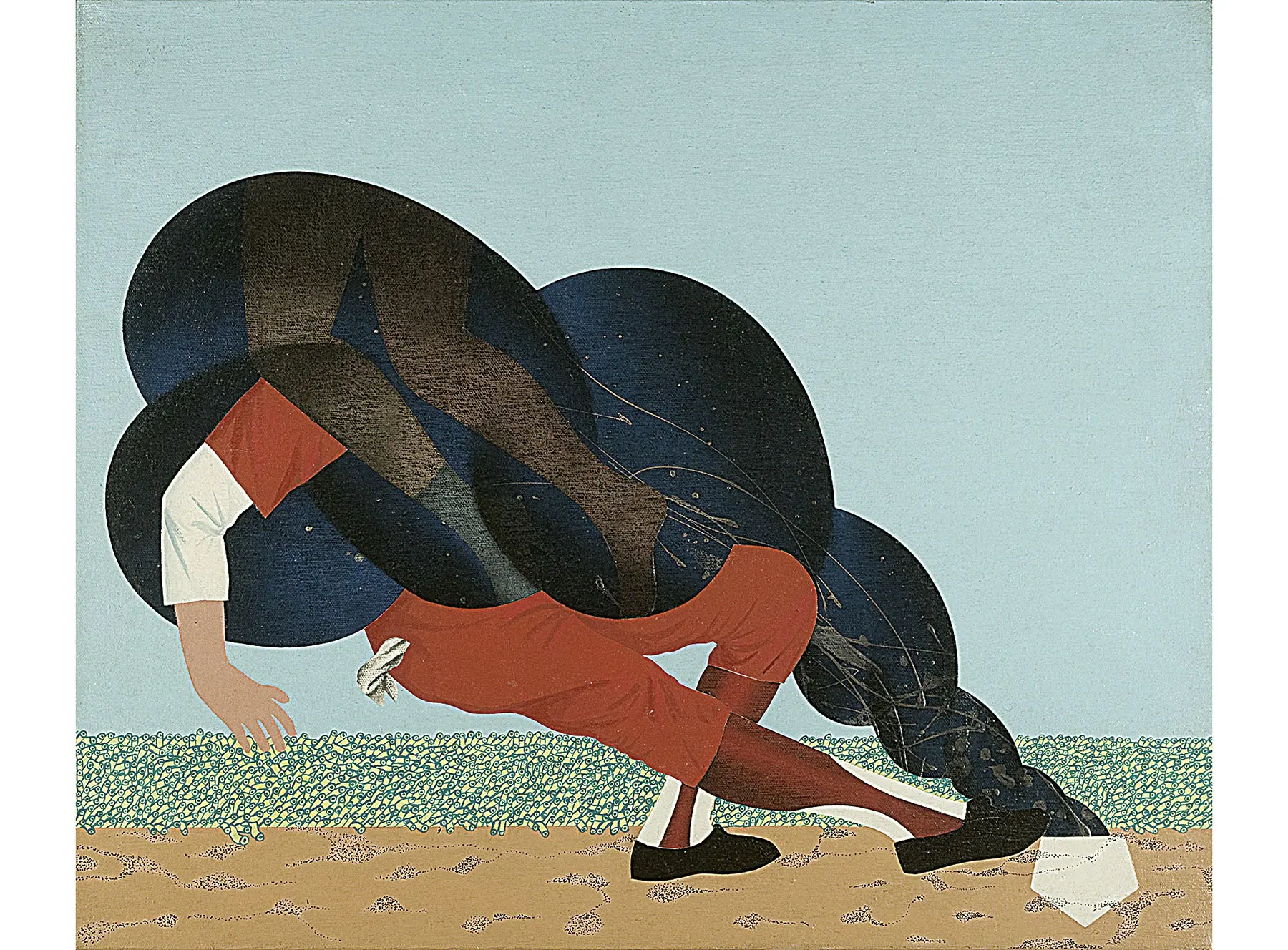
José Campos Biscardi’s figurative art deserves special mention for his incorporation of elements both from Pop Art and surrealism and what is known as New Figuration. Also, his work is inscribed in the genre of the fantastic by joining dissimilar elements (clouds, fragments of bodies, pieces of landscape) treated with forceful, flat colors, and great humor. Equally emblematic is the work of Margot Römer, who began to work with the national flag in 1978, using strident colors and unusual shapes. Both her painting and her graphic art have tirelessly explored the metamorphosis of the flag and one of its constitutive elements: the star. The assemblages and paintings created by Carlos Zerpa were also given significant space in the exhibition. Zerpa began his career in the 1960s as a conceptual and performance artist in Valencia, Carabobo state. Religious themes made into fetishes are a constant in his assemblages and body actions, and his works present a strong cultural syncretism (art history, religion, rock music, etc.). These works in a way underscore a Venezuelan idiosyncrasy.
Finally, the exhibition took account of the repercussions of Pop Art in later decades. Among Venezuelans, Jacobo Borges, also represented by a work from the 1970s, had a prominent place with two works dated in 2011, experimental in that his pictorial vitality and his whirlwind of color are brought into digital media. Meyer Vaisman, meanwhile, parodies, decontextualizes, and reconstructs cultural images in ways that question the “consumption” of contemporary art. Completing the selection of recent and memorable works by notable artists in the local scene are selections from Jeff Koons, Kenny Scharf, and Donald Sultan.
*All photos in this text are by Reinaldo Armas.
SUSANA BENKO