
Ir para volver (Leaving to return) was the
title chosen by curators Jacopo Crivelli and Manuela Moscoso for the 12th
edition of the Cuenca Biennial. The phrase is common in Ecuador, where it is
used to signal a situation of temporary absence, a departure the return from
which is as unpredictable as it is imminent. The title suggested from the start
that ideas of transit and circulation were to be the Biennial’s central axis.
In the words of its curators, the Biennial harks back to the ideas of the
Caribbean thinker Édouard Glissant concerning a “knowledge that emerges from movement and from relation”, which translated into a
heterogeneous yet felicitous selection of works that used their author’s own
displacement as a basis for reflection, used or appropriated techniques and
materials from the local context, or explored economics, migration, and
commerce. This chronicle attempts, first of all, to note some important
presences in the event, and secondly to reflect on the project of such a
Biennial in the city of Cuenca on the basis of its relationship to other initiatives
and the emergence of new platforms that are giving new dynamism to the
contemporary art debate in Ecuador.
The works
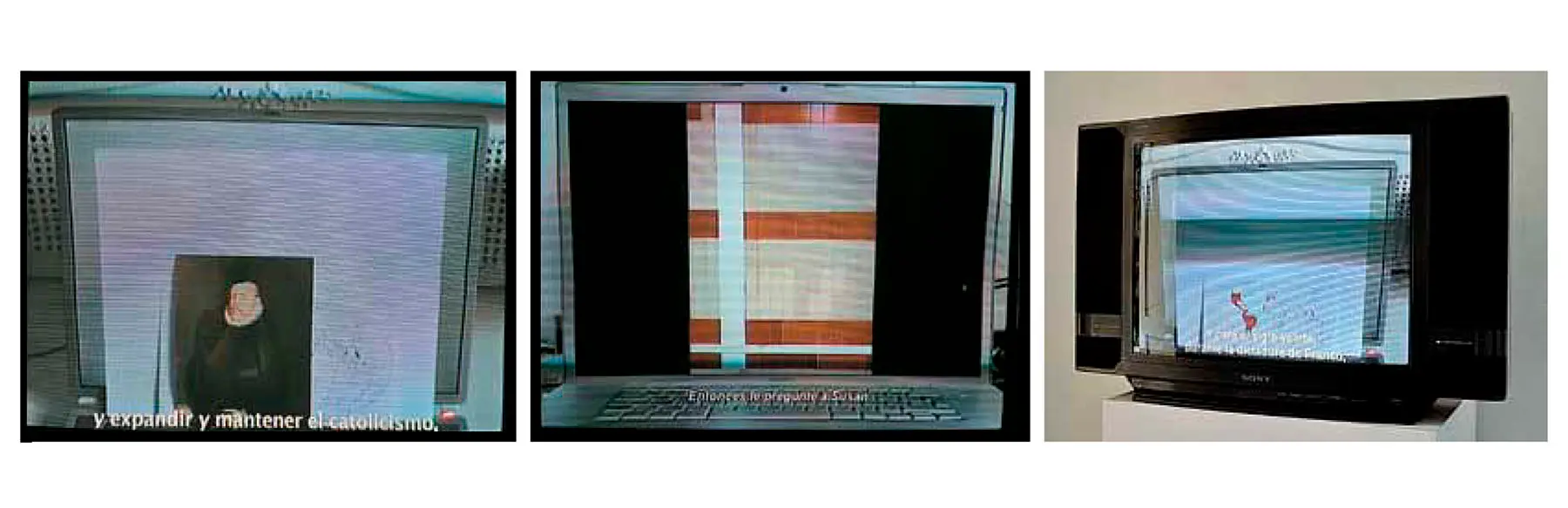
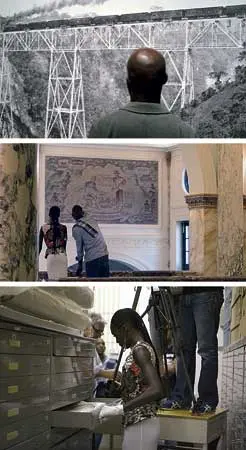
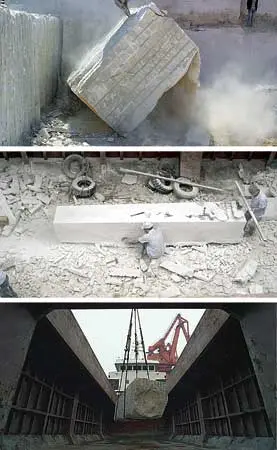
Ir para volver made a safe gamble on works that are really solid and allow viewers to move with fluidity and solvency between the various spaces. Many of these “strong” works placed an accent, precisely, on the circulation of images and bodies associated with economic and political processes, and in other instances connected to dialogs with the past or with the non-human that invert our ways of imagining time and space. One of the best works in the Biennial is Folklore II (2008), a video by Venezuelan artist Patricia Esquivias, where, by means of a kind of lecture and visual map of clippings and images, the artist establishes connections between Philip II King of Spain (Sixteenth Century) and the Spanish singer Julio Iglesias. Esquivias does not limit herself to analyzing these two characters, but emphasizes how behind them the images of the “sun” and of “gold” play a decisive role in the geopolitical construction of Spain and its historical ways of projecting imperial power. Another notable work is Wendelien van Oldenborgh’s installation La Javanaise (2012), which analyzes the relationship between a Dutch textile company, colonial history, and the contemporary African market. In the video, model Sonja Wanda and the former model and artist Charl Landvreugd engage in conversation at the Royal Tropical Institute (formerly the Colonial Museum) in Amsterdam and reflect on the effects of fashion, the body, colonialism, the market, global aesthetics, and performance art. Albanian artist Adrian Paci’s The Column (2013) is another high point in the exhibition. It shows the journey of a giant block of granite onboard a large ship that sets out from China; during the sea-going expedition, the granite is sculpted into a Roman column. Transformed into a temporary workshop, the ship illustrates capitalism’s demand for maximum efficiency, to the point of the journey itself—usually considered not productive in economic terms—became the main space for the exploitation of cheap labor and the production of commercial goods for global consumption.
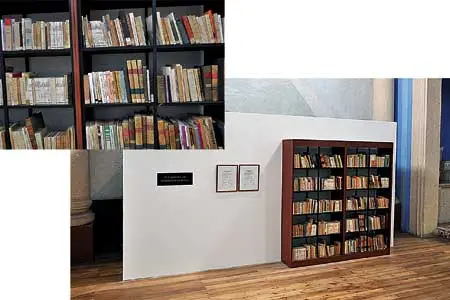
In works like Van Oldenborgh’s or Paci’s, the very idea of “leaving to return”, or of migration and displacement, reached its harshest social connotations, as it is precisely the traffic of these (non-European) bodies that signals the way in which coloniality continues to operate in the contemporary world. Another work that indirectly alludes to this is The concise book of application forms (2009), by Turkish artist Meriç Algün Ringborg. It is an encyclopedic compilation of all the visa application forms in use in the world. The forms not only show the requirements imposed by every nation-state in order to authorize the entry of foreign citizens, but also unveil the image of a highly bureaucratized, xenophobic world, permanently distrusting anything that threatens to shake up the existing modes of understanding identity, the social body, and borders. For its part, the work of Cuenca native Juan Pablo Ordóñez recovers a fascinating audiovisual archive of migration. His proposal is a compilation of “video-letters,” tapes recorded between 1970s and the past decade by Ecuadoreans who migrated and used the medium to communicate with their relatives and friends. Ordóñez is developing this project in collaboration with Melina Wazhima, as the collective Ñukanchik People, through the AMAME (Archive of the Audiovisual Memory of Ecuadorean Migration, in its Spanish acronym) program, which consisted of the compilation of all such memories of migration. Besides providing the public access to the archive at the library of the Benigno Malo school (one of the Biennial’s sites), Ordóñez’s action titled Déja Vu consisted of performing live some of these video-letters.
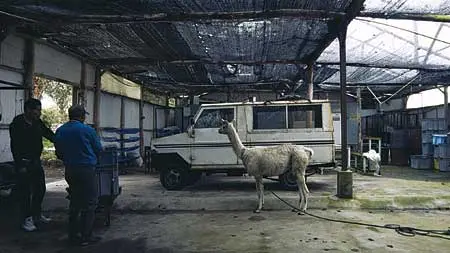
Another important work in the Biennial was Video Trans America, an installation by Juan Downey, a monumental work consisting of the documentation of a series of journeys to different sites in the Americas (Mexico, Guatemala, Peru, Bolivia, and Chile), recording native cultures and generating spaces for the local discussion and feedback of its audiovisual register. The work, however, suffered from a crowded display and inadequate equipment which make it very difficult to watch every video, and omitted references to the place where each video was recorded. Another work created in the logic of displacement was Half Way, by the Quito artist Adrián Balseca, which features a car or the Andino male, Miura 1977 model, whose gas tank has been taken out; the car is pulled by different means (horses, other cars, tractors, trucks, etc.) along the route from Quito to Cuenca. The Andino was the first automobile assembled in Ecuador in the 1970s, in the midst of a military dictatorship, and in this work it becomes an allegory of an economic model associated with truncated modernity.
Another interesting set of works focused on dialogs with non-human entities, and one highlight among them is Daniel Gustav Cramer’s project Ghost (2010), which compiles over the thousand narratives of paranormal encounters that took place in different places throughout the United Kingdom. Also, Opera Onowoka (2014), a performance by Ecuadorian artist Saskia Calderón “winner of the Biennial’s main prize”: a musical piece “produced in cooperation with spirits, following a Huorani cosmology.” After a period of research in Ecuador’s Amazon rainforest, the artist decided to create an opera that consists of the enunciation of the names of dead beings, in an intense performance. This was one of the few works that explicitly situated the body as a vehicle for invocation and critical contestation, besides alluding to issues of geopolitics and identity through movement and voice.
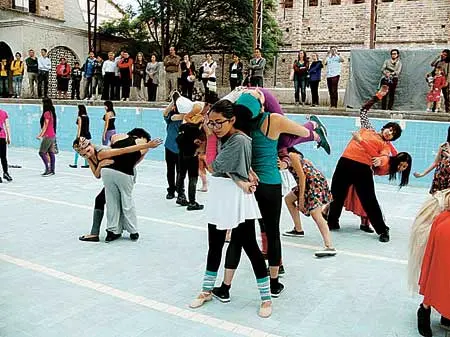
Perhaps this was one of the Biennial’s most noticeable absences: it lacked works that dealt with the issue of “coming to return” using the body’s own language, gesture, or performance. In that sense, the work of Italian artist Marinella Senatore, The School of Narrative Dance. Cuenca (2014), was precise. For some time now Senatore has been the driving force behind an alternative Dance School where education takes place through experimentation and play. The school is an open and horizontal process of exchange based on the languages of dance and drama, investigating what is possible to narrate through them. Senatore established a working process with the Benign Malo school community, which resulted in a series of dance and music experiences in public spaces.
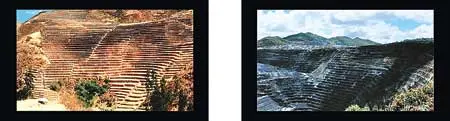
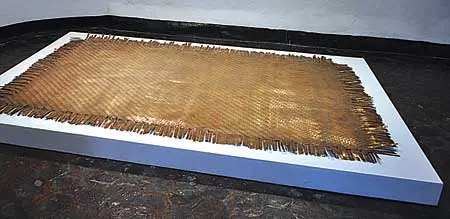
Another set of works revisited a certain modernist or formalist legacy, on the basis of which it posed a series of questions about the processes of knowledge production, modes of representation, and what aesthetics is able to communicate. The project Abstract Specific/Specific Abstract (2014), created by David Steegman Mangrané in collaboration with Benjamin Krammer-Mayer, is an exploration of abstraction as a language. For the project, Steegman and Krammer-Mayer sought the collaboration of artists Mariana Castillo Deball, Amilcar Packer, Raimond Chaves and Gilda Mantilla, Max Uhle, Jorge Juan, and Antonio de Ulloa, who created a series of graphic works where abstraction became an instrument to investigate reality in dialog with other disciplines. As a critical comment on certain aspects of the minimalist legacy, The weave (2013), Ximena Garrido-Lecca’s sculpture, uses several copper strips to weave a typical handcrafted mat, which the artist accompanies with a video titled Mineral deposits (2013), which associates images of the neglect of rural areas that is a consequence of the accelerated processes of an extractive economy in different areas of the Peruvian Andes. The weave uses pure copper, the mineral as extracted from the earth, to produce an object that evokes in a direct way a local memory and an artisanal aesthetics that are under constant threat.
The Biennial and its context
This 12th Cuenca Biennial clearly consolidates the path towards internationalization already insinuated in previous editions. The Biennial is one of contemporary Ecuador’s most significant platforms for the exhibition and the discussion of art. Perhaps it is not entirely erroneous to assert that Ecuadorean art is yet to fully enter the international narrative of Latin American art that has been built since the 1990s. This is evident in the intermittent absence of Ecuadorean artists in the large-scale narratives and exhibitions that have given shape, over the past twenty five years, to the way in which art from the region is understood and interpreted. One absence that has nothing to do with the (very high) quality of the work produced in the country, but with how apparatuses of power, circulation mechanisms, and visibility operations have been articulated in the region.
In fact, this seeming isolation, which for some may be something to lament and a reason for dissatisfaction, has been used by a variety of groups and independent initiatives to articulate spaces for artistic production and critical debate from a site of difference. Ecuador’s art scene, as happens in other Andean countries with a strong indigenous presence, finds its richest and most productive moments precisely in the tension between the desire for insertion in the transnational model or art and the urgency to construct fiercely local platforms that situate the debate within coordinates of one’s own. In that sense, it is important to look not only at the Cuenca Biennial, but also the parallel choreography of different spaces and agents in Ecuador, which opens up a question about the possibility of a discussion that imagines a different globality, a microglobality from the provinces.
Despite having a cultural system that is much more decentralized than its counterparts in some other countries (Peru, for instance), Ecuador does not have an established local market or museums that are representative of art’s new globalized power and could inscribe it in the network of institutional exchanges that has started to function actively during the last decade in Latin America (through institutions such as the Pinacoteca de São Paulo, the MALI in Lima, the Banco de la República gallery in Bogotá, the MALBA in Buenos Aires, and others). Thus, the Cuenca Biennial has been the sole local platform for a dialog between local art and the production of Ecuador’s neighbors since the late 1980s.
Yet, despite the fact that Ecuador’s art scene is relatively unknown in other capitals in the region, it is precisely there that a series of notable, bold initiatives are being forged that seek not to be assimilated into the parameters of global good taste, but, on the contrary, are attempting to generate alliances with other microcommunities and to make the debate about art’s participation in public life more complex. In fact, the organization Cuarto Aparte, an autonomous contemporary art event held in parallel to the Cuenca Biennial’s inaugural activities, illustrates the attempt to seek points of convergence and divergence from the Biennial’s own debates. Cuarto Aparte is an independent, self-managed platform that was launched in 2009 and is organized through artists, groups, and producers from several cities in the country; in this edition, it hosted a series of workshops, projections, exhibitions, and debates that definitely enhanced the Cuenca experience. Also significant is the support of other spaces that helped the Cuenca Biennial gain greater visibility, as is the case of the important management contributions of No Mínimo Gallery — an outstanding emerging space in Guayaquil—which was able to bring a significant group of collectors, gallery owners, and international curators to the Biennial.
Equally surprising is the dynamism achieved by cities like Quito, particularly after the establishment of the Centro de Arte Contemporáneo (CAC), an exceptional case in the production and debate of the arts from the public sector, with an international project that involves debates focused on ecology, decolonization, sexual dissidence, freeware, indigenous cultural practices, among others. I say “exceptional” because it is uncommon to find institutions with a political drive of this kind within the state apparatus, moreover with the necessary autonomy to define contents and alliances with other collectives, as is the case, for instance, with the strategic support that CAC gives the Diferencial Arte-Tecnología Project, an experimental space centered on the possibilities of technology in contemporary social life. Seeing how quickly Quito’s Centro de Arte Contemporáneo has consolidated shines a ray of hope on the difficult task of pushing forward public policies and models of regional management that understand art as a decisive instrument in the transformation of civic debates and as an important element in the construction of a model of the commons. The CAC joins in this way other experimental projects in Quito, such as the La Selecta collective, which explore the relations between art and popular culture; the Oído Salvaje collective, one of the most interesting initiatives in sound and political experimentation in Latin America, and even non-artistic initiatives that have nevertheless attempted to see the arts as a mode of contestation and empowerment, as is the case of casa Trans and Proyecto Transgénero, a space of struggle against the discrimination of transsexual individuals and also a space for the formation of a renewed post-feminist activism. One could also note No Lugar, a space of exhibition and residence, which has begun to fill the void left by Ceroinspiración after its closure in 2012.
In this context, the Cuenca Biennial can be seen as one more element in the complex machinery of the contemporary scene in Ecuador, where several of the projects mentioned here are significant for the way in which they connect with local urgencies. What takes place then is a complex negotiation from the spheres of the micro and the macro, from the institutional to the independent, here the demands of international visibility clash with the need to imagine an alternative, locally self-determined debate. It is precisely such tension what makes Ecuador one of the richest contexts in terms of critical artistic projects, something that is not always possible to perceive from metropolitan aesthetic radars and from the parameters of good taste as defined in the art world’s global capitals.
MIGUEL A. LÓPEZ
Writer and researcher, Lima, Peru.