
– Another biennial?
– Another biennial!
– Another biennial...
– Another biennial?
Yes, another biennial established its presence and jumped to center stage. BIACI is the acronym from the International Biennial of Contemporary Art of Cartagena de Indias, whose program unfolded from February 7th through April 7th in the eponymous city in Colombia’s Caribbean coast. From the start, the biennial’s offerings were stimulating and promising, given who was involved in the organization and the roster of internationally renowned participants.
Before getting to it, though, it seems essential to take a detour around the implications of “the biennial” as a theme. No other format for the exhibition of artifacts and/or contemporary aesthetic experiences has achieved so much empathy among artists, audiences, and producers as that enjoyed by the famous “biennial,” a phenomenon that has even broken with the intrinsic logic of a periodicity marked by a two-year interval between its celebration in a specific city, as in the case of the Havana Biennial which takes place whenever the finances of the Wilfredo Lam Contemporary Art Center allows, or even as happened with Manifesta, The European Biennial of Contemporary Art, which, intent on reinventing the format, embraced the notion of transhumance as the motor for its quest and mark of identity, avidly traveling to several European cities in a fascinating exercise in changing the rules of the game, which resulted in the vast offering of its novel format.
To this, we must add the current overlapping of the biennials with commercial art fairs, another successful contemporary format. Thus, fairs attempt, with a degree of success, to become more intellectualized with the inclusion of academic cycles, forums for experts, pavilions containing art curated—not to mention recommended—by legitimizing names that are generally the same as curating biennials, in a kind of game of roles that raises no complaints and causes no discomfort. All of this contrasts with the “fairing” of biennials, spaces that until recently were traditionally academic, thanks to the economic boom in the arts, incessant parades of people attending the obligatory “super fun” parties that are part of the program, the presence of the mass media with their light promotional copy, and the shenanigans of this or that artist—none of if entirely absent from BIACI.
With a long and very specific history that harks back to 1893, when the first experience of the kind was organized in Venice, Italy, and was ratified in 1895, when it takes—logically—the name “biennial” properly speaking, this format is today synonymous with contemporary art, regardless of the obligatory periodicity implied in the semantics of the term, thanks to its geo-positioning merits concerning public policies or private powers, which is an attempt to grab our attention achieve one or two things of some relevance, and emphasize dynamics of local versus global art. In that sense, it is important to note that the International Biennial Association began operations in 2013 during the Gwanju Biennial, with the participation of 150 biennials (or events that function in the biennial mode) and 450 agents. The World Biennial Forum No. 1 was the backdrop for the association initiatives and the shaping of a haphazard, clearly unsettling network that attempts to contain the diversity and multiplicity implicit in this large number of similar things pretending to be different. It is impossible to ascertain how many biennial events are in operation, emerging, or already obsolete in the international circuit. What is clear is that many are born but do not grow, and cannot even justify their birth with a second edition, as would be only logical.
—Another Biennial!
Colombia has not remained alien to the international comings and goings in the constitution of biennials. As we indicated, last semester saw the 1st International Contemporary Art Biennial, Cartagena de Indias —BIACI 2014. This initiative, which is to be celebrated, was led by the foundation of the same name, formed by a group of Colombian society notables with specific interests in the city, such as industrialists, cultural agents, private galleries, and even a former President of Colombia.
If there is something common to all international biennials it is the impetus that each location impresses on their development, to the point of becoming a connatural theme to each so that the host city, with its specific spaces, ends up as form and content at the same time. In the case of Cartagena, this premise is reinforced by the potency of the city’s histories and the difficult social reality encountered in every corner. Without a doubt, this is key for the cohesiveness and/or crossbreeding of the components in each production, something that had already been explored by the organizers of the National Artists Salons in Colombia—SNA, in 2001 and 2010-11 (in its 28th and 42nd editions respectively; it is important to note that in 1989, the 32nd edition was presented under a classic model, at the Cartagena de Indias Convention Center)—who had to used unconventional architectural structures for the installation of artworks, which inaugurated the practice of the site-specific before anybody here talked about such a modus operandi. This element was well updated and developed at BIACI, which reminded us of the SNA throughout the event.
The curatorial concept for this fledgling initiative, carried out with an onerous budget, was charged to Berta Sichel, artistic director. Sichel is renowned in the circuit for her work with different biennial events, and especially for her tenure, between 2000 and 2011, at the Museo Reina Sofía, where she helmed the Film and Video Department. Curators Paul Willemsen, Basi Silva, Mariano Salvador, and Barbara Krulik accompanied and advised Sichel in what they deemed #1 Cartagena, which brought together works by about a hundred artists (101, to be exact, between collectives and individuals) from every continent, with a pronounced presence of artists from the United States, especially New York (more than a third of the total). This is especially significant if we think of the differentiating factors for Latin American biennials, which (without it being a general rule) have achieved independence from the axis of power, particularly the market powers in the arts.
According to the curator, in #1 Cartagena “the idea is how to represent the past in the present, with topics that are closely connected to the history of the city: slavery, music, dance, handicrafts, and the use of space (…). I talked to four or five curators who are close to me, and it was a long selection process. I chose works I wanted to show in order to do a tour of the past and how the past is represented in the present; I didn’t select artists because of their established importance, but because of their ability to communicate these ideas.”1
With interest, the curator highlights the journal Caras, by Spanish artist Nuria Carrasco, “in its Palenque version (Kalas), a portrait of afro-descendent populations,” in an event that sought to generate empathy with the city, from a constructive logic, and attempted to give pride of place to features of the identity of citizens in an inclusive Cartagena.
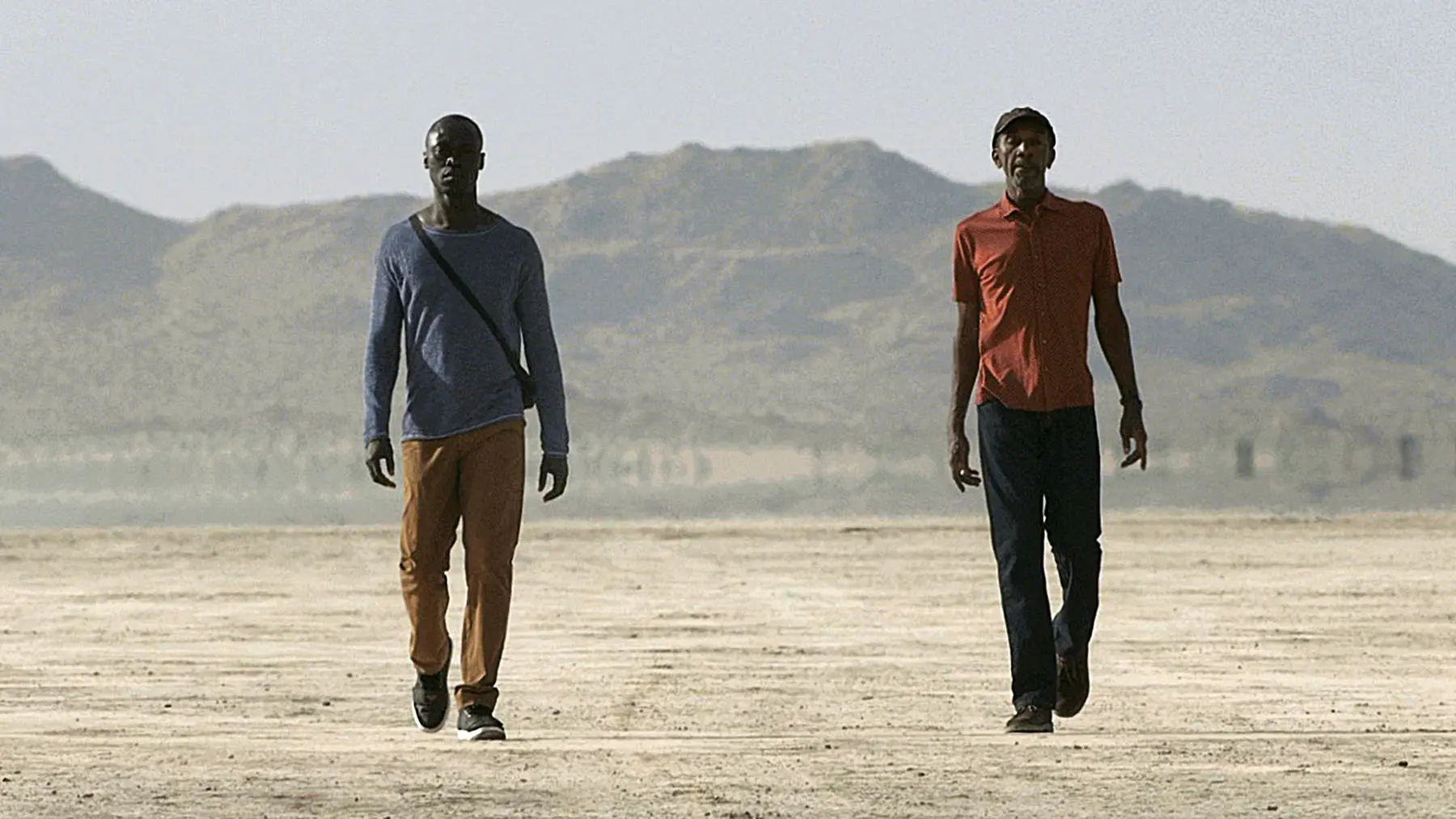
The concept for #1 Cartagena was divided into four alternating nodes that enabled an array of interesting and challenging spectrums. With a certain pretension of exhaustiveness, the nodes began the discussion at the Museo Histórico Palacio de la Inquisición, with the concept “of loss, of trauma, of the intangible,” a triad of concepts that speaks, from the strength of contemporary narratives in the arts, of the symbolic power of their own forms as they relate to history. Then, it continued with the Museo Naval del Caribe, where the node referred to the concept of “handcrafts” expanded, echoing the city’s manufacturing tradition. The third node was “colonialism and its manifestations,” on exhibit mainly at Casa 1537, a site named for the date of its construction and currently on its way to becoming a private mansion. The last node, “art, culture, and ecology,” was on display at Colegio La Presentación. Other, smaller spaces were arranged throughout the walled city and the Getsemaní area, notable among them the spot just next to Nohra Haime’s NH Gallery, perhaps Cartagena’s only gallery in its style; Haime sits on the BIACI Board and is one of the project’s best-known promoters. There we saw a forceful video, two men of African descent walking in the distance. Reminding us that we all have an African origin, they look at the viewer and approach slowly. The video is 12 minutes long, although it feels like the time of history. The end is abrupt, with the men trailing off at both sides of the screen. In my case, this work by Bill Viola was the last one I was able to see, perhaps due to its location, and without a doubt, it was worth the price of admission.
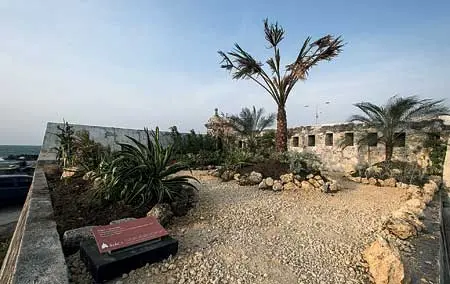
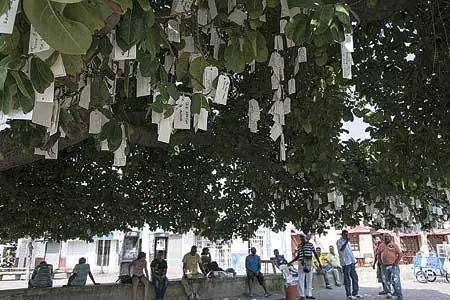
#1 Cartagena reached out to the public in special ways. In a salient spot of the city wall known as La Tenaza, Raúl Valverde presented Paisaje adaptado, a garden of plants of Mediterranean origin with all that is implied in their survival in a different climate, environment, and culture. The result: a piece of the world in a different world, an echo of the past that projects into the future. The always relevant Yoko Ono also opted for the use of exterior spaces and was present with Wish Tree for Cartagena, a performative work that invited all comers to trust the beautiful Nautilus Square tree with their wishes, a playful exercise that certainly lit the ramshackle social-life scene of this poor area of the city.
For the production of this first biennial, a laudable effort given the city’s limitations and difficulties in terms of installed capacity for events of this size, the organizers skillfully deployed experts from other areas of the country, particularly from Medellin two main museums, who had recently produced the 43SNA, Saber-desconocer.
—Another Biennial…

Perhaps in an attempt to conjure up the desirable chance to arrive at a #2 Cartagena that ratifies the challenging biennial format, or perhaps with the idea of having a parallel program with consensus and sponsorship from the start, the option was to incorporate, as though a mise en abyme or a Russian doll, a biennial within the biennial. As can be gleaned from the press materials, BIACI, intent on promoting the participation of Colombian artists, launched a few months prior to opening day a public call addressed to them. This call, a complete success according to the organizers, given a large number of respondents, had Gabriela Rangel, Stephanie Rosenthal, and Miguel González as its guest jurors. Fewer than ten artists were selected under this system. It was here, with the purpose of presenting something forceful, that the jury became a curatorial team, with a different and somewhat sarcastic (if compared to the main event) title: The ocioso imperfecto o cuando las cosas desaparecen. The total number of artists was 28, all from Colombia and most from Cali and Bogotá; ten of them live outside the country or have an intermittent residence here.
This second selection of artists was decidedly distinct from Berta Sichel’s #1 Cartagena; such division introduced a binary sense to the entire BIACI. The Museo de Arte Moderno de Cartagena, the Plazoleta Joe Arrollo, a mansion in La Soledad street, and a couple of public places were the setting for a show that felt parallel to the official version, but with marked differences, especially given the condition of the occupied locales, which, on some occasions, as in the case of the Plazoleta Joe Arrollo, constrained the artist’s entries, in a dramatic way, too simple objects of works contained by the space, which raised questions about the evident budgetary imbalance between the investment on #1 Cartagena and El ocioso imperfecto o cuando las cosas desaparecen, the latter established for Colombian artists.
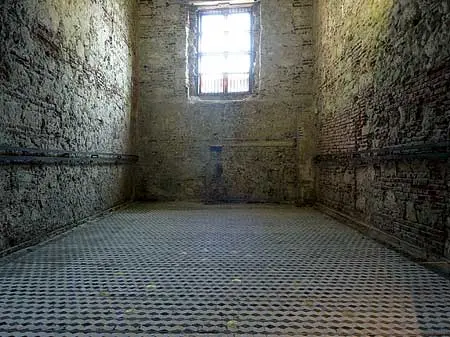
Paradoxically, one of the works that resonated the most with visitors, and in my judgment perhaps the strongest work in this secondary version of BIACI, was Unas de cal y otras de arena, by Miguel Ángel Rojas, installed at the Museo de Arte Moderno. This work, which has a precedent in Grano (an installation with mineral pigments, 1980, related to human migration and referred to as a family affair), consisted of a refined construction of a ground made of sand, salt, lime, and gold, allegorical of the Thirteenth Century tiles with Egyptian motifs that are so common in the upper-class manses of colonial Cartagena. Besides the ground, made highly evocative by the passage of the sunlight entering through one of the windows, there was a monitor showing a subjective-POV tour of one of the city’s most populous and impoverished neighborhoods. Already in the title of his work Rojas puts in play a metaphor connected to the old popular saw about sorrows in contrast to joys, a meaning that poetically extrapolates his particular vision of the city. However, and even if unwittingly, this work, which represents everything that Sichel was after in #1 Cartagena, ends up reasserting with great clarity the separation between the two events.
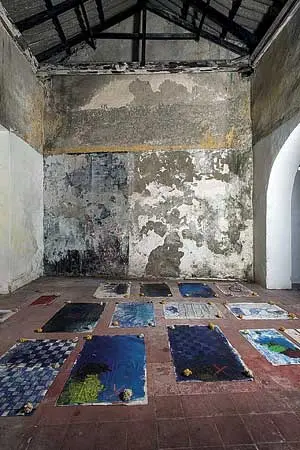
Something similar happened with the participation of the young artist Óscar Murillo, whom everyone awaited with great curiosity thanks to the reputation that preceded him, entirely unrelated to the content of his work. (We must add that this is Murillo’s first outing in an event of this magnitude in Colombia). Murillo’s work, intelligent and sagacious, defied those who expected to encounter here a selection of his paintings. Instead, the artist was able to enjoy, all for himself, an old mansion in a sector of the old city, where property value can reach astronomical levels. Murillo used the house’s naked austerity (as was left, probably, by the family that inhabited it, forced out by the dynamics of a pitiless market). Industrial tables for culinary processes, without food; a single painting representing a chessboard in the yard, left to the elements; drawings on newsprint paper, arranged on the floor with their corners held down by cornmeal that, it seems, was kneaded on those tables long ago. The drawings alluding to change the game, with numbers that underscored the randomness of life for the poor, who play the lottery in the hopes of bettering their condition, were among the few elements accompanying a video of a party with Afro-Colombian music from the country’s southern region (the music from the north is less melancholy), recorded at La Paila, the artist’s native town. In sum, this installation posited an agonizing question about the emptiness, the uprootedness, the implicit need behind the act of migrating, the lack of opportunities, and, of course, it was a slap in the face to those who envy Murillo’s success.
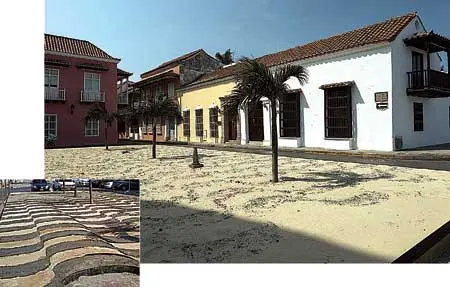
Like a premonition about everything on exhibit so far, Felipe Arturo proposed a public space installation. Using a metallic fence that encircled the square in its entirety, the surface was covered in river sand, carefully separated from its ocean counterpart: the one dark and gray, the other clear and amber. Arturo found the protagonist pattern of alternating, out-of-phase waves, seemingly modernist, in the streets of Rio de Janeiro, where they arrived from Salvador de Bahía, which in turn took them, naturally, from Portugal. Here, the cultural migration implicit in an urban design pattern once again posited the binary theme, only now the promise of a mixture of the unmixable appeared to take center stage. The two types of sand, helped by passers-by, would end up entwined into a new pattern, inviting homogeneity.
Although I am still yet to find, in all that I’ve heard, read, and reasoned, a convincing explanation for the decision to include two events under a single umbrella, even if it was in good faith and goodwill (which I do not doubt), this event will be remembered among other things for its dramatically binary connotations, as it separated local and foreign artist as one separates night from day, or as Plato does in his dyads: the good from the bad, the true from the false, the beautiful from the ugly.
* Photo: Oscar Monsalve.
NOTE
1. According to the curator, in the Fundaciones MAMM radio program, February 2014.
ÓSCAR ROLDÁN ALZATE
Curator and political scientist. Head of the Cultural Extension Department at Universidad de Antioquia.