
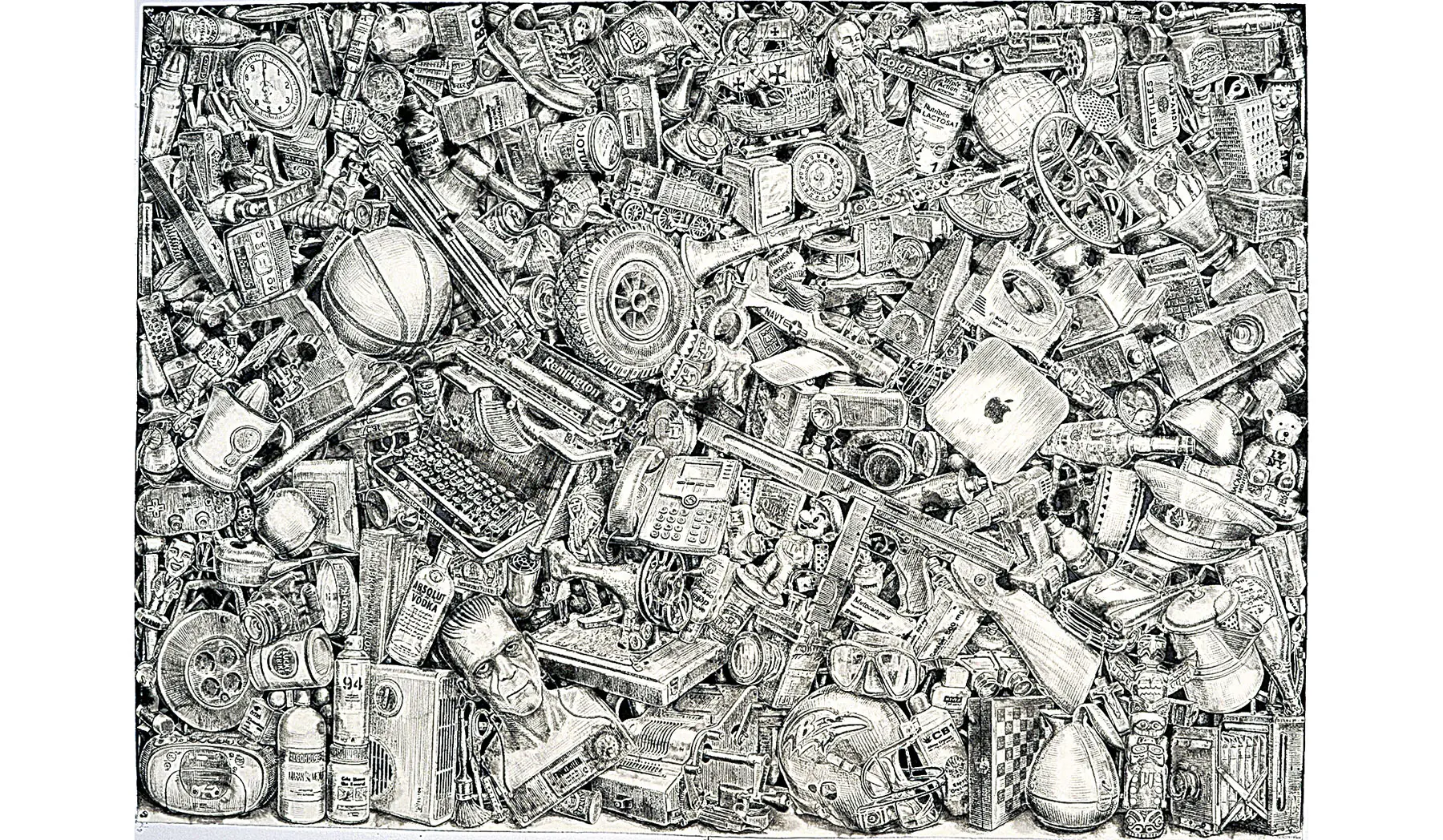
An exhibition of Cuban art whose title includes the word “American” implies, indisputably, reflections about the diaspora, the identity, the conservation, and the incorporations of culture alongside/on/with another. The viewer receiving this information wonders, among other things, how all-encompassing can it be? Will I find new proposals, authors, and works of art? (In good measure, these are the same questions posited by a critic setting out to comment on the exhibition.) Thanks to an informative booklet, visitors have access to general references for 38 participants1, with no listing of works. They are: Alejandro Aguilera, Jairo Alfonso, Alexandre Arrechea, Tania Bruguera, María Magdalena Campos Pons, Yoán Capote, Los Carpinteros, Luis Cruz Azaceta, Christian Curiel, Alessandra Expósito, Teresita Fernández, Carlos Garaicoa, Anthony Goicolea, María Elena González, Armando Guiller, Luis Mallo, María Martínez Cañas, Abelardo Morell, Gean Moreno and Ernesto Oroza, Glexis Novoa, Geandy Pavón, Emilio Pérez, Javier Piñón, Carlos Rodríguez Cárdenas, Andrés Serrano, and Katarina Wong. The curatorship, by gallery director Susan Hoeltzel and Yuneikys Villalonga, is expressed in the two- and three-dimensional works on display in the gallery’s four levels. Also participating are Juan Carlos Alom, Allora y Calzadilla, Humberto Díaz, Felipe Dulzaides, Luis Gárciga, Tony Labat, Glenda León and Ana Olema, all included in the video section, curated by Meykén Barreto.
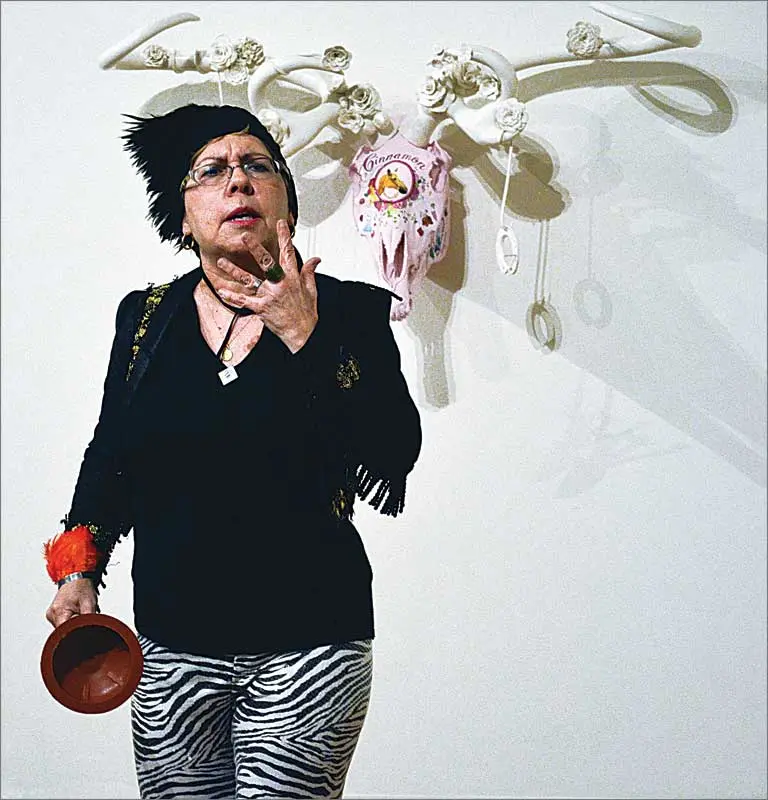
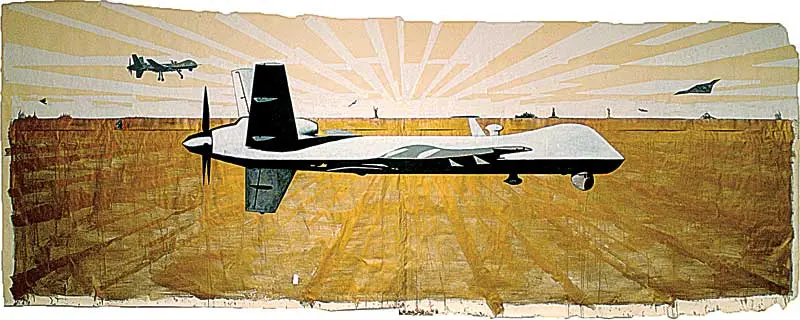
A general tour of the exhibition provides a diversified view. In this Lehman College Gallery, each exhibition is always connected to the educational program provided by the institution. One goal of the exhibition is to overcome the common, simplistic idea held of the two countries’ political relationship, trying to establish a score for many voices for those born in Cuba and resettled in the US, and for those born in America. These should have been supported, at least, by a biographical grid. Undoubtedly, viewers verify a confrontation of aesthetic ideals and languages between the participants. In general terms, the artists featured coincide in having solid careers and aesthetic contributions, personal to a large degree. Given that we are in a meeting of images, we shall start our analysis with the video artists. Juan Carlos Alom (Havana, 1964) synthesizes both cultural realms through experimentalism and informalism; he creates a different documentary tone, valuing a certain primitivism achieved to a degree through the dysfunctional digital. Jennifer Allora (Philadelphia, 1974) and Guillermo Calzadilla (Cuba, 1971) live and work in Puerto Rico and have collaborated since 1995; they represented the United States at the Venice Biennale in 2011. Their works—like Discusión— are diverse and widely known. Humberto Díaz (Cuba, 1975) is a performance artist, photographer, video artist, sculptor, and interventionist; he could be deemed an “illusionist”, as he reduces reality to relative states. Felipe Dulzaides (Cuba, 1965) creates sound sculptures, drawings, public art, installations, and video that focus on the displacement of individuals. Tony Labat was born in Cuba; since the early 1980s, he is an active video artist in California, producing works of social commentary about the Latino community. Luis Gárciga (Havana, 1971) lives in Cuba and migrates through ideas. Glenda León (Havana, 1976) elaborates an analogy between the two meanings of the word “inversion” and can even extend to the intoxication with dollars. Ana Olema (Cuba, 2005) is a “politico-cybernetic artist, and so what!”, as she puts it.
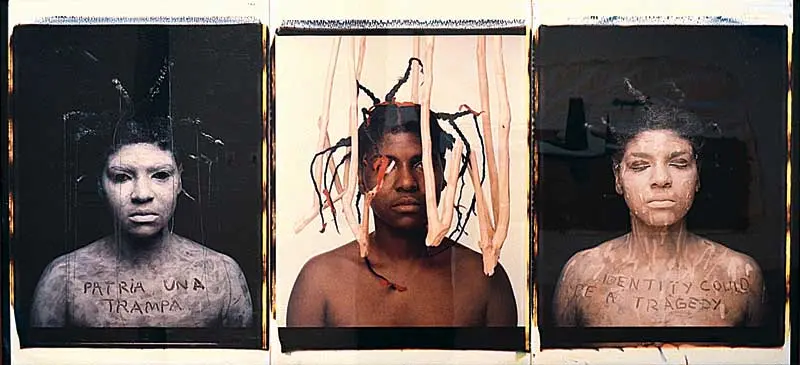
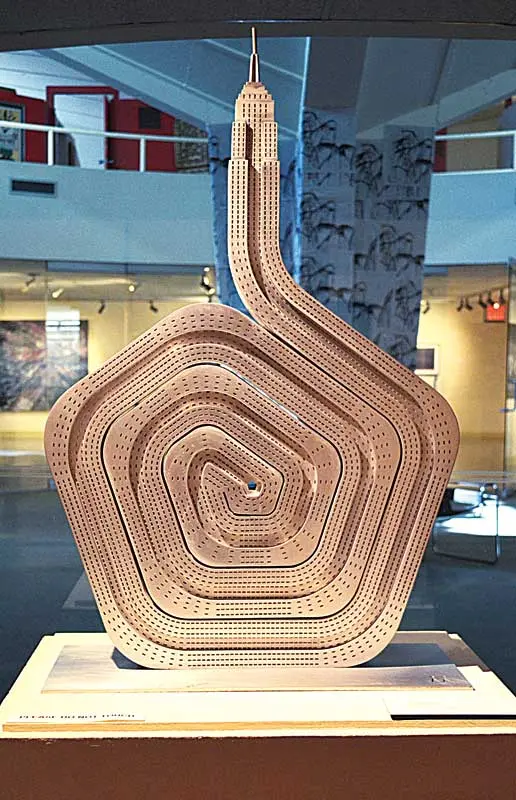
While the video image-action is solid, varied, and “framed”, the presences in the remaining walls are extremely clean. One does not perceive the intensities of the Caribbean; what predominates is a well-sieved judgment. For those of us who saw the exhibitions of works by Cuban artists at the now-closed Exit Art, those and the current one are like night and day. The exhibitions at Exit Art were variegated and disjointed; the one at Lehman College is impeccable. Perhaps there is an explicit mission: to ratify the quality of each work through order and space. Fundamentalismos is Carlos Garaicoa’s entry, which symbolizes the exhibition’s general climate and is one of the most consistent works in it. Garaicoa’s work comprises a series of sui generis coins in sterling, with the image in head and tail, presented in an elaborate acrylic and mirror support. The polyptych is impeccable, although the museography hides it away somewhat. At the opposite end of a built partition, we find El Che y Carlos Santana, by Alejandro Aguilera. The title characters hold a figure of Christ and present a series of mutilations inflicted upon Latin America. In terms of three-dimensional works, two standouts are Chrysler and Empire State, two works by Alexandre Arrechea. The artist—who was a member of Los Carpinteros—presents his work in aluminum, maintaining the well-known urban relationship of the drawings that characterize his oeuvre with interpolations that signal the past and reconstitute Disneyfied worlds that border on science fiction. The works presented by all the participants are an enriching experience, but in particular, Yoán Capote, María Magdalena Campos-Pons, Tania Bruguera, and Luis Cruz Azaceta reach a revealing poetics that rises above the mean. Such is the case of In camera # 19, by Luis Mallo (the atmosphere of this photograph evokes old prints and brings to mind also Puerto Rico’s Myrna Báez’s spray-machine paintings). In this century, photography is a discipline that scaffolds the exhibition structure of group shows, as seen in the works of María Martínez Cañas and Abelardo Morell.
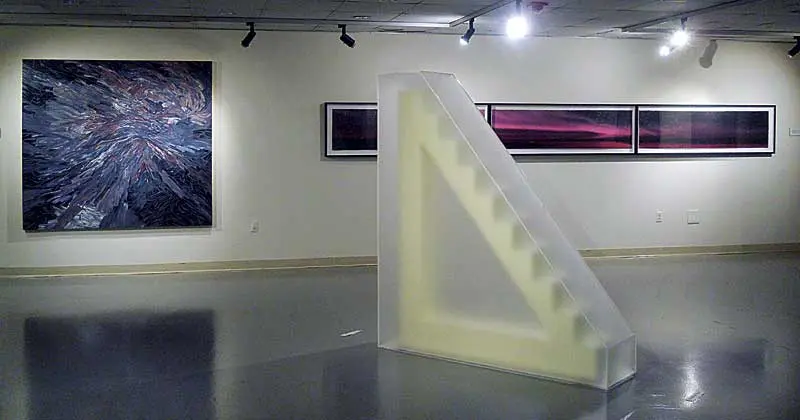
In the world of sculpture, in the encounter of sculpture with design works—utilitarian or otherwise—Armando Guiller presents Helical Work 4 (2006). In the lobby, Ana Olema and Annelys PM Casanova pluck a Latin American note of limited resources: Latin museographic informality.
In a telephone interview with both curators—Yuneikys points out: “in celebration of the 30 years of the gallery”—Susan Hoeltzel, the director, wanted to do something different. “Being of Cuban origin, I was delighted that this was the topic. We wanted to note possible differences between artists who reside in Cuba and others in the US, or who are the first, second, or third generation in the United States. Similarly, we wanted to wonder what does it mean to be Cuban today, in the face of a changing situation that is in progress but we don’t know in what direction. What do people of Cuban background think today about identity? Also, to note through these artists the focus on aspects of architecture, politics, and society in the US.” Susan Hoeltzel ratified: “There was a curiosity about this exhibition, where we did not intend to encompass everything, but to provide a current view of the relationship between art in Cuba and Cuban artists in the United States. We have programmed dialogs, and to be more all-encompassing we would need both a budget and a space larger than the one now available.”
There are no conclusions that could have been worked in the classroom. Here, one contribution about the title Cuban America: An Empire State of Mind. It is perhaps time to start saying the United States instead of America because all of us born in this continent are Americans. Either we start using the appropriate term, or we stop complaining about a situation of domination that is accepted/encouraged from the very name we use.
NOTE
1. Some of the participating artists work as duos and the opening featured a performance by Carmelita Tropicana for a total of 38 artists in the show.
GRACIELA KARTOFEL