

Permission To Be global/Prácticas globales… at CIFO (Miami) features 61 Latin American artists from Central and South America and the Caribbean region, presented in a well-conceived exhibition design. It can also be, perhaps, the most complete show ever presented at CIFO. The exhibition’s idea and curatorial concept are indeed the most complete, but so is the way in which viewers are invited to walk through the exhibition to understand its discourse. To that effect, the exhibition involves many different formats, such as photography, painting, video, installation, and sculpture, well-modulated according to the intensity of their meaning to communicate the discourse of Permission To Be Global/Prácticas globales. This discourse asks, in essence, what does it mean to create in the current context of the global village, taking as its point of reference the critical tradition of Latin American art, especially in the past forty or fifty years. What poetic and discursive positionings embody a critical answer to the logic of late capitalism, which attempts to identify the global with the category of the universal? How can we reflect, with the languages of the art-production field, about the political, economic, and socio-cultural deficits that the project of Modernity in Latin America carried with it as the new democratic States and subjects emerged?
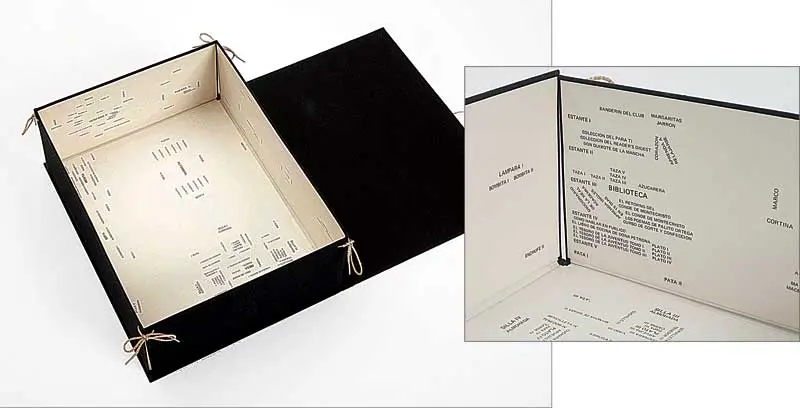
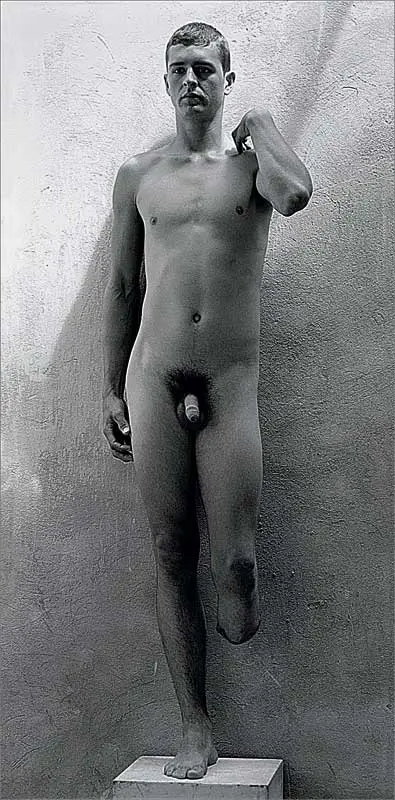
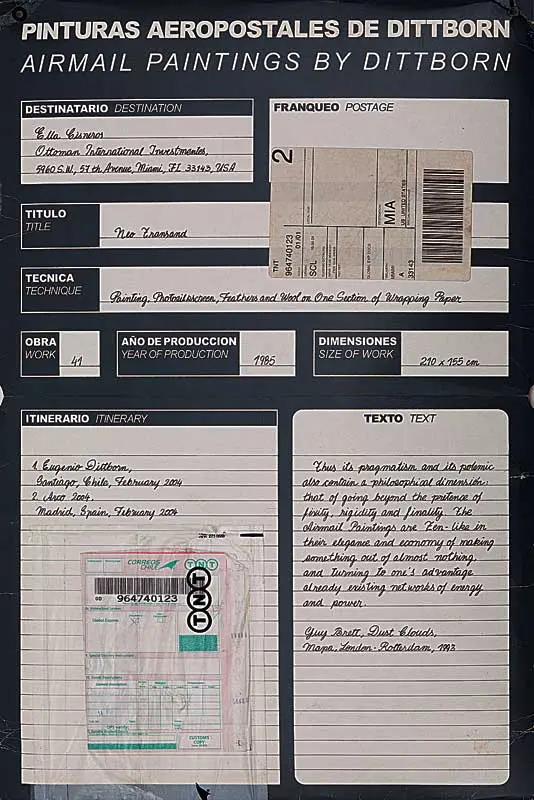
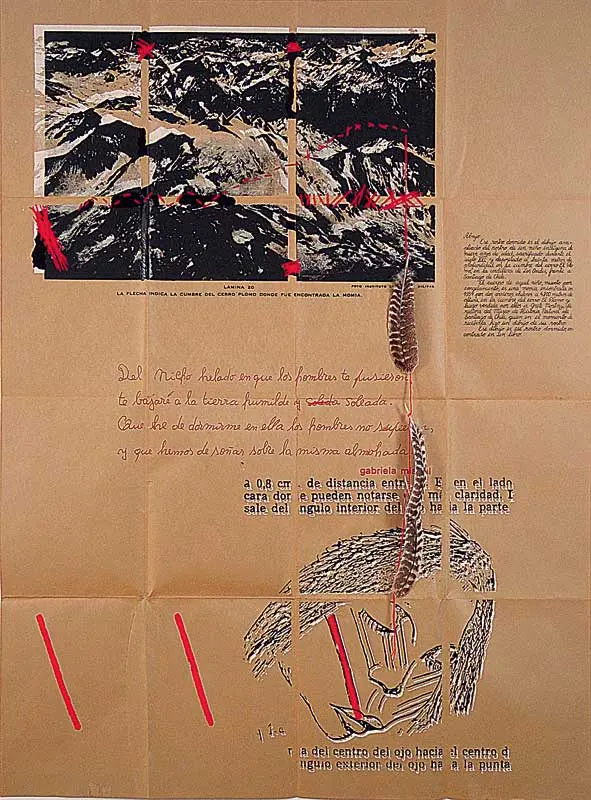
This reflective drive posited already in the concept for the exhibition, requires a chronological review of the most recent history of artistic production in Latin America. Thus, Permission To Be Global/Prácticas globales makes it possible to organize a kind of poetic itinerary through the last four decades of contemporary art. An itinerary that visits, among others, everything from conceptual poetic options (Daniela Ortiz, Ricardo Brey, Eugenio Dittborn, Luis Camnitzer, Oscar Muñoz), to neo-figuration (René Francisco y Ponjuan, Marisol Escobar), to geometric art (Daniel Medina, Magdalena Fernández, Lygia Clark). This traces a broad and rich panoramic of the Latin American art-production field, allowing viewers to move forward in the recognition of the most visible, most sustained poetics. But along the same path viewers encounter, in turn, a cartography of the weightier and most important discursive profiles practiced by the last four generations of Latin American artists.
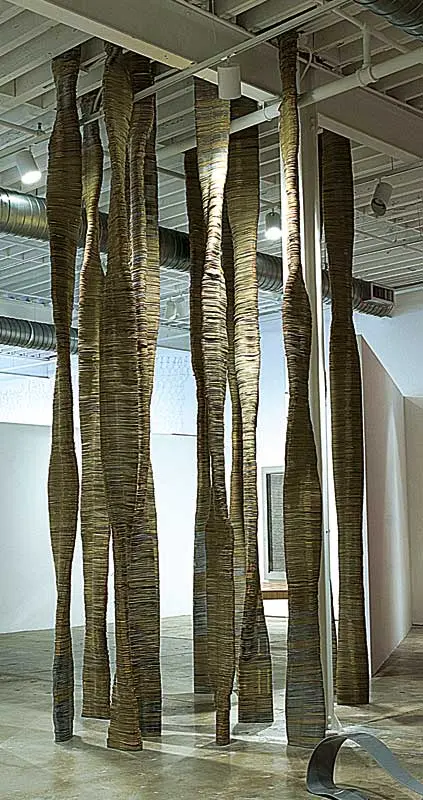

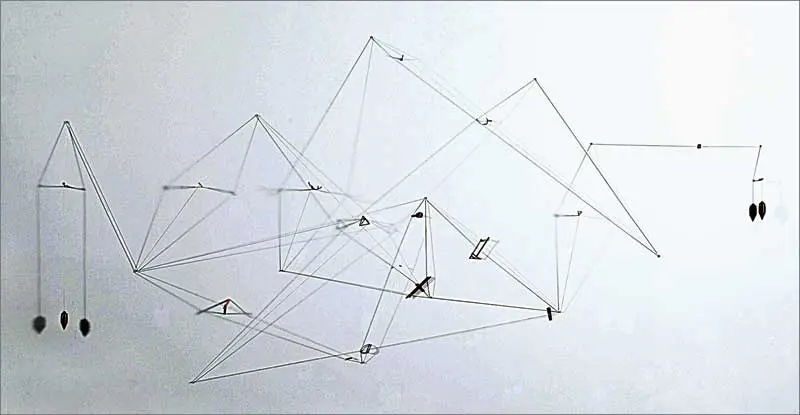
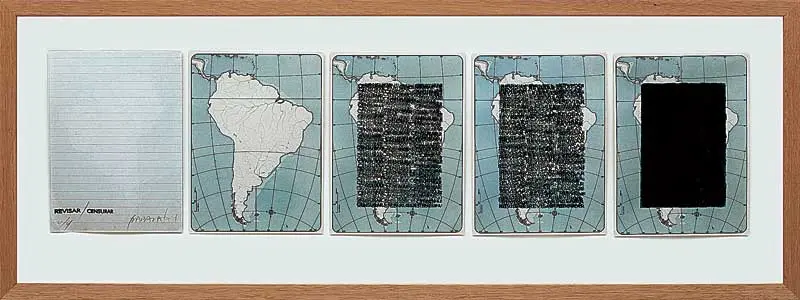
To emphasize and distinguish the stations along this long itinerary, the exhibition’s concept is divided into four sections: Power Parodied, Borders Redefined, Occupied Geometries, and, lastly, Absence Accumulated. These four sections make references to the profiles both poetic and discursive deployed by the curatorial concept of Permission To Be Global/Prácticas globales. The first section (Power Parodied) presents, among many others, works by Yaima Carrazana, Valeska Soares, Meyer Vaisman, Nelson Leirner, Liliana Porter, Alberto Borea, Francis Alÿs, Carlos Garaicoa, Priscila Monge, and Yoan Capote. Here, the aesthetics of Pop Art and its iconographic contents are what sets the pace. The second section (Borders Redefined,) moves, however, towards the conceptual, where the idea on the one hand and the document in the other become protagonists, through the work of, among others, León Ferrari, Luis Camnitzer, Regina Silveira, Gabriel Orozco, Ana María Maiolino, Pablo Helguera, Cildo Meireles, and Lucio Fontana. Meanwhile, the third section (Occupied Geometries) connects works situated in the orbit of the epigonal orbit both of abstract geometry and of conceptual art with works by (to cite just a few names) Miguel Ángel Ríos, Ernesto Neto, Claudio Perna, and Eugenio Espinosa, and Inti Hernández. This section points toward a reflection about the status of the relationship between subject and object. Lastly, in the fourth section (Absence Accumulated), figuration, often associated with the human body, and conceptualism, in the guise of historical reinterpretations, remain in equilibrium. And it is an equilibrium distributed between works by, for example, Regina José Galindo, Horacio Zabala, Miguel Ángel Rojas, José Damasceno, or Nicolás Robbio.
Global practices vs. local proposals?
It is true that each one of the sections that structure the exhibition emphasizes a discursive profile that particularizes it; it is also true that these profiles are combined, and that their discourses, like their poetics, intertwine. Given this, rather than a reading by section to help us compose the whole later, it is preferable and more fruitful to see the entire exhibition from a perspective that activates the four sections in an instantaneous and simultaneous way. In this way, we are submerged in the narratives of iconography, of the image, and of objects that are sedimented or rooted in visual memory, in historical fact, in consumption as part of the material culture of capitalist industrial development. Between them, the four statements bring together images, facts, and objects constituting a surface of sensibility that, in one way or another, intervenes in our visions of Latin American culture and society of the last fifty years. Thus the heavy presence of Pop aesthetics, its content, and themes, but also the presence of conceptual and geometric options. The icons of mass culture in Leirner and Poster, with Mickey Mouse, confronted with other images as a protagonist, give an example of such approaches. Carrazana directly raids the archive of images provided by the great figures of contemporary art, from Malevich through Frank Stella, who is now part of the visual culture of the masses. He takes their patterns of images and uses them to design nail polish. A good portion of the works functions on the basis of humorous appropriations of such iconographies. Others invert the power of the symbol, the addictive attraction that the consumption of commodities creates in the subject, like the dazzling promise of a comfortable life. But from different perspectives. These works, like those by Ferrari, Regina José Galindo, or Carlos Garaicoa, examine the conflictive relationship between public and private space that has marked the most recent Latin American history.
A process marked, on the one hand, by the post-colonial legacy, where semi-feudal reminiscences, especially in rural areas, have pushed against the modernizing process, separating the countryside from the city. On the other, a violent backyard of the Cold War, where capitalism and communism attempted to impose their own interests and agendas. These provoked a sequel of coups d’état, military dictatorships, systematic violations of human rights, which deeply damaged the democratic institutions of the modern State in Latin America. Damage from which it is still recovering today.
Given this, thinking in terms of globalization with the languages of the art-production field first demands to exercise a critique of what today is understood by “local”, and of what is understood as “global.” The challenge resides in asserting local roots (outside of any notion of the autochthonous or folklore) and universal characters, without reducing the latter category to an abstract notion that can be extrapolated to any space or time. Every concrete universality is concrete and assumes the irreducible singularity, both spatial and temporal, of the phenomena it studies. One cannot be universal without regard for the spirit of the place to which one belongs. Positing things from this perspective is the great merit of an exhibition like Permission to Be Global/Prácticas Globales. The show describes the most important trends in today’s Latin American art and underscores its singularity, eccentricity, and marginality with respect to the trends in international art. But at the same time, it outlines the zones of contact that this art has with the international art scene both in Europe and the United States, vindicating its particularity.
*Images courtesy of the Ella Fontanals Cisneros Collection.
DENNYS MATOS