
Writing about the experience of visiting the third Bahia Biennial, in Brazil, is no easy task. The exhibition project extended across Brazil’s fifth-largest state and fourth-most populous. Cachoeira, Feira de Santana, Itaparica, Vitória da Conquista, Salvador, and other cities were taken over by exhibitions, performances, film projections, and roundtables that had the biennial as their launching platform.
Given this, there are many entry points to this project. It is important to clarify, however, that what I write about my experience of the Bahia Biennial, during what was my first weekend in this region so mythical in Brazilian culture, focused solely on Salvador. I imagine this fact makes a great deal of difference for my critical evaluation of the event, since it also had a strong presence, for example, in Cachoeira. Also, the Biennial had two cycles of exhibitions; part of the program is open to the public between May and June, while others begin between July and September. And some spaces had temporary exhibitions that lasted for a few weeks only, for example, the Esteio gallery, of Universidad Federal de Bahía’s School of Fine Arts. In that sense, I suppose that in order to have an integral and intense experience of the Bahia Biennial (for those who believe in such possibility for the contemporary visual arts audience), it would be necessary to move to the state and divide one’s attention between the various events.
After this introduction, let’s focus a bit on the curatorial project. Is it all Northeast? was the question posed by curators Marcelo Rezende, Ayrson Heráclito, and Ana Pato. To better understand it, it is important to remember part of the Biennial’s history. Held for the first time in 1966, it had a second edition in 1968, and then, after an intervention by the military dictatorship that took over Brazil in 1964, it was censored and closed, the works programmed for exhibition confiscated by the regime. This 2014 edition is, then, it's third, breaking a significant absence of 46 years.
Unlike the São Paulo Biennial, international from the start (its first edition featured works by Max Bill, Pablo Picasso, and René Magritte), the Bahia event opted for its 1966 launch to present local production and gave awards to Rubens Gerchman, Ruben Valentim, Hélio Oiticica, and Lygia Clark. Something I believe is key to understanding the importance of this biennial is its geographic origin, highlighted in bold lettering in the title of this year's edition: it fought (and as I will show later, continues to fight) to elevate the complexity of the visual arts in Brazil. It is not a catechism of works from the cities that are considered central to the country’s economy as well as its arts, São Paulo and Rio de Janeiro; neither is it a unidirectional regional response to the state of Bahia’s art production or that of the larger region to which it belongs, the Northeast. The Bahia Biennial is, rather, a way to reflect on a problem centrally present in Brazilian culture and widely debated since the mid-Nineteenth Century: the location and the search for a “Brazilian art” in the many Brazils that have given shape to this continent-sized nation.
I began my visit on an August Friday, walking around Bahia’s variegated buildings—something that also merits note, since, as is the case with other biennial experiences in Brazil (Curitiba and Porto Alegre), the Bahia Biennial invites visitors to explore the city’s geography and engage art production in such diverse spaces as the Museu de Arte Moderna (moved to the Solar do Unhao by architect Lina Bo Bardi in 1966) and the Church of El Pilar, built-in 1718. It was in the latter, dating from a time when Salvador still held the title of Capital of Brazil, that my visit began.
It was a felicitous surprise to find there that the Biennial’s initial project remains, even if in the latent form: to situate itself between the local and the national, between the “Northeast” and “Brazil” (it all, always, between quotation marks). Even well beyond that, it seems possible to state that the curatorial project expands such supposed geographic tension and places Brazil in dialog with foreign artists in a non-obvious way clearly distinct from some frustrating exhibition experiences that use a large-scale event as a launching pad into the international (generally, Europe; i.e., the West) visual arts stage. Sharing a small space in the church, by one of the two altarpieces, are a Colonial-era sculpture, a work by Yves Klein, and a work by Charbel-Joseph H. Boutros. More than a geographic encounter between Brazil, France, and Lebanon, the audience witnessed the intervention of a small altar in which the very notions of temporality and the history of the arts are juxtaposed to reflect about the permanence of the sacred in the production of images. Local historical production, and already institutional name like Klein’s, and the gambits of a relatively young artist gave a unique tone to the church. And perhaps this is the same flow that dominates the entire experience of the Bahia Biennial this year.

At the São Bento Monastery, another religious building, the curators invited the audience to recreate the previous editions of the Biennial. As the text distributed in a newspaper format put it, the question was not to try to imitate what was presented in the past, but to re-construct that historical battlefield where the Bahia Biennial found their destiny; a site marked by different kinds of dualism: left and right, young and experienced, concept and form repression and resistance, open and closed, depression and euphoria, reason and irrationality.” In the Monastery exhibition areas, then, we encountered works exhibited at some point in those events, printed documents, and interviews with participants in the project, added to insertions of works by young artists. In this exhibition, we find an element that remained constant in all the spaces I was able to visit: bringing to light works exhibited at some point in Bahia, which contributed to important salvaging of the history of the most recent artistic production in Brazil.
Lenio Braga and Siron Franco, for example originally presented works in the first two editions of the Bahia Biennial, and these works were “recreated” in the monastery. Meanwhile, other names gave shape to the exhibition with works that didn’t necessarily hark back to those editions but comprised a kind of meditation on the role of art production in Bahia during the 1960-2010 hiatus. Such is the case of artists like Almandrade, Gaio, and Sante Scaldaferri. Finally, Arthur Scovino, a young artist who presented an individual appropriation of the Church of the Afflicted and who was already convoked for the São Paulo Biennial to be held also this year, followed up on a sort of historical, but not a linear cycle of the place of power and the constant presence of the arts in the State.
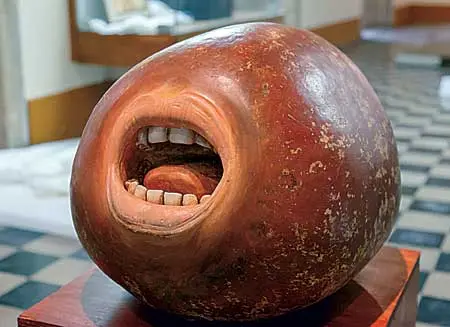
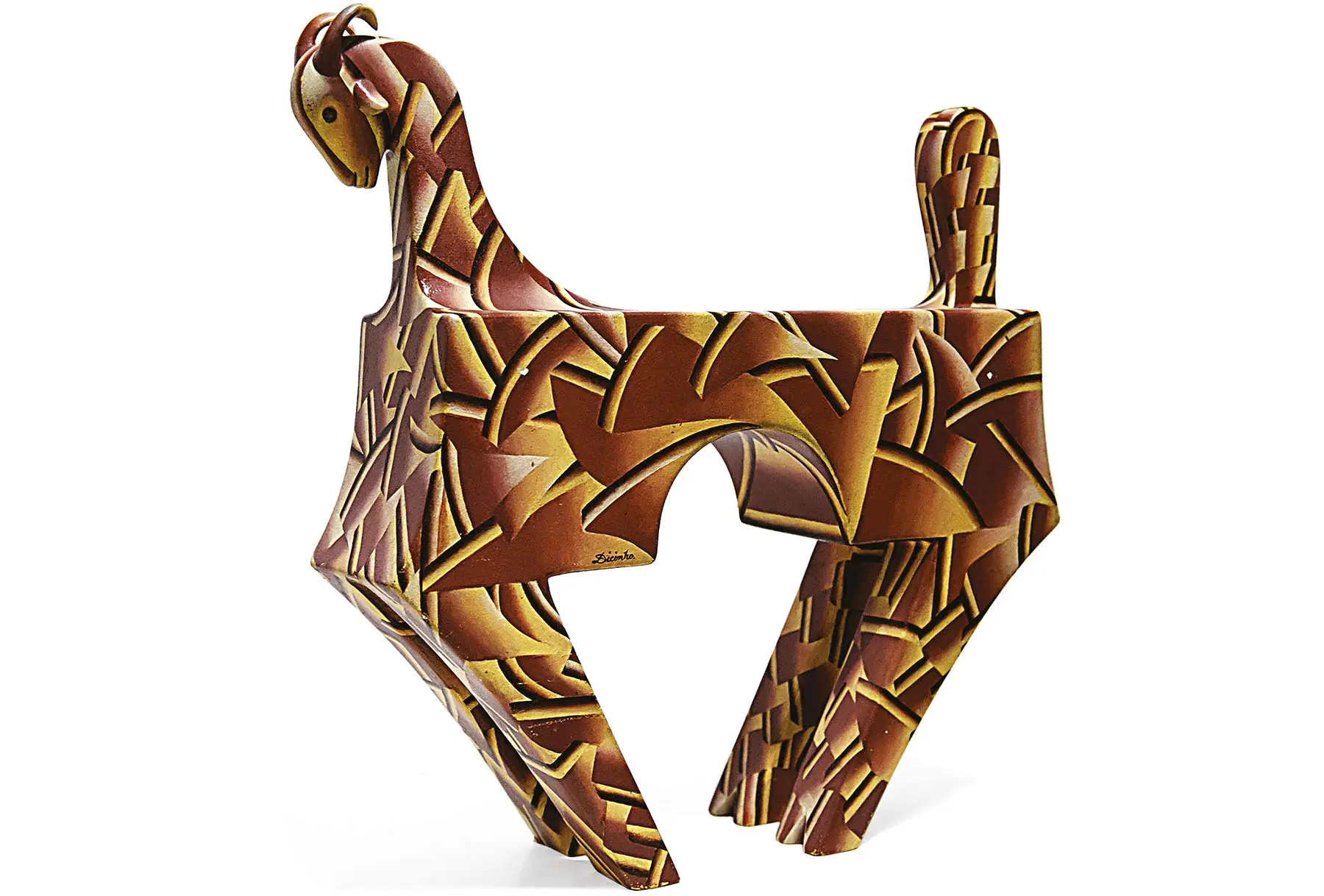
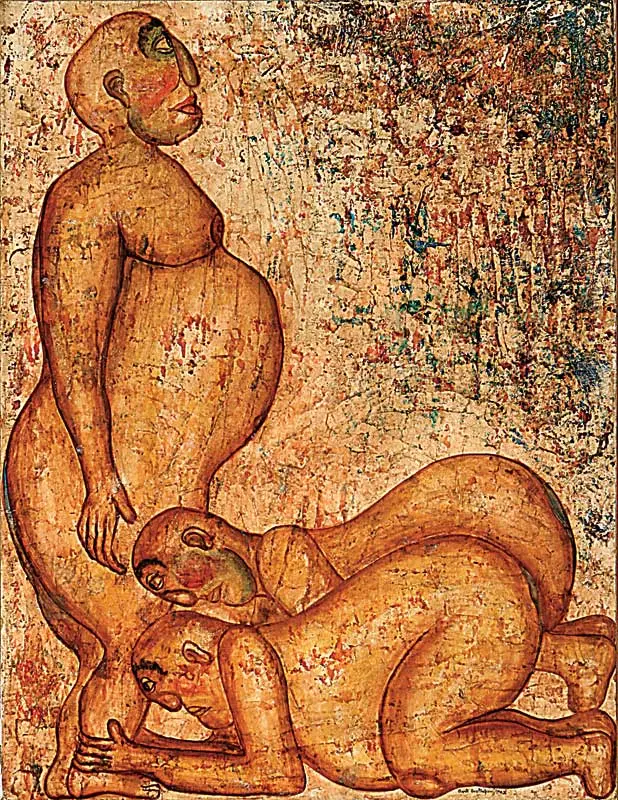
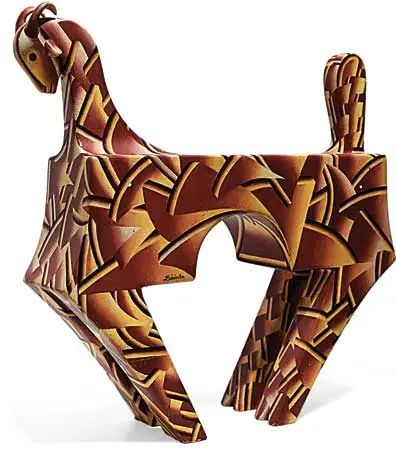
This site of learning is, I think, essential to what I was able to see of the Biennial. If at the São Bento monastery we understood the historical traumas or the suspension of a dormant event, at the Museu de Arte Moderna, the names of Juarez Paraíso, Riolan Coutinho, Juraci Dórea, and Rogerio Duarte were presented to the public in the format of small solo retrospectives. Arriving on the Carlos Costa Pinto Museum, I discovered the work of Dicinho and Edinízio Ribeiro y Primo.
The 1960s, commonly read in art history as a period of experimentation driven by the almost-sacred triad of Hélio Oiticica, Lygia Clark, and Lygia Pape artists of undisputable importance, all situated between Rio de Janeiro and an ebullient international scene seem to me suddenly more complex and colorful. I kept thinking about the coincidence in the use of terms by the Bahia Biennial and an exhibition like Artevida, curated by Adriano Pedrosa and Rodrigo Moura in Rio de Janeiro, both opening at the same time. Besides attempting to observe Brazilian art beyond the European canon (as proposed by Artevida), this is to say, opening a dialog with the artistic production of the 1960s through the 1980s in Africa, Asia, and Latin America, it is essential to revise the very idea of what the word Brazil means. Surely the Rio triad already absorbed by curatorships and historiographies that seek to be global and inclusive needs to have by its side names that the passage of time has reduced to oblivion. It was them, the forgotten, that taught me the most in Bahia, for example, the experimentation site of the Nervo Óptico group in Porto Alegre in the 1970s, or a figure like Torcuato Neto, who lived during that period in Teresina, the capital of the state of Piauí, a place abandoned by all narratives of “Brazilian art.”
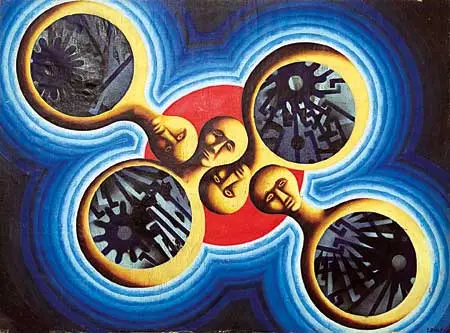
Perhaps it may be possible to give new meaning to the central question of the Bahia Biennial and to ask Is it all Brazil?; in other words, are Bahia and its artistic production integrated into the historiographical constructions of art in Brazil? And what about the Northeast, which encompasses nine Brazilian states? What is Brazil? Or, as the title of a book by anthropologist Roberto Da Matta has it, What makes Brazil, Brazil?
In the hesitation and the anxiety of knowing that there is still much to consider about all I have learned and what I would like to learn yet regarding not only Bahia, but what Brazil maybe, I prefer to stay with the wise words overheard at Giselle Beiguelman’s installation in a blighted area of the city’s public archive: “The tropics seem to conspire against memory.”
RAPHAEL FONSECA