
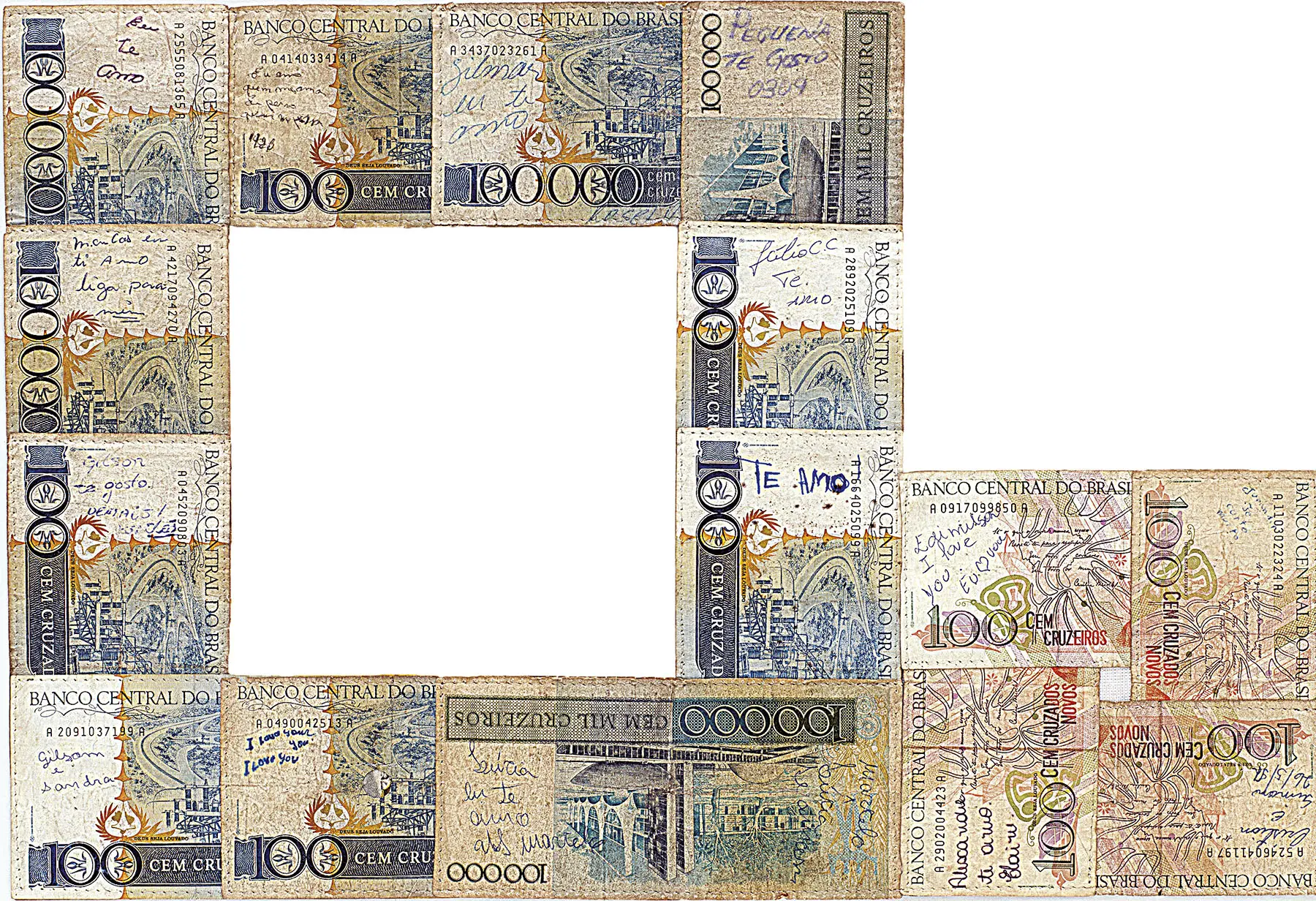
In this first anthological exhibition of works by Jac
Leirner (São Paulo, Brazil, 1961) in Mexico, viewers encounter a series of key
works in the artist’s prolific career. The show covers three decades and is
articulated around the themes and strategies that define the work of this
renowned Latin American artist: serialization, repetition, circulation, and
consumption. At the same time, the selection of works reveals how her practice
has been nourished, to a greater or lesser degree, by a variety of artistic
movements such as Brazilian constructivism and neo-concrete art, arte
povera,
minimalism, Pop, among others. Within this framework, the exhibition curated by
Violeta González has a retrospective intention whose chronological structure is
altered by the intermittent presence of works conceived in recent years or by
works created specifically for this occasion. At a spatial level, the
curatorial gambit was to fragment the museum’s generous exhibition areas into
eight small and medium galleries that create a sinuous, looped walking path. In
each one of these spaces, visitors encounter different series of works or
installations like: Lungs (1987), The
Hundred
(1998) or Corpus Delicti (1992), Names (1998), to name only a few.
As the leaflet that accompanies the show illustrates well, each gallery deals
with specific aspects of Leirner’s visual and conceptual quest. This
museographic and curatorial solution can be understood as a valid didactic and
narrative recourse, but it certainly cancels, to a degree, the possibility of
generating crossings, contagions, or inadvertent dialogs between the works
while simultaneously rendering the exhibition space a sequence of reduced,
aseptic white cubes. Adding to this, the determination mentioned denies the
architectural features of this important museum, projected in the 1970s by
Teodoro González de León and Abraham Zabludosvsky and imposes on the entire
show the sensation of having being preconceived for a different type of
architectural space.
A highlight of the first gallery is the presence of eleven great small-format works where Leirner explores the visual potential of texts and dialogs with the forceful legacy of concrete poetry as developed mainly in Europe and Brazil in the mid-Twentieth Century. Produced in the early 1980s using a typewriter—an instrument that these days has acquired archaic, nostalgic undertones—these works make clear that the serialization, repetition, and ordering of signs and materials were present in Leirner’s art from the beginning. These graphic compositions achieve a surprising formal balance between the organic character, the semantics, and the geometry both of each number and of the structures that they form as they recur, become engrossed in themselves and follow a specific rhythmic pattern. In this same introductory space we encounter a trio of mixed-technique works titled Objectual Image (1982). Here, Leirner’s treatment of line, space, and plane respond to the visual and sensorial precepts of Brazilian concrete art, inherited by Leirner in a frank and natural way. Be it by making cuts in the construction paper support or drawing with a thin cord, the artist generates simple abstract spaces with a surprising emotional and reflective charge.
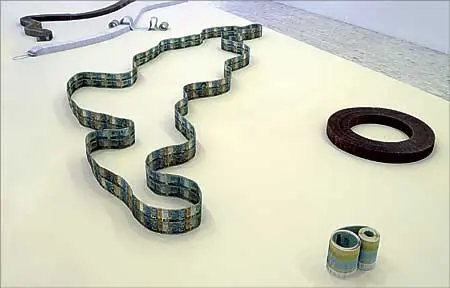
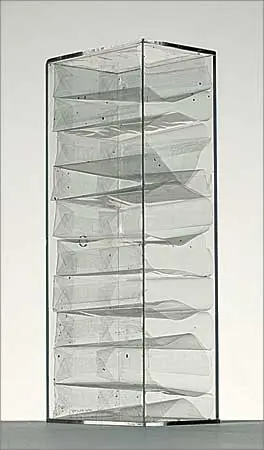
As we continue with the visit, we enter a space holding various sculptures from the series Lungs, from 1987 and a recent work titled Skin, from 2014. While the older works and the newer example share a theme and a language, the results are different. Leirner’s works from the 1980s imply an intimate relationship with the material and the economic and social connotations of the cigarette packs, while at the same time presenting a direct link to the artist’s body and her own experience as a tobacco user for a number of years. Those works, made using the packages’ cellophane, their thin plastic ribbons, of their price labels, are clear declarative statements about the way in which Leirner was to use throughout her career consumer products and the perishable or discarded materials consumer culture generates, and their relationship to everyday life. On the contrary, Skin is a two-dimensional work comprised of hundreds of white rolling papers and small wires that give the papers a degree of rigidity. Attached to the wall under a symmetrical composition, they form an enigmatic and minimalistic surface. The presence of the body, the dimension of time, and the socioeconomic weight of the materials seem to dissolve in favor of aesthetic and perceptual elements.

In a kind of hallway that takes us to the wider space where the series Corpus Delicti (1992) has been mounted, and after traversing the gallery devoted to Leirner’s well-known works from the 1980s using banknotes as her prime material, we find two small-sized but highly significant works. One of them is Precarious Chromatic (1991), produced during a residence at the Oxford Museum of Modern Art; the other is Hip-Hop (1998). The former is a visual essay based on the degradation of different colors and hues present in a vast and eclectic selection of leaflets promoting cultural events, actions, or sites, as well as their entertainment counterparts such as zoos, social programs, museums, concerts, tourist attractions, etc. In parallel to the chromatic study, this work shows how Leirner interconnects formal aspects of constructivism and concrete art with symptoms or manifestations of contemporary popular culture. In turn, Hip-Hop is another chromatic exercise created using pieces of adhesive tape in different colors placed on the wall like a narrow perimeter band. Here the artist pays homage to Piet Mondrian and provokes a rhythmic and formal contagion between Mondrian’s interest in Jazz and her own predilection for hip-hop. Both works, not among Leirner’s best-known, condense in a precise and poetic way the strategies that have defined her practice.
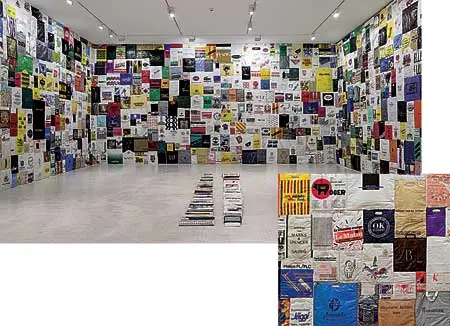
It is impossible to obviate the installation and series titled Corpus Delicti (1992), already mentioned, where the aviation industry and its derived objects (blankets, headphones, barf bags, napkins, ashtrays, luggage labels, among others) generate notes on the discourses of globalization that emerged during that decade and on the intensification of the mobility and displacement of peoples and goods around the entire world. Finally, it is worth mentioning the impeccable presence of two works: Names (1989) and Names (Museums). The former is a large-scale installation that consists of the wall mounting of hundreds of commercial-use bags belonging to an infinity of establishments, brands, and services. These objects cover the walls of their assigned space and form a revealing and attractive mosaic. Products no longer in use, such as Kodak Gold Film rolls, combine with large global brand names and with local establishment such as Librería Polanco, S.A. The later, placed on the ground, consists of two parallel rows of bags and packaging materials from museums, art spaces, and art publications. Among them, a bag with the logo of this very magazine: ArtNexus. Arte en Colombia Internacional. A true treasure. As the curator notes: “both these works evoke Leirner’s earliest investigations on the issue of difference, repetition, and singularity.” In the case of Names (Museums), she also considers the systems of circulation and exchange in the art system, something that has interested her since the 1990s.
The exhibition accomplishes the purpose of exhibiting medullar works in Leirner’s oeuvre and of offering its audience information about her main strategies, methods, and influences. However, its retrospective and didactic nature as an anthology seems to blur the present of a still-active artist. Works created specifically for this exhibition, such as Labels, where the artist displays these informative objects from the inventory of the Museo Tamayo, appear as simple and flat variations on solid works from the previous decades.
VÍCTOR PALACIOS
Curator. Head of Visual Arts at the Casa del Lago Maestro Juan José Arreola, UNAM, Mexico.