
Spanish photography was the topic of PhotoEspaña, Madrid’s international festival of photography, which this year held its sixteenth edition. Left behind were editions where generic arguments such as “City,” “Nature,” “Stories,” “The Everyday,” or Expanded Time articulated the evolution of an event that focused exclusively on photography during its first period and then opened itself up also to video, installation, and even experimental film, in search of what Sergio Mah, one of its curators called the Photographic. That which, without being photography in the strictest sense, is supposedly molded by the photographic gaze or is made for that gaze. The doubling back of this edition of PhotoEspaña on its own country made it possible for it to present a synthetic history of photography in Spain, from the pioneering figures from the second half of the Nineteenth Century through those whom the curators of the group show PSP. Contemporary Practices in Spanish Photography are deemed exemplars of “the most innovative practices and theories in Spanish photography.”

The National Library organized an exhibition titled Photography in Spain. 1850-1870, with works by Charles Clifford (England) and Jean Laurent (France), and Spain’s José Martínez Sanchéz, Alonso Martínez y Hermano, Joaquín Pedrosa, and José Spreafico, all from the Library’s own collection. These are divided into documents of the most evident manifestations of the era’s progress, such as bridges, railroads, and aqueducts, and those documenting the appearance, at the time, of architectural monuments and landmarks that to this day remain emblematic in Spain, such as the Alhambra, the Roman Aqueduct in Segovia, or Madrid’s Puerta de Alcalá and Plaza Mayor.
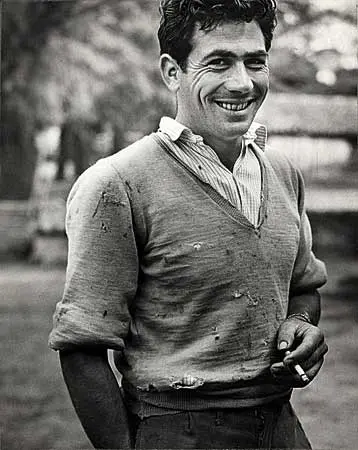
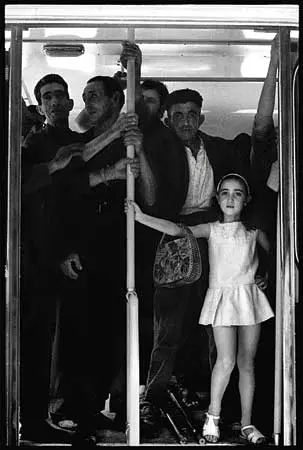
The show La palangana, at Círculo de Bellas Artes, focused on the 1960s when Spain was still a mostly rural society and had not freed itself from the devastating sequels of the Civil War and the sinister post-war period. The media and the regime’s propagandists hid the reality of poverty and oppression behind a misleadingly colorful and luminous scenery, which a group of committed photographers was intent on tearing. And they did so with a very direct, very succinct black and white photography that resulted in a notable inventory of the men, women, children, situations, uses, and trades of a people surviving with dignity amidst highly adverse economic and political circumstances. The show included works by such well-known figures as Gabriel Cualladó and Ramón Masts, but also by less celebrated photographers whose work is nevertheless of comparable quality: Leonardo Cantero, Juan Dolcet, Paco Gómez, Fernando Gordillo, Sigfrido de Guzmán, Francisco Ontañón, Joaquín Rubio Camín, and Gerardo Vielba. Ontañón is the author of the photograph of the modest tub (palangana) used to wash the prints, inside which in this case float the portraits of the members of the group that adopted it as its emblem.
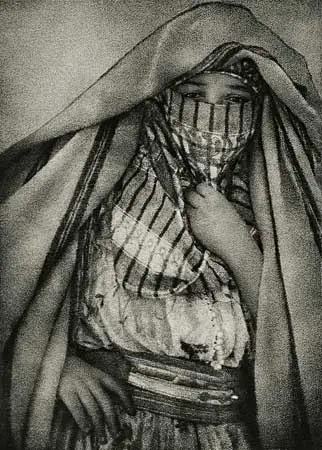
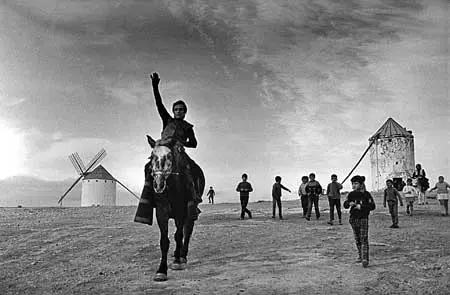
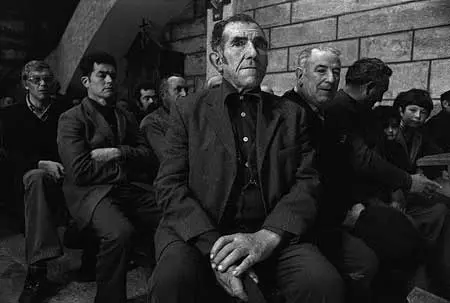
Tan lejos, tan cerca. Photographic Documentalism in the 1970s, presented in the exhibition galleries of the Botanic Gardens, dealt with the next stage in the history of Spanish photography, when the country embarked on economic transformations expressed in a rural exodus, industrialization, urban expansion, the formation of a professional middle class, etc. These photographers worked in black and white and retained the focus on everyday life and anonymous characters, but they now had at their disposal the most sophisticated technical means and possessed a marked stylistic intent, which on occasion flirted openly with formalism. On exhibit were works by Koldo Chamorro, Cristóbal Hara, Fernando Herraéz, Anna Turbau, and Ramón Zabalza. And by Cristina García Rodero, who since then has trained an anthropological gaze upon collective festivities and ritual threatened with extinction, in rural Spain first and then in other countries, like Haiti and Venezuela. Her photography is as visually opulent as the events she usually captures in it.
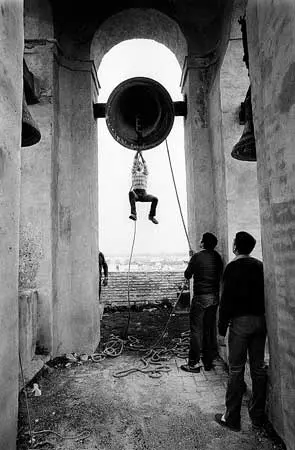
The historical chapter in this edition of PhotoEspaña included another important group exhibition: Photography and Modern Architecture in Spain, 1925-1965, held at the ICO. It offered an extraordinary example of symbiosis and exceptional coherence between photography and its object. Between architecture and modern photography, joined by a shared dedication to the “clear and distinct” Cartesian object, resolved by architecture in spatial and volumetric terms and by photography in that paradigmatic laboratory of modernity that was the Bauhaus. The roster of photographers exhibiting here was longer than the list of architects, whose names are nevertheless better known despite photography being in his era as important as architecture had always been.
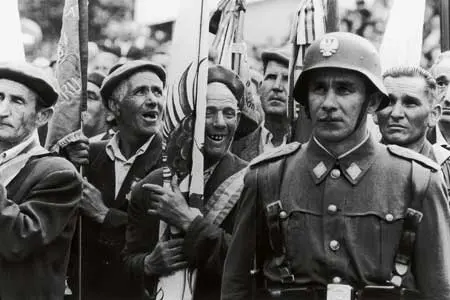
We must also include in this historical chapter several significant solo exhibitions. Among them, the one devoted at Real Academia de San Fernando to José Ortiz-Echagüe, a truly historic figure in Spanish photography who throughout his long career which ended with his death in 1980 was distinguished by offering a visual counterpart to the foundational narrative of the Spanish people as established over the course of two centuries by its organic intelligentsia. The titles of the books produced by this intelligentsia are eloquent: Tipos y trajes (1930), España, pueblos y paisajes (1939), España mística (1943), and España, castillos y alcázares (1956). The photographs on exhibit at the Real Academia are older than those books and are part of the series Norte de África, resulting from an extensive tour Ortíz-Exhagüe took of the territories of the Spanish Protectorate in Morocco and other regions of the same country. His gaze was that of a romantic traveler who emphasized the alien-ness and exoticism of the peoples, customs, and landscapes of a country he saw as strange and fascinating. The technique of carbon copying underscores even more in these images the effect of strangeness and fascination.
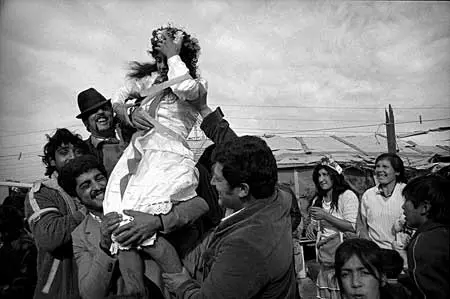
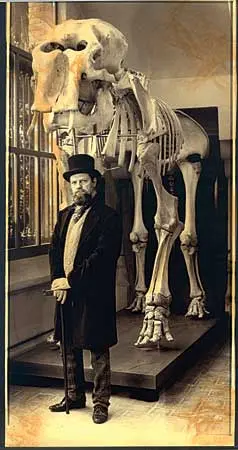
This kind of gaze—similar to how Northern European travelers saw Spain during the Nineteenth Century—is interrogated by Xavier Mulet’s project presented, very appropriately, at the Museo Nacional de Ciencias Naturales. It was titled M. Ardan, gran viajero del siglo XIX and it documented, with the meticulousness of the archivist and the philologist, the work of a fictional character who went by the pseudonym of M. Ardan and had been a writer, photographer, botanist, and tireless traveler. Mulet uses archaic procedures, such as the Collodion process, ambrotype, and ferrotype, as well as film frames, cyanotypes, and paper portraits in order to give verisimilitude to the works of this archetypical Nineteenth-Century traveler and to offer a panoramic of the evolution of photographic technique during that century. Literary references were also relevant, and the pseudonym M. Ardán evoked the name of the protagonist of From the Earth to the Moon, Jules Verne’s 1865 novel of scientific anticipation: Michel Ardan (Verne’s admiration for the advances of science and technology extended also to photography, by the way). In fact, it is known that Ardan is a palindrome of Nadar, the name of the well-known Parisian photographer in whose studio a veritable Who’s Who of the era had their portraits made.
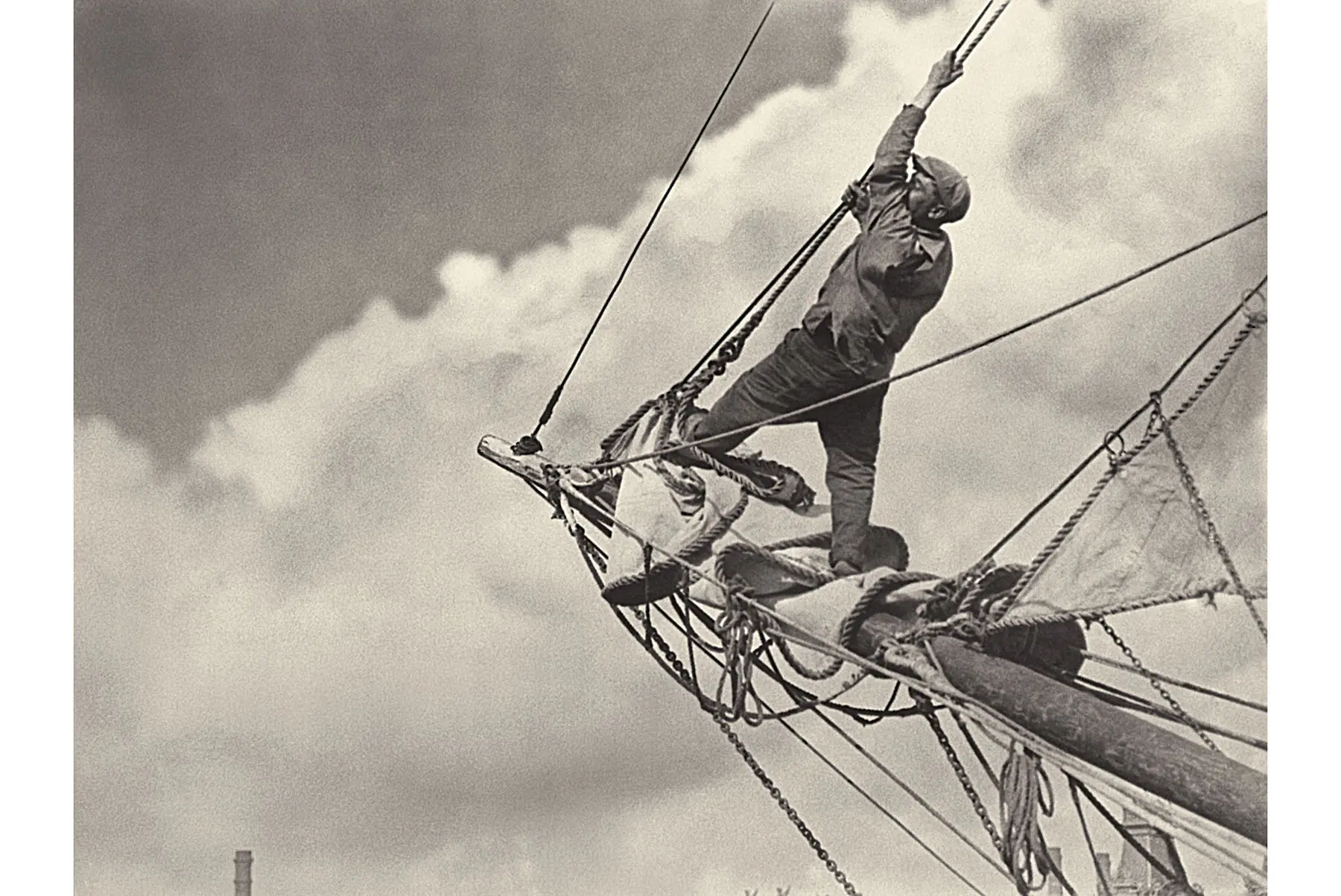
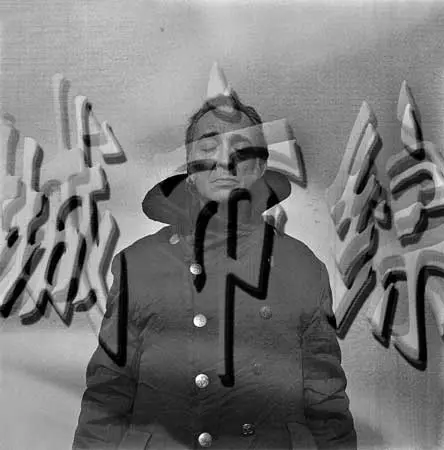
Who was not a fictional character is Antoni Arissa, the object of what was perhaps the most interesting solo retrospective at this PhotoEspaña: Arissa. La sombra y el fotógrafo,, 1922-1936, held at Telefónica Foundation. It offered an opportunity to encounter the work of one of the most significant Spanish photographers of the Twentieth Century, one who nevertheless has yet to achieve the recognition of the extraordinary quality this photographer deserves. Arissa began his career under the aesthetic of pictorialism and using pictorialism’s taste for veilings and blurred images he created magnificent photographs focused on everyday life in Barcelona, its boulevards, and its port. It was, however, Arissa’s turn to a constructivist aesthetic—as forged by Rodchenko and Moholy-Nagy—that allowed him to compose truly astonishing photographs. “Atmosphere” and softness are abandoned in favor of a plenitude of light and precision of shapes and contours, while the characteristic themes of a mechanized city take the place of the popular or the picturesque. At the same time, Arissa’s repertoire begins to incorporate purely abstract compositions. Among them, a veritable masterpiece: an untitled photograph from the 1930s where we see the inner courtyard of an anonymous four-level apartment building, in a low-angle shot and with such advantageous use of light effects that the bare walls appear as metallic mirrors.
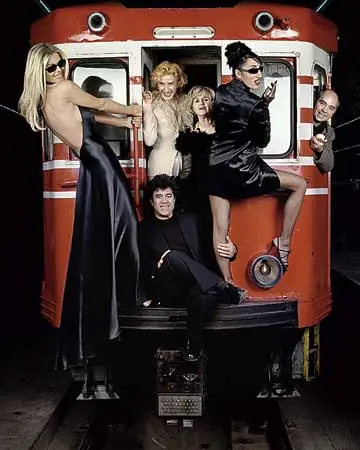
The characters of the Spanish Transición, of the Movida in Madrid, of the post-modern country, were depicted by two notable photographers: Chema Conesa and Alberto García-Alix, both with solo shows in this edition of PhotoEspaña: Conesa’s titled Retratos de papel and presented at Salas Alcalá 21, García-Alix’s titled Autorretrato and on view at Círculo de Bellas Artes. Two coeval photographers who nonetheless could not be any more different; the former the portraitist of Spain’s (and some international) mass-media stars, art-world figures, and leading politicians of the last four decades, the latter the portraitist of urban marginality. And more specifically, of the tribe of moteros, or bikers, of which he has been a member, who with their taste for Harley Davidson motorcycles, leather outfits, switchblades, tattoos, piercings, metal adornments, and hard rock, emerged as a model—as tempting as it is unsettling—for the middle-class urban youths at the center of the counterculture of the Madrid movida. The difference between them is re-emphasized by Conesa’s predilection by Cibachrome and large-format prints while García Alix preferred black and white and less spectacular formats.
The task of presenting the current state of photographic practice was assumed by two ambitious group shows: PSP. Contemporary Practices in Spanish Photography at the exhibition galleries of the Centro Fernán Gómez and Fotografía 2.0 at Círculo de Bellas Artes. As I mentioned before, the curators of the first of these shows presented the photographers selected for it as exemplars of the most innovative practices and theories in Spanish photography.” To me, however, they seemed the example of a generalized confusion, victims of the dizzying “big bang” in contemporary art, which has blown to smithereens the differences and boundaries between the arts only to remix the remains of such a formidable explosion into strident and often innocuous collages. Because this exhibition was indeed dominated by collages, not only in the form’s classic version, photo-montage, but the kind that invades space with an agglomeration of photographs, press clippings, advertisements, drawings, manuscript texts, and a remainder of diverse materials, including wood and tile. True, there were exceptions like Tanit Plana, who presented three full-color, large-format photographs under the common title of Don Dinero, which played with the ubiquitous, manyfold prostitutions of our times. Or Iñigo Aragón, who exhibited Los comediantes, a series composed in the manner of classic photo-montage (a genre that, by the way, was splendidly represented by Josep Renau’s devastating series The American Way of Life, on exhibit at Círculo de Bellas Artes. And Daniel Mayrit’s very conceptual Sin España, which consisted of a mural photograph with 39 images, each containing a single word used by the King of Spain in his ritual year-end TV addresses: materials for a semiology of Spanish political discourse.
Fotografía 2.0, curated by Joan Fontcuberta, reviewed photographic practices at a moment when the dominant visual paradigm is no longer film or TV, but the Internet, which, multiplying its volume and possibilities into infinity, have radically transformed photography. The exhibition’s critical tone was clear from the outset, as entering visitors encountered a plywood cubicle of the poorly-lit inner walls on which hung photocopies of documents declassified by Washington after Edward Snowden’s revelations concerning global espionage. A risible declassification process, since the documents were mostly redacted. Albert Gusi touched in this way on the topic of the panoptic in which we are immersed: he composed a mural photograph using images captured by night-vision cameras of deer ambling in the forest. Not even these animals escape global surveillance. In Thinspiration, Laia Abril presented shocking, heart-breaking images taken from blogs where women suffering from anorexia share their stories. In Obscurities, in turn, Juana Ghost presented images from Goth web pages and fanzines, showing the bizarre tattooings and self-inflicted scars of members of this extensive urban tribe. Daniel Mayrit’s work presented the hidden counterpart of exhibitionism and total surveillance: power. He did this in a mural photograph titled You Haven’t Seen Their Face, comprised of stolen portraits of London’s 100 most powerful people according to Square Mile magazine, who are nonetheless barely known by the public at large.
Despite its emphasis on Spanish photography from all eras, this edition of PhotoEspaña was not entirely devoid of international presence, albeit one less significant than in previous editions. Works by Lilliam Bassman, Philip-Lorca di Corcia, Clegg & Guttman, Isaac Julian, Nancy Newberry, Koen Suidgeets, Simona Rota, and Mindaugas Gabrénas were on view at various art galleries or exhibition spaces included in the festival program. That not counting such significant group shows as Mapping the Blind Spots at the Lázaro Galdeano foundation, the result of a collaboration between the Polish photographers collective Sputnik Photos and its Spanish counterpart of NOPHOTO; Elemento Latente. Diez fotógrafos de América Latina, a selection of Latin American photographers at Casa de América; and Mexico City’s Gimnasio del Arte’s exhibition at Centro Centro, presented as part of the latter institution’s yearly exhibition program Huéspedes del presente. Novísimas escuelas latinoamericanas de fotografía creativa, curated by Marta Soul.
The two most outstanding exhibitions of works by Latin American artists were by Marcos López and Ana Gallardo, both from Argentina. Gómez’s exhibition at Fernando Pradilla Gallery was titled Fe Ciega and featured the photographs he took in Toledo as part of a project devoted to the celebrations of the 500th anniversary of El Greco. Gallardo presented, at Oliva Arauna Gallery and with the title of Pencas, the heart-rending images that resulted from her experience at Xochiquetzal, a geriatric center serving old prostitutes in Mexico City. Also worth mentioning is the presentation at Casa de America of the appealing ethnographic work of Alejandra Undurraga and Catalina Ruitort with popular celebrations in Chile.
CARLOS JIMÉNEZ
Art critic and writer. Lives and works in Madrid.