
The exhibition Unsettled
Landscapes is the start of a new era for “SITE Santa Fe”, established
in 1995 with the intention of articulating what at the time was the only
platform for international biennials in the United States. Helmed by a
curatorial team that includes Irene Hofman (director of SITElines), Janet Dees
(curator of special projects), Candice Hopkins (guest curator), and Lucía
Sanromán (guest curator), Unsettled Landscapes us an attempt to take the
project beyond its initial reach, proposing, on the one hand, a conceptual
reformulation with the notions of territory and geography at their center and,
on the other, a focus that extends to the Americas as a whole: from Nunavut,
the autonomous territory in northeast Canada, to Tierra del Fuego in southern
Argentina.
This new Biennial thus abandons the old title of SITE Santa Fe International Biennial and opens the way for a new series of exhibitions titled SITElines: New Perspectives on Art of the Americas, which attempt to excavate the several layers of history associated with Santa Fe. These various memories in tension are, indeed, one of the project’s starting points: these lands were part of a Native American territory, then possessions of the Spanish Crown, then a Mexican province, and today the State of New Mexico in the United States of America. Clearly, none of these moments cancels the previous one; on the contrary, what takes place is an accumulation of conflicts connected to coloniality, race, and the economy in the Western context. The idea is to conceive this Biennial as a site where an analysis extensive to many other areas of the region can be attempted.
Unsettled Landscapes possesses the virtue of being an intelligent exhibition centered on clearly political points of debate, engaged through a roster of artists and works who are neither canonical nor literal or predictable. The exhibition makes the gambit of bringing together a varied selection of 45 artists from different parts of the continent who are working towards a poetic dissection of the concepts and uses of the landscape, the land, and the territory. Indeed, the exhibition questions the role played by geopolitical systems of representation in the ways in which we experience our living space, how they mold our subjectivity (behaviors desires, expectations), and set the boundaries for our perception of the social space. The curators ask us to pay attention to the social construction of the landscape, highlighting a selection of works that engage the everyday drive to perceive the representations and demarcations of the territory as natural, unavoidable formations. The intention is, in this way, to think about how these representations function as sites of power and domination, but also how fiction, visuality, and aesthetics can become spaces of transformation of and intervention on the conditions under which any place is inhabited.
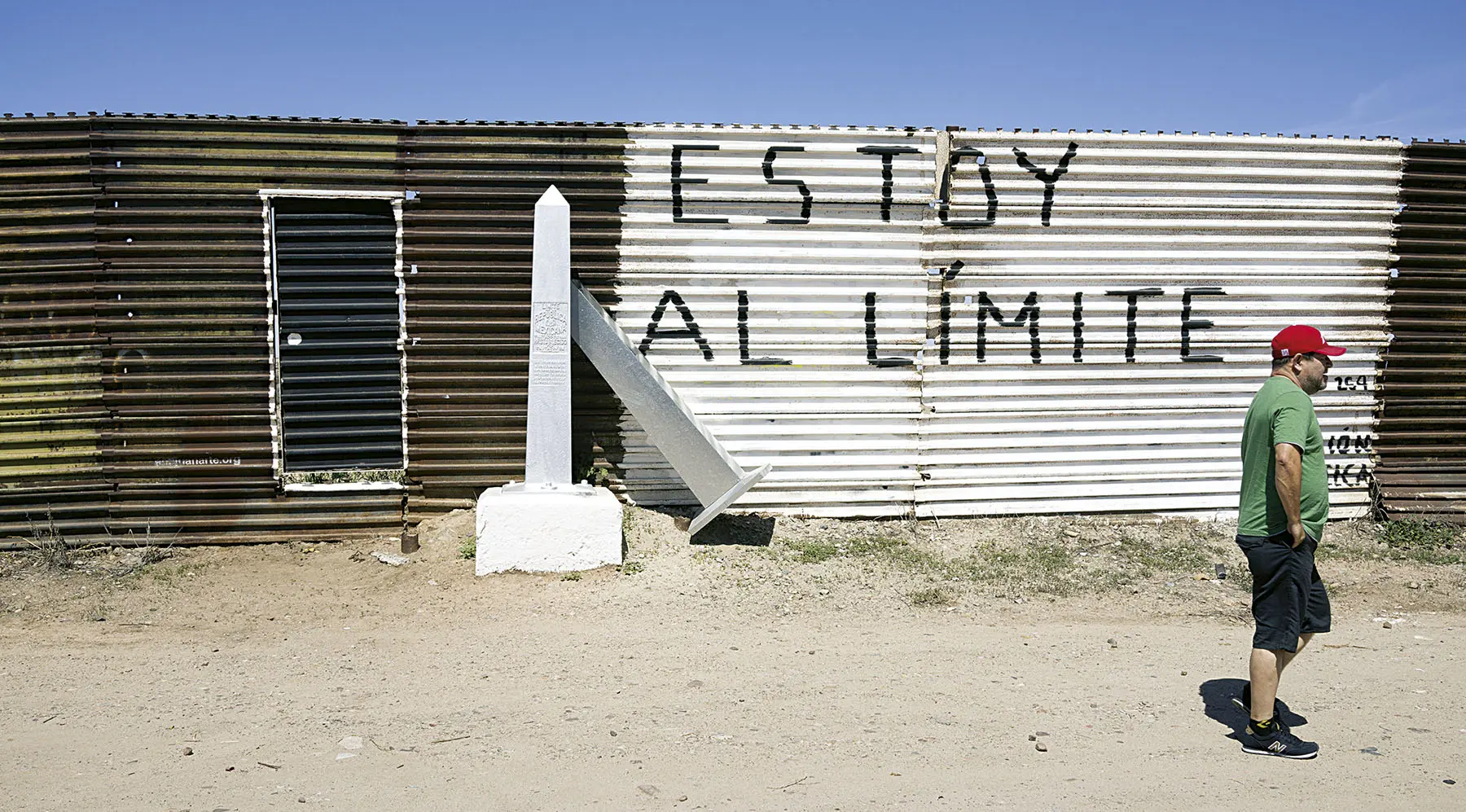
Undoubtedly, one of the most potent projects in Unsettled Landscapes was DelLIMITations (2014), by Marcos Ramírez ERRE and David Taylor. This work–one of several commissioned specifically for the Biennial–consisted of recovering and retracing the US-Mexico border as it existed in 1821. The action was the almost clandestine placement of a large series of metal landmarks that locate, physically, the border in the space it occupied before Mexico lost a portion of its territory to the United States. This work deal openly with the conflicted relations between the two countries, as well as the porous nature of political and cultural borders defined by an exhausted model of the Nation-State.
Another work directed at giving geographical and historical boundaries new visibility was Twenty-One Amazonian Maps (2014), by Gilda Mantlla and Raymond Chaves, which consisted of the superposition of a series of maps on the territory of the rainforest that interconnects several South American countries: river maps, maps on indigenous settlements, of oil exploitation, of natural preserves, among others. The work on the wall, then, undoes national borders in order to offer a representation in conflict of one of the regions most endangered by private economic interest and mining concerns that impact local life and ecosystems.
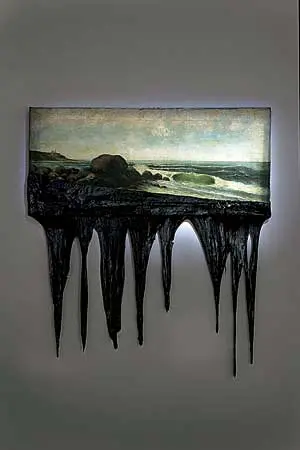
This concern is also evident in Minerva Cuevas´s Hidrocarburos series (2007-20014), from which a painting was exhibited here. In this series, Cuevas presents a number of historical landscapes she has found in antique shops, intervened by the covering of part of their surface with tar, a petroleum derivative. This work clearly alludes to the effects that the oil industry has on the continent’s natural spaces.
Another good choice in this exhibition is the new position from which it launches its reading of Latin America’s visual production (and, by extension, Latin America itself). Unsettled Landscapes brings again to the table a necessary debate about geography and its relationship to power, which had an important presence in Latin American art-world debates in the 1990s but has been displaced, over the last decade and a half, by other concerns. Thus, recent models intent on revising Latin American art have included the re-evaluation of certain Modernist discourses and geometric models (and their legacy), the grammars of activism and direct political engagement in contexts of extreme violence and repression, and lastly, the image of a tropical America that uses, in a parody key, the iconography of exoticism, hot-bloodedness, and exuberance. Rather than these models, Unsettled Landscapes seems to have its sights on a less spectacular, yet clearly urgent space: territories and communities located at the margins of the global imagination, which is to say, histories, practices, and cosmologies that make it possible to rethink critically the fictions and boundaries of the West.
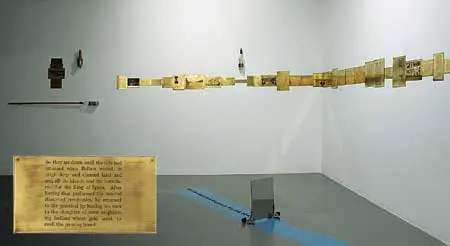
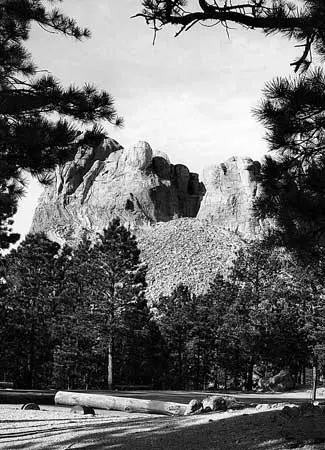
Matthew Buckingham presents one of the exhibition’s most solid works. Titled The Six Grandfathers, Paha Sapa, in the Year 502,002 C.E. (2002), his work is a timeline-like installation around Mount Rushmore, famous for the memorial sculpture carved in granite depicting American presidents George Washington, Thomas Jefferson, Theodore Roosevelt, and Abraham Lincoln as a tribute to the first 150 years of the history of the US republic. The timeline begins at the approximate time when the mountains arose from the geologic activity and includes key moments in the history of the struggle of the Sioux people and the pressure on the part of the US government to take over their land. Similar in a way, Luis Camnitzer’s installation titled Amanaplanacanalpanama (1995) recovers texts and images that reveal the colonial agenda behind the construction of the Panama Canal. Through a suggestive deployment of documents engraved on metal sheets and some objects, Camnitzer’s work explores the Canal’s different historical and political moments.
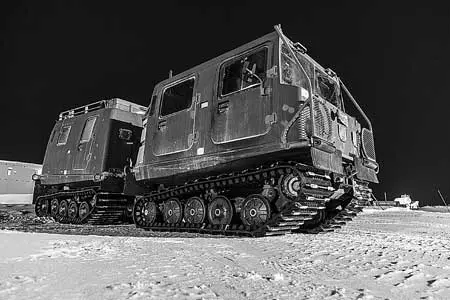
The Soniferous Aether of the Land Beyond the Land Beyond (2013), an installation by Charles Stankievech, is one of the most fascinating works on exhibit. Filmed in 35mm at the Alert Signals Intelligence Station—initially a meteorological station, later an anti-Soviet spy station in use during the Cold War— it presents the spaces and remnants of one of the most isolated and lonely human constructions in northern Canada. The artist traveled there to film in the middle of winter, under 24-hour darkness, and later combined his footage with old radio transmissions to achieve, finally, a sci-fi-inflected visual document. In this work, the traces of a technology now in disuse and the deliberate, mesmerizing observations of the outdoors create a new scenery where the thirst for a militarized utopia becomes the obverse of a post-apocalyptic landscape.
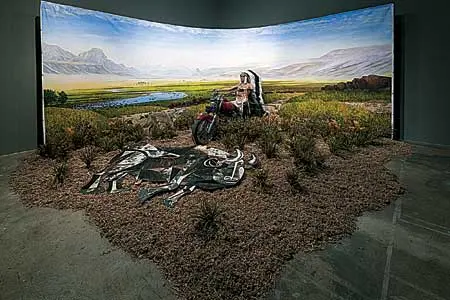
Bête Noire (2014), an installation by Kent Monkman, is another high point in Unsettled Landscapes. The artist, known for his large-scale paintings of the native American landscape, created for this exhibition a diorama-like installation featuring his alter ego, “Miss Chief”. the work presents us with native Americans in drag, riding a motorcycle through a vast landscape of the American plains, and in front of him a reclined bull that is a direct allusion to Pablo Picasso’s Guernica (1937). Bête Noire deliciously betrays an entire traditional construction of the American landscape, theatralizing and mocking its historical meanings: on the one hand, it inverts the gender roles associated with the native and original communities; on the other, it alludes to the power relations connected to the visual, both in the construction of the natural landscape commonly adopted by the natural sciences (as in the use of dioramas in the late Nineteenth Century) and in the emergence of Modernist languages in the West (such as Cubism, inspired on African masks).
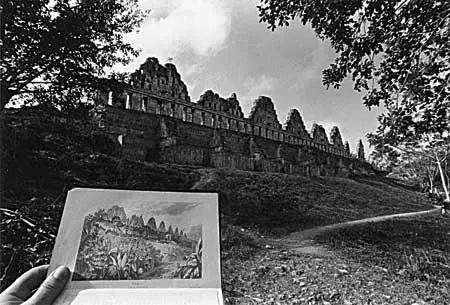
The inclusion of Juan Downey was also a laudable move: his installation Video Trans America (1976) is a monumental work consisting of the documentation of a series of journeys to different locations in the continent (Mexico, Guatemala, Peru, Bolivia, and Chile), recording native cultures and generating local spaces of debate and feedback of the same audiovisual documents. This work resituated the question of how to build non-colonial modes of representation that do not subject other bodies to a state of violent scrutiny. From a similar standpoint, Leandro Katz, in his series Catherwood Project, observes with a critical eye the itinerary of John Lloyd Stephens and Frederick Catherwood in their Nineteenth-Century expedition to Yucatan. Katz uses photographs to register the same Maya ruins visited by the travelers, framing them as they did and setting the product alongside Catherwood’s illustrations. Katz inverts the observer’s role as an archaeologist, as well as the social reach of their narratives and interpretations.
These questions about Western modes of representation and indigenous cultural practices are particularly pertinent in the context of Santa Fe, the third-largest art market in the US. The presence of Native art and the growing interest in it in this context signals the relevance of this debate, from coordinates that transcend the folkloric representations usually favored by the market. In that sense, the work of investigation and critical documentation underway at the Museum of Contemporary Native Arts is of great significance. It is there that Unsettled Landscapes is able to pose a number of important questions vis-à-vis the local art market, indirectly interrogating easy resources to self-exoticism on the basis of “the native” and gambling in favor of hybrid creative models that propose more complex ways of thinking the relationship between Western culture and the communities and/or languages outside its systems.
The exhibition takes us, subtly, through a selection of works that always see the land and its representation as a struggle between powers in permanent negotiation. The works featured in Unsettled Landscapes interrogate the uses and limitations of these images as a natural source of knowledge, highlighting the way in which they partake of public life and shape the space we live in and, in consequence, altering the images we shall have in the future. What this project reminds us of with such clarity and forcefulness is that we must not renounce intervening on geography, maps, and landscapes, powerful devices of social truth.
MIGUEL A. LÓPEZ
Writer and researcher. Lima, Peru.