
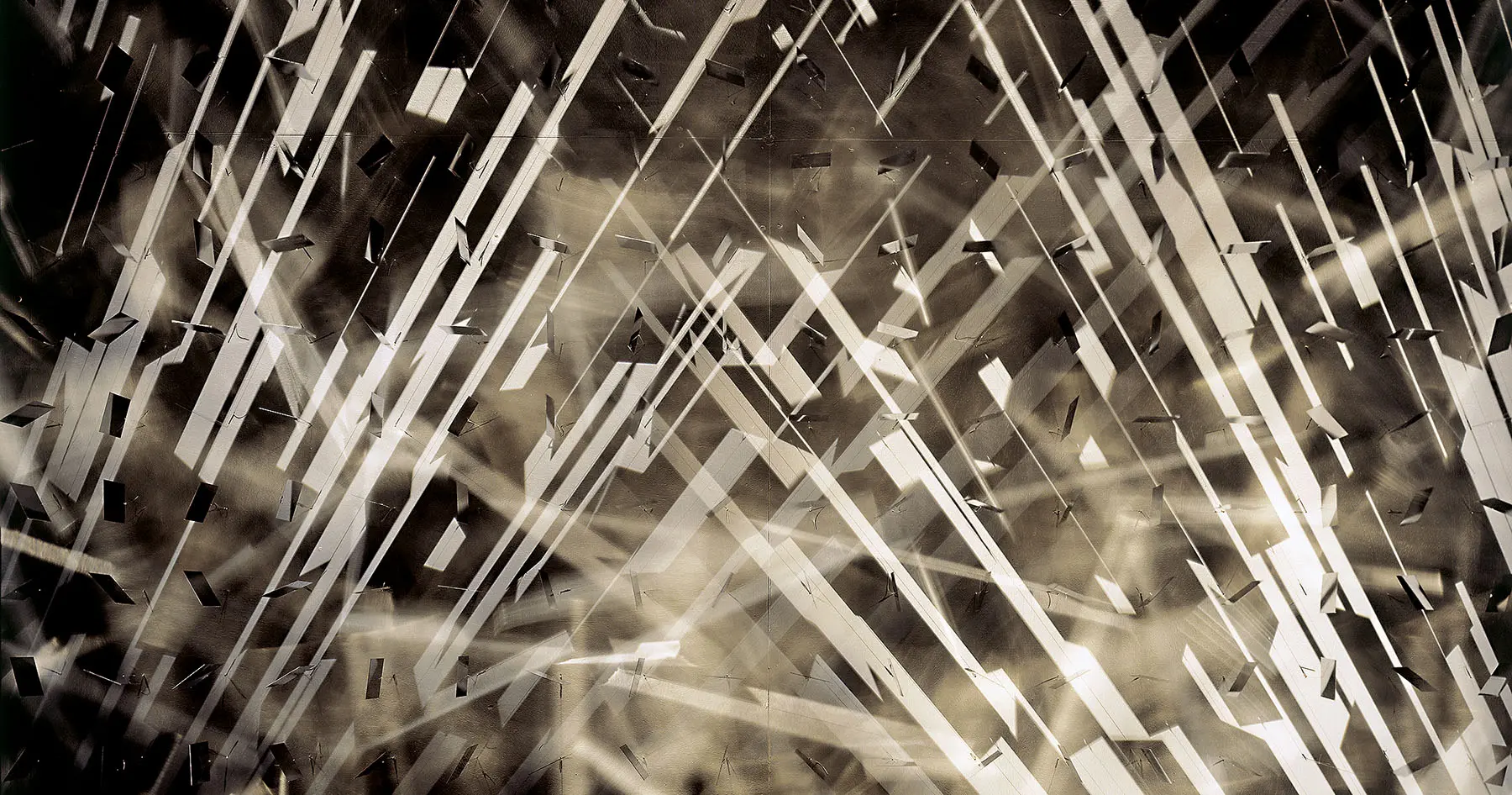
Le Parc, the son of a French father, was born in Mendoza province in 1928. He received the First Prize for groups at the Paris Biennial in 1963; the Special International Di Tella Prize, Buenos Aires, 1964; and the controversial International Grand Prix for Painting, Venice Biennale, 1966. In 1982 he won the Konex Prize for Merit as one of the most important visual artists in Argentina during that decade. In 1987 he won First prize at the Cuenca Biennial (Ecuador).1
Susana Sulic: You expressed an early vocation for draftsmanship and illustration.
Julio Le Parc: I worked from a very young age in different activities. My family moved to Buenos Aires and I started at the Manuel Belgrano School at 15.
S: When did you develop an interest in geometric art?
LP: What do you mean, “when”? One does not enter into geometric art as one enters a religion. Neither does one enter religion as one enters art. In art, you arrive at geometry through reflection, thinking, comparing… it is all part of a process.
S: How were your beginnings in Argentina?
LP: In Art School, you start with figurative exercises, expressionism, and deformed figures: a continuity in order to arrive at a result.
S: I was asking about the precedents…
LP: You make your own precedents, you learn them. Impressionism, cubism, constructivism, that’s the way it is in Argentina.
S: But there was a vocation.
LP: The same predisposition any artist has. And it gets adjusted according to the precedents. You learn about what was done before… the tendencies in the art that go from impressionism, cubism, surrealism, constructivism, etc. It is a process with a common ground.
S: You moved away from figurative art.
LP: There is a figurativism that is social in character, and one that is about nature.
S: You are talking about the international arena, but the same took place in Argentina in the 1940s.
LP: What happened in Argentina in the 1940s and 1950s was part of a common reflection…
S: Can you name a movement?
LP: Arte Concreto Invención.
S: An entire generation moved to Paris at the time.
LP: I arrived in 1957-58 and found Vasarely’s investigations of 1955-56 interesting.
S: Everything indicates you all had abandoned academicism.
LP: A journal was launched in Argentina. It worked there as Concrete art. But they later shifted and found Surrealist elements or devoted themselves to the fashion for lyrical abstract art.
S: There was also a Salon titled New Realities, like the one in Paris: Réalités Nouvelles.
LP: Such movements and those that could become influential turned into academicism. You had to make geometric art and nothing else… and then, the fashion was over. And from arte concreto invención they moved on to a different fashion.
S: Which fashion?
LP: And many of the Concrete artists moved on to surrealism in the thrall of that fashion.
S: How did they get out of that?
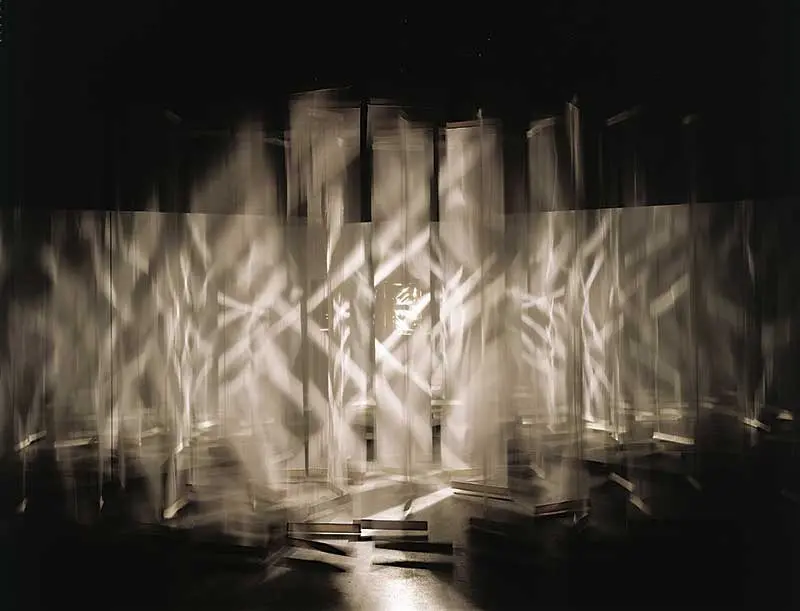
LP: We didn’t do anything special to break with that academicism, neither in favor nor against. We did our jobs. We left Buenos Aires and what we found here: Vasarely still alive. Of the geometric artists, the only one I was interested in was Vasarely, because he opened up new possibilities. A change needed to be provoked.
S: Who accompanied you in the early stages of this process?
LP: Sobrino and I had studied on our own. In Buenos Aires. For me and for Sobrino, Mondrian and his writings were important.
S: What you did with Mondrian was to turn him upside down.
LP: How so?
S: Yes, you turned his concepts upside down. You turned him around!
LP: How is that?
S: Because the theories of neoplasticism mean the cathedral, verticality… you brought art into the streets… you went out in the street, sought new spaces. You tried to avoid introspection in the arts, subjective elements…
LP: For us, Mondrian was the starting point. He had very clear ideas. In manifestos, in texts, he shaped and established precise relationships that were useful to us in the beginning. The relationship to form; he was very precise.
S: What derived from that, then?
LP: It was ours. The relationship with the eye, with the surface, to begin with, and then the entire evolution that happened and the entire process.
S: What was the determinant for the launching of GRAV (Groupe de Recherche d’Art Visuel)?
LP: Working together, being connected, reflecting as we saw one another’s proposals in parallel: setting individualism aside, being ready for confrontation, and seeing what happened on the basis of that confrontation.
S: Were there other artists who were influential in that context?
LP: The basis was all the artists who came before us: the constructivists as a whole, Moholy Nagy, Albers, Duchamp, and above all Mondrian and Vasarely, the ones closest to us. Mondrian could have been my grandfather and Vasarely, my father.
S: GRAV included three Argentine artists and three French artists, which was interesting.
LP: In the beginning, there were more. Vera Molnar, Servans, Miranda signed the act of foundation. Then they moved on, and very quickly we were six.
S: What were the reasons?
LP: A dynamic of group work and compatibility of interests, according to each case.
S: Can you give me some examples?
LP: Demarco preferred to work individually. Molnar wanted the work to be scientific, closed, lab-based and thought that it shouldn’t communicate with the outside world. Miranda had, in my view, some difficulties, or lacked the skills to integrate into group work.
S: You wanted to know the international scene.
LP: I won a scholarship and came to France in 1958 with that idea. With Sobrino we analyzed the work of contemporary artists and the constructivist of kinetic avant-garde of the period, noting their contradictions and their limitations to be overcome. Above all, the attitude of artists who used a free selection of forms and their location on the surface and in space.
S: And you differentiated yourself from Vasarely.
LP: Already early the year after I settled in Paris the differences between Vasarely’s work and my experiences were clear… In 1959 I was working in a systematic manner, on the basis of sequences and progressions to obtain optical results with progressive sequences and visual experiences on the surface, regular orders, homogeneity of forms, and relationships.
S: But there is a constant…
LP: The visual instability of forms, positions, and colors. But to that were added issues of post-image, the decomposition of the plane into planes, and the first trials with images--light, multiplied by planes of Plexiglas, superimposed and in-depth.
S: Who was closest to your positions?
LP: In the group, we were all close. We had the idea of moving away from the classical figure of the artist, from individualism, from the factors of success. Our production was critiqued by the others. We made severe critiques from a standpoint of great affinity. The dialogue, the critique of the work, was a way of breaking with the classical scheme of the individualistic artist.
S: Did your investigations help narrow your social network?
LP: In contact with Denise René, Vasarely, Vantongerloo, Morellet, etc.
S: And what about the ideas?
LP: With the establishment of GRAV in 1960 came to the first group texts and debates. The confrontation was organized, made concrete, and developed. The foundation document was signed by Demarco, García Miranda, García Rossi, Molnar, Morellet, Moyano, Servanes, Sobrino, Stein, Yraval, and me.
S: The writings from that period were extremely important.
LP: The 1961 Paris Biennial was the opportunity to validate the results with the distribution of a flyer titled “Enough mystification.” During the second presentation in the group’s studio, we had meetings, debates, and the publication of the text: “General proposals.” A little later came “Proposals on movement,” signed by García Rossi, Morellet, Sobrino, Stein, Yraval, and me.
S: But group work was not all.
LP: There were individual experiences with light. Around that time I was making small lightboxes with a manual motion to produce shifts of images and color. Along with the earliest mobiles on the ceiling, there were reliefs in wood with progressions of relief, of rotation; combinations of white, black, and transparency respectively; investigations with indirect light skimming the surface of the plane; curved and uneven screens; etc.
S: Was the emphasis placed on systematization?
LP: In my personal experiences, I introduced color-light in-depth with random shifts.
S: When did the first group exhibition take place?
LP: In 1962 in Paris, and after that we went to Italy with the exhibition Programmed Art. I also traveled to New York for the first GRAV exhibition in the US. And I produced a personal text, A propósito de arte-espectáculo”.
S: Were surveys and public debates the feature of that era?
LP: Traveling and meeting members of the “N” group from Padua, the “T” group from Milan, and other artists with whom the Nouvelle Tendance was born as an international movement.
S: Was the group’s first labyrinth produced on the theme of instability?
LP: Several manifestations happened in 1963. Among them, the group’s labyrinth at the Paris Biennial. And I took part, representing the group, in the International Art Critics Conference in Rimini, where I presented the “Proposal for a site of activation.”
S: That meeting determined the organization of an international meeting, and there came the text “Enough mystification” at the Nouvelle Tendance show in Zagreb.
LP: In 1964 we organized meetings in preparation for a great manifestation of the Nouvelle Tendance in Paris, and then came GRAV’s proposal for a Day in the Street. Also in Argentina and Brazil, on the occasions of GRAV exhibitions such as La inestabilidad, we organized meetings, debates, and discussions.
S: Can you talk about your own experiences in 63/64?
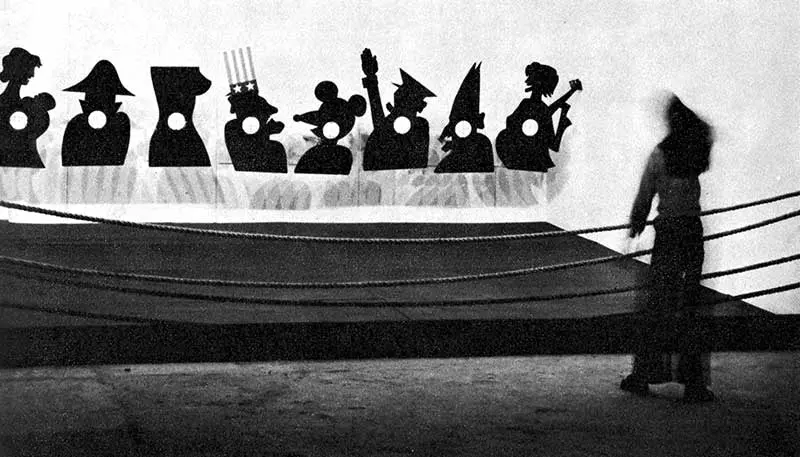
LP: The incorporation of contingencies external to the work, labyrinths, pathways, rough passages, manipulable elements, reliefs with curved reflectors. The first games came then, and also plans for large-format works.
S: In 1965 the group worked in New York.
LP: With the group, we created Laberinto III in New York, and we published “Stop-Art.” At the Paris Biennial, with the GRAV we presented a game room where viewers are even further seen as an active and determinant element in the proposed situations.
S: What were the variants?
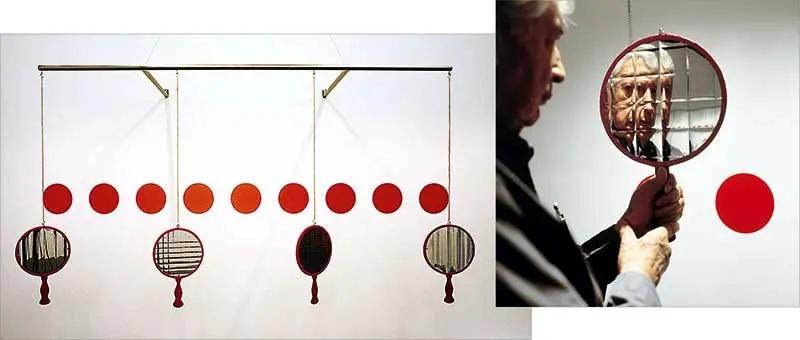
LP: Personally, I developed themes of the play, mirrors in motion, elements for game rooms, sets of surprise movements, shoes for different kinds of walking, eyeglasses to see differently.
S: And in terms of light?
LP: I worked with pulsating light, with different series of mirrors, elements for Une journée dans la rue (A day in the street), and multiples.
S: You had your first solo show in 1966.
LP: At the Howard Wise Gallery in New York.
S: And with the group in the City of Paris.
LP: Une journée dans le rue began at 8:00 am, and despite the intervention of the police it continued through midnight.
S: How was the event organized?
LP: This experience involved the presentation of diverse elements that provoked different situations every two hours, at different spots in the city. It was accompanied by a flyer with a text by GRAV, a map with the day’s program, and a survey.
S: You also represented Argentina in the Venice Biennale and won the International Prize for Painting.
LP: I had a solo room at the Venice Biennale and my first solo exhibition in Paris in the two spaces of the Denise René Gallery.
S: As well as the GRAV text on “Multiples.”
LP: I presented multiples.
S: And in Germany?
LP: From that year, with the exhibition Kunst Licht Kunst in Eindhoven, the group installed a labyrinth where light is used as a prompt for the viewer’s participation.
S: Did you travel often to Latin America for your exhibitions?
LP: My second trip was in 1967.
S: It was an intense effort.
LP: The text Cultural Guerrilla and then In Search of a New VIewer. Personally, I developed themes with light, environments, shapes in contortion, a transparent wall with reflective plaques, and others.
S: In 1968 you participated in what was known as “workshops for people.”
LP: Popular poster workshops. And I was expelled from France.
S: Was it because of the May ‘68 events?
LP: There was general persecution. After five months, I was given permission to return to Paris, with the support of other artists and intellectuals.
S: What did you do in the meantime?
LP: I traveled around Europe. With Enzo Mari we sent a telegram to Documenta retiring my participation. And I produced analytical texts, such as Demystify Art.

S: And about the behavior of the artist?
LP: In those group works, the audience is always the primordial element, and it is the viewer’s participation that gives meaning to the proposal.
S: Paris in May 1968…
LP: It was also the moment when GRAV dissolved.
S: The group’s activity ended in May 1968. However, in July GRAV presented an exhibition at the Environments room at the Kunsthalle in Bern. Over a short period, you were expelled from France and GRAV dissolved.
LP: I was expelled from France in July, along with other artists. And at that point, the group retired its work from an official exhibition. In November, four members decided to dissolve.
S: The Act of Dissolution is dated November 15, 1968.
LP: And we all signed it. And they declared that, while in June of 1960 forming a group was a necessity, after eight years its efficacy was in question, be it for the situation, be it for its own evolution, be it for its components or external circumstances.
S: A transitional year…
LP: There were collective reflections, unrealized common projects, the preparation of América Latina no oficial, a boycott of the São Paulo Biennial, public assemblies. There was an international campaign for the mobilization of artists and interventions in the cultural arena.
S: The 1960s were glorious years.
LP: The first survey game, Voltee los mitos, is from 1969.
S: You went back to your experiences with color from 1959.
LP: I systematized and developed them. Like the creation of cells or pieces, where light, vibrating and in motion, envelops the viewer.
S: In 1972, Jacques Lassaigne, director of the Modern Art Museum in Paris, offered you a retrospective from your beginnings in France.
LP: Driven by my anti-institutional convictions, I decided to leave it to chance with “heads or tails.” I asked one of my children to toss a coin; it came out tails, and that meant “no.”
S: You are said to have been the leader of the group.
LP: When you work in a group, you must subject yourself to the confrontation, and a dynamic emerges. Each one is responsible. You are not alone; you are part of a whole.
S: Were you always an activist?
LP: In late 1970 and early 1971 I traveled to Cuba for the second time. With a large solo exhibition at Casa de las Américas, I produced surveys, public discussions, meetings, as well as an attempt to create an experimental team, working in collaboration with the people.
S: In early 1970 you moved your studio from Paris to Cachan.
LP: Yes, and in 1971 I traveled to Puerto Rico. On the occasion of the first American Print Biennial there was a collective statement in favor of the liberation struggles of Latin American peoples, read live on television. I traveled to Havana to participate in a roundtable about the “Social Function of Art in Contemporary Society.”
S: This made possible an analysis and debates with intellectuals and artists about a new attitude.
LP: It later brought about, besides my personal reflections, the group exhibition América Latina no oficial in Paris. I also went to the Medellin Biennial.
S: Always with the same kind of intervention: games-surveys and debates about Latin America.
LP: And themes like “Color 1959”
S: And the Modulaciones series?
LP: Those were paintings I started in 1974, and they reflect the same continuity.
S: When did you have your first retrospective?
LP: In Düsseldorf, in mid-1972. In 1978, the BBC in London produced a documentary film.
S: One of your last public works is at Galerías Pacífico in the Buenos Aires Autonomous City.
LP: And it reflects the adjacent murals…
S: Before coming to Paris, before leaving the Escuela Nacional de Bellas Artes Prilidiano Puyrredón, you were able to study the murals that Berni, Castagnino, Guimaraes, Spilimbergo, and Urruchúa created for the same Galerías Pacífico. What influence did the muralists have?
LP: From the propositions of such murals I arrived at the intuition of the importance of the “viewer.”
S: Lately there have also been several events in Italy.
LP: Already in 2004 at the Boldeniga Castle, near Brescia, and Verso la Luce, sculptures were always visible in the garden. And now at Punta de la Dogana.
S: Yvonne Argenterio, Denise René, La Cometa, Lelia Mordoch, Brugada, and Granel promoted your work. Your career took place not only in museums, salons, and biennials.
LP: Changing the relationship between art and the audience should be the task of ministries of culture, public institutions… art cannot remain attached to the appropriation of galleries.
S: You brought the arts out of the museum.
LP: We sought a different relationship with the public in every place where we could invite them to participate.
S: As in El laberinto.
LP: We worked collectively on the construction of the labyrinth and people could enter, walk through it… we wanted to offer different proposals, different kinds of solicitations in a very narrow space. The public was not asked to walk around a stating framed painting.
S: Were there antecedents for that, other tendencies?
LP: There doesn’t exist, or it has not been created, a confrontation between contemporary art and artists themselves, in their relationship with the audience.
S: You moved forward in the democratization of the arts.
LP: No. That aspect of democratization is a superficial simplification.
S: What else should be done?
LP: Inventing new modes of appropriation. Multiplying valuation criteria. Not being subjected to fashion. To those with money. And changing all this. Especially, to make commercial value dependent on aesthetic value.
S: And not the opposite?
LP: A work to be sold expensively has intrinsic values: for it, in itself.
NOTE
1. He received the medal as Chevalier de l’ordre des Arts et des Lettres from André Malraux, Minister of Culture of France, in 1967.
SUSANA SULIC
Doctor in Aesthetics, Science and Technology of the Image, Paris VIII; History of Contemporary Art, Paris-IV Sorbonne; Sociologist and Professor of Fine Arts in Buenos Aires; Graphic Arts, Kunstakademie Düsseldorf.