
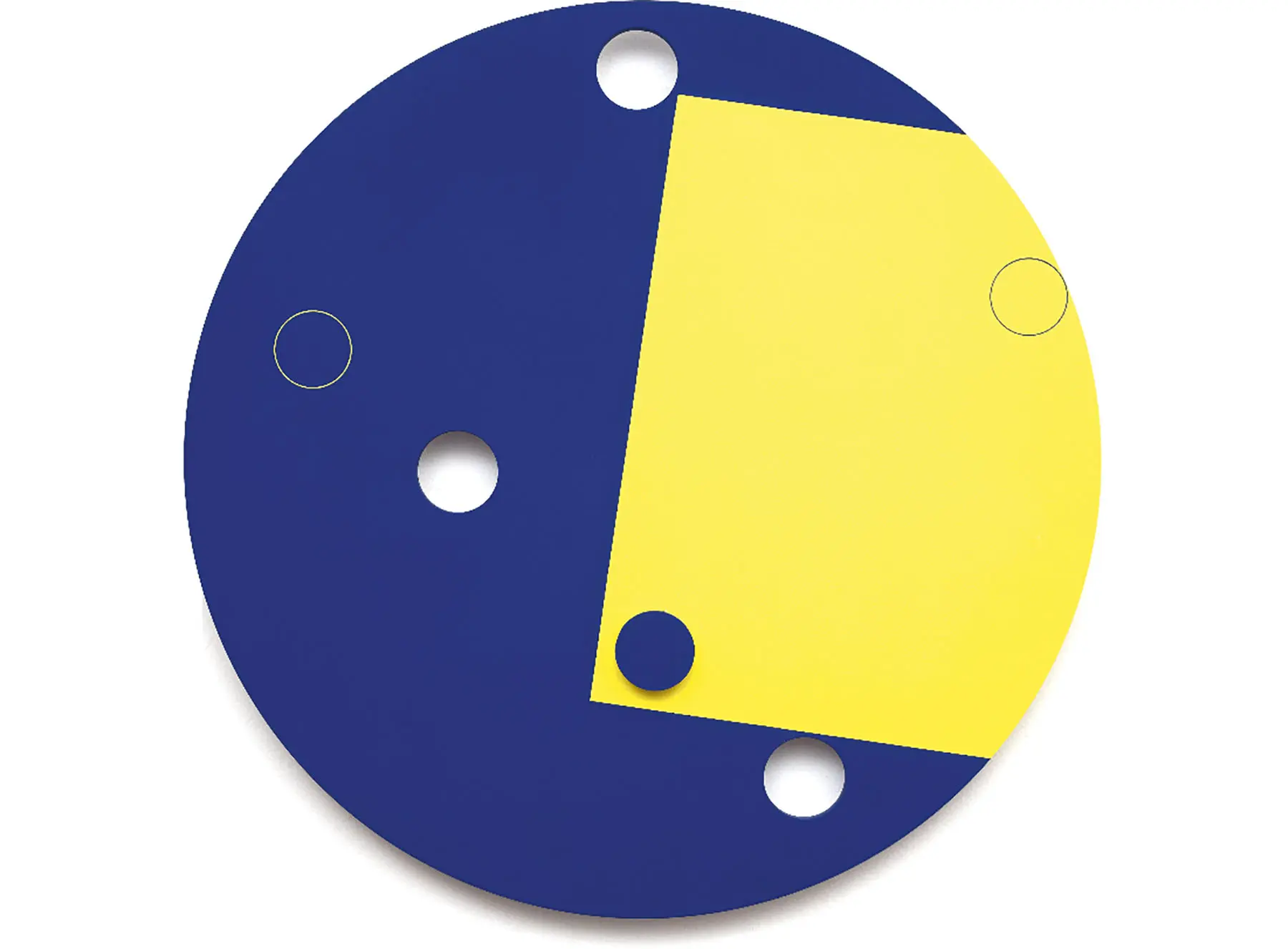
Macaparana’s work is essentially Brazilian, even as it situates itself at the opposite pole of the “Brazilianism” of our Modernist art when it deals with national themes.
I say that his work is Brazilian because it emerges from a different aesthetic process, one that began in Brazil with the introduction of Concrete Art in the early 1950s.
Concrete Art, which was fundamentally universalist —since the basis for its language was geometry— and had nothing of the national or the regional, clearly broke with the Modernist tradition in Brazil, represented by Anita Malfatti, Tarsila do Amaral, and Di Cavalcanti, among others such as Segall and Portinari.
With its geometric language, Concretism opened a new path for the visual arts in the country, and at the same time produced an impasse, which at the same time was the point of origin for neo-Concretism. Because, in distancing itself from the norms of Concrete Art, neo-Concretism introduced different options in constructive art, distinct from those indicated by the Ulm School.
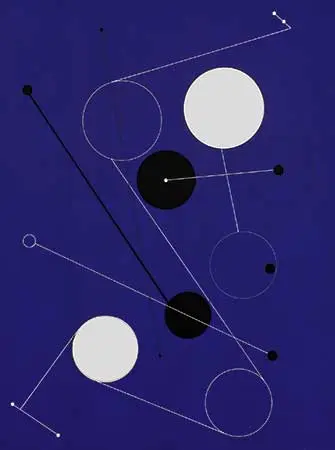
The basic innovation of neo-Concretism was to eliminate the frame as a fundamental element of pictorial language. The frame was subjected to violence and substituted by what the neo-Concrete artists called the non-object. The originality of Macaparana’s art—whose unique contributions are indisputable—could only appear after the neo-Concretists had so essentially changed the function of the framed surface as support for pictorial language. A new language was born there.
And, what is that new language? It is the fact that the framed surface ceases to be the site where the language of painting exists, to become itself that language. For that reason, its shape shifts: now, making art is reinventing it, turning it into an art object.
With this, I am obviously referring to Lygia Clark and Willys de Castro, but also to Macaparana, the inheritor of that new path opened for the arts by Brazilian artists.
Another legacy also present in Macaparana’s work is geometry, the straight line, rectangles, and hexagons, as well as invented shapes and invented geometry not to be confused with the abstract figure on the painting’s surface: no, in this case, geometry is itself the work of art, the wooden plaque in the shape given it by the artist.
So, see here: I am saying that geometric art in Brazil was a revolution that, in following that line, ceased to make paintings and moved on to inventing colors and geometric shapes, another universe, another geometry, and that a notable example of this is Macaparana’s art.
* All images illustrating this text are photos by Sergio Guerini.
FERREIRA GULLAR