
The first thing that surprises us about Macaparana is his name, taken from a rather obscure city in the Brazilian Northeast where he was born and spent his first few years, but which he seldom visits today. Yet, José de Souza Oliveira Filho, as he is legally named, can no longer renounce his moniker, assumed, or rather imposed, when Pietro María Bardi2 and Antonio Maluf decided to print it in the invitation for an exhibition organized by the Museu de Arte de São Paulo (MASP) in 1979. In this way, a bit to his chagrin and unexpectedly, Macaparana adopted for himself the rhythmic and cacophonic name of his native city, which those closest to him have reduced to just the first two syllables.
We would have to search in those early years in Macaparana, a city not that easy to find in the expansive map of Brazil’s geography, for his earliest artistic impulses (stimulated by his paternal grandmother), his contact with fabrics, textures, and cuts in his tailor father’s shop, to understand the possible roots of Macaparana’s vocation. His childhood and adolescence were years of artistic training and education at home, rather than more formal academic studies. His family lacked the resources to send him to study in Recife, and a small space was set up at the back of his father’s store for an improvised studio. There the budding artist produced his first colorful gouaches, in small formats and directly connected to the natural environment around him. Macaparana helped in his father’s tailor shop on a daily basis, and whenever possible he escaped to the back and worked on his art.
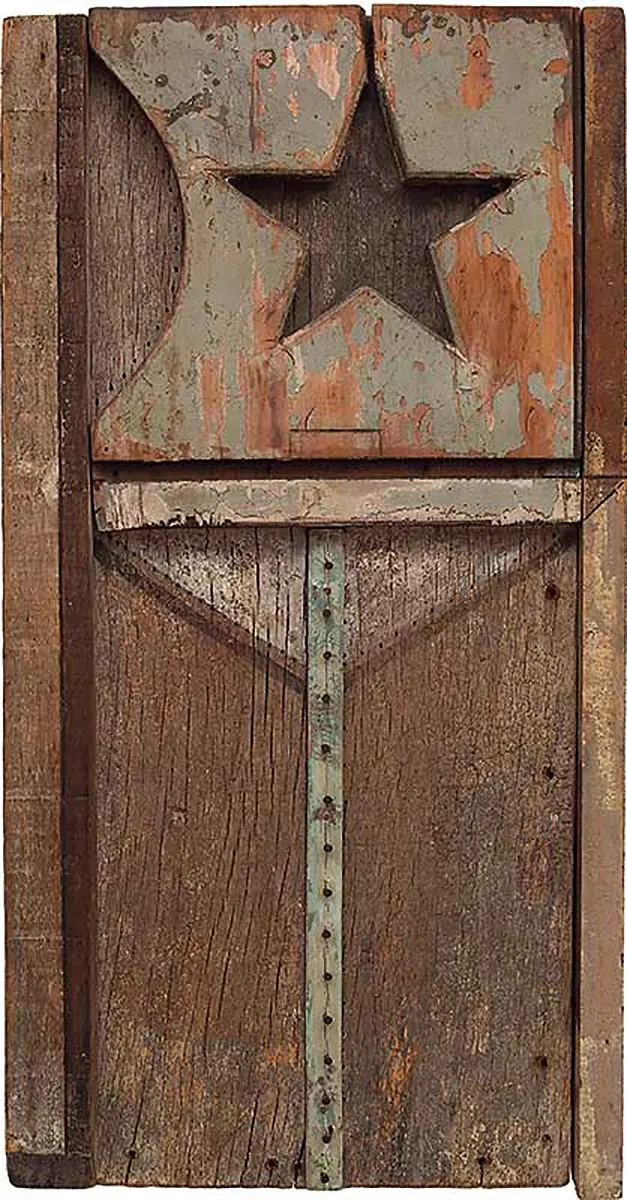
Preserved from this early period are some arid, rough, and desolate landscapes, painted in dim tones and loosely connected with social surrealism, and from there —already in the mid-1980s— a leap into the use of wood in an attempt to situate himself within the framework of Joaquín Torres-García’s constructivist poetics. The relevos, wood fragments found in trash dumps or demolition sites, are Macaparana’s first substantive attempt to explore three-dimensionality and where all narrative intention finally disappears; they are also his first timid approach to Continental modernity that could also be read in a geometrizing key. Macaparana’s encounter with the legacy of Joaquín Torres-García helped the Pernambuco artist elaborate, very tentatively, a discourse and a source for the affirmation of space for utopia, the best results of which were to be achieved almost two decades later.
In 1985, Theon Spanudis3 wrote a brief text, barely half a page, that provided an interesting approximation of the artist’s newfound intentions. Spanudis was one of the very first critics to celebrate this turn and connect it to the wooden ex-voto tradition of the Northeast, also the starting point of Macaparana’s prior graphic work. Two years earlier, however, in 1983, Bonino Gallery in Rio de Janeiro exhibited a small selection of Macaparana’s work, accompanied by a small catalog where writer and critic Geraldo Edson de Andrade asked us to attentively follow the Pernambuco artist’s work, noting the symbolic weight of his compositions and the complex aesthetic struggle between form and composition.4
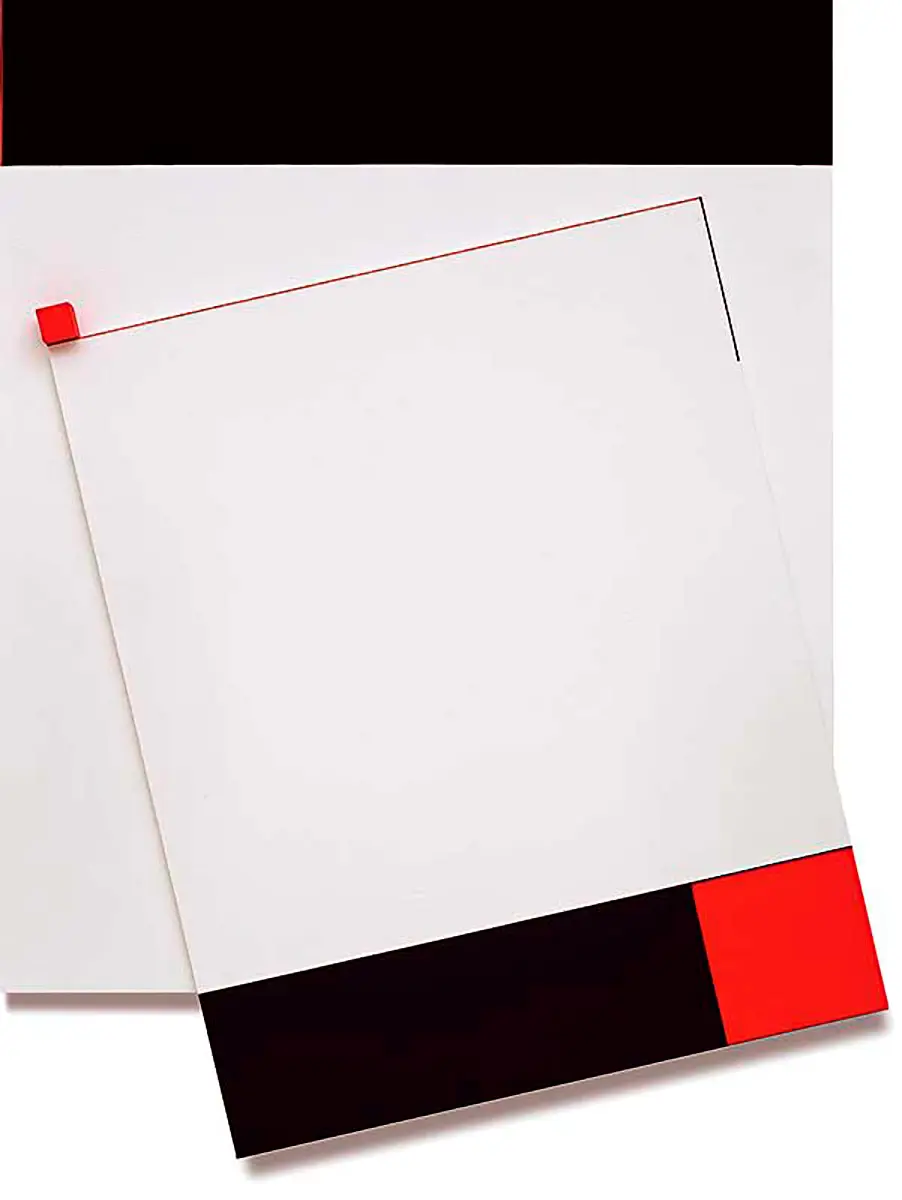
To understand the process by which Macaprana assumes and radicalizes his geometric experiences, coming very close to Neo-concrete postulates, his friendship with Willys de Castro5 appears as a definitive accident. Their initial encounter took place in a gallery in the early 1980s when Macaparana bordered the age of 30 and Willys was already immersed in the investigations for his Pluriobjetos. From that moment on, Willys and Macaparana sustained an intense dialog that often valued Neo-concretism’s hybrid proposals above the rigor of concrete art orthodoxy. This dialog was only interrupted in 1988 by the death of the author of the Objetos ativos, but they were key to giving Macaparana’s work, in only a few years, a sensorial warmth and a disposition to dialog with the viewer it never before possessed.
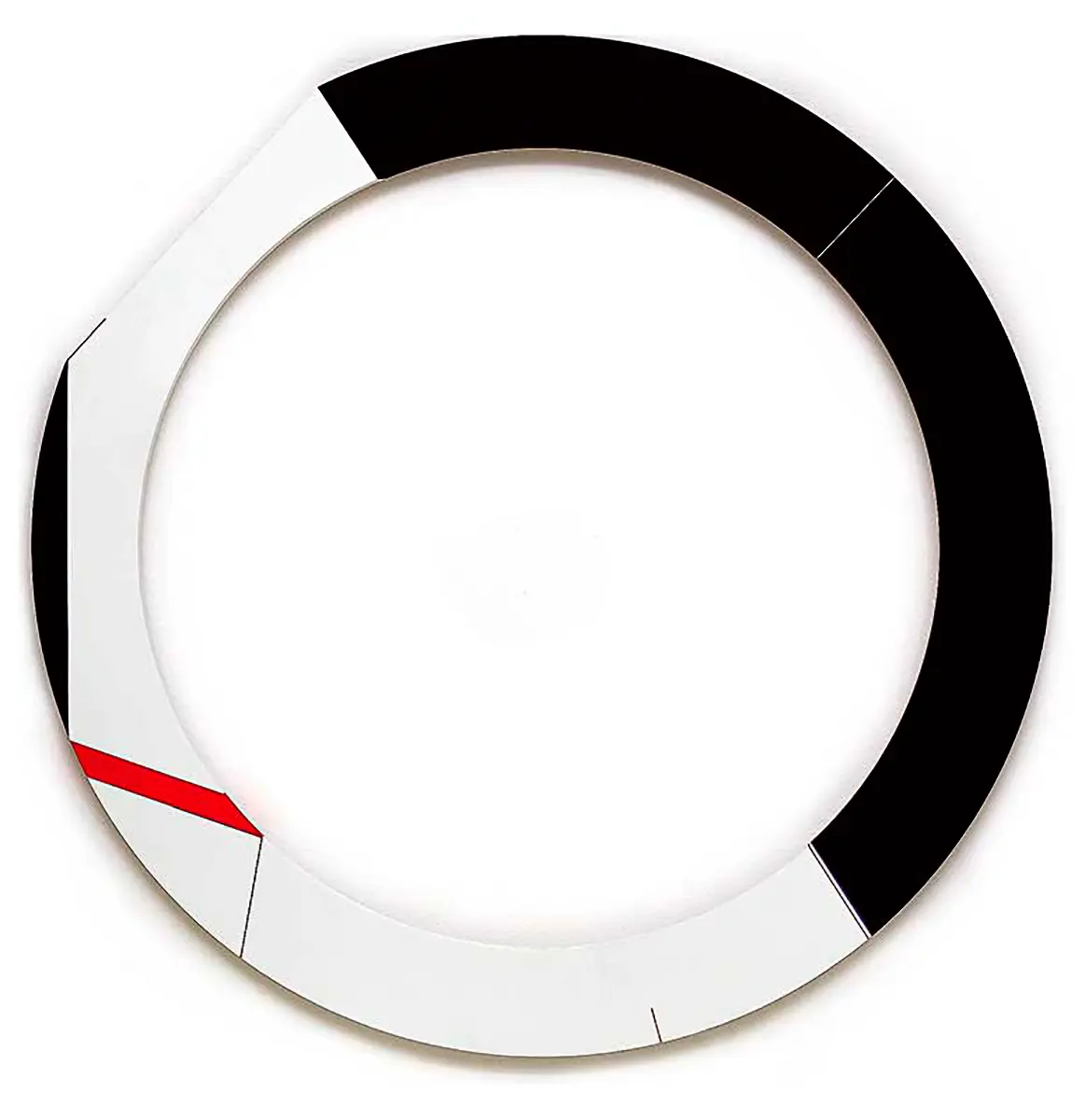
Their long conversations and walks, their European travels, their frequent visits to museums and galleries, and the acidly critical views espoused by Willys de Castro and Hércules Barsotti6 exerted a great influence on Macaparana’s work and demanded from him a certain distance to process the weight of his admiration for two of the most essential figures in Brazilian art during the second half of the Twentieth Century. Macaparana paid homage to Barsotti in a 2003 work named after him, which revisits one of the unusual formats Barsotti used in his formal explorations; and in Barsottiano I and II, two delicate works on paper from 2006. He also dedicated to Barsotti (and to his own father) his solo exhibition at Jorge Mara’s gallery in Buenos Aires.7 In 1988, Macaparana’s solo exhibition at Mónica Filgueiras Gallery in São Paulo was dedicated to Willys de Castro. De Castro died that same year and didn’t get to see the tribute, based on neo-concrete postulates where the traditional concept of a painting barely had any place.
Starting in 2000, Macaparana practically abandoned the wood reliefs that had occupied a good portion of his concerns in the 1980s and 90s, and with that, he gave closure to a period that demanded the cancellation of neo-Concrete intents in order to open different paths. Macaparana seemed more enthusiastic about painted stainless steel, found refuge in the intimate character of small-format art, and experimented further with paper; the presence of space and vacuum became more considered, and the artist continued to work on the basis of series, as he often does. El jardín de Sara, a series developed between 2000 and 2008, reflects the long agony of gallery owner Sara Campos’ garden; Cartas para Bispo de Rosario deals with the legendary work and figure of an excluded, ailing, marginal character of the Brazilian Northeast who produced a unique oeuvre where embroideries and the accumulation of found objects are the central axis of the composition, mostly created in the Rio de Janeiro hospice that was his home.
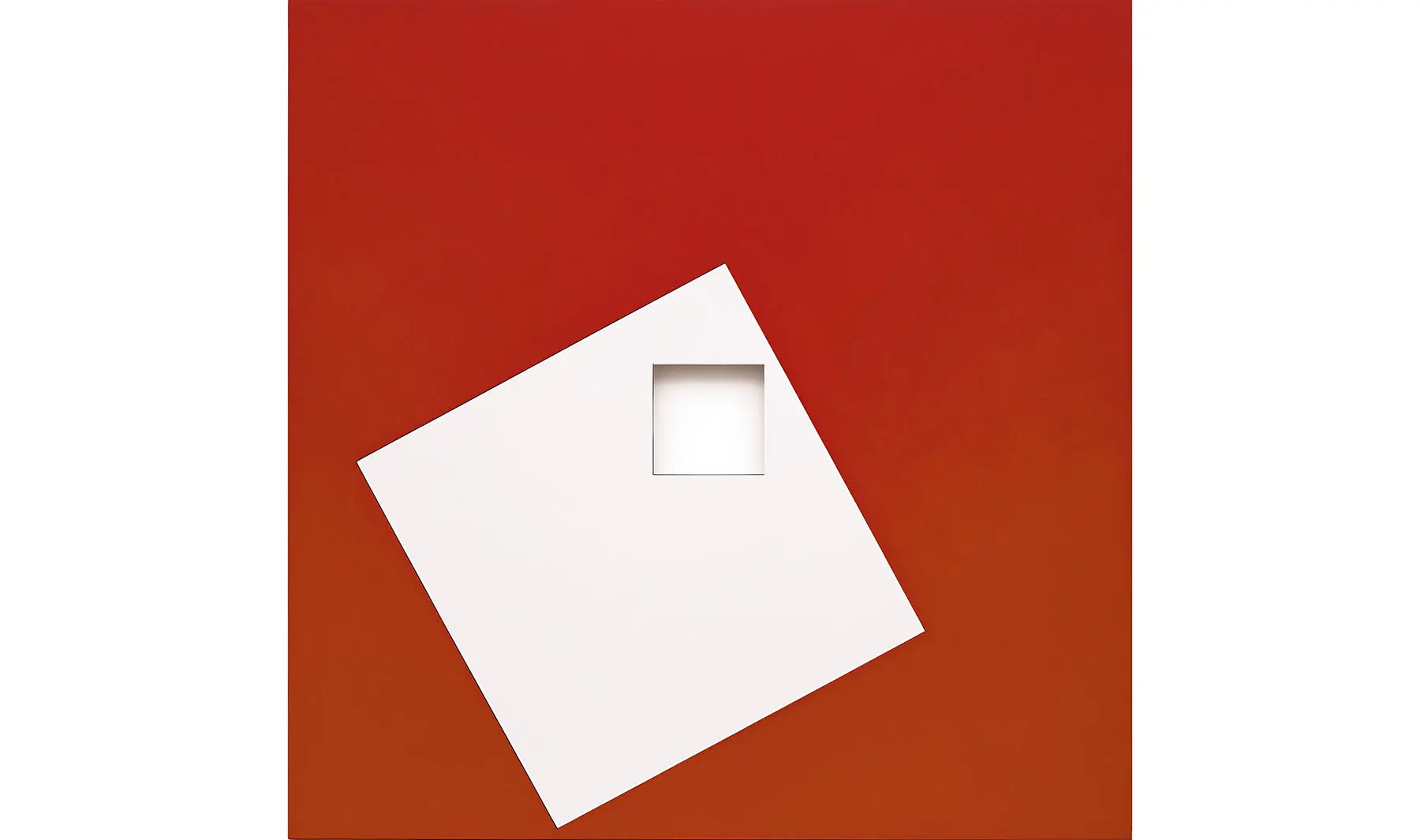
Over the past fourteen years, Macaparana has developed a daring, sensible, intuitive, almost organic geometry, in which there are no a priori calculations and where the disconcerting interruptions of the plane know how to find a felicitous accommodation within the final composition. Macaparana trims perforate the surface, makes marks with his chisel, and folds the paper several times to the point of presenting us with a planimetric in relief where what in appearance we are seeing is not what is happening in reality. The artist’s intentions demand attentiveness from the viewer and force us to sharpen our gaze in a subtle game of essences and appearances. These intentions were well understood by Eduardo Stupía, who in the catalog for the show at Jorge Mara Gallery writes: “In fact, Macaparana’s art can be said to consist, in turn, of the prodigious transmutation of simple, pure systems and alphabets that, based on the enlightened reconfiguration operated by the artist on basic or slightly irregular shapes, are projected, ubiquitously, into a state of malleability and tension, both in regards to their own perimeters and proportions and in connection with the location in space.” Macaparana achieves his colors after a long search; he never takes pigment directly from the tube but mixes and reduces until he finds the exact hue required for the work in question. And also because he has been able to find, in Brazil’s immense geometric legacy (and Latin America’s, by extension), a space of his own where the becalmed presence of the musical element8 is crucial and can even turn the brushstroke into a musical score, the line into a sign.
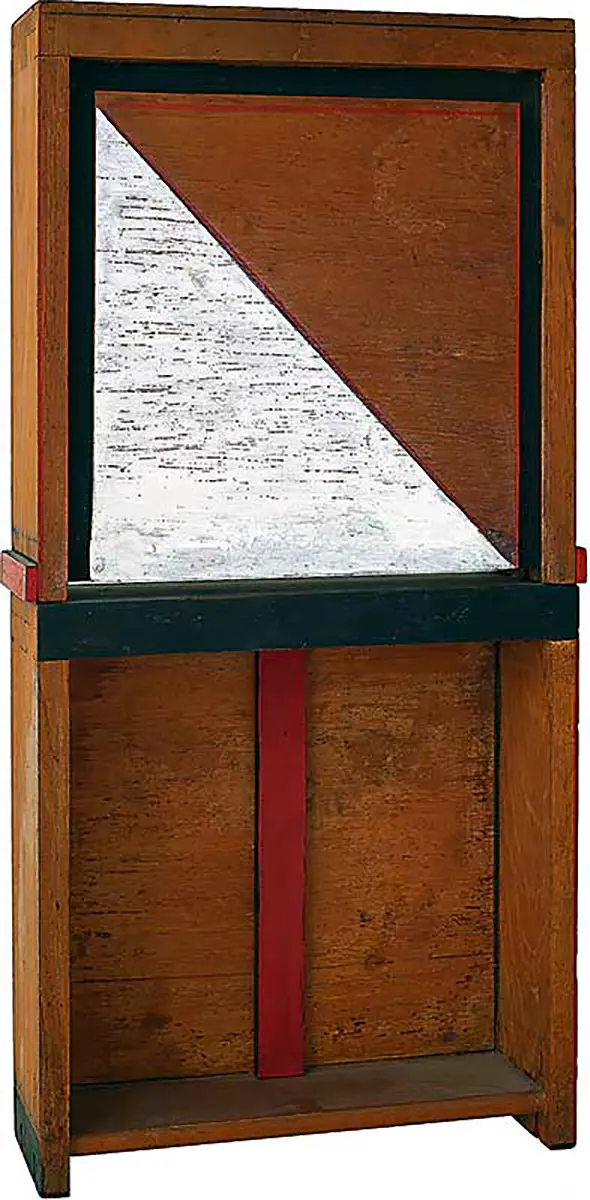
The insertion of Macaparana in the outsize and contradiction-laden terrain of Brazilian art could be situated at a midpoint between the respective poetics of Waltercio Caldas and Ernesto Neto, both inheritors of Brazil’s great geometric tradition and in particular of the suggestive, landmark-setting emergence of neo-Concrete art in Rio, despite the fact that their formal solutions at times distort and question the latter’s modes, or treat them with irony. However, Macaparana’s work has remained untouched by the latest boom of modern and contemporary art in the South American giant, and the knowledge and consumption of his work is the province of the most attentive audiences, those that are the least committed to current fashions or stereotypes.
NOTES
1. The term “sensible geometry” is in part derived from the exhibition Arte ahora III, América Latina. Museu de Arte Moderna de Rio de Janeiro (MAM/RJ), 1978.
2. Pietro María Bardi (La Spezia, Italy, 1900 São Paulo, Brazil, 1999) was a historian, journalist, critic, and collector, and a founder of the Museu de Arte de São Paulo (MASP), the institution he helmed for 45 years. After WWII, he met architect Lina Bo in Rome; they married in 1946 and moved to Brazil. The MASP launched an innovative program (often in collaboration with Lina Bo Bardi) that turned the museum into an educational center, with cycles and conferences on industrial design, film, and printmaking. His last book, A História do MASP, published in 1992, is a personal account of his years heading one of America’s most important museums.
3. Theo Spanudis (Smyrna, 1915 São Paulo, 1986) was an art critic, collector, and psychoanalyst. He was invited to Brazil in 1950 by the Brazilian Psychoanalytic Society. In 1857 he abandoned the profession and devoted himself to poetry writing and art criticism. In 1959, Spanudis was among the signers of the Neo-Concrete Manifesto. In 1979, he donated his collection to the USP’s Museu de Arte Contemporanea.
4. Macaparana Pinturas. Exhibition 289. June 28 – July 16, 1983. Bonino Gallery, Rio de Janeiro.
5. Willys de Castro (Uberlandia, 1926 São Paulo, 1988) was a Brazilian painter, draftsman, stage designer, and graphic artist. With Hércules Barsotti, he joined the neo-Concrete group in 1959, adding his name to those of Ferreira Gullar, Lygia Clark, Hélio Oiticica, and Franz Weissmann, among others. Between 1959 and 1962 de Castro created the series Objetos ativos, where plane and volume are reactivated while the canvas as a support for the work of art is questioned and rejected.
6. Hércules Rubens Barsotti (São Paulo, 1914 São Paulo, 2010) was a Brazilian painter, printmaker, and visual programmer. Along with Willys de Castro, in 1954 he founded the Graphic Projects Studio, illustrated several journals, and developed textile prints. Invited by Ferreira Gullar, Barsotti joined the neo-Concrete group. Barsotti explored unusual formats, such as rhombuses, hexagons, and spheres. In 2004, the Museu de Arte Moderna de São Paulo (MAM) organized a retrospective of Barsotti’s work.
7. Macaparana was presented during the fall of 2010 at the Jorge Mara Gallery in Buenos Aires. The catalog published for the occasion was written by Eduardo Stupía and translated into French by Samuel Titán Jr.
8. The numbered series Cuadernos de música or works like Gould I and II must be understood as Macaparana’s tribute to music, and in particular to Canadian pianist and composer Glenn Herbert Gould (Toronto, 1932 1982), a renowned interpreter of Bach’s Goldberg Variations and Sonatas as well as Arnold Schönberg’s piano works.
OSBEL SUÁREZ