
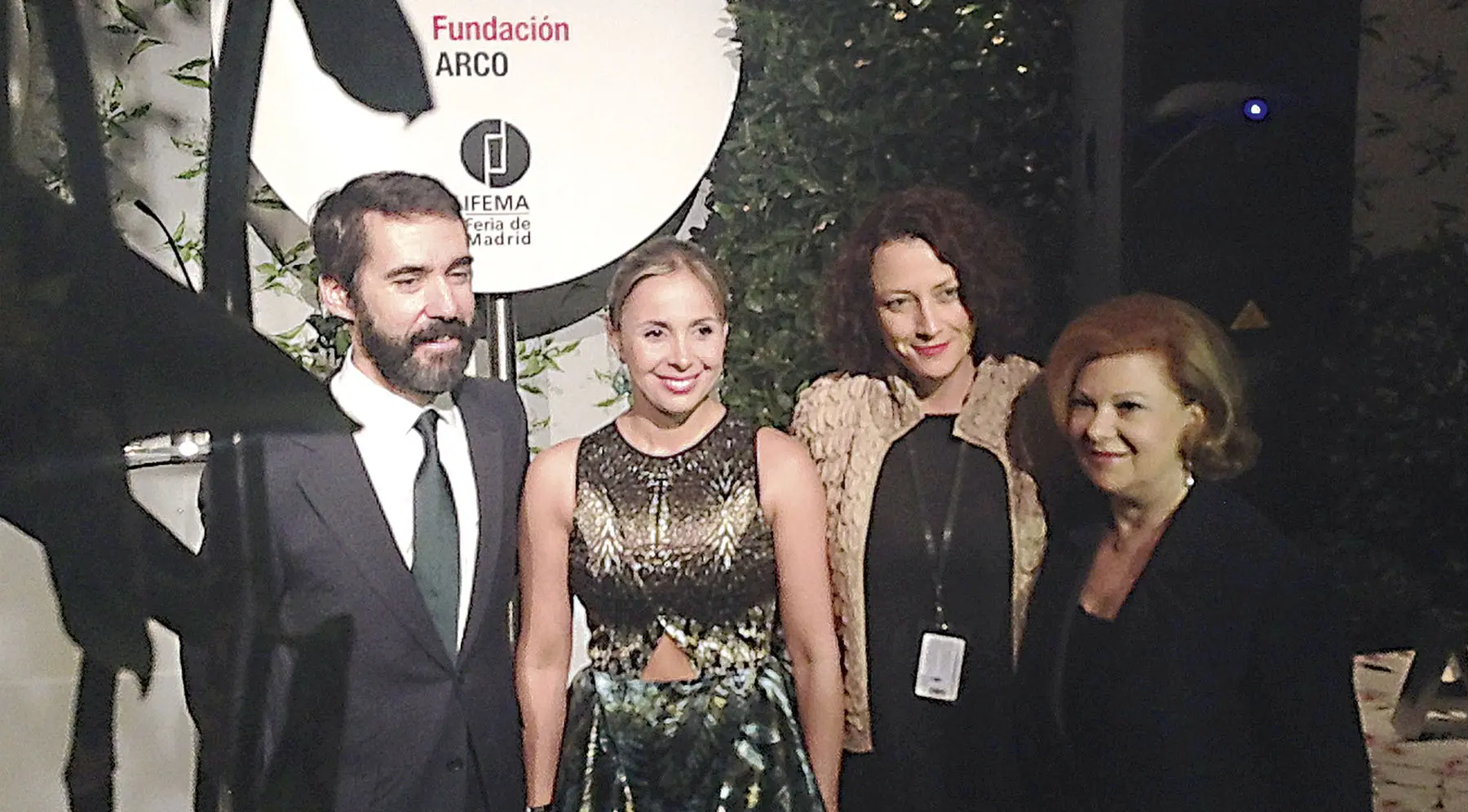
This year’s edition of ARCO differed from its predecessors both for a sensible rise in the quality of the offer and an unexpected display of contemporary Colombian art, in the international art fair itself and most of Madrid’s institutional exhibition spaces. ARCO’s executive team—with Carlos Urroz at the helm—gave Colombia the status of the featured country, and this moved the Colombian government to design an ambitious program of exhibitions involving almost twenty museums, art centers, and even some alternative locations in the Spanish capital. The media impact of this elevated concentration of art shows in a brief period of time was such that a Madrid online publication titled its coverage in this way: “Colombia, it's capital Madrid.” For the fair itself, the Colombian government contracted a mega-pavilion and filled it with information about the current state of the art in the country, which complemented and reinforced the promotional work of 10 Colombian art galleries most from Bogotá, although some also from Cali and Medellin present at ARCO. The pavilion also featured a posthumous homage to Ana Mercedes Hoyos, and Celia Sredni de Bribragher received the Special “A” ARCO Award for her outstanding role in the international promotion of Colombian and Latin American art; Banco de la República was given the Institutional Collector Award; and the Bar On Collection, the Private Collector Award. Fundación Iberdrola from Spain was presented with the Corporate Collector Award.

In Madrid, the ARCO Colombian program covered a broad range of cultural institutions, as I have noted. At the most prestigious end was Museo del Prado, which is hosting La Lechuga, a solid-gold pyx covered by 1.757 precious stones, made in Colombia during colonial times. At the other end, that of alternative spaces, were Matadero, Tabacalera, and even a modest locale like Espacio Trapezio, with an Antonio Caro exhibition. And in the middle, a heterogeneous roster: Casa de América, Casa Encendida, the Cervantes Institute, the Conde Duque, and the 2 de Mayo Center in Móstoles. Not even the Thyssen Museum and Museo Reina Sofía abstained from participation or at least did not refuse the Spanish government’s strong invitation to take part in the Colombian program. The formerly presented Sin título, an older work by Doris Salcedo; the latter, a cycle devoted to the films of Luis Ospina.

Overwhelming and heterogeneous as it was, this offer outlined a significant panoramic of one important part of contemporary Colombian art and made it possible to identify a number of dominant trends. First, an indubitable interest in nature themes is assumed in a highly diffuse way as plot and even as a pretext. A simple review of the titles of the main group shows included in the program proves this trend: Tejedores de agua: el río en la cultura visual y material contemporánea en Colombia at Conde Duque; Naturaleza Nominal at 2 de Mayo; La migración de las plantas at CentroCentro; Mutis Mutare, a tribute to Spanish botanist José Celestino Mutis expedition, at El Ranchito, and Desnaturalización. Juan Sebastián Cárdenas one of the curators of the Acorazado Patacón exhibition, at Tabacalera—explains the importance of this tendency in the following terms: “In today’s world, we continue to be raw material suppliers (…) but it can be said that art is a particularly effective critical tool to explore the implications of this phenomenon of our dependence on ‘the natural.’” To his explanation perhaps we should add the current influence on the Bogotá art scene of the FLOR ars+natura Foundation, headed by José Roca, who was also a co-curator for Tejedores de agua and curator for Mutis Mutare. And both María Willis and Jaime Cerón had an even larger presence: each curated three exhibitions, and both co-curated Mutis Mutare. A veritable record.
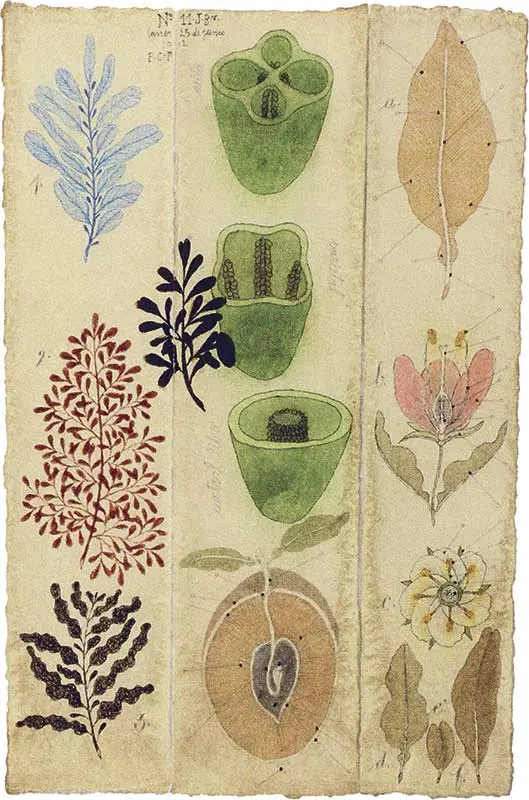
But while Alberto Baraya exquisitely represents the ironic moment of this trend with his herbalists of artificial plants and flowers, which parodied Mutis’ botanical expedition, Carolina Caycedo, and Carlos Motta represented its tragic moment. Both exhibited with Bogotá’s Instituto de visión gallery: Caycedo presented an impressive aerial photograph denouncing the environmental destruction caused by large-scale mining, and Motta had his video Nefandus, in which the artist uses a canoe trip along the Don Diego River, in Santa Marta’s Sierra Nevada, to tell us how that idyllic location (and others like it) were the stage for missionaries to impose Christian morality on the original peoples, and with it the condemnation of homosexuality.
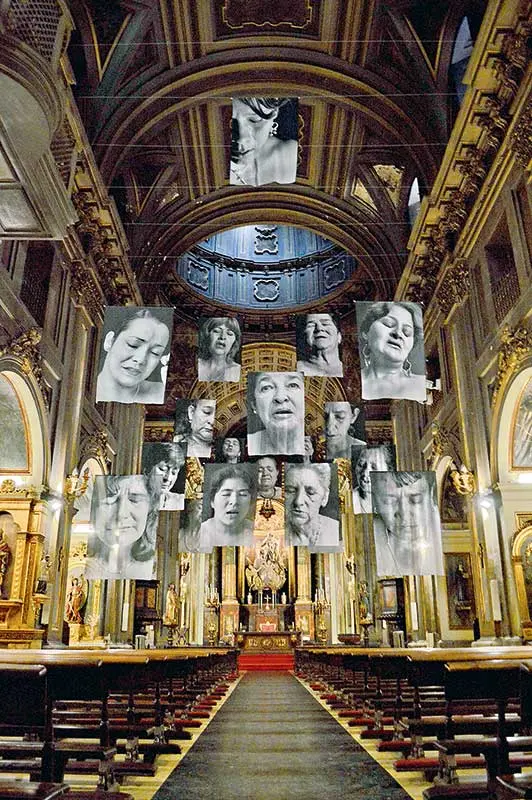
The second trend has to do with violence, or, to be more precise, with Colombia’s unending armed conflict (which today, thanks to the Havana talks, seems closer than ever to a resolution). It has left behind a long trail of pain and suffering, as alluded to in such works as Doris Salcedo’s Sin título, mentioned above; Iván Hurtado’s paintings and models referred to war devastation, exhibited by La Oficina gallery; and Sudario, Erika Diettes’ impressive installation with large-format photographs of female victims of the dirty war, which occupied the central nave of the San José Church, in the heart of Madrid. Also to be mentioned is Mirar la vida profunda, Carolina Ponce de León’s book on the photography of violence of Jesús Abad Colorado, presented in the Colombian pavilion at ARCO.
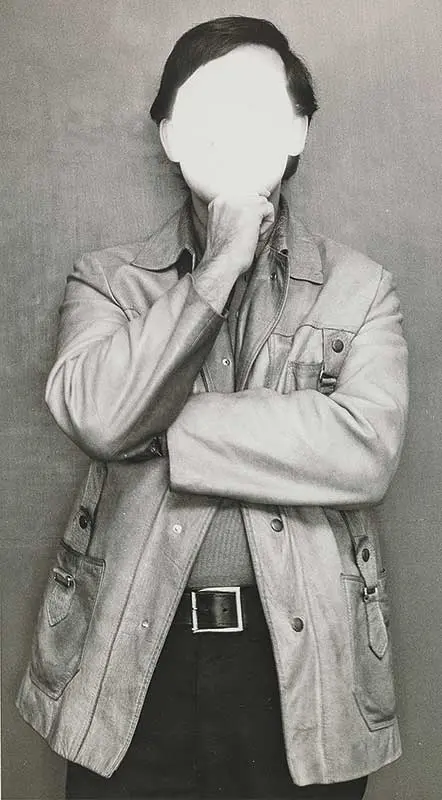
Besides these dominant trends, we must mention Antonio Caro’s exhibition at Espacio Trapezio and Miguel Ángel Rojas’ installation Unas de cal, otras de arena, at the Museo Nacional de Artes Decorativas. Also, the show about Colombian photography of the 1970s curated by Santiago Rueda Fajardo, which has the virtue of being the result of a long investigation and has recovered artists no longer on the scene, such as Camilo Lleras, Inginio Caro, or the early Manolo Vellojín. The title comes from one of Lleras’ works: Autorrestrato disfrazado de artista, to which the following subheading is added: Conceptual Art and Photography in Colombia in the 1970s.
Finally, it is important to note two outstanding works of art. First, Atramentos, by Oscar Muñoz, is titled after the black substance used in ancient Rome to die fabrics, paint, and write. It is a splendid intervention inside one of the shared bathrooms in an old cigar manufacturing facility, refurbished today as a contemporary art center. The decaying aspect of the sinks and showers intensified the effect intended by the artist with his drawings and a video projection where printed letters take the post from the photographic portraits and self-portraits that for so long characterized his work. Books prepared us to “read” photographs, Marshall McLuhan wrote in a justly famous essay. And Óscar Muñoz moves from one to the others in order to bring to our attention one of his obsessions: the unredeemable obsolescence of all technical means our civilization has invented to preserve memory.
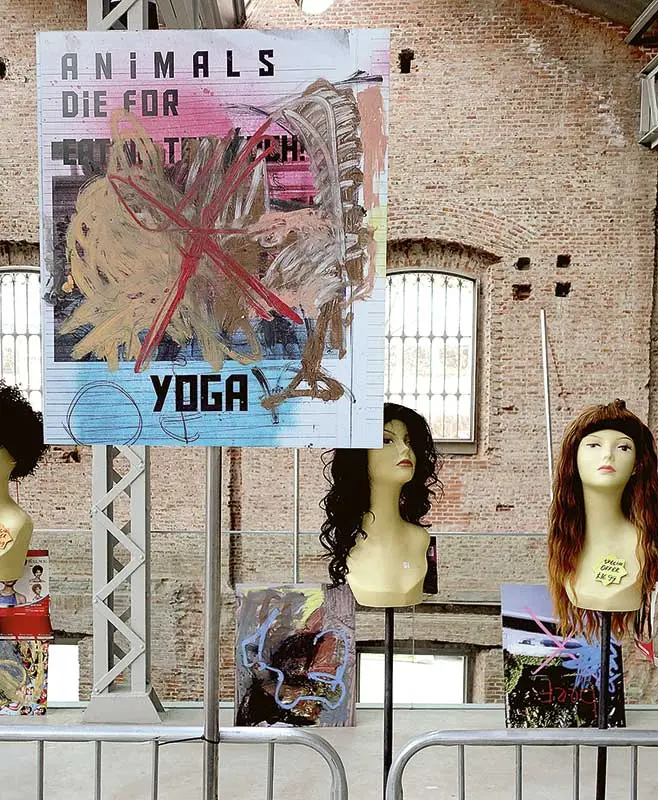
De marcha… una rumba… No, solo un desfile con estética was the title given by Oscar Murillo to his mega-exhibition at the Daoíz y Velarde Cultural Center in Madrid. The main body of the exhibition stages the contrast between his aggressive, brutal paintings and the ceaseless parade of stylized mannequin heads displaying the wigs that Third World women often purchase in an attempt to imitate the appearance of top Western models. The crudeness of the denunciation formulated in that contrast was emphasized by a series of speakers hidden at intervals behind garishly painted fabrics, through which we hear the testimonies of migrant Latin American and African women in London, telling the story of their difficult survival in a city where they sought to escape poverty and the violence of the sociopolitical strife in their native countries. The show is completed with the projection, in a closed room in the lower level, of a video about the visit of a lottery seller from La Paila to his prospective clients. On the floor at the entrance, we found three mannequins clad in the uniform of the La Paila sugar factory, where Murillo’s father worked before emigrating with his family to London, where Murillo was able to become an artist.
CARLOS JIMÉNEZ