
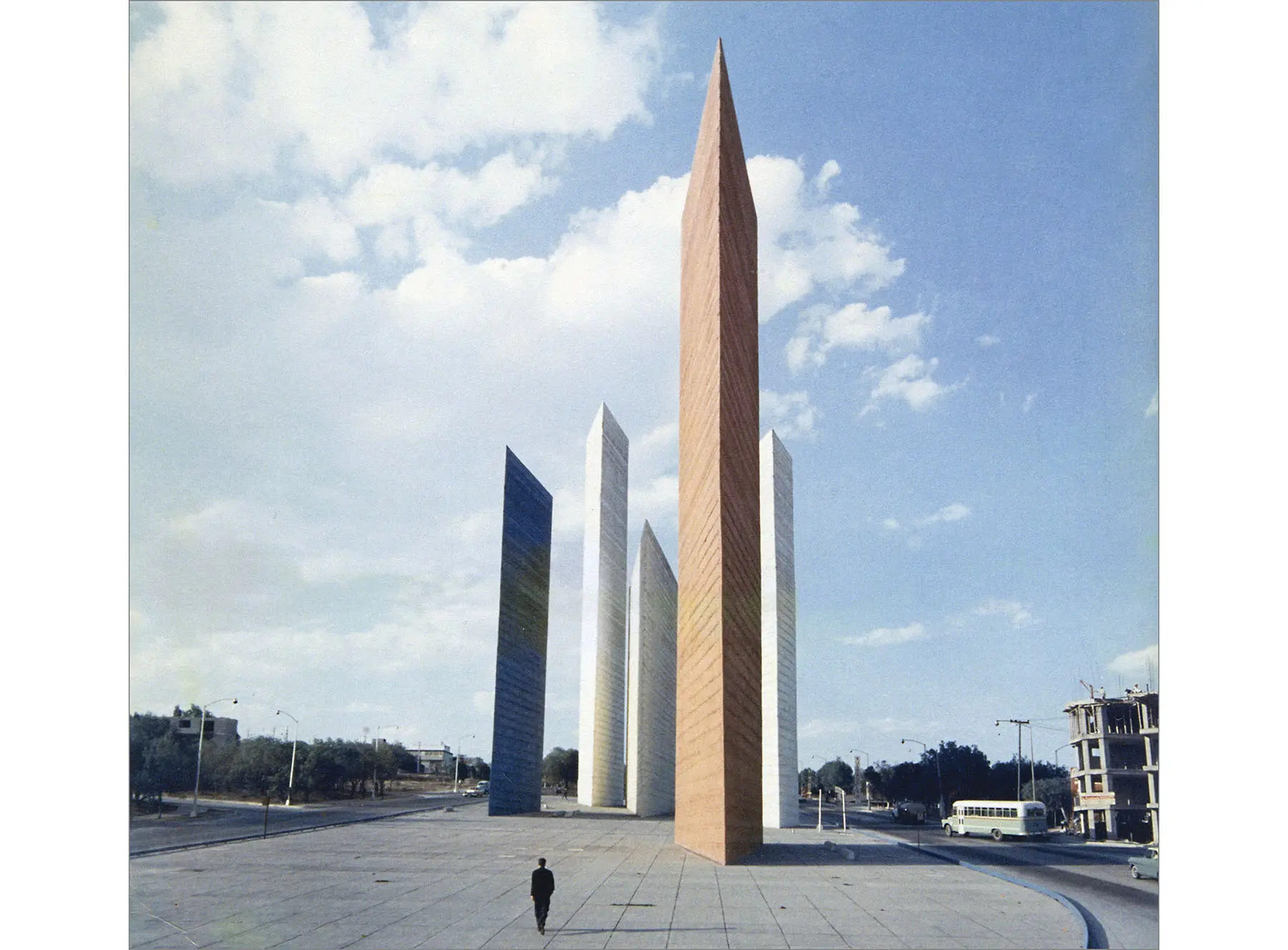
Mathias Goeritz was a plural artist not because he worked in all disciplines and with all materials, but because he encompassed all fields—ideas and materializations, work and pedagogy, criticism and publications, organization, and participation. And if that were not enough, as a singular figure in the history of Twentieth-Century Art he was a precursor of Minimalism and actions. One approach to knowing and understanding his figure emphasizes the fact that he was not afraid to state the importance of emotions. Save for his initial contributions in Spain, it is indisputable that all his significant developments took place in Mexico. What were his great contributions and why did his aura transcend internationally? These questions can only be answered if one knew him and understood the core of his work. 2015 will mark the 100th anniversary of his birth, and the 25th of his death. Mentioning and analyzing the many areas in which he excelled is to truly receive the gift Mathias gave humanity. We are not talking about a tribute to him, because he accepted them with his usual amiability, but they were not to his liking. Those he received while alive he deemed anticipations of death, and that they should have been postponed until he was no longer with us. To understand this, one must go to the difference between format and content. Bombastic formats—such as those common in tributes and homages—even as they reflect admiration, recognition, and merit, tend to stand out for their presentation: they produce “more noise than content.” It is not uncommon for people to speak of a tribute after the event, but if one were to ask them for the reasons that motivated it, the answers would be generic; it is especially difficult to detail them in Goeritz’s case. For “having introduced Mexico to the new languages at a time when Muralism was dominant... for the Satélite Towers, and as a teacher to so many architects active today for the Friendship Route…”
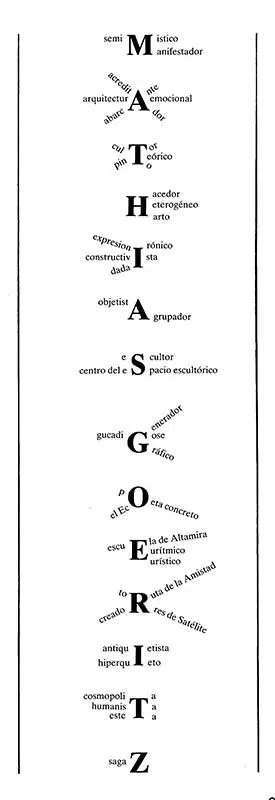
In 1985, Kuper Gallery—his gallery since he arrived in Mexico—organized an exhibition celebrating Goeritz’s 70th birthday. The artist’s closest friends were invited to participate, and even with that narrow circle, the works on exhibit were many and varied. Goeritz still very much together both physically and mentally thanked everyone for that night, and during the following days communicated with the participants via his well-known letters. A few years later, Mexico City’s Banco Mercantil presented a large exhibition of his works. Outside the building, a monumental banner, over 15 meters tall (at the time, such proportions were not in use for banners on a building façade), welcomed visitors with a concrete poem Goeritz was given on the occasion of his 70th birthday celebration. The artist himself had commissioned the banner, surprising even the author, who learned of this only upon arriving at the opening. Goeritz saw it as his portrait, in an aesthetic methodology he felt passionate about. That concrete poem provides the structure for this essay.
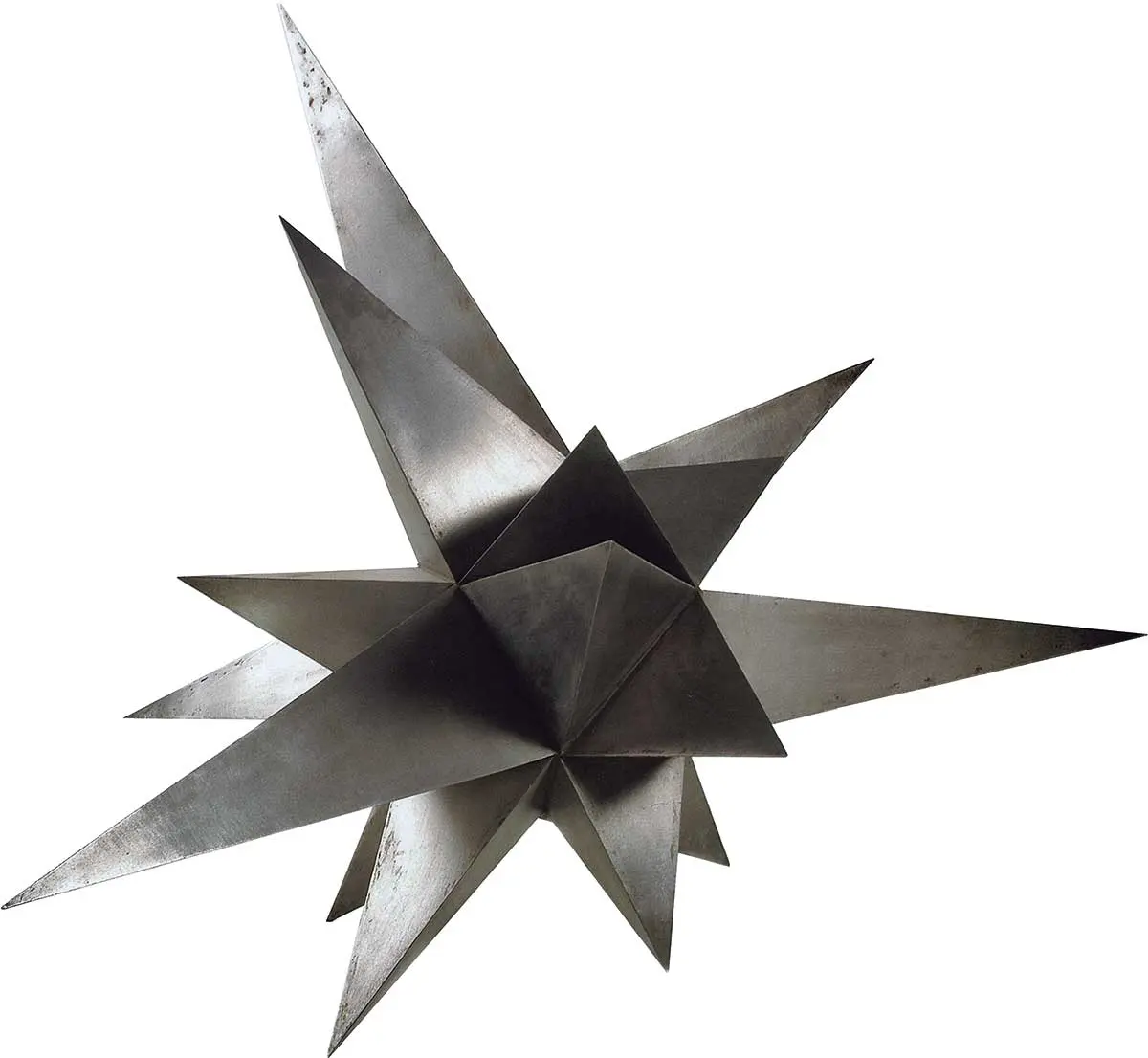
Semi-mystic. Without being so in the strict sense, Mathias Goeritz forges in “action” another side of the term ‘mysticism’. Without verbalizing it, remaining very private in his religious life, he respects other religions and creates works for cathedrals and synagogues, with no discrimination. For Goeritz, art is always a great medium for communication.
Manifesto maker. Some of the many art movements that appeared since the beginning of the Twentieth Century emitted their ideas. Goeritz thought it was absolutely necessary to do so, even if later, with his usual modesty, he claimed that only the Los Hartos manifesto contained any sentences of value.
Credit giver. He enjoyed giving credit to every person, however minimal his or her collaboration had been in a given project.
Emotional architecture. He developed this theory in the manifesto of the same title and connected it to his creation of El Eco. This is considered Goeritz’s most significant contribution, where he explains that “…maybe for having lost the close contact of community, by wanting to emphasize in excess the rational part of the architecture. The result is that the Twentieth Century man feels crushed by so much 'functionalism', for so much logic and utility in modern architecture.
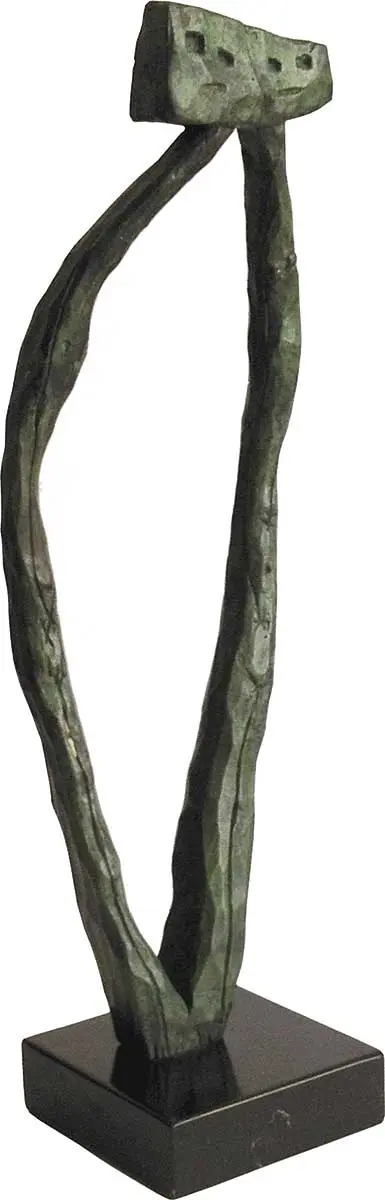
“…He clamors—or will have to clamor one day—for a spiritual elevation; to put it simply: an emotion like that provided in its time by the architecture of the pyramid, the Greek temple, the Romanesque or Gothic cathedral, or—even—the Baroque palace. Only by getting true emotions from architecture can Man again consider it an art.”1
All-encompassing. Goeritz studied Art History and Painting; introduced Mexico innovative international artists like his adored Alexander Calder; devoted himself to teaching with the development of pedagogical systems of his own; expanded constantly his range of expressive modes as an artist; created glassworks, ironworks, works with artificial lights, enduring and ephemeral murals very different from those of the Revolutionary period; created the cultural component for the 1968 Olympics; used concrete early on to create sculptures; was an art editor for the Architecture Journal; was an art critic; wrote prologues for catalogs; published small catalogs and books; his complete letters, placed side to side, would circle the world several times; he produced print portfolios; he made concrete poetry and participated in mail-art exchanges; he was a juror in advanced international architecture competitions La Defénse (when France decided to accept the construction of skyscrapers, but outside Paris, to maintain the city’s municipal plan); he organized groups for play/creation; he introduced people so that they could organize exhibitions, commission or sell works; since his arrival in Mexico he learned, with gratitude, all the techniques he didn’t know; he opted for designing what he wanted to create and commissioning it to others; without being an architect, he advised architects on many occasions with excellent results (as in El Eco, Torres de Satélite, Ruta de la Amistad; Hotel Camino Real in Mexico City); working solo and with colleagues, he developed monumental and urban sculpture; he was a member of the Berlin Arts Academy and received many distinctions from a variety of associations, like Michell Ragon in Visual Arts – Literature and Architecture.
Cultivated, painter, theorist, creator, heterogeneous have a clear reach for the reader. As for “fed up,” it is connected to that expression and with his Los Hartos (‘The Fed Up Ones”) manifesto, of which he wrote several—in the first person singular and plural, both in 1961. Out of this came exhibitions, the movement, and the ideas remain present. “I am fed up with the pretentious imposition of logic and reason, of functionalism, of decorative calculations, and, of course, of the whole chaotic pornography of individualism, the Glory of the day, the fashion of the moment… I am fed up, above all, of the artificial and hysterical atmosphere of the so-called art world, with its adulterated pleasures…"2
Expressionist. It was his first way of painting and also of expressing himself in drawing and sculpture. He came from that period in the arts in Germany, although he changed constantly and always reflected on his origins and what the caves of Altamira and Mexico gave him. “You know that I am a bastard child of German Expressionism… I always liked to exaggerate and to make gigantic or minuscule things. What always shocked me was the damn human measure. For me, what counted always was the divine measure.”3
Constructivist. Well beyond his expressionist, dada, primitivist, brutalist periods, Mathias Goeritz distilled a structural synthesis that, in turn, has to do with the forms and geometric shapes on the plane and in space. Without being strictly connected to the Russian constructivists or the important constructivist movement in Brazil, his experience with the Bauhaus school, with Max Bill, and all the rest who emigrated, directed him towards a long and productive period of works thus characterized.
Dadaist. For their breeding grounds, the Dadaists met at the home of Goeritz’s parents when he was a child; after he grew up, he was fascinated by Hugo Ball’s theories, with their drive towards non-conformist artistic experimentations, restorative in the context of the era’s moral crisis—what Ball set in motion at Cabaret Voltaire.
Objectist and assemblers require no explanation.
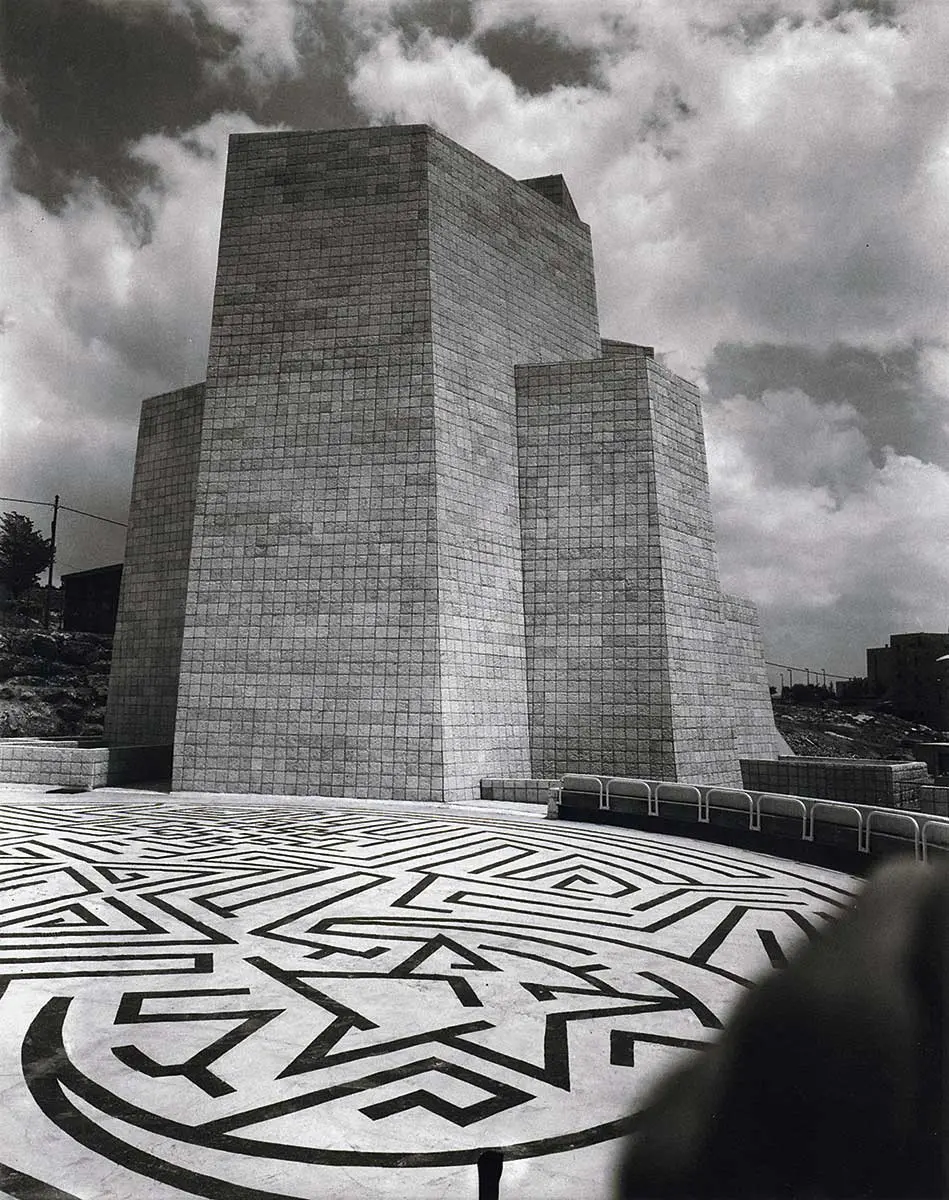
Sculptor. Goeritz is well known as a sculptor, he had explored sculpture very seldom in Spain, along with his great friend the sculptor, and theorist Angel Ferrant. His education in Germany was as an Art Historian and as a painter. Already in Mexico, more precisely in Guadalajara, when his dialog with architect Luis Barragán began together they would work in transcendent projects—Barragán told him: “What a pity you are a painter, what Mexico lacks is sculptors.” Immediately, Mathias began to research how to learn those skills. His guides were Ignacio Asúnzolo and the master carver Romualdo de la Cruz. He always mentioned both, with great gratitude. This was the origin of many commissions and personal proposals for Goeritz’s sculptures.
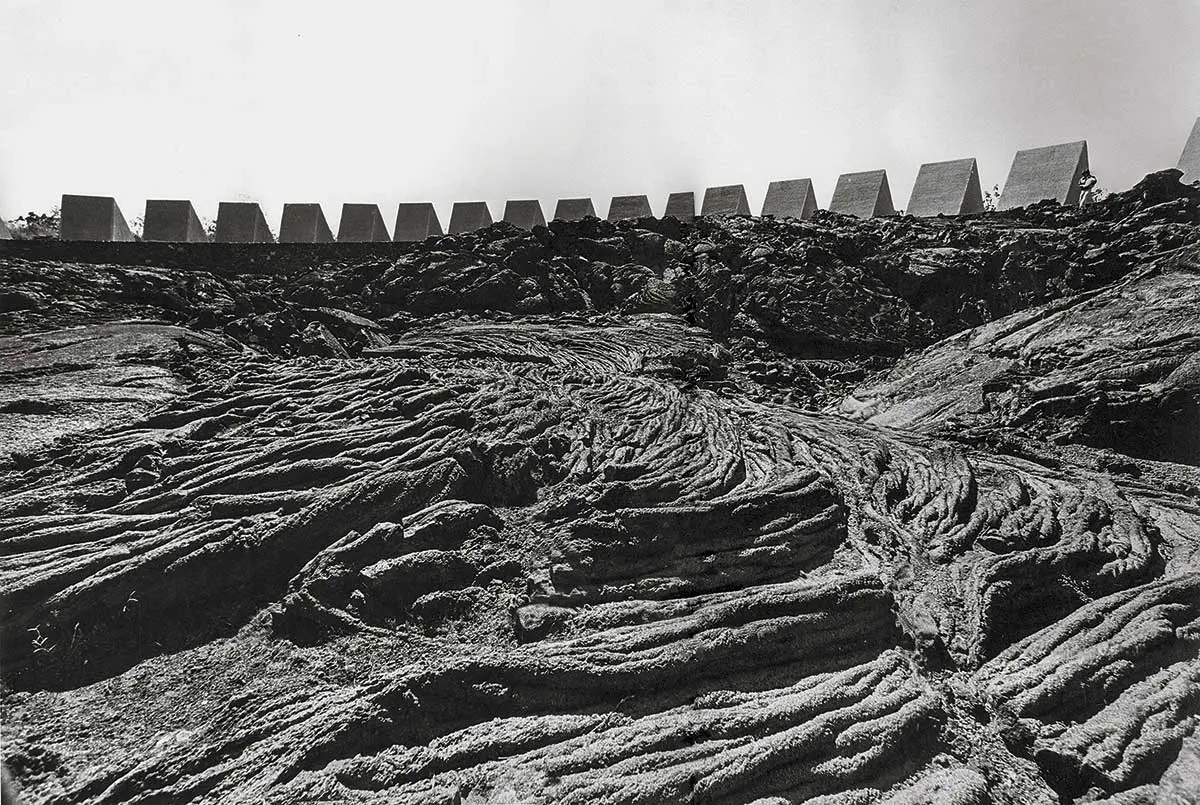
Sculpture Space Center. The Sculpture Space is one of the most beautiful locations in terms of the conjunction of art and nature, and it is an example of Goeritz’s collaborative work. It is the product of the work of several artists in association with the Universidad Nacional Autónoma de México (UNAM), the country’s premier educational institution, in a protected ecological space, with the creation of public and monumental sculptures, and environments that favored interactivity. It hosted concerts, meetings, and ballet, among them Bambi’s Crown at Sculpture Space II, 1979/80. This was Goeritz’s work. Each participant created their sculpture located in sector II of the space and took part in the construction of the leaning walls that surrounded the lava in the sector I.
Gucadigose. Another idea of collaborative work resulted in a dual project in 1975. They played with letters from each participant’s name: Angela Gurría, Geles Cabrera, Juan Luis Díaz, Mathías Goeritz and Sebastián.
Generator. It is explained throughout the text.
Graphic. Goeritz was deeply interested in graphic design and in the modes of connection between graphic arts and sound.
As a Concrete Poet, Goeritz created numerous works in several styles. It is one of the key issues in his solo oeuvre.
El Eco is the name of Goeritz’s project for the Museo Experimental, where he speaks of space and surprise as emotional elements. Space-as-such, not to host objects but to breathe, to measure visually and bodily. To find in it the echo of one’s own inner spaces, man’s emotional “echoes”, the throbbing of man’s heart. Goeritz, who was not an architect, have the fortune of being fully supported in the creation of El Eco thanks to Daniel Mont—who died before the building was completed—as a tribute to whom Mathias Goeritz’s only son was named Daniel.
The School of Altamira. Goeritz’s first great teaching exercise. Impressed by the intensity of the primitive forms in the caves of Altamira, he understood the importance of sensory perception and admired what those people were able to create and communicate in such limited conditions. This is where he started to teach his classes, where he met Dr. Ida Rodríguez Prampolini (his second wife), and what prompted his hiring to Guadalajara. While Goeritz discovered essences in Altamira, his earlier expressionist and somewhat naïve notes were retained; they became the beginning of his mysticism.
Eurythmic. The word has to do with harmony in space and with human beings’ inner perceptions.
Heuristic. He paid attention to research, seeking diverse solutions not necessarily in isolation, but as befitted the scheme of each science.
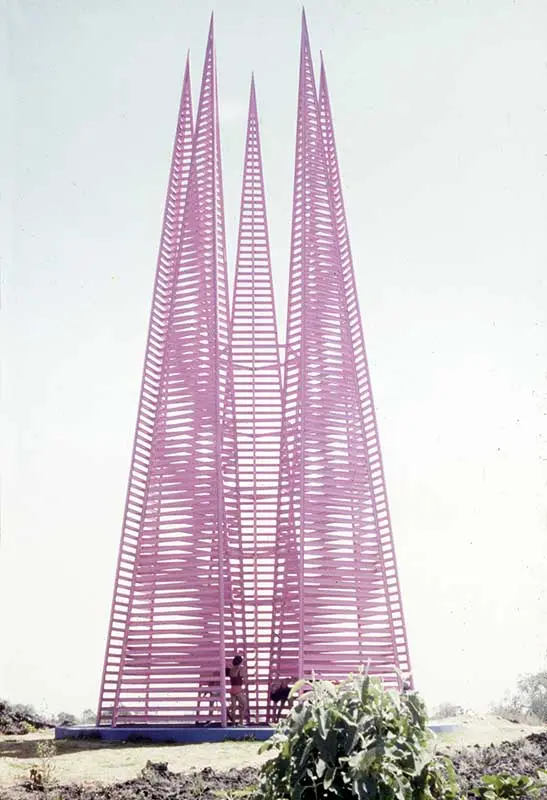
Torres de Satélite. In Goeritz’s many collaborations, those with Luis Barragán and Jesús “Chucho” Reyes was the first and deepest one. “We were a well-oiled trio until I was pained by the breakup. Many things were published, and I only replied once because Bambi insisted that I did. I didn’t think I needed to say anything, things had been confusing. Barragán was abroad when there was a call saying that President Alemán was to choose the sculpture for the new sector of the city. I told Luis and he said, send him one of yours. We couldn’t cancel on him. What else is there to say? And I will not stop saying that without Chucho, without his ability with color, none of us would have achieved what we did. Not only in Satélite, but in everything we did together.”1
Anti-quietist. He didn’t stop working.
Hyper-quietist. Does not require an explanation for the reader. He also drew constantly, with an imperious necessity and a certain naiveté, on occasion independently of the themes of his work at the time. His expressionist drawings, those with very thin lines connected to the needle sculpture he saw in Spain—the primitive ones, and others… until the geometric period begins and figures become scarce. Be it through the color black or through black in interaction with other colors, a will to intensity is always manifest.
Cosmopolitan. Humanist. Aesthete. Three elements connected to the letter “t” in his family name, both an introduction and a corollary to this tribute without tributes. Dozens of topics remain. With the recognition of lived phenomena and objective results—memory, work, intelligence, cleverness, risk, etc.—Goeritz was able to plunge bodies into spaces that are emotional rather than physical or material, giving concrete shape to objective signification phenomena such as actions and artworks, with his sole behavior as an example.
Cunning. This is a subtle, Goeritzian ending to the tower of the concrete poem. While still alive, several publications wondered whether Mathias Goeritz was a provocateur. In the beneficial and humanistic sense, yes, he was, with his intense, motivational personality, with occasional ups and downs of skepticism and disappointment from which he emerged armed with a consistent idealism. His cunning drove him to terrains of great variety and intensity, made concrete throughout his life. This tribute without tributes has his mark.
NOTES
1. A Mathías –Torre a sus setenta años. 1985. Concrete poem by Graciela Kartofel.
2. All quotations of Mathias Goeritz come from personal conversations with the author.
3. Mathias Goeritz un artista plural. Ideas y dibujos. Conaculta, Mexico, 1992. p. 91 – 101.
GRACIELA KARTOFEL
Art critic.