
Raquel Arnaud- Well, for me it was a great learning experience. I was a child, but I think that that closeness with them taught me the seriousness and respect they had towards the art. Once, Lasar reworked the same piece for ten years. That was the care he put into it. When he fell ill and had a heart attack, I was one of the few people allowed in the studio; the trust he had in me, how much I learned working with him helped me understand what I was doing. When he died, Ms. Jenny immediately decided to carefully authenticate all the works. Many were not signed. She stayed up very late with Luis Hossaka, of the São Paulo Museum, to authenticate work by work.
Afterwards left for that large itinerant exhibition. I was studying political sociology, already married, with two children, Oscar y Berta, born while I was in college. When Ms. Jenny needed help with Segall's work, she called me. Sometimes she surprised me. For example, when I went to Düsseldorf to help take down the Segall exhibition and saw I could do that very easily. I think it was a training, the training of my gaze. The exhibition traveled to different locations. In those experiences, I realized I had found my path and saw my expertise and my perception develop. I think that is why.
Now, and I don’t know if you want me to tell the story in sequence, what happened was the following: When Mr. Segall died, they created the Lasar Segall Museum. Something important took place then. Mr. Segall learned that one of the works had been recovered from the Nazis. It was a marvelous work (Eternal Walkers) and it was later shown in Peter Cohen’s film The Architecture of Doom, which showed the art that Hitler ordered burned in New York, and among those was this work. Ms. Jenny and Mr. Lasar had known it at the time but there was nothing they could do, since he was nearing death. After he passed, another letter from a European dealer arrived offering the same painting, and Ms. Jenny acquired it. That has historically very important. An intermediary of Mr. Baldi, who was a close friend and frequented their home, introduced that dealer, who found the painting in Europe, to Mr. Lasar.
Sometime later I separated from Oscar, Segall's son, and went to work. When professor Bardi learned this, he decided to call me to work with him at the Museu de Arte de São Paulo (MASP). It was another learning experience... It was 1968 when the MASP moved to Avenida Paulista. It was a project by Lina Bardi, for whom I felt (and continue to feel) boundless admiration. When I arrived, Ms. Lina was preparing an important exhibition: “The hand of the Brazilian people.” She always worked with such economy, using even the boxes in which the works came to set up the exhibit. I saw and assimilated, and also helped. And that started to happen... and I remained at the Museum for some time. Observing Ms. Lina, with her posture of doing everything in the most correct way. As I had seen Mr. Segal and Ms. Jenny do, I again was in contact with professionalism, and that remained with me to this day.
In 1971, Professor Bardi introduced me to Hector Babenco, who wanted to make a film about museums. Bardi told me then that it was up to me to find sponsorships for the project. I found them, and the film was made. After that, I started seeing Hector and got pregnant with Mira...
IDF- And your children are very much present to this day…
RA- Well, yes, with Oscar I had three kids–Oscar, Berta, and Lucia. Later came Mira, who currently works with me in the gallery. And since I imagined that Professor Bardi didn’t like to have a pregnant woman in the museum (why would that be?), I left surreptitiously and began to think about having a gallery of my own. I went for an internship at Collectio in order to learn a bit about that whole universe, and starting there me and Mônica Filgueiras reached an agreement to open a gallery and to give it all our attention and care. And when we had already decided and everything was ready, TV Globo called me to be an executive director here in São Paulo. I said, “I am not going to be able to, I am launching a gallery,” but the directors, who were also my friends, said “We are certain you can do it, you must accept!” and in the end, they insisted so much that I did. I had then two jobs: the Graphic Arts Cabinet, focused on art on paper, and the Global Art Gallery.
IDF- What year was that exactly, Raquel?
RA- In ‘73. The Global Art Gallery opened at that time, precisely. It was huge, but our roster at the Graphic Arts Cabinet was very well thought out. It included important artists, like Mira Schendel, Lothar Charoux, Amilcar de Castro, who did drawings, León Ferrari, who had arrived from Argentina, Regina Silveira, Carmela Gross… Arte Global had a plan of doing three exhibitions a year–Franco Terranova and I selected the artists. We presented a large number of shows through 1979, among them, yours, Iole, with all your production from the 1970s, after you came back from Italy, isn’t it? You were just arriving from Milan!
IDF- It was a retrospective of works from the 1970s. It was then that we met.
RA- It was then we began working together. In 1979 my society with Mônica dissolved and Global Art also ceased its activities. From then, I moved to 9 de Julio Avenue, to a gallery that had been renovated by Lina Bo Bardi. It was an incredible thing, very little money, cement sacks and bricks, some wooden planks between them for nails and canvas for a ceiling, so that light would seep through.
IDF- What were the main exhibitions you had there? I remember incredible shows like José Resende, when he came back from the Guggenheim Fellowship (NY). You let him close the gallery from outside with a large lead curtain and people came in through a little opening on the side, near your office...
RA- We also had several openings outside, despite the fact that the building’s tenants didn’t like that.
IDF- But commemorations, cocktails, and celebrations are one thing; another thing is this: you always imbued your work with attitude, without being strident or sensationalistic. I mean, coherent with the character of the artist’s work each time. In this case, it was expected that José Resende, coming back from the experience of such an important fellowship as the Guggenheim, would find an adequate space to exhibit a vigorous aesthetic action. So, I think that the exhibition brought to the fore your determination to accompany the artist’s process, verifying specific moments in the body of work and bringing them forth in a unique way. In this case, if it wasn’t there, it is improbable that the work would have been exhibited at the time.
RA- Yes, the institutions would not have done it... and note that the space of the gallery was small. But it had to fit, and it was perfect!
IDF- So, I want to emphasize this: at a time when cultural institutions in Brazil were barely beginning to open their space to contemporary art and here were very few galleries, you played a key role in the Brazilian art scene: to fill a large lacuna in the promotion of contemporary art, in what it had of innovative.
Is that what brought you close to artists like Soto, Piza, Cruz-Díez?
RA- I will try to explain: I was starting my gallery here in São Paulo and I already had very close ties with the artists I exhibited. The first was Lygia Clark, then Franz Weissmann, Sergio Camargo, and Amilcar de Castro, all in the gallery on 9 de Julio Avenue.
IDF- That was in 1980?
RA- Yes, in 1980. I remember that it was a mad dash to arrange everything... From then on, I felt the dialog that existed between them. Evidently, when José Resende arrived, who was among the first and I already knew them from the Graphic Arts Cabinet, I became more integrated with the work of all of them. And people started to come, Tunga, also Waltercio Caldas, and I noticed that connection, the affinity they had...
I met Carlos Cruz-Díez in person during the “Efímera” exhibition organized by Sérvulo Esmeraldo in Ceará (Brazil). By then we already corresponded and talked on the phone, since the early 1980s. Then I went to Venezuela, met Jesús Rafael Soto. Soto and Cruz-Díez were close friends with Sergio Camargo. There was a common history behind them, because all of them took part–even Lygia Clark and later Mira Schendel–in a British gallery called Signals, curated by Guy Brett. In fact, it was Sergio who insisted, generously, to introduce Guy to Hélio Oiticica, Lygia Clark, all of them, and took them to Europe. And in all of that, I started to see a joining of language... Sérvulo Esmeraldo and Arthur Luiz Piza already worked with me in the Graphic Arts Cabinet. So, that group living in France was one I paid attention to, and I wanted to work with them. Outside of that, I had Willys de Castro and Hércules Barsotti at 9 de Julio; they were like brothers to me... We were three! First, they were my neighbors, they walked up Jadcock Lobo street and stopped at my gallery, and we shared and conversed. All of that with great care for me not to confuse things, which wasn’t easy, because they always knew everything. I remember that, sometimes, I was on the phone with someone and they corrected me...
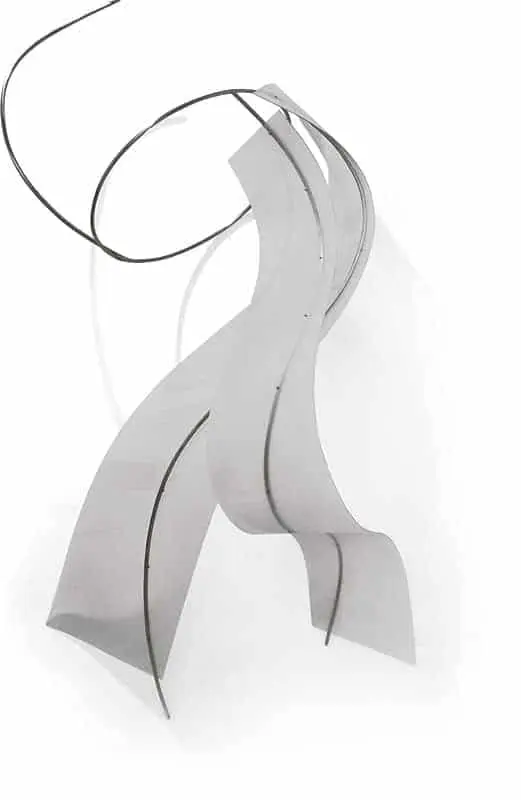
IDF- They were extremely rigorous artists, weren’t they? In fact, I think that the word “rigor” permeates this entire interview...
RA- I don’t think I had anyone who wasn’t. The movement grew and I had to move the gallery. You had no idea how I felt! You exhibited there in ‘88, right? The gallery was very nice and a meeting point for young artists. For example, the Casa 7 artists, who were just starting, came late in the afternoon to talk with Resende, who always had the generosity of bringing people together, and Sergio Camargo also.
So, it was very sad when I had to move to a larger space, because during the entire construction Willys de Castro was ill with cancer. But I insisted on having him work; I was able to get all of de Castro’s exhibitions for the gallery. They were three in total. When I saw he was sick, I thought, “I must find him an occupation, to get his mind off the cancer,” and I asked him to open the new gallery on Brigadeiro Avenue with those beautiful works of his...
IDF- Ah! So it was he who opened the second gallery, on Brigadeiro Avenue, and not 9 de Julio! And it was with those incredible works later shown at Funarte, in Rio, as happened with Mira Schendel’s Sarrafos … Mira’s Sarrafos were at the gallery on 9 de Julio?
RA- Yes. She died in ‘88. It was shortly after I moved. Mira, Willys de Castro, and Lygia Clark, who was also one of my artists, died.
IDF- And Grippo? When did he exhibit with you?
RA- Víctor Grippo exhibited between ‘86 and ‘87. That was a beautiful exhibition. He was close friends with Sergio Camargo.
IDF- That show of Grippo’s was also very important for me. It was a great counterpoint to José Resende’s lead curtain, with the same esthetic force, but everything in it was alive, everything was being born... It was impressive, wasn’t it?
RA- And he made those small lead containers, with beans... he watered them, and the beans, over time, exploded inside the container. It was impressive, the way in which nature, for all its fragility, broke through the lead. It was marvelous working with him. Later he went back to Argentina. Grippo and Ana María Maiolino lived together for 10 years. She was also one of my artists at Global Art and in the gallery.
IDF- Which of the Brigadeiro Avenue exhibitions did you like the best?
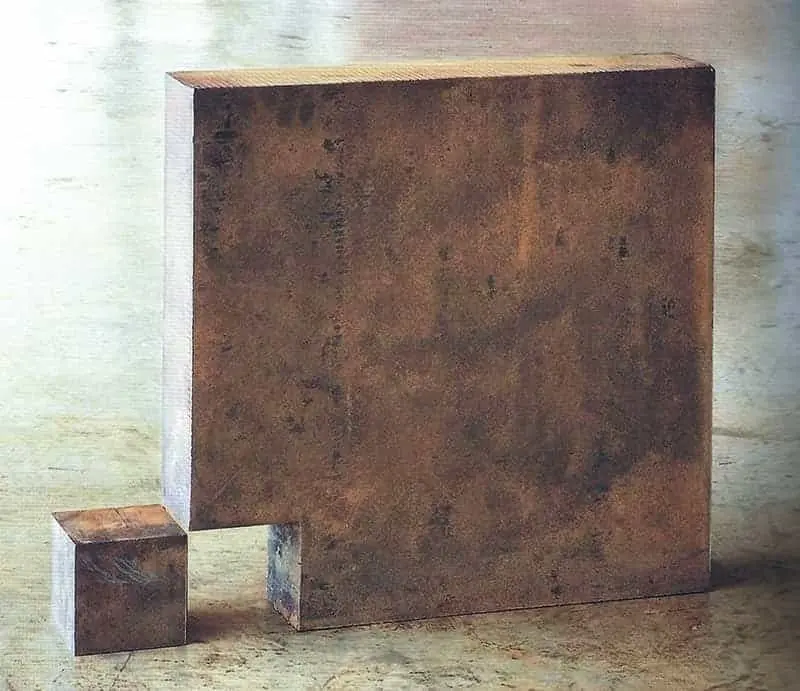
RA- I remember some very clearly: Amilcar de Castro’s and Sergio Camargo’s.

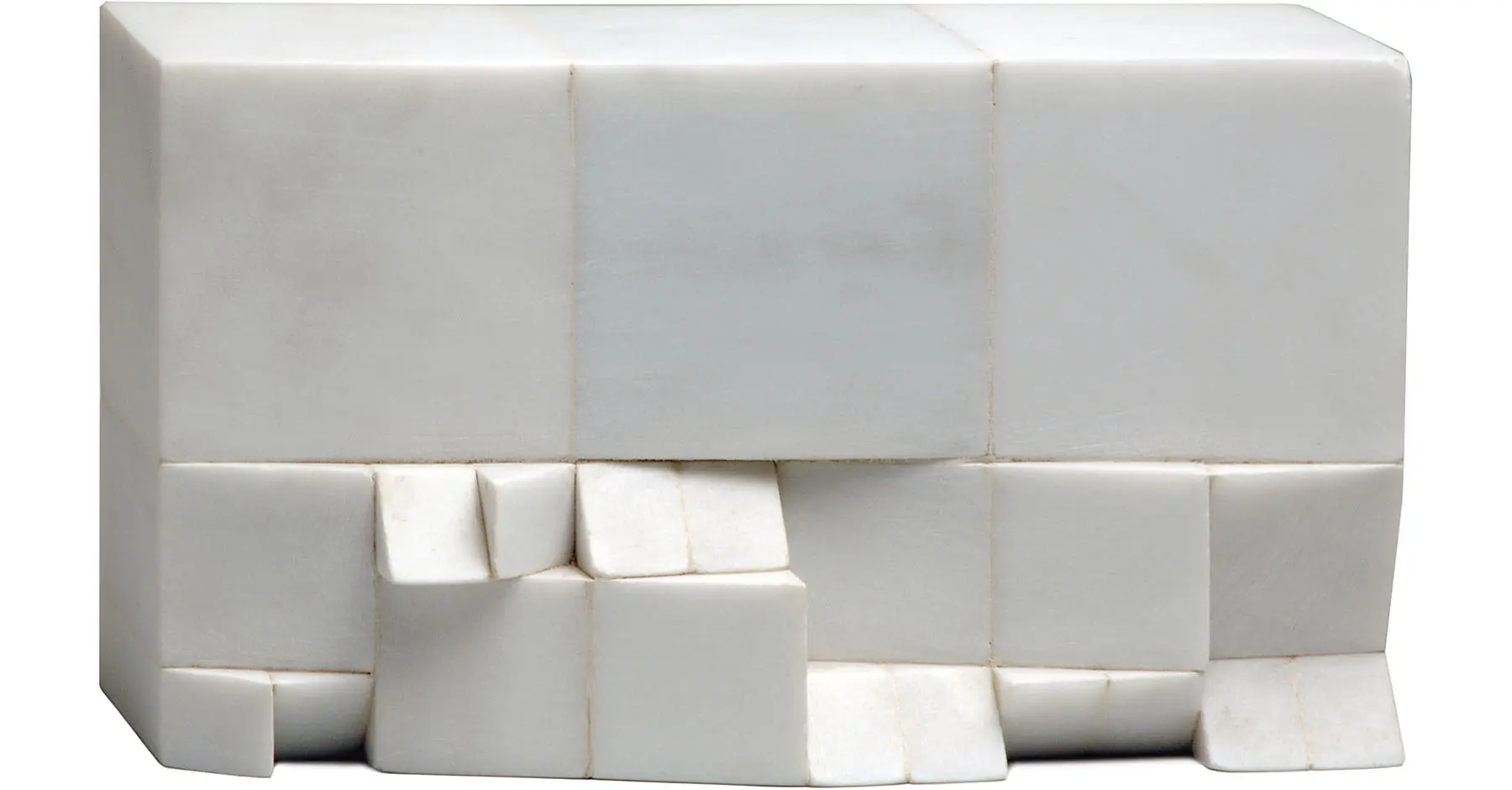
IDF- Of Sergio Camargo’s I still remember the truck coming in, bringing the works from Carrara... you opening the boxes and those beautiful sculptures coming out of them... he was very touched.
RA- Those were his last works and he was very emotional.
IDF- Raquel, when did you reinstall, along with Lauro Cavalcante, Sergio Camargo’s atelier at the Imperial Palace, in Rio?
RA- It was at the end of the 1990s, and it is still there. When I saw Brancusi’s atelier at the Pompidou I came up with the idea of doing an homage to Sergio Camargo, and I invited Reinaldo Brito to do the curatorship.
IDF- I would like for you to tell me about the importance of Sergio Camargo.
RA- I worked with Sergio for 17 years before his death. When he died, there was a tumult, nobody knew where his stuff was. I was traveling, taking his book to the San Francisco Museum, and the news left me in shock. The family was anxiously looking for me. When I arrived in his home, I found everything written down in detail by me on his work table. Nobody had thought of looking there.
There were the cards I had brought back from France, well organized. We still use them today at the Institute of Contemporary Art (IAC) I created in 1997 with the initial idea of cataloguing Sergio's work. In that way, I gathered a number of his documents and also those of artists who were close to him and who died around that time: Willys de Castro. Mira Schendel and somewhat later Amilcar de Castro.
IDF- The Institute’s goal is to maintain the memory of these artists’ work, right?
RA- Indeed. And see, we created the Institute for that function, and today the core of documentation and research is having incredible growth. I feel the need for a larger space. And you will see how nice is the current exhibition, by Lothar Charoux.
IDF- So, this function of yours of being an agent in the promotion of contemporary art by artists who have rigor as their common denominator is expanding more and more, and the IAC is a powerful channel for that, don’t you think?
RA- That’s true. Of the initial group I mentioned, only Mira Schendel left the IAC. But in any case, we still have highly representative works, because we worked for a long time with her in the gallery.
We are currently organizing an exhibition of your work, Iole, with documents, drawings, and models, Waltercio Caldas will also have an exhibition of documents, the children of Luiz Sacilotto are also enchanted with the possibility of bringing here the work of their father. Sérvulo Esmeraldo brought from Europe everything he had.
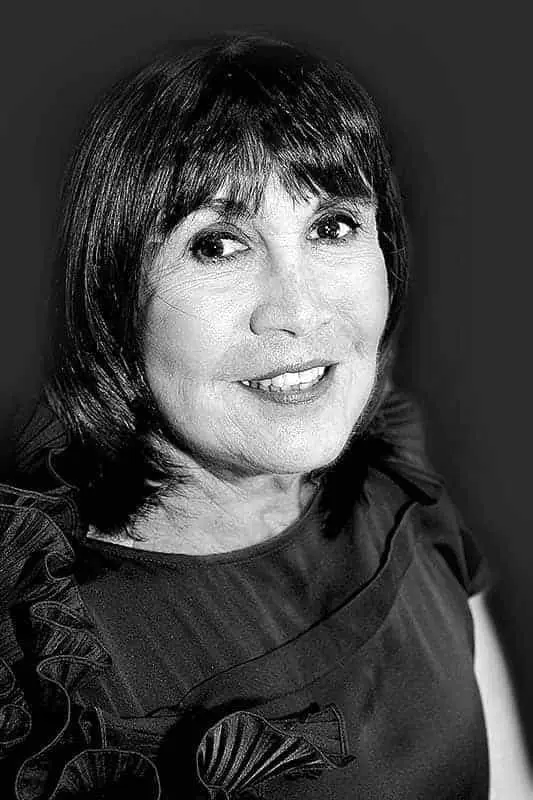
IDF- And your exhibition at the IAC was revealing for an understanding of his work. I was lucky enough to see even the technical reserve of the works, the library with Sérvulo’s books, not about his oeuvre; I mean, those references that make a difference. When you bring the work of an artist to the IAC, everything that pertains to their life and biography comes already armed with the aesthetic element; you bring here what really matters in the cultural realm.
RA- That’s very important. Sometimes, people invest millions in one painting but don’t know the process involved. At the Contemporary Art Institute you can make an appointment, see things, read, right?
IDF- Yes, it is open to all! And when you have an organization like the IAC’s, people have the possibility of seeing the process as well.
RA- With the establishment of the IAC, I was very thankful to the collectors who helped me setting up the institute. They embraced my ideal and trusted me. It’s a pity we had a difficult impasse with an officer at the University of São Paulo (USP), who took away the building I had reformed to install and open the IAC.
IDF- But it was left as a legacy, wasn’t it?
RA- Yes, it is a legacy I am leaving, just as I think collectors should leave theirs. So much so that when I did the commemorative exhibition for the 40 years of the gallery, at the Tomie Ohtake institute and the gallery itself, I went looking for works that collectors had acquired from my gallery in order to exhibit and give them visibility again. I did this with great care, assuming the curatorship myself.
Juan Carlos de Figueiredo Ferraz also presented, in his institute in São Paulo, duplication of this show, with works from his collection acquired in the gallery. As a matter of fact, he is a person for whom I have the greatest of respect, because he turned his private collection into an institution: the Figueiredo Ferraz Institute, which opens its doors to a broader public.
IDF – You emphasized the importance of giving visibility to works that are landmarks in Brazilian art. The fact of having a series of works in the homes of collectors is essential, but so is the fact that you, besides that, bring that information to a larger audience through the IAC.
RA- But I wonder, is this effort acknowledged? The Ministry of Culture supports so many things... can it be that the Institute does not deserve support?
IDF- But, Raquel, the recognition will come from History. Your role in contemporary Brazilian art is widely acknowledged, as is your legacy. And you respond very well to adversity, you use difficulties to push quality forward and to innovate.
With all this in process, you even had the energy to build a new gallery, which opened in 2011, didn’t it?
RA- The new gallery, which opened in 2011 with a project by Felipe Crescenti, was conceived for large temporary exhibitions by my artists and also to house the Sergio Camargo Collection. Some time ago I moved the works from the Rio studio, in Jacarepaguá, to São Paulo, because the old location didn’t provide the proper conditions for their preservation and conservation. I rented a house (Casa Hum) to hold them for a while, and now Sergio’s collection is well preserved and on exhibit at the gallery.
IDF- Going forward, where will you put your tremendous energy? Where is you gaze going nowadays?
RA- I am currently finishing the catalog raisonné of Sergio Camargo's work and a catalog of Willys de Castro.
I want to enhance the quality of the activities at the Instituto de Arte Contemporáneo and at the same time work with our team at the gallery to have it be more and more in sync with my direction and my project. In this way, our exhibitions will continue to have the greatest rigor and aesthetic commitment.
IOLE DE FREITAS