Apertura: Photography in Cuba Today, a show at the University of Wisconsin-Madison’s Chazen Museum of Art, curated by Guillermina De Ferrari, highlights the uncertainties of life in the island nation, and the ways in which these uncertainties impact the arts. For anyone writing about it in 2015, the range of contradictions in which Cuban art has been involved in recent months is impossible to ignore. While the thawing of the Cuba-United States relationship follows an incremental diplomatic path, the road ahead for the Cuban Government, if it is to be tolerant of a political art committed to freedom of expression, can only be described as complex.
The show features six artists and one artist collective: Carlos Garaicoa (1967), René Peña (1957), José Manuel Fors (1956), Reynier Leyva Novo (1983), Ángel Delgado (1965), Rafael Villares (1989), and Liudmila + Nelson (Liudmila Velasco, 1969, Russia; Nelson Ramírez de Arellano, 1969, Germany). The main idea here, astutely and elegantly presented by De Ferrari, is to elucidate how current Cuban photography creates an aesthetic space where a variety of photographic strategies are used to investigate and interrogate political, economic, and cultural openings. The show shines a light on the ideological implications of understanding Cuban photography as not necessarily connected to immediate historical reality, not necessarily intent on preserving the appearance of the photographed object, but, rather, as an instrument for questioning the future via the use of technical resources as methods to undermine existing realities.
Apertura wants to situate itself between the stereotypical vision of black-and-white photography in use since the early Twentieth Century (think, for instance, of American photographer Walker Evans’ photos for The Crime of Cuba, published with an essay by Carleton Beals)—and the vision that gave a decidedly masculine visage to the Revolution during its first two decades. In its ability to capture a given image, on the other hand, photography in Cuba has been an essential contributor to the congealment of the island in an eternal past. The postcard photographs with almendrones (1950s automobiles) in the foreground and the city in ruins in the background, found even today, promote the view of a Cuba condemned to permanent backwardness. It is in relation to these visual clichés that Apertura stakes its own position.
If the metaphor of the lens was useful at some point to talk about perspectives and experiences that are radically unique, by speaking of apertura (in Spanish, both aperture and opening) De Ferrari adds a perspicacious layer to the language we use in connection with photography and focuses on a highly specific period in history: that of post-Soviet Cuba and the approaching end of the US embargo. As was the case also during the Cuban Revolution, contemporary Cuban photography offers a visual counterpart to this transitional period. What photography says about these changes, and how it says it, is the common thread connecting the works on exhibit in Apertura.
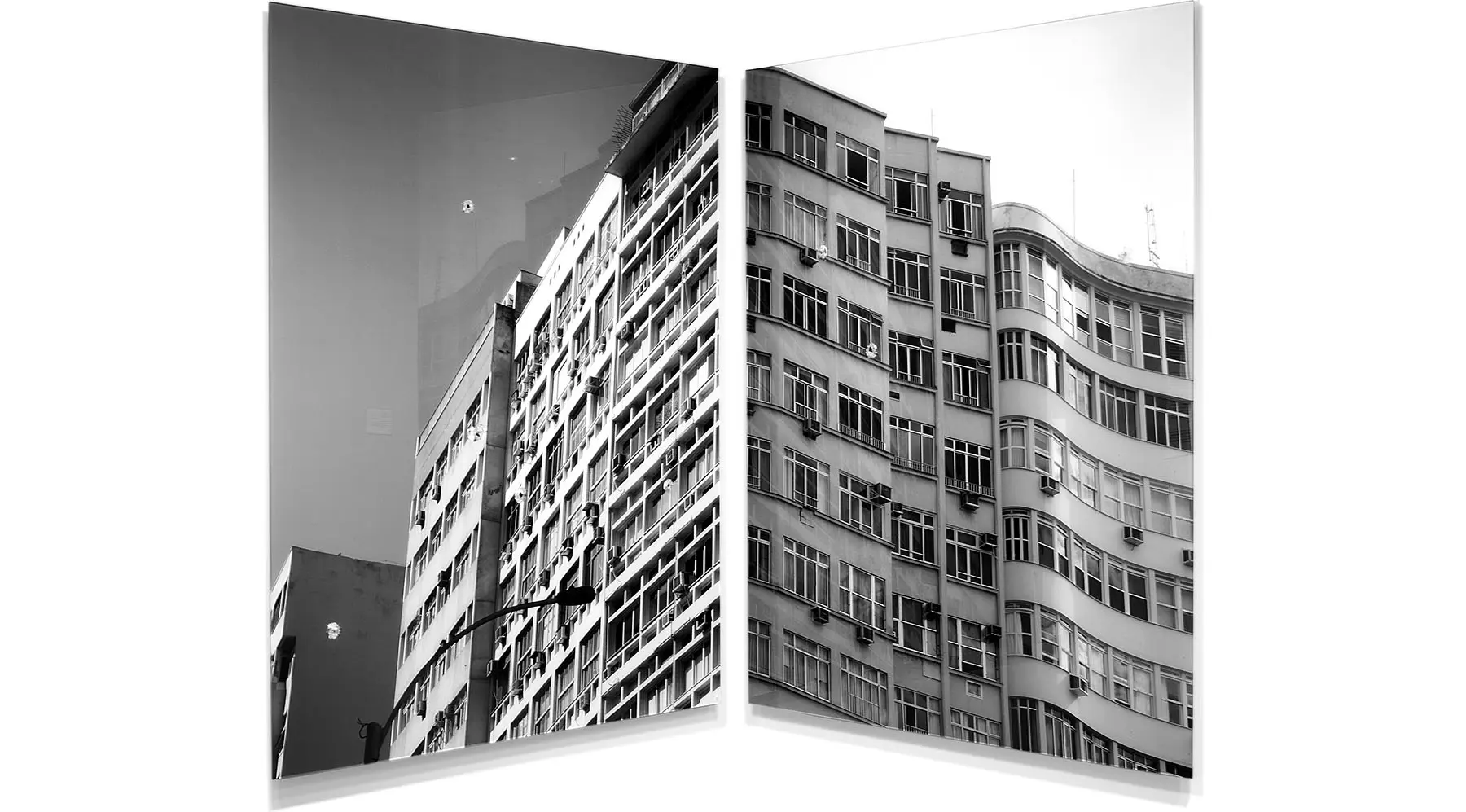
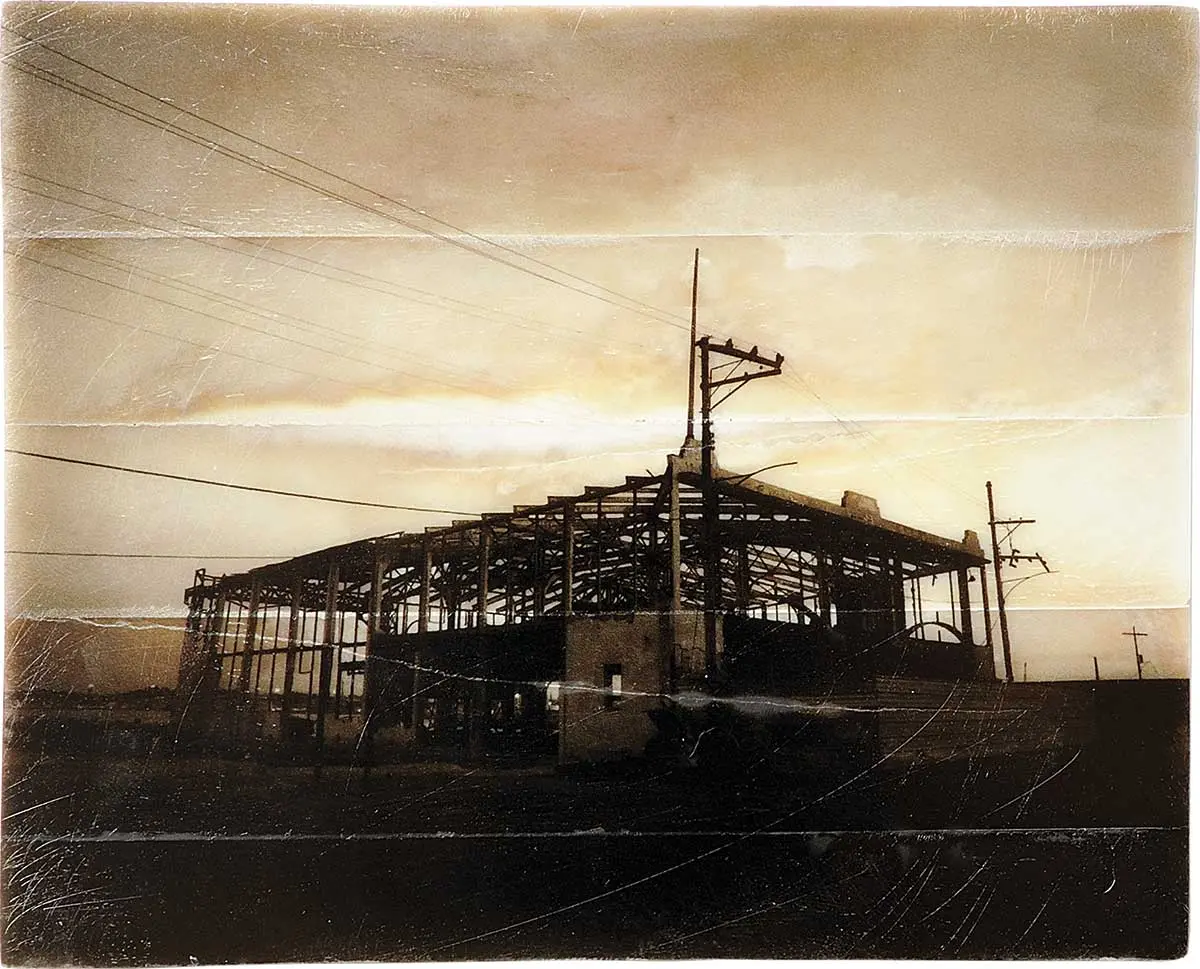
The use of skin and organic matter as supports give Cuban photographic explorations a certain sense of urgent vitality. In Avenida del Puerto y Luz (Port Avenue and Light, 2012), Carlos Garaicoa uses cattle bones covered in gelatin as the printing material for his photographs of Havana blight. This unusual medium adds a somewhat biological meaning to the image; this is to say, what we see are not just urban ruins, but the last vestiges of what was a living city. The striations formed on the surface of the photographs give them an air of film still, as if after any given image always came another, in quick succession. In his usual formal tone, Garaicoa presents in Noticias recientes (Brasil) (Recent News (Brazil), 2008) a photographic installation where the conflict between life and everything that threatens its continuity is addressed to the viewer in the most direct manner. Set at a ninety-degree angle, the diptych formed by the two large-format images seems to depict two corners of a single building. On closer inspection, we realize that the corners actually belong to two different structures. Nevertheless, the similarities between them and the fact that the Plexiglas covering both photographs is equally damaged by 9mm pistol shots generate the impression of our own bodies being involved in the action. The effect of standing on this corner created by the diptych is terrifying. It feels as though the corner was indeed inside an apartment, and the shots were bullets straying in the direction of the viewer.
The diptych’s title, although referred specifically to Brazil, speaks of a recent time and a sensation of vulnerability that seems synonymous with societies marked by great economic inequality. Shown in the context of this exhibition, it is impossible not to wonder whether such moments of social rupture are what is coming as a consequence of greater economic openness.
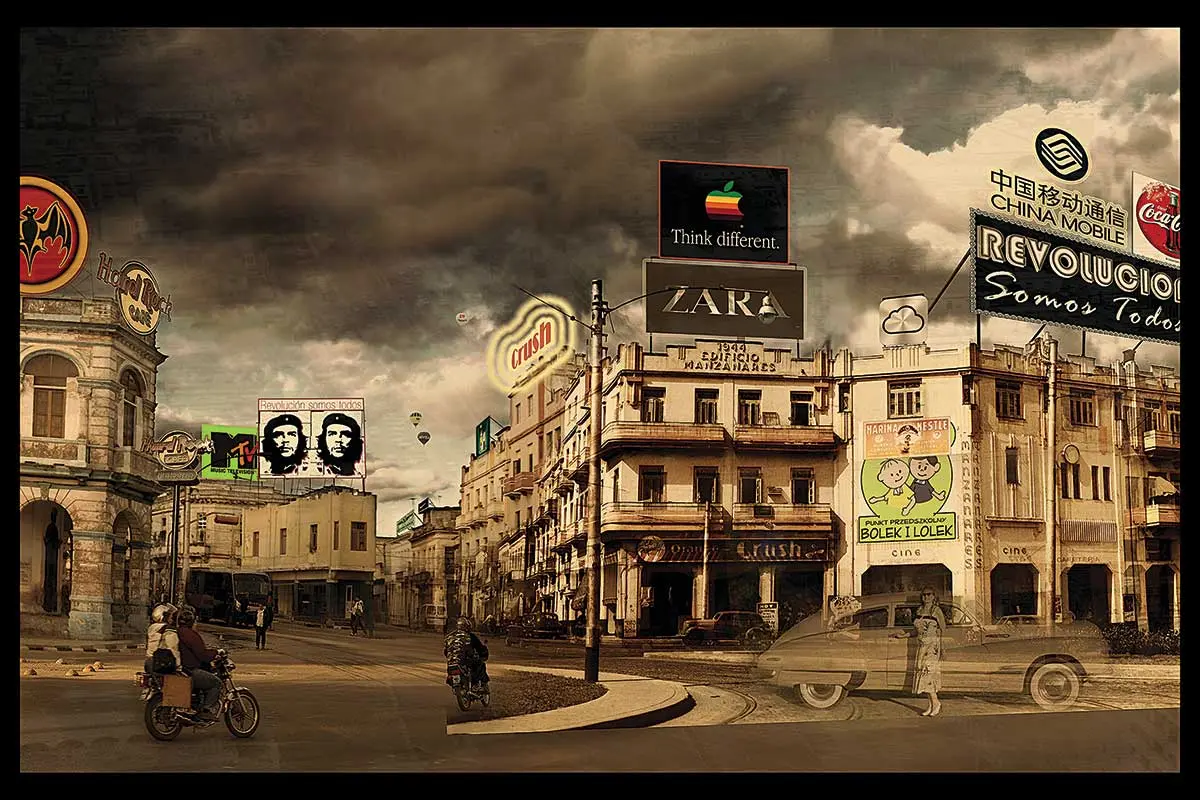
Cuba’s opening to the United States will be reflected mostly in the economic field; for the purposes of visual culture, this will have great repercussions on the island landscape. Speculations about how the Havana skyline will change are explored in Liudmila + Nelson’s digital compositions, for instance, Infanta y Carlos III from the series Hotel Habana (2009-2012). After finding old photographs of a typical Havana scene, the duo locates the place where it was taken and reshoots it with the greatest possible fidelity to the original. Both photographs are then set in the overlap and intervened digitally: advertisements and logos are made to alternate with the only signs seen today, displaying Communist Party slogans. The final result, installed in lightboxes, adds verticality and color to an urban landscape that is typically represented in photographs as low-rise and sepia-toned. The heights that Liudmila + Nelson give Havana is, unfortunately, made of piled-up billboards in the iconic brand colors of companies like Apple, Bacardi, and Coca-Cola. The banality of these billboards, in combination with the long-ago photographs, gives the new images Sci-Fi air. Liudmila + Nelson seem to be asking as to whether the image, now made into a full digital manipulation, is to be the standard landscape of the near future.
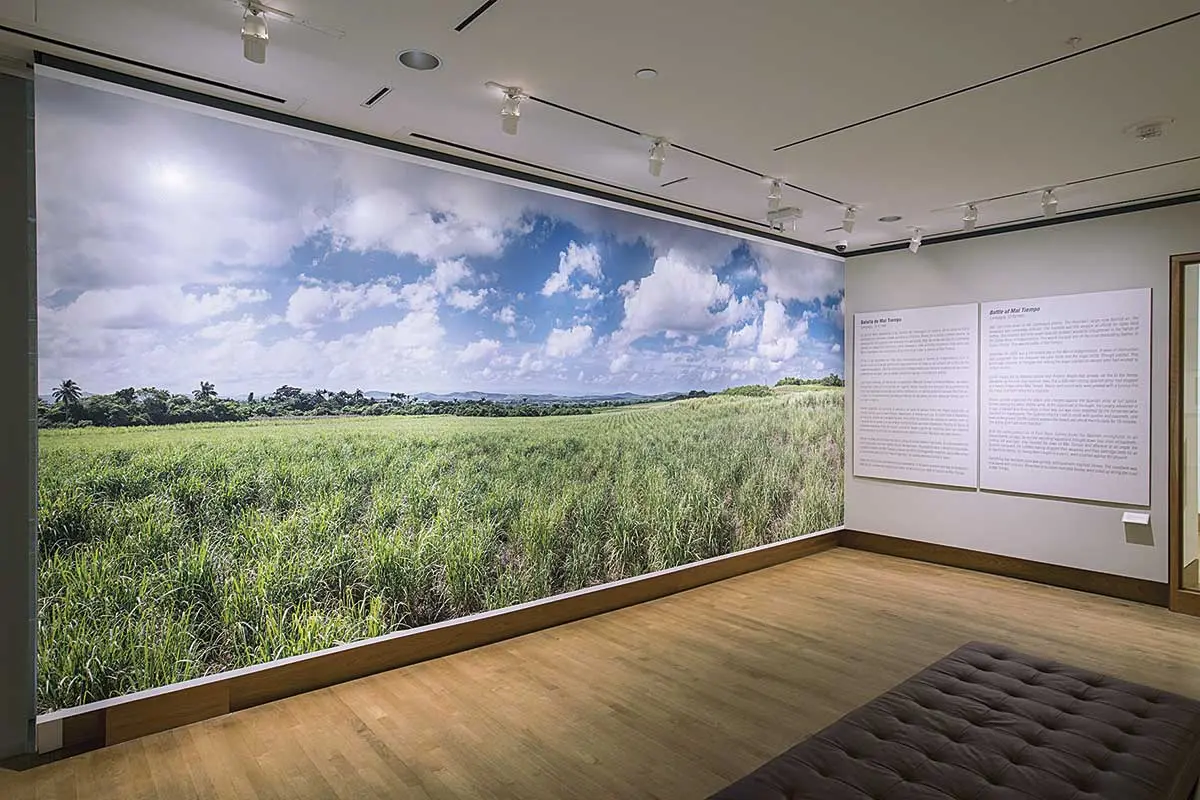
On the other hand, Reyner Leyva Novo’s large-scale photograph titled Sólo la tierra perdura (Batalla del Mal Tiempo) (Only the Land Endures (Battle of the Bad Weather), 2013) depicts the field where, in 1895, troops led by Máximo Gómez and Antonio Maceo bloodily confronted Spanish soldiers. In close proximity to this field, which today resembles a virgin, untouched plot, Novo includes a fictitious essay from Maceo’s perspective, describing a terrible war scene of which the photographs offer no evidence. The text, as De Ferrari notes in the essay that accompanies the exhibition and can be downloaded from the Chazen Museum’s web page, is able to represent what photography can’t. Documentary photography can’t fulfill its task of leaving testimonies for the future in the absence of monuments that reveal history. The written word, then, substitutes for that which falls short in visual language.
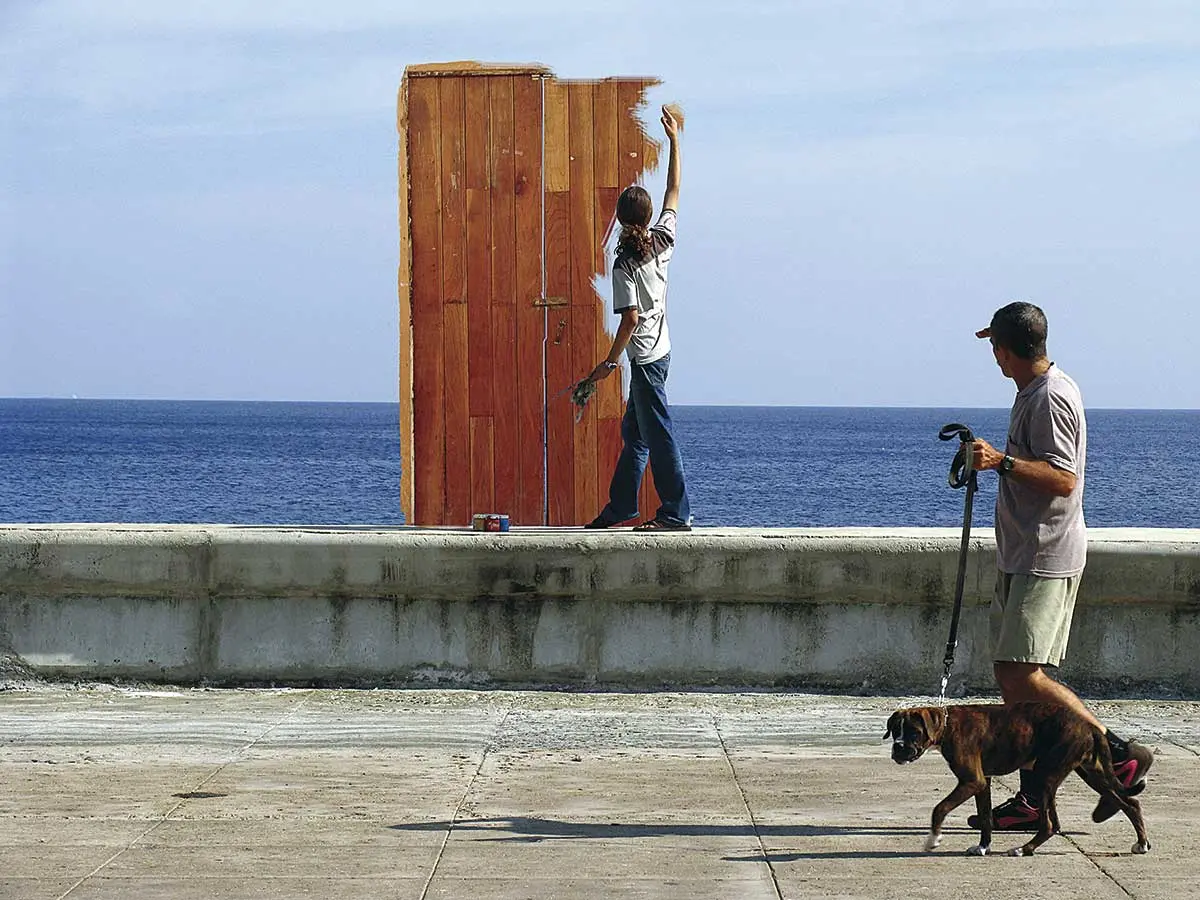
Waiting to see what path Rafael Villares’ career will follow is exciting. At 26, Villares is the youngest artist featured in this exhibition. Born in 1989, just as the Soviet Bloc was dissolving, and raised during the “Special Period in Peacetime,” Villares offers us three images from the series Finisterre (2005). Comparing the images of Finisterre with those in Abigail González’s series Ojos desnudos (Naked Eyes, 1992) suffices to understand what has changed in Cuban photography during the past two and a half decades. González’s photographs were important in their time, as they presented a raw, supremely anti-romantic image of Cuba. Printed in black and white, they depict domestic scenes interrupted by the presence of the camera. The thickly grained quality of González’s images, where nothing seems manipulated and everything is shot from vertiginous angles, contrasts with Villares’ in almost every respect. The composition in the Finisterre series is practically analogous to a stage or podium; the theatrical element in his work is difficult to ignore. Yet, the fact that it is different does not mean that one reality replaces another. What characterizes Finisterre is precisely the lack of reality as such, and the need to construct an alternative truth by means of technological resources.
The digital manipulation of the photographs—where we see him, Villares, painting imaginary doors in iconic locations such as the Havana Malecón or the Free Havana Hotel, whose proximity to the ocean represents the “end of the land”, the finisterre—can be read as a mordant commentary on the current methods (or lack thereof) used to enter or exit Cuba. On the other hand, it is difficult not to interpret the technical acumen with which Villares constructs his photographs as an expression of optimism. It remains to be seen if these photos will remain valid in upcoming years, and whether freedom will remain a right accessible only through Photoshop touch-ups. If we look one or two decades ahead, will the metaphor of liberty be a cliché, or will it remain a relevant social issue for the Cuban people?
If the photographs included in this exhibition are telling us something, it is that this moment of increasing openness is yet to become evident in the current Cuban scene. The use of unusual supports, untraditional montages, photographic superpositions, installations with text, and digital manipulations remains necessary in order to reflect about what Cuba was and what it is to be.
MARCELA GUERRERO