An interest for the variety of abstract-geometric proposals that flourished in Latin America has resurfaced in the last decade, prompting new research on the work of renowned artists as well as on others who are less well known, and even some who were practically unknown.
Perhaps it was the fatigue of many realistic and documentarian lines that drove the emergence of other ways of looking and other concerns, which in turn has supported the idea, justifiably, that creative contexts are much more complex and diverse than the favor enjoyed by specific tendency or style in a given era would lead one to believe. A historical moment encompasses many elements that create a phenomenon, and there are many layers of creative energy at its core.
In Colombia during the 1960s, many artists, guided above all by the influence of Pop Art, began to stake critical positions on the basis of figurative languages and realistic photographs. At the same time, an interest in abstraction also gained momentum and acceptance, bringing to maturity both geometric and expressionistic options that deserve greater notice.
The most often named artists in Colombian abstraction are Édgar Negret, Eduardo Ramírez Villamizar, Manuel Hernández, and Carlos Rojas. Yet it is possible that their work is only superficially known since the country’s difficult historical processes have given greater resonance to figurative modes that can be read politically. Thus, at the current juncture, when the region, in general, is revisiting its creative history in different realms, the emergence of surprises like those of Judith Márquez or Cecilia Porras, and the reemergence of the unknown proposal by artists like Carlos Rojas or Manolo Vellojín.
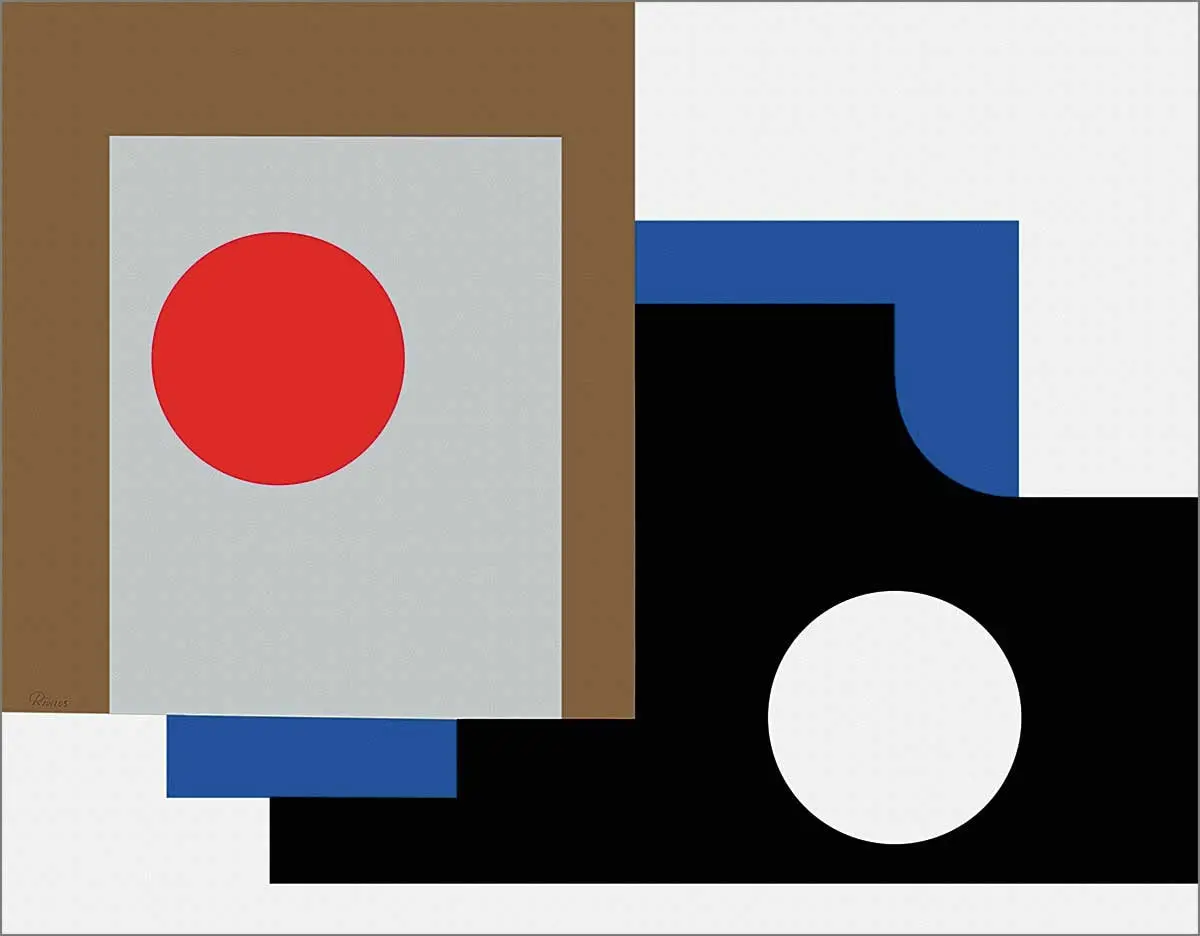
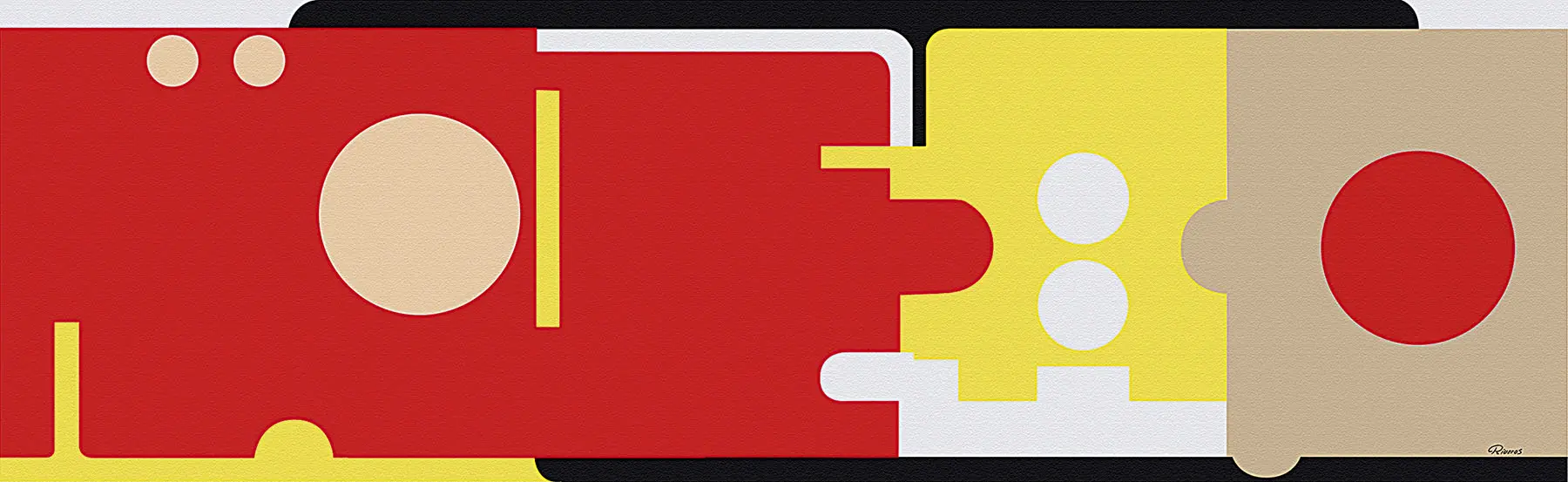
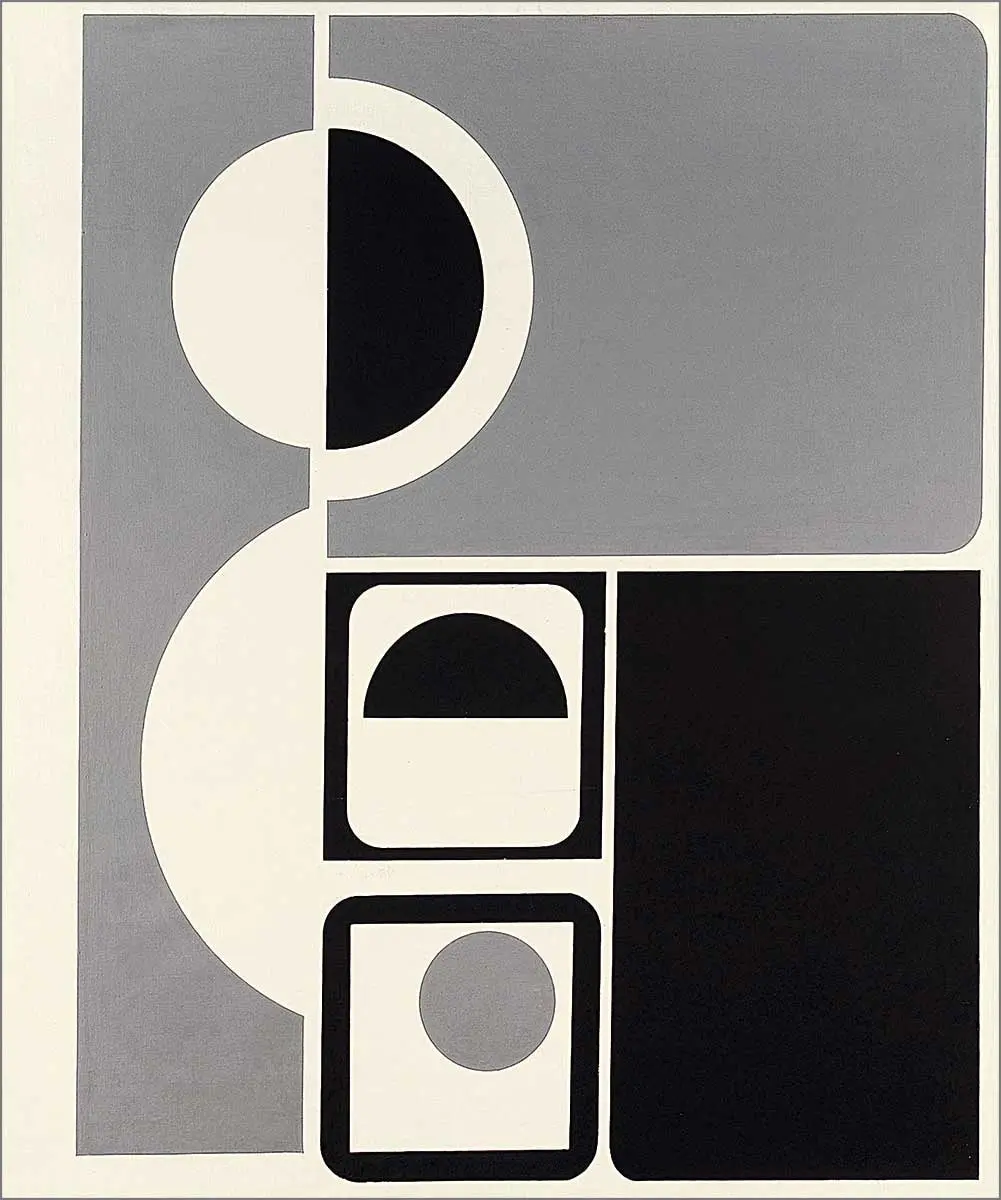
Eduardo Serrano, for two decades the curator at the Museo de Arte Moderno de Bogotá (1974-1994), offers yet one more name for this recapitulation of abstract art in Colombia, based on his study of painter Jorge Riveros’ oeuvre. Little was known of him until his recovery by Serrano, in part because many important years in Riveros’ career took place in Europe, particularly in Germany, where he completed his education and inscribed himself as an artist, exhibiting his work in the midst of the country’s rich cultural debates of the 1960s and 70s.
It was in Germany, where he arrived from Madrid’s San Fernando Academy in search of an education in abstract geometry, that the artist found the capital he wanted to exploit. Germany was the center of abstraction in Europe and the country that, for those very reasons, preserved the greatest archive of early Twentieth Century geometric abstraction and expressionism.
Germany has also been the birthplace of the first holistic modern art and design school, the Bauhaus. Jorge Riveros studied avidly every material within reach, and in his rigorous work began to develop a language of his own, which started as strictly geometric and severely linear but gained greater freedom and perhaps lyricism in recent years.
It must be noted, however, that despite the intensity with which he absorbed European influences, Jorge Riveros is also, and forcefully, a Latin American artist, not only for the dialog he has sought with the region’s great abstract artists, but also for his sustained fascination with its pre-Columbian art, textile traditions, and native crafts. He devoted himself to understanding their structure and geometry.
In consequence, since his time in Europe, the artist has developed an eclectic project, where the spatial principles derived from the Golden Ratio and the forceful colors taken from a different context have been equally decisive. Although early in his career he worked in monochromes, Jorge Riveros studied closely such color expressionists as Auguste Macke, Alekséi von Jawlensky, and Wassily Kandinsky, and fused their contributions to Latin America’s chromatic traditions.
These encounters provide a special richness for moments such as the present, where valuable expressive knowledge of color has been lost. Painting’s evolution over the last three decades has left a gap in the use of such an important tool for visual expression as the proper understanding and handling of color, which are not fully achieved by film and photography.
MARÍA A. IOVINO