Every photograph is constructed, an artifact that is produced, circulated, and consumed in an exponential way. Under this premise, Colombia’s Fotomuseo – Museo Nacional de la Fotografía has brought together visual artists from five continents in order to explore the image’s constructive possibilities, as part of the Bogotá Photography Biennial 2015.
Their approach to the selection of works that circulated through the events in the program (theory forum; portfolio reviews; film series; workshops with artists; exhibitions in galleries, museums, and public spaces) can be interpreted on three levels: a first level referred to the meaning of the image and its modes of production, connecting works and artists who engage in a variety of creative practices to translate concepts into photographic images; a second level dealing with the susceptibility of these productions to intervention or manipulation, deploying in each case analog or digital mechanisms that achieve variations of a single register or challenge the veracity of the image; and, finally, a third level that analyzes a series of works where the support of photographic representation is used atypically by artists who reflect on the medium as such and on the implications and challenges posed by a constructed visual culture.
In this way, a number of characteristic features of contemporary photography as presented in the Biennial’s sixth edition are established. The event included the presence of Germany as the featured country, with the Institut für Auslandsbeziehungen’s show Presentation/Representation. The format of Fotográfica, unique in Colombia, illustrates a joint effort by the public and private sectors to promote the creation of spaces for civic engagement around cultural and artistic expressions, efforts that are gaining acceptance among the local audience and surpass the expectations of foreign visitors.
Giving shape to the pretext
Artistic practice has developed a special affection for objects that we may call common, simple everyday things from which meanings are extracted that, once reverted into the image, generate new codes for reading. The first level of interpretation proposed above is connected to the corporeality of the elements to be registered, and with the possible relationships between them, mediated by the artist. This is the space of some of the best-known photographers who participated in Fotográfica 2015.
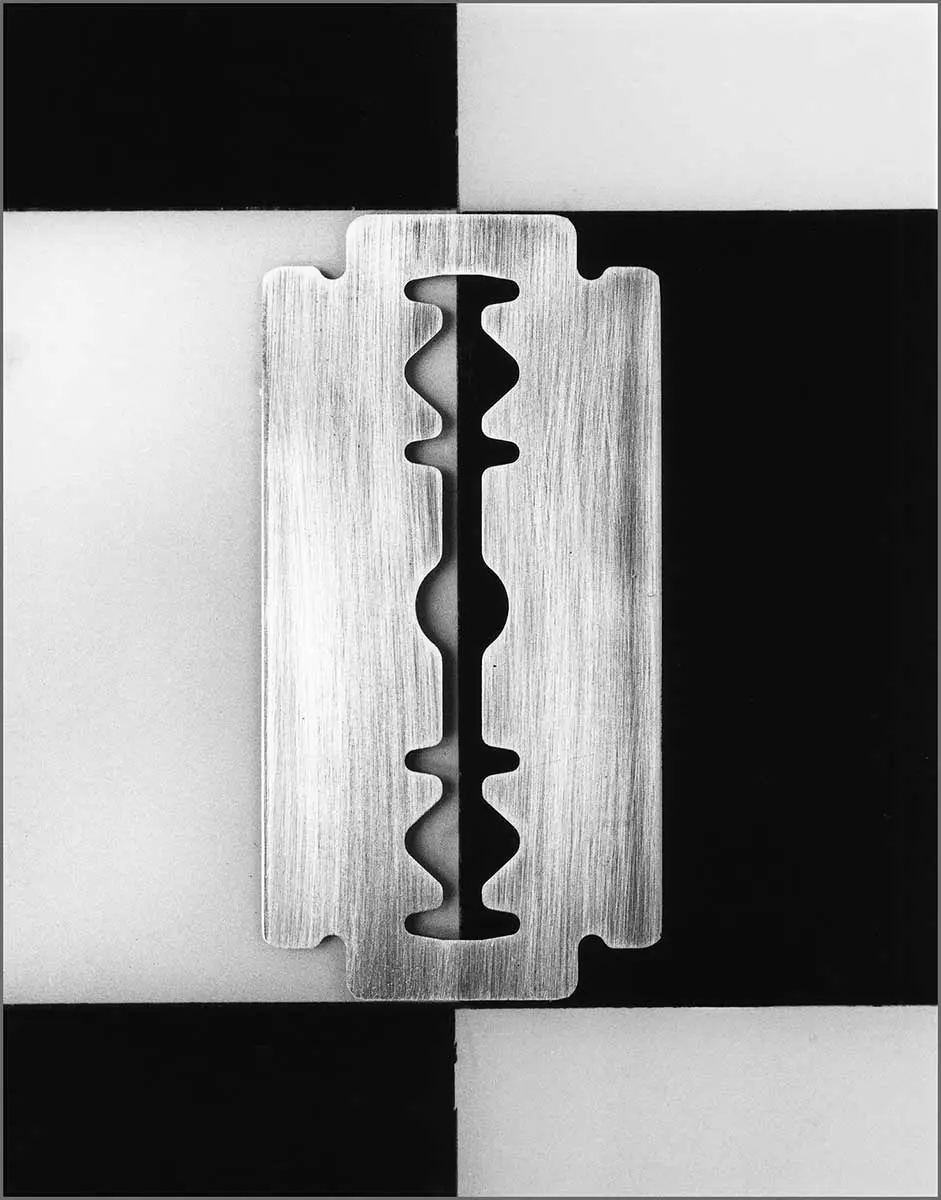
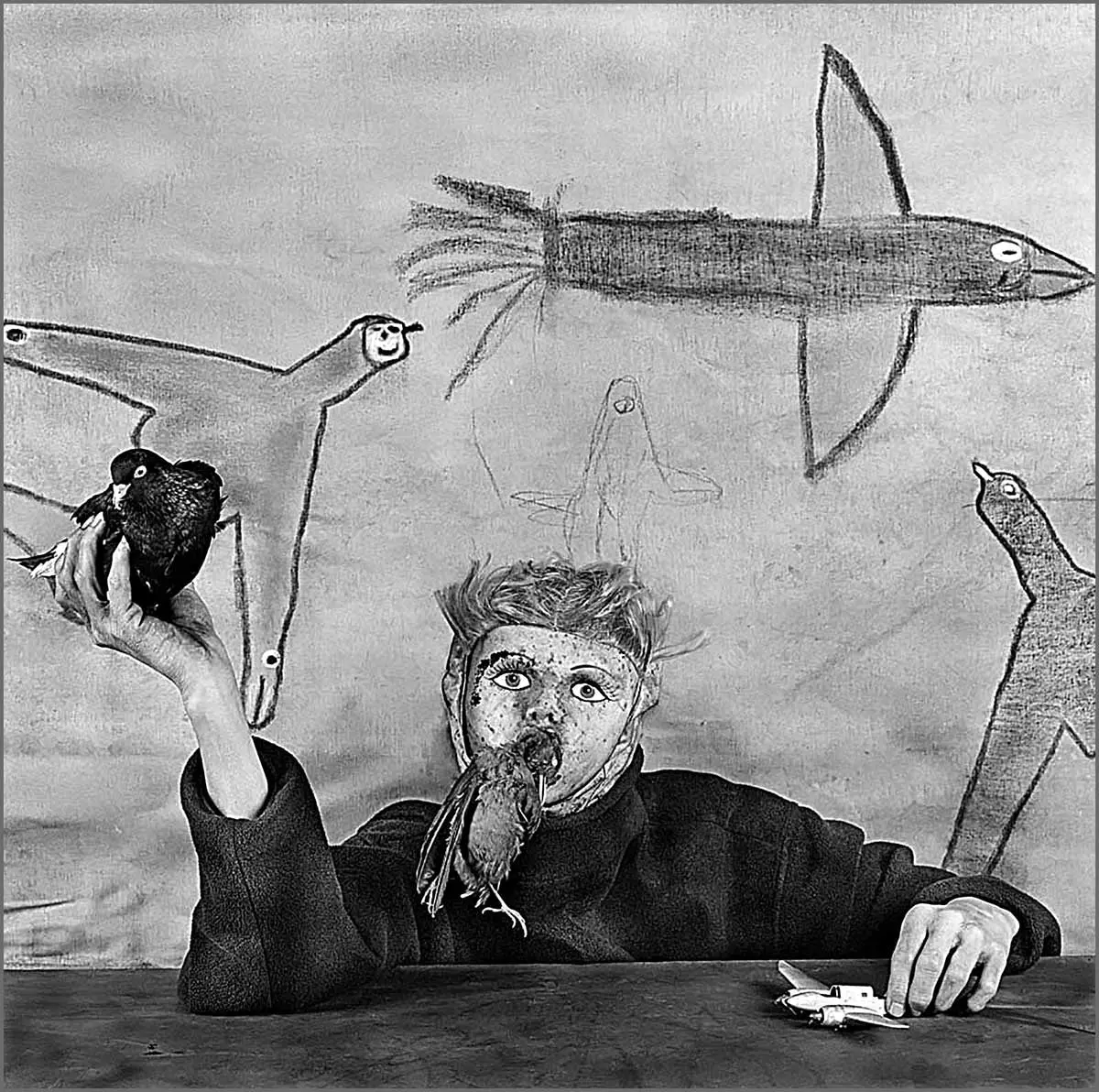
Confronting and interrogating objects has been the path followed by Chema Madoz (Spain); his black and white images point towards the metaphorical meaning of things around us, where objects are selected and situated in such a way as to expand their narrative capacity. The work of Roger Ballen (based in South Africa), in turn, reflects similar features, yet here the possibility of recreating scenes through everyday objects is broadened by the incorporation of collage and graffiti elements, as well as animals, toys, and iconographic images that signal the construction of a visual language of the unconscious. These artists recognize the narrative potential of the object to recreate ideas or concepts; any alteration occurs before the act registers, be it by analog or digital means so that the work of composition implies a direct modification of reality, with the photographer acting as a sculptor or draftsman.
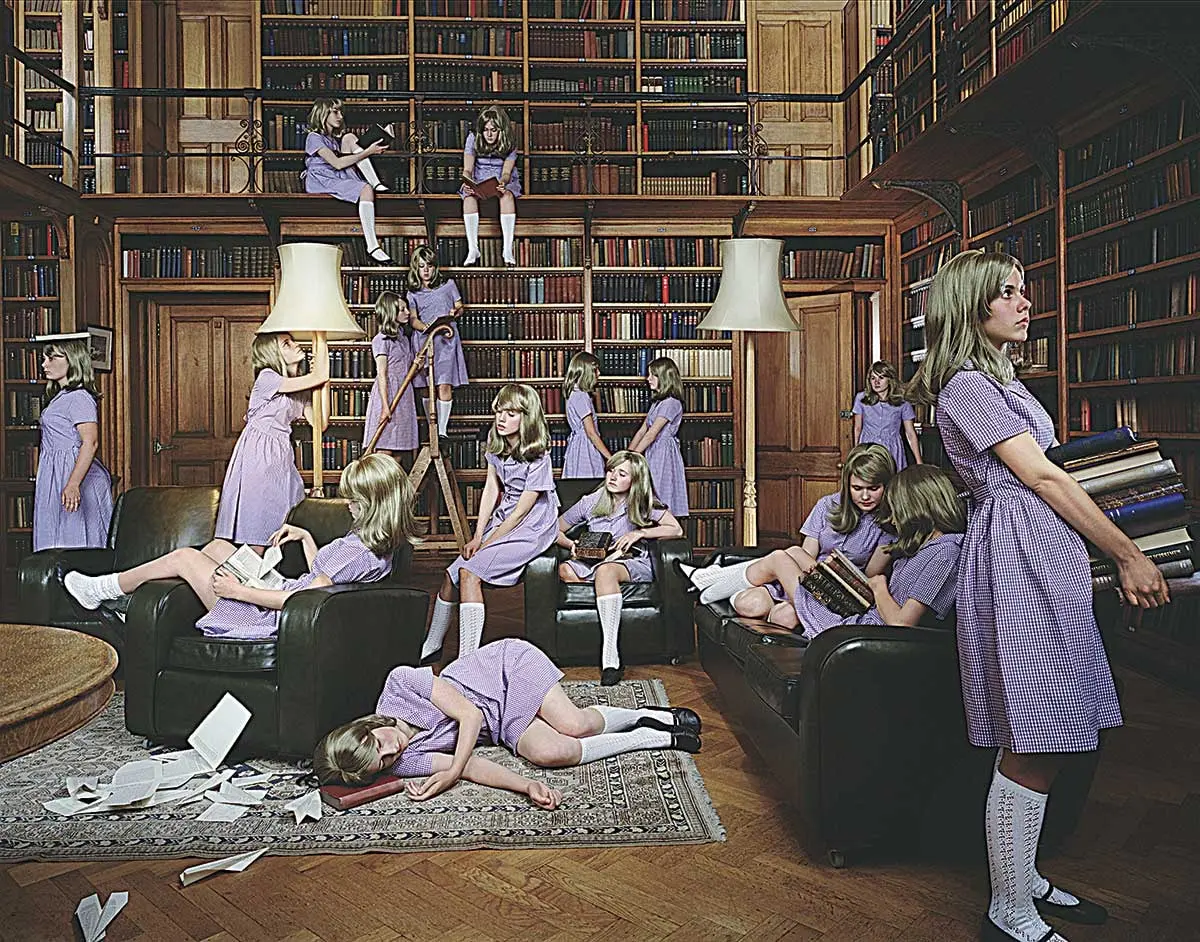
Among the works that stand out for their scenographic nature is School Play, by Julia Fullerton (Germany), where adolescent girls represent different cultures emphasizing group behavior in their uniformity and the standardization of the characters, pointing towards a somewhat stereotypical comparative reading.
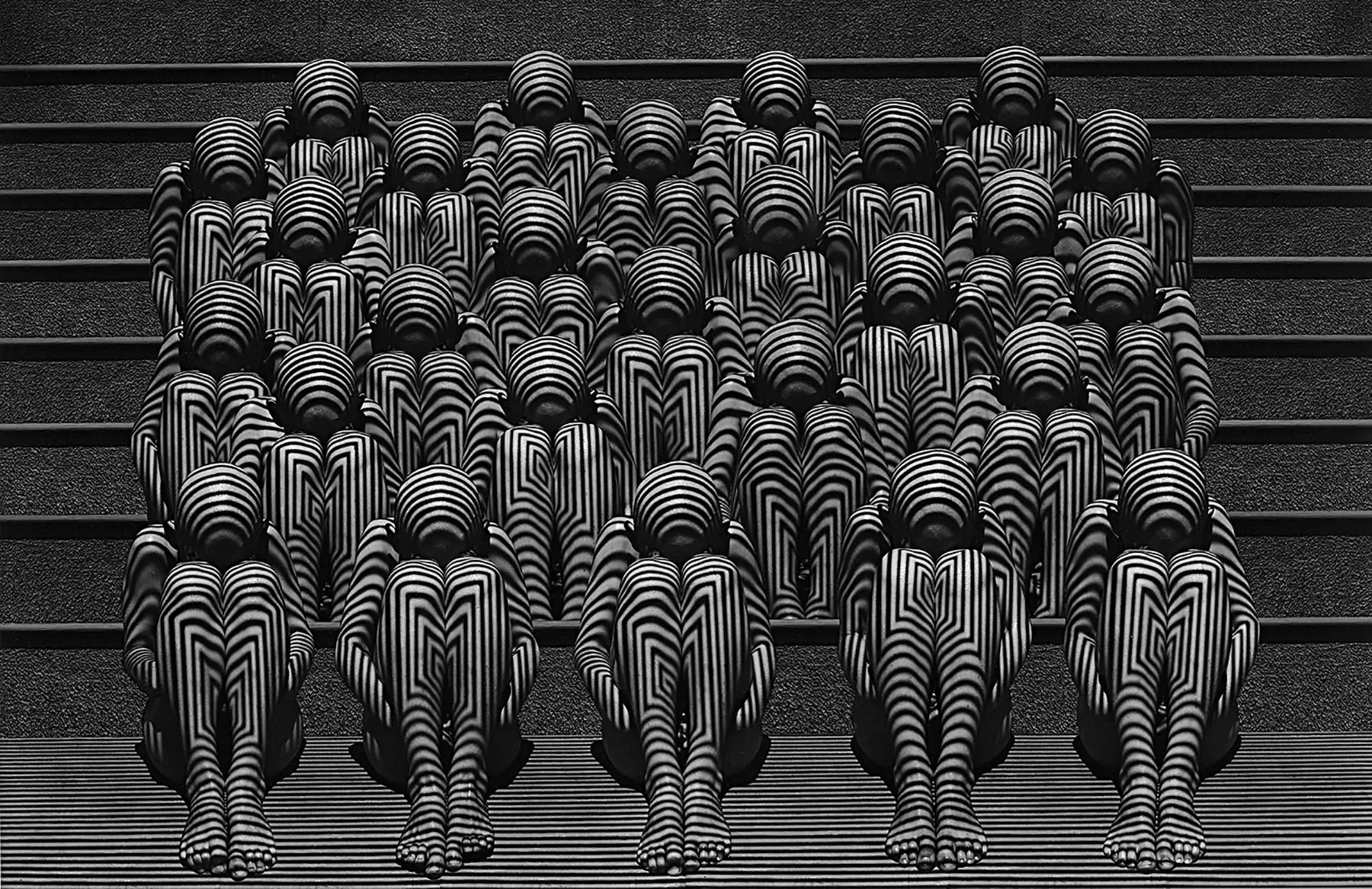
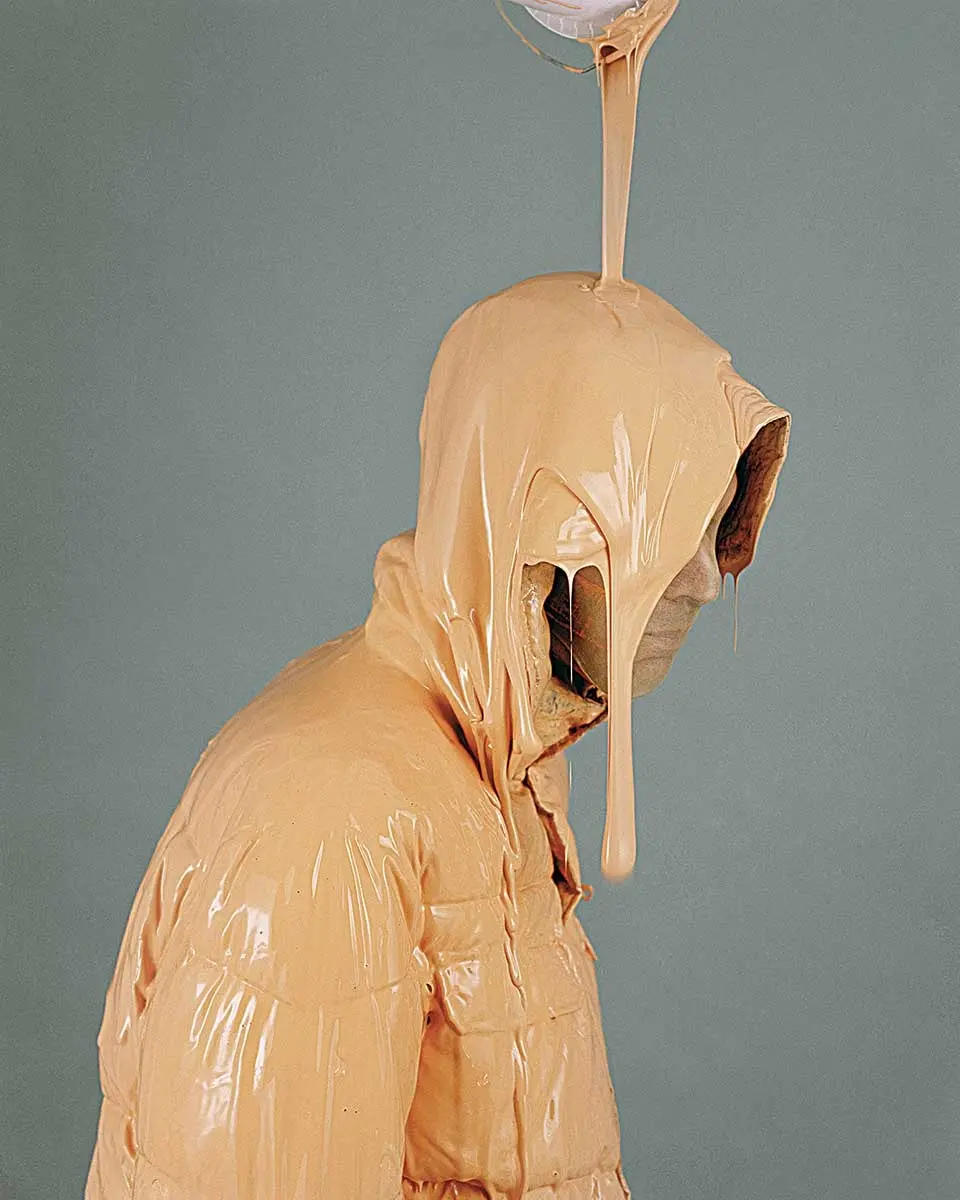
The notion of constructed photography finds a central axis in the portrait genre, given its influence in the development of the visual arts and its relationship with the various techniques of representation. The work of Hannu Karjalainen (Finland) proposes a consideration of the artificial nature of the portrait; his paint-covered characters interplay at the semantic level with Europe’s pictorial tradition and involve practices like performance art and body painting, displacing the tension of the image to the moment in which the register is operated.
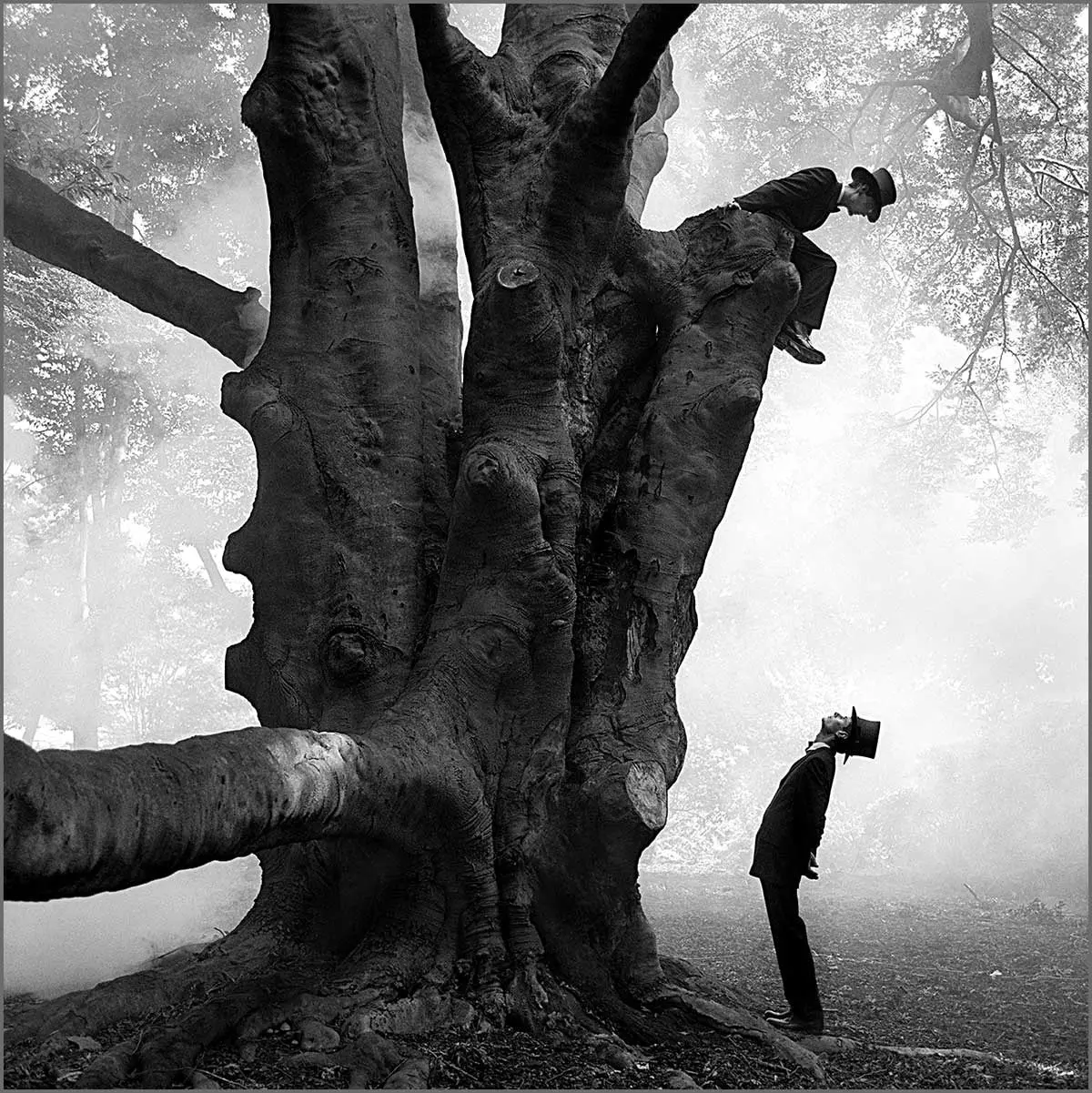
Rodney Smith (USA) is among the most highly renowned photographers present in the Biennial. With vast experience in the industry, Smith has developed a unique language that both evokes the modern way of life and alters the speed at which it is experienced. The careful selection of each detail is a legacy of Smith’s experience in the field of advertising, and it evokes in each shot a profound desire for life.
Diluting the image
A group of artists stands out in the Biennial for the way in which, after recording objects, characters, or specific situations in their photographs, they manipulate or intervene in the results. Such photographic construction is connected both to the development of technologies capable of encoding the image in new languages—rendering it susceptible to modification at different scales—and to the need to redraw those contexts, illustrating each artist’s analysis of the parts that allow them to fracture space.
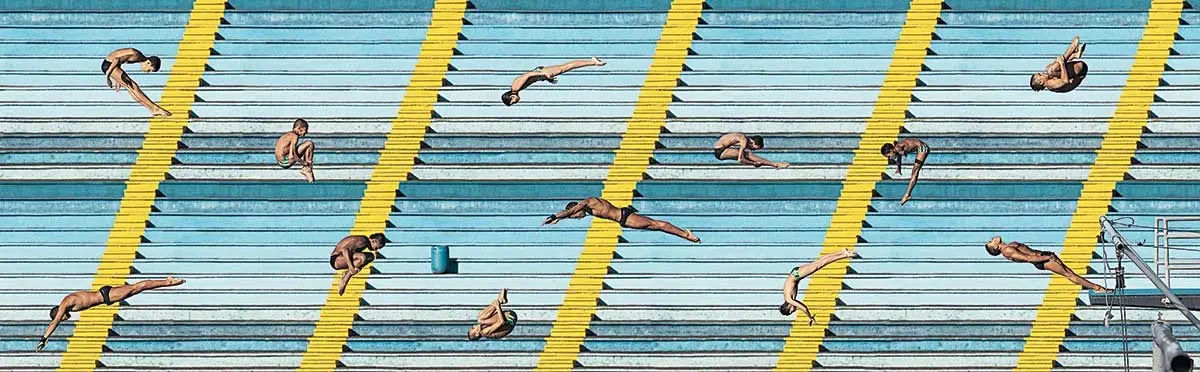
The images produced by Mario Arroyave (Colombia) reveal just such a quest: in Línea de tiempo (Timeline), digital photomontage allows the artist to fix sequences of motion in a single instant; each component is reproduced and multiplied, operating a shift in our perception of space and its boundaries. A similar concern is found in Parpadeo cuántico (Quantum Flicker), by Isabel Martínez (Chile), which superimposes two brief exposures of the same element. Her images cause an optical sensation of intermittence that evokes the behavior of the brain as it the gaps between images in order to create the illusion of continuous motion.
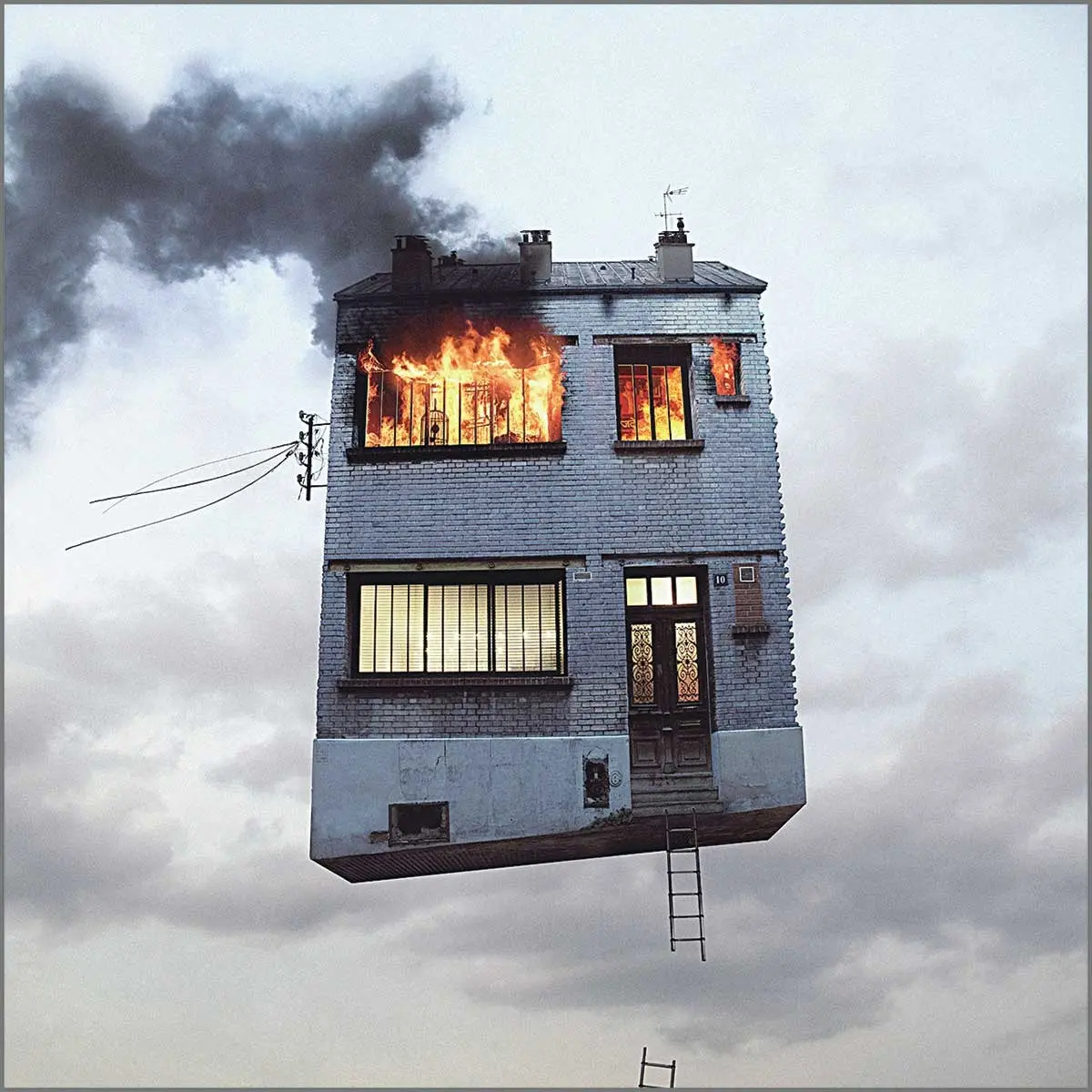
In turn, the series Flying Houses, by Laurent Chéhère (France), connects various processes of digital assemblage and composition in photographs of nameless spaces of little architectural significance in the urban periphery, which once reconfigured become fantastic narratives. The artist focuses his attention on the imaginary events that could take place inside each space once the new meaning is given to it; the characters peering out the windows and the details in each work make reference to films and other key influences in Chéhère’s creative process.
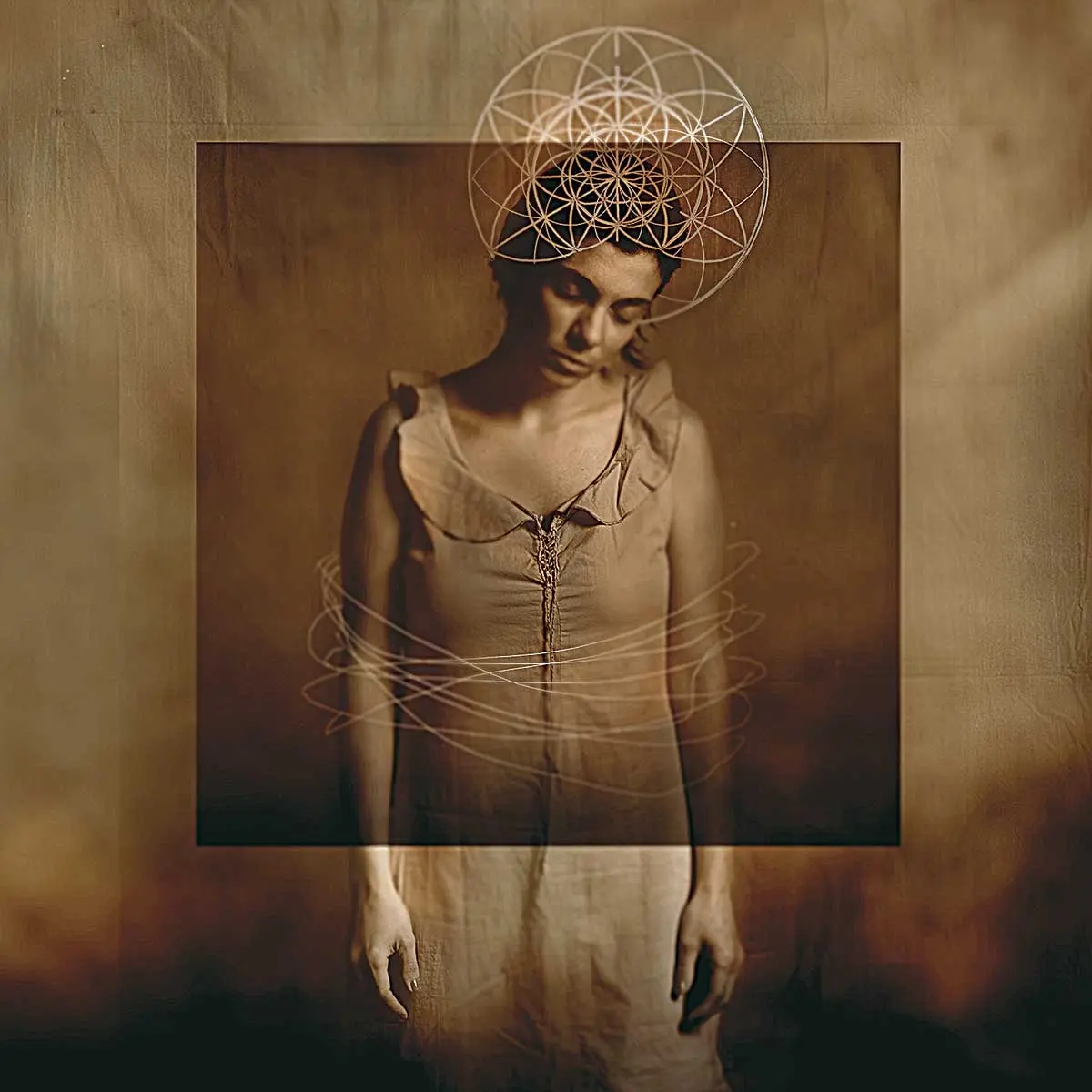
Meanwhile, Dores da Alma (Aches of the Soul), by Sheila Oliveira (Brazil), revisits the use of digital drawing as a language for the intervention of the photographic image. Her work makes reference to multiple presences; the framing and the elements depicted hark back to the deep psychological and emotional states of the individual. Also included in this group, for its compositional characteristics and its methods of manipulation, is the work of Misha Gordin (Russia), which, unlike what happens with the use of digital tools, takes place at the point of development, working directly on the negatives in the darkroom. The production of each photograph involves the use of pre-designed schemes and sketches and studies of the behavior of light.
Where to focus the gaze
The production and circulation of photography are becoming more accelerated, and this has manifold effects in the development of visual culture with many more formal supplies and sources, and also, perhaps more importantly, in the transformation of technologies via intersections and trial-and-error processes. The third level mentioned above posits an experimental approach to the conventional tools of photographic configuration.
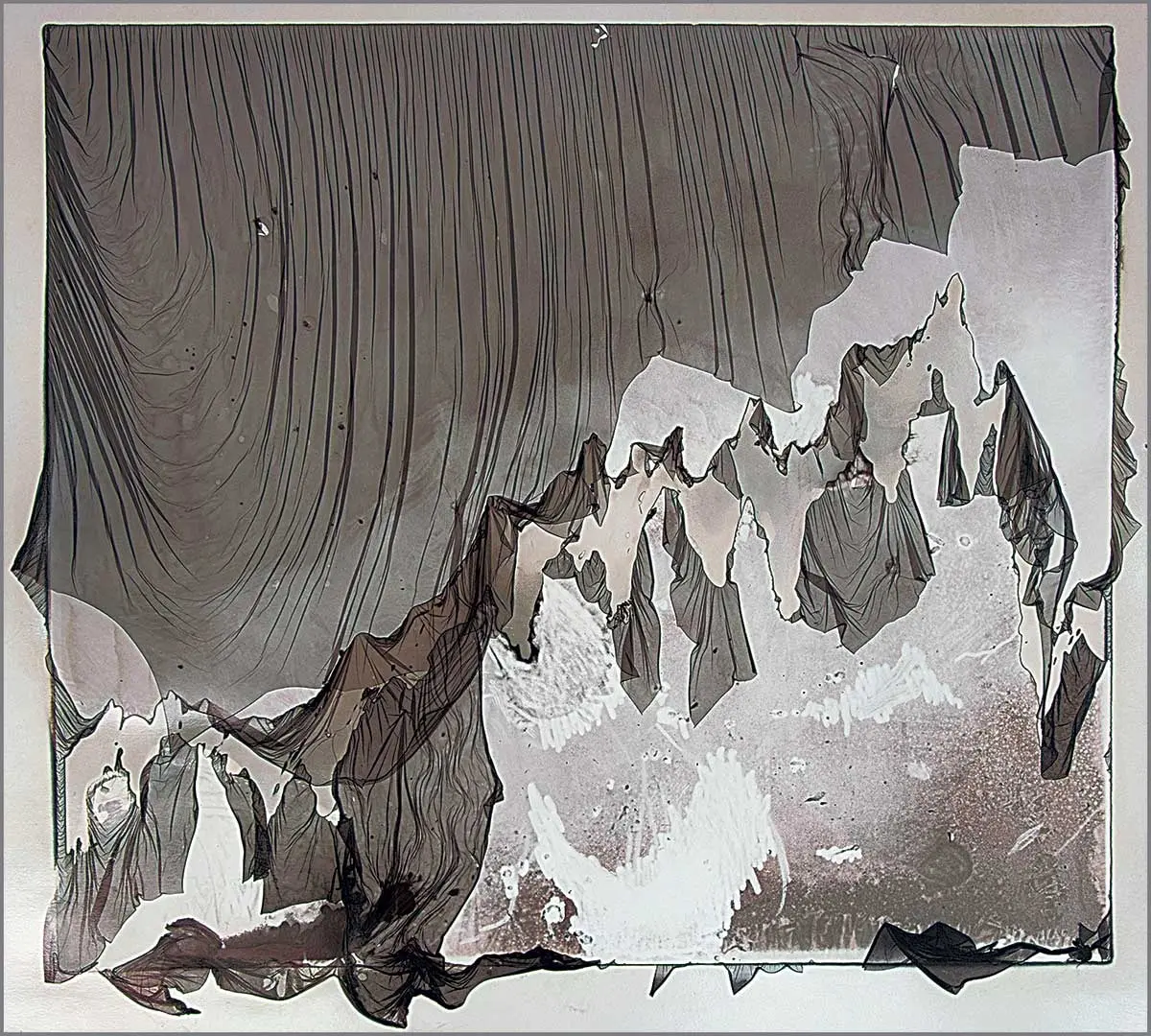
The series Montañas de la incertidumbre (Mountains of Uncertainty), by Roberto Fernández Ibáñez (Uruguay) is a case in point. At first glance, we see the depiction of mountain formations and valleys resembling a natural landscape; these, however, emerge from math graphs of the kind commonly used to represent statistical data in economics. The photographic surface acquires relief and texture thanks to the folds left behind by the emulsion in the development process. A similar mode of construction is identifiable in the work of Bonchang Koo (South Korea), in his case referred to the material on which the image is fixed. Each photograph is composed of fragments of the same image, cut and gathered into a cubist composition. The elements represented by the artist refer to a nameless body floating in space, and it is left to viewers to reconstruct the image through a superposition of the different frames.
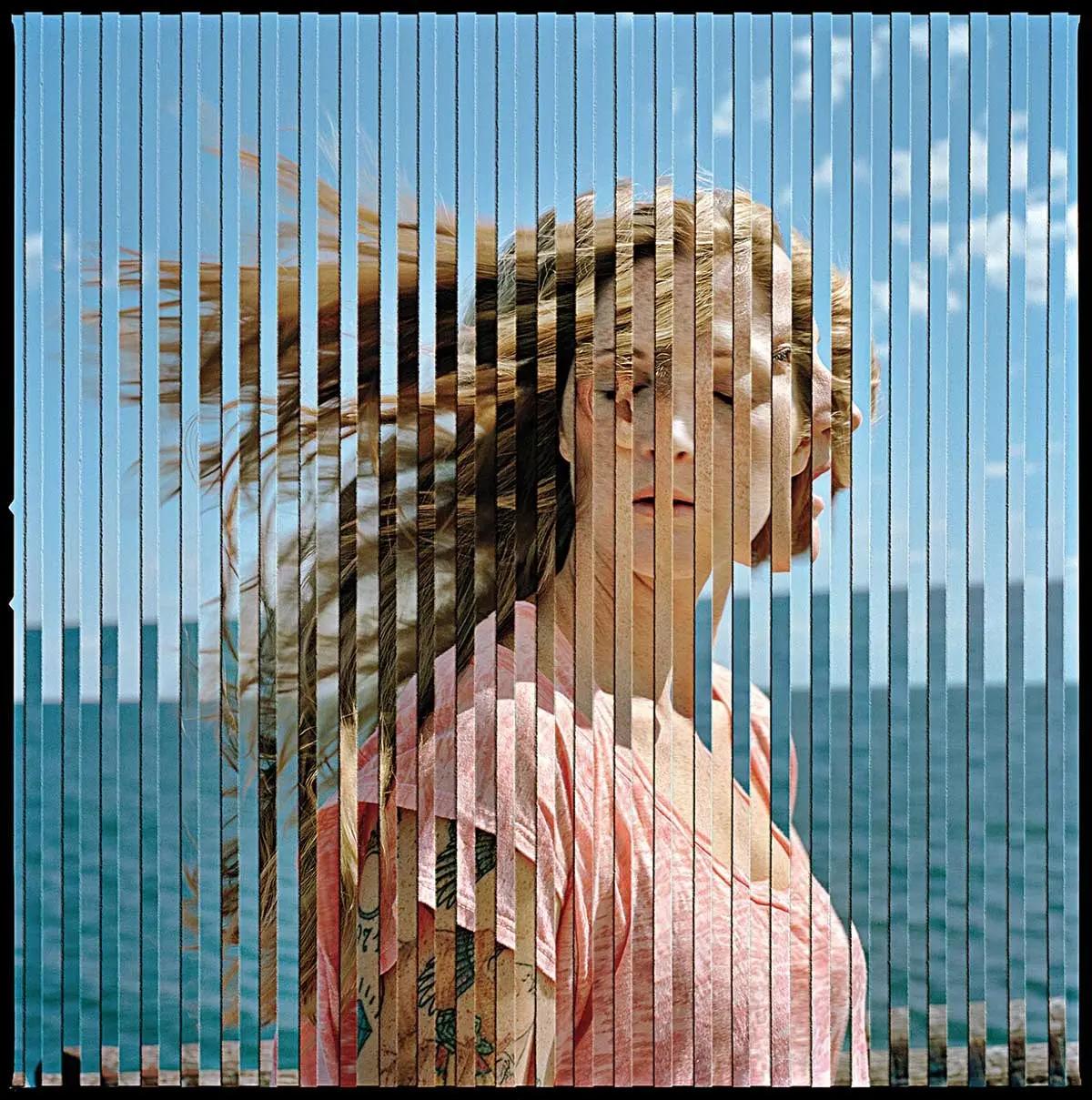
In his series Retratos al carbón (Portraits in Charcoal), Luis Carlos Tovar (Colombia) brings together different social groups inhabiting the regions of the Atlantic coast, where the extraction of mineral resources has had an impact on the ecosystem. His work, installed outside the National Library in downtown Bogotá, fosters an unpredictable encounter—because of its format—with characters portrayed looking out to the ocean.
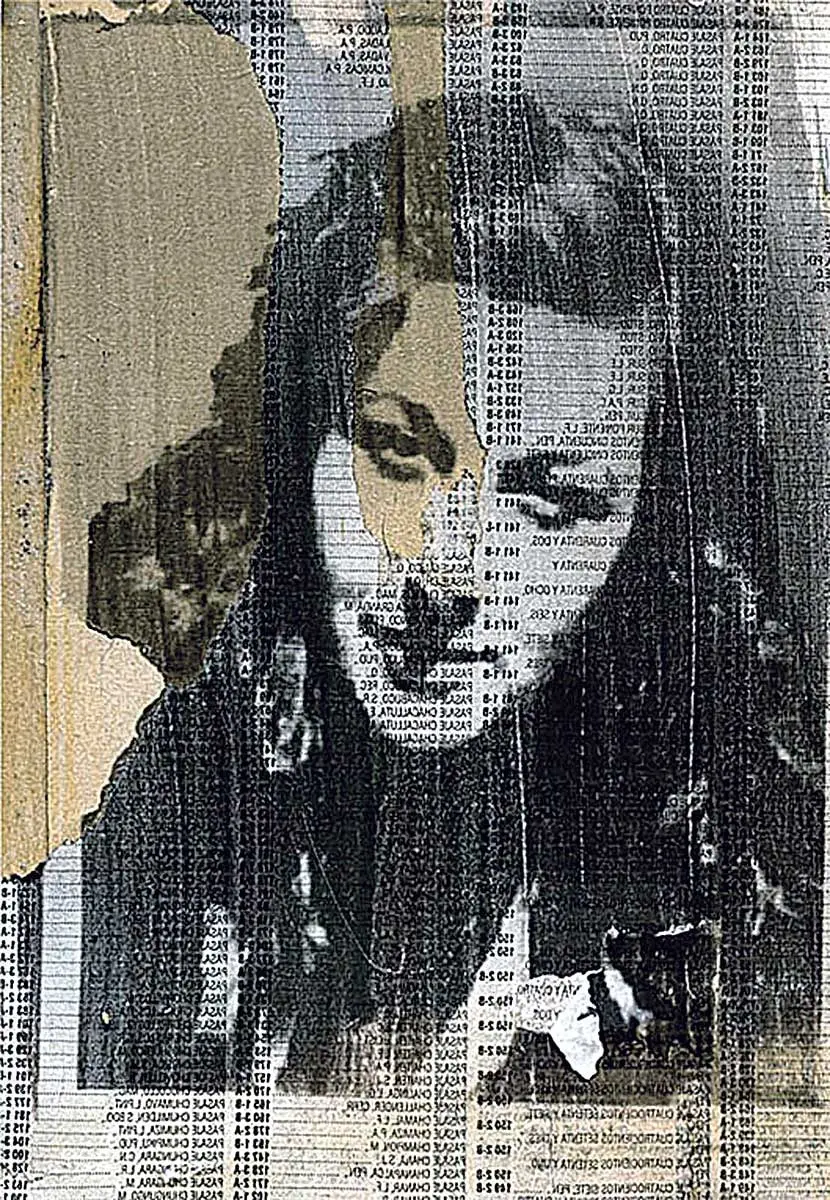
Social commitment in the practice of photography is reflected in Los 119 (The 119), a series by Cristian Kirby (Chile), whose work establishes a direct connection between the portraits of people who disappeared under military repression and the urban spaces from which they were kidnapped. The artist attaches to maps and directories faces that have circulated for years on different print media and given shape to a singular aesthetics used by their family members to fight against oblivion and assert their sustained grief.
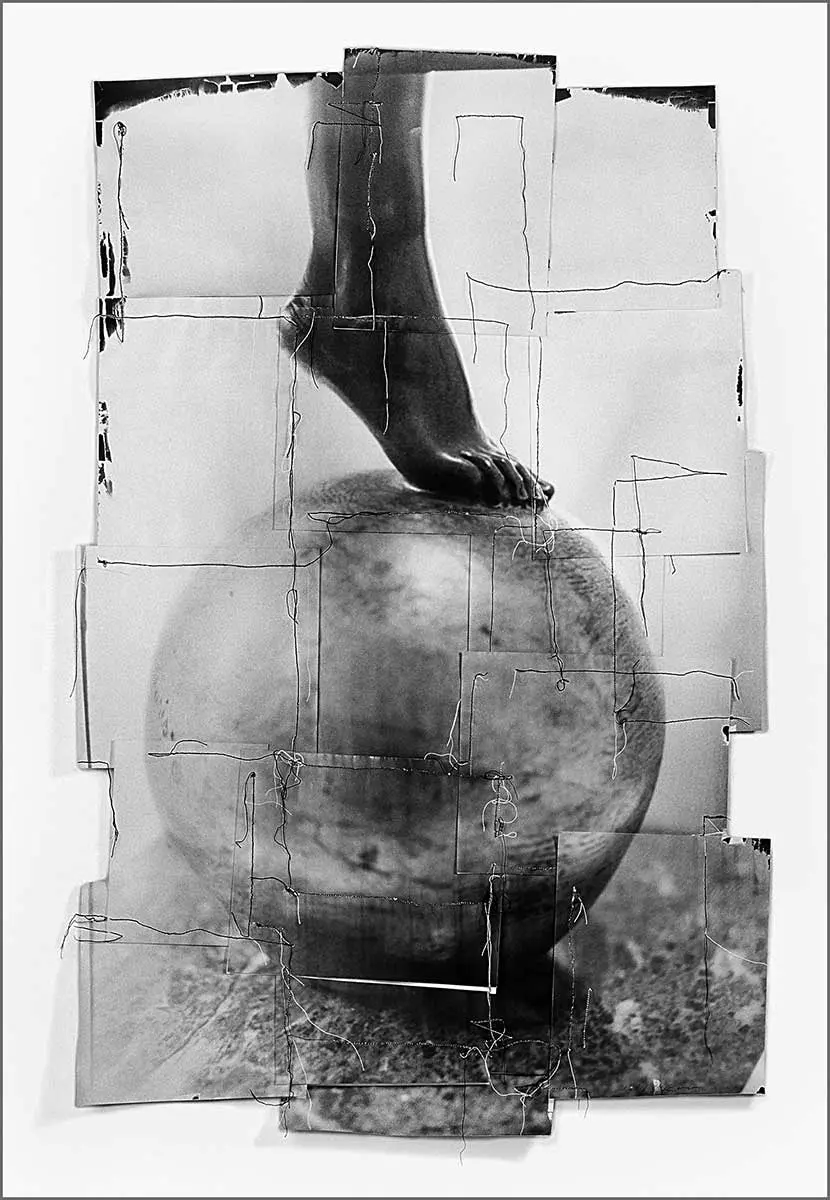
The spectral character of each image is reasserted by traces of light-sensitive emulsion, confronting the viewer with the ephemeral and vulnerable nature of memories entrusted to digital media.
The representational nature of photography, which results from a series of processes capable of giving rise to a semantic composition, recreates a supposed reality and presents it to our gaze. At every one of these levels, Fotográfica Bogotá has embraced a multiplicity of perspectives that appropriate the format, reflecting its progressive and inevitable insertion in each social sphere.
The biennial has also consolidated a unique audience that, besides contemplating the various proposals on offer, attends the theory forums and takes those reflections into their personal exercises and habitual spaces.
About the exhibition spaces
The museums, galleries, and exhibition spaces in which the Biennial unfolded contributed to define the narrative character of each selection of works. Spaces like the District Archive, the National Library, or the Museo de Bogotá, following public cultural policies, hosted works that converse with their respective thematic foci, allowing visitors to establish connections between different contents referred to memory and the city.
For their part, the galleries and alternative spaces associated with the Biennial presented the work both of emerging local artists and of well-established photographers with longstanding careers, generating interesting contrasts and discourses that illustrate the unstable condition of the photographic medium, as the variability of its supports gives rise to proposals that formulate new readings of the genre’s tradition.
The use of public spaces, a longstanding strategy of Fotomuseo, put the language of the visual arts directly in front of passers-by and of society in general, thanks to the installation of expographic devices and billboards in different areas of the city, the projection of some works on buildings, and the presentation of workshops by several artists, who took advantage of their stay in Bogotá to participate in local initiatives for extracurricular education in the arts.
Once the exhibitions end, the countdown begins for the Biennial’s seventh edition, which promises to once again bring Colombia’s capital and global photographic production into sharp focus.
NOTE
1. “El paisaje mediático: sobre el desafío de las poéticas tecnológicas”. In La fotografía como expresión del concepto. Arlindo Machado, p. 44.
ALEJANDRO JIMÉNEZ PÉREZ
Industrial designer, Master in Museology and Heritage Management/collective.